
Executive Overview
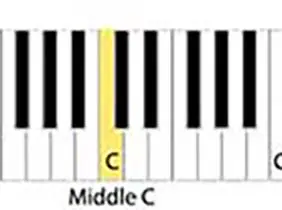
To millions of aspiring pianists, vocalists, and instrumentalists across the globe, the musical journey begins with a singular, universally recognized coordinate on the keyboard: Middle C. Far more than just a convenient black-and-white key sitting somewhere in the middle of a standard piano, Middle C serves as the foundational cornerstone of music theory, pedagogical instruction, and sheet music architecture.
Technically cataloged as C4 in scientific pitch notation, assigned note number 60 within the MIDI (Musical Instrument Digital Interface) protocol, and conventionally tuned to a frequency of 256 Hz, Middle C occupies a unique psychological and structural space in Western music. It is the root note—the tonic—of the C major scale, a diatonic foundation entirely devoid of sharps and flats that makes it the most intuitive entry point for raw beginners.
Yet, despite its ubiquitous moniker, Middle C is paradoxically named. It is neither the exact mathematical center of an 88-key piano keyboard (which actually falls between E and F) nor does it sit natively within the five-line staves of standard treble or bass clefs. Instead, Middle C functions as a vital cartographical bridge. It is the crucial crossover portal that unites the high-register world of the treble clef with the low-register domain of the bass clef, anchoring the Grand Staff and lending its defining frequency to the specialized "C clefs" used by instruments spanning diverse tonal ranges. This comprehensive investigation explores the physical properties, historical significance, theoretical mechanics, and enduring pedagogical necessity of music’s most famous note.
Detailed Chronology and Technical Evolution of Pitch Standardization
The journey of Middle C from a purely acoustic phenomenon to a codified standard is deeply intertwined with the broader history of musical tuning, acoustics, and notation systems.
The Acoustic Birth of C4
Long before digital frequencies and standardized concert pitches, early music theorists recognized the elegance of the C major scale. Because the scale requires no alterations (no sharps or flats), it became the natural baseline for vocal pedagogy in medieval and Renaissance Europe. As keyboard instruments evolved from simple pipe organs and clavichords into the complex, multi-octave acoustic pianos of the 18th and 19th centuries, builders needed a reference point to anchor the instrument’s register.
The designation of C4 as "Middle C" emerged organically as the keyboard expanded outward from early 60-key designs to the standard 88-key layout familiar today. On an 88-key piano, which spans from A0 to C8, Middle C sits as the fourth C note from the far-left side of the keyboard (or the fifth C from the right).
The Battle of Frequencies: 256 Hz vs. Modern Concert Pitch
In the realm of acoustics, Middle C is frequently associated with a frequency of 256 Hz. This specific frequency holds a revered place among mathematicians, acousticians, and early scientists due to its binary properties. Being a power of two ($2^8$), 256 Hz allows for clean, symmetrical octave divisions down to the lowest audible thresholds (reaching down to 1 Hz, representing theoretical "C0").
However, modern orchestral tuning relies on A4 = 440 Hz (established officially by international standard in 1939 and reaffirmed by the International Organization for Standardization in 1955). Under equal temperament tuning linked to A4 = 440 Hz, exact Middle C (C4) vibrates at approximately 261.63 Hz. Despite this modern concert pitch deviation, 256 Hz remains historically and theoretically significant, often utilized in scientific demonstrations and alternative tuning systems (such as Verdi tuning or scientific pitch, where C5 = 512 Hz).
The Codification of MIDI and Scientific Pitch Notation
As the music industry transitioned into the electronic and digital age during the late 20th century, engineers required an unambiguous identifier for every pitch.
- Scientific Pitch Notation (SPN): Combines a musical note name with an integer indicating the octave number. Middle C is designated as C4 because it sits in the fourth octave of the scientific piano range.
- MIDI Protocol: Developed in the early 1980s, the MIDI standard assigns every key and continuous controller a discrete integer value from 0 to 127. Within this framework, Middle C is hardcoded as Note Number 60. This universal standardization ensures that a digital synthesizer, computer software, or electronic keyboard instantly recognizes a keystroke as Middle C, regardless of the manufacturer.
Supporting Context and Metrics: Anatomy of the Grand Staff
To understand why Middle C holds such architectural power, one must examine how it manifests on written sheet music. To the untrained eye, the visual representation of Middle C appears contradictory.
The Clef Conundrum
When viewed in isolation, neither the Treble Clef nor the Bass Clef houses Middle C within its five primary horizontal lines:
- On the Treble Clef: Middle C is written on a temporary auxiliary line—known as a ledger line—floating directly below the bottom staff line.
- On the Bass Clef: Middle C is written on a ledger line floating directly above the top staff line.
At first glance, this separation seems counterintuitive for a note labeled "middle." However, when these two staves are combined in the traditional piano layout—where the Bass Clef sits directly beneath the Treble Clef—the genius of the system becomes apparent. The ledger line extending upward from the Bass Clef and the ledger line extending downward from the Treble Clef converge to point toward the exact same pitch: Middle C.
The Grand Staff and the 11-Line Model
When music educators want to demonstrate the absolute continuity of pitch, they combine the Treble and Bass staves into what is known as the Grand Staff. If one were to mentally fill in the invisible space between these two staves by drawing all the missing ledger lines, it would create a massive 11-line staff.
In this theoretical 11-line configuration:

- The 6th line (the exact dead center of the staff) is Middle C.
- Notes climb progressively higher into the treble register as you move upward.
- Notes descend deeper into the bass register as you move downward.
This structural design explains why instruments with broad pitch ranges—such as the piano, harp, and pipe organ—utilize the Grand Staff. It allows a performer’s right hand (typically reading the treble clef) and left hand (typically reading the bass clef) to orbit around Middle C as a central gravitational pull.
Specialized C Clefs: Alto and Tenor
Not all instruments neatly divide their repertoires into exclusively high (treble) or low (bass) ranges. Instruments such as the viola, cello, trombone, and bassoon frequently navigate registers that hover around the middle frequencies. To accommodate this, music theory employs movable "C Clefs" (specifically the Alto Clef and the Tenor Clef).
- The Alto Clef: Visually centered so that Middle C sits precisely on the middle (3rd) line of the staff. This clef is the primary reading standard for the viola, providing equal headroom for notes above and below the instrument’s sweet spot.
- The Tenor Clef: Designed so that Middle C sits on the 4th line up of the staff. This shifts the visual focus slightly lower, making it ideal for the upper registers of the cello, trombone, and bassoon.
The existence of these clefs underscores the central premise of Middle C: it is the universal pivot point around which all orchestral writing is balanced.
Pedagogical Perspectives: Official Insights from Music Educators
The role of Middle C in music education cannot be overstated. For generations, piano instructors have utilized C4 as the absolute gateway for absolute beginners.
The Pedagogical Starting Point
According to prominent music educator, composer, and author Ben Dunnett (LRSM), founder of the Music Theory Academy:
"Middle C is the starting point for many people in their musical journey on a keyboard. It is often the first note taught in school or in piano lessons and is a reference point we always come back to. It makes sense that a C is the first note many people are taught—it is the root note (tonic) of the key of C major which has no sharps and flats in its key signature and so is an obvious starting point."
Dunnett emphasizes that the physical layout of the keyboard—where groups of two and three black keys alternate across the board—makes finding a "C" visually intuitive for children and adult learners alike. By locating the white key immediately to the left of any group of two black keys, a student can instantly identify a C. Among all the Cs, the one closest to the physical center of the instrument is selected as the launching pad.
Cognitive Mapping and Muscle Memory
Beyond sight-reading, piano pedagogy relies heavily on Middle C for hand-positioning exercises. Traditional "Middle C position" places the right-hand thumb (finger 1) on Middle C and spans outward through E, F, G, and A, while the left-hand thumb rests on the B directly below Middle C, spanning down through G, F, E, and D.
This symmetrical setup builds early spatial awareness, teaching the student’s brain to map physical finger movements directly to notation on the page. Even as modern piano methods have evolved to embrace multi-positional playing and intervallic reading from day one, Middle C remains the indispensable home base to which students inevitably return.
Future Outlook: Middle C in the Era of Digital Audio Workstations and AI
As music production shifts increasingly away from traditional paper sheet music toward Digital Audio Workstations (DAWs) like Ableton Live, Logic Pro, Pro Tools, and FL Studio, the role of Middle C is experiencing a digital renaissance.
The MIDI Grid and Piano Roll Revolution
In modern music production, sheet music is frequently bypassed in favor of the "piano roll"—a graphical representation of pitch over time displayed on a horizontal grid. In virtually every major DAW software package, MIDI Note 60 (Middle C) is hardcoded as the default vertical reference line.
- Virtual instrument plugins (VSTs) such as orchestral libraries, synth patches, and drum machines map their key-switches and root samples relative to C4.
- When producers program software synthesizers, the default test note triggered by external MIDI keyboards or computer qwerty-keyboards is almost universally Middle C.
Acoustic Preservation vs. Digital Flexibility
Looking forward, the fundamental acoustic definition of Middle C faces interesting crosswinds. While equal temperament (A4 = 440 Hz / C4 = 261.63 Hz) remains the dominant commercial standard, the rise of microtonal composition, historical performance ensembles, and algorithmic AI-generated music highlights the enduring malleability of pitch.
Yet, regardless of whether a composition is performed on a 19th-century Steinway grand piano, a centuries-old tracker-action pipe organ, or generated instantly via a cloud-based neural network, the underlying structural logic remains unaltered. Middle C will continue to serve as the master coordinate—the linguistic bridge connecting the written page, the vibrating string, and the digital data stream.
Conclusion
Middle C is far more than an arbitrary note on a musical staff or a convenient key on a piano. It is a masterclass in functional design, bridging the physical mechanics of acoustic instruments with the abstract visual architecture of the Grand Staff. From its foundational role as the tonic of C major to its vital position as MIDI Note 60 and C4 in scientific notation, this single pitch anchors music education, orchestration, and modern digital production. As long as humans continue to compose, read, and perform music, Middle C will rightfully remain right in the middle of it all.