
Executive Overview
In the realm of musical performance, few skills are as universally revered—and as notoriously difficult to master—as sight reading. Whether an aspiring pianist is tackling a Chopin nocturne for the first time, a young violinist is auditioning for an orchestra, or a seasoned session player is dropping into a studio with an unfamiliar chart, the ability to decode and perform unpracticed sheet music fluidly is the ultimate litmus test of musicianship. Yet, music education pedagogues have long noted a pervasive, foundational flaw that trips up students at every level of development.
When confronted with a fresh piece of sheet music, the instinctual reaction of nearly every student is to fixate entirely on pitch identification. Eyes lock onto the staff, desperately trying to decipher whether a note is a C-sharp or a D-natural, tracing line and space with agonizing slowness. In this hyper-fixation on the notes themselves, an essential, life-giving element of music is entirely abandoned: the steady beat.
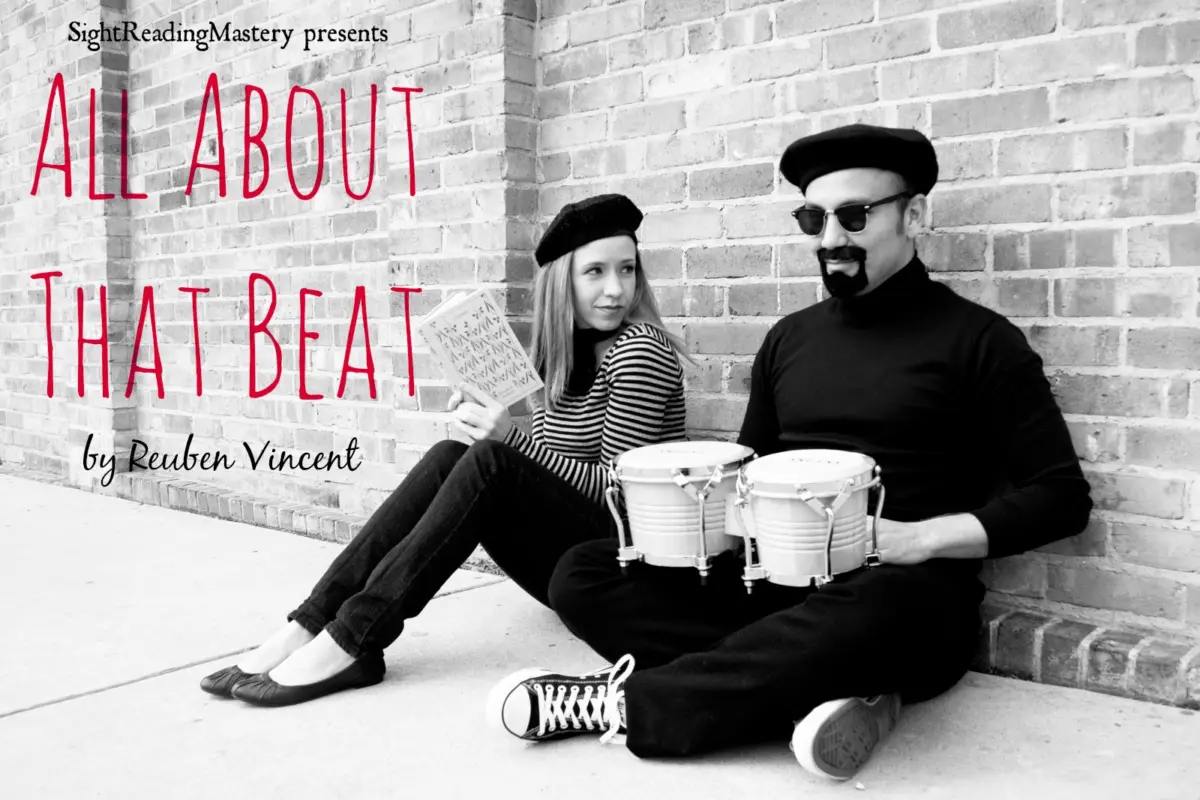
Without a pulse, music ceases to exist as a dynamic, living art form; it devolves into a disjointed, lifeless sequence of sounds. As music educator and composer Reuben Vincent succinctly puts it, “Forget what Meghan Trainor might have you believe: when it comes to sight reading, it’s ‘all about that’ beat!”
This comprehensive report explores the pedagogical mechanics of rhythm-first sight reading, outlines a structured, step-by-step methodology for transforming erratic reading habits into rock-solid internal timing, and examines the broader psychological discipline required to bend one’s natural instincts to the absolute authority of the pulse. By reframing the relationship between rhythm and pitch—making the beat the master and the notes the slaves—musicians can unlock unprecedented levels of fluency, confidence, and musicality.
Detailed Chronology: The Anatomy of a Sight-Reading Breakdown
To understand how to fix the sight-reading crisis, one must first examine the chronological sequence of events that occurs when a musician opens a new score. This breakdown typically follows a predictable, highly problematic timeline.
Phase 1: The Panic Scan (0–5 Seconds)
Upon laying eyes on a new piece of music, the student experiences a minor spike in cognitive load. The brain recognizes unfamiliar visual symbols and initiates a frantic scanning process. During this brief window, the brain prioritizes spatial location over temporal placement. The musician looks at the clef, checks the key signature, and immediately zeroes in on the very first note of the piece.
Phase 2: The Pitch Paralysis (5–15 Seconds)
The performance begins—or attempts to. Because the musician is so deeply invested in getting the pitches right, the temporal engine of the performance sputters and dies. If a note is ledger lines above the staff, the brain pauses to calculate its exact letter name. During this micro-hesitation, the internal metronome stops entirely. The beat is sacrificed on the altar of note accuracy.
Phase 3: The Rubber-Banding Effect (15–30 Seconds)
Realizing they have stalled, the musician rushes to catch up, speeding up through easy passages and slowing down drastically through complex technical hurdles. This rubber-banding tempo destroys any semblance of musical coherence. Accidental stops, frantic self-corrections, and erratic pacing characterize the rest of the performance, leaving the student exhausted, frustrated, and convinced that they are simply "bad at sight reading."
Phase 4: The Pedagogical Intervention
To break this destructive cycle, educators must intervene by enforcing a strict chronological reset. The process must be inverted: the temporal framework must be established before a single pitch is processed, and it must remain inviolable throughout the duration of the exercise, regardless of how many notes are missed.
Supporting Context & Metrics: The Science of Rhythm and Muscle Memory
Why is the human brain so naturally resistant to maintaining a steady beat while reading unfamiliar visual text? Cognitive psychologists and music neuroscientists point to the competing demands placed on working memory during sight reading.
When a musician reads standard notation, the brain must simultaneously process:
- Visual Decoding: Translating graphical symbols into physical motor instructions (e.g., "press this key with this finger").
- Kinesthetic Execution: Engaging the precise muscle groups required to produce the sound on the instrument.
- Temporal Tracking: Maintaining a constant subdivision of time to ensure that events occur at mathematically precise intervals.
Studies in cognitive load theory indicate that when a task introduces high intrinsic complexity—such as decoding complex, unfamiliar notation—the working memory becomes overloaded. When overload occurs, the brain instinctively sheds the most computationally expensive real-time task that does not instantly halt the process. For most musicians, that task is maintaining a strict, unyielding tempo. It feels safer to slow down and get the note right than to stay in time and miss it.
However, empirical evidence from music academies worldwide demonstrates that this safety net is an illusion. Musicians who prioritize the beat over pitch accuracy commit fewer cumulative errors over the course of a phrase. Why? Because keeping a steady pulse forces the brain to chunk information ahead of time, scanning two or three measures into the future rather than staring myopically at a single note.
Step-by-Step Methodology: Reclaiming the Pulse
Transforming sight-reading capabilities requires systematic retraining. Educators recommend a rigorous, three-step framework designed to hardwire the beat into the musician’s physical and mental routine.
[ Step 1: Tap into the beat ] ---> [ Step 2: Count before playing ] ---> [ Step 3: KEEP GOING! ]Step 1: Tap Into the Beat (Externalizing the Pulse)
A reliable sense of internal timing does not happen by accident; it must be cultivated through heightened environmental and physical awareness. Steady beats surround us constantly—from ticking clocks and industrial machinery to the driving percussion of recorded music.
- Active Listening Exercises: The next time you listen to the radio, watch television, or attend a live concert, do not merely hear the music—interact with it. Tap your foot, clap your hands, or nod your head precisely to the macro-beat.
- Embracing the Physicality: Do not be self-conscious if observers raise an eyebrow. Physical movement is the bridge between auditory perception and instrumental execution. If your body cannot physically embody the beat away from your instrument, your fingers certainly will not embody it on the keys or strings.
Step 2: Count Before You Start Playing (The Two-Bar Rule)
Before a single note is played, the performance space must be claimed by the tempo. A method championed by leading pedagogues involves a slow, deliberate two-bar count-in before initiating any sight-reading exercise.
- Analyze the Time Signature: Determine the structural meter of the piece. If the time signature is $4/4$, there are four beats in every measure.
- Establish the Baseline Speed: Count out loud with absolute discipline: “1, 2, 3, 4, 1, 2, 3, 4.”
- Lock the Tempo: The speed at which you count in is the speed at which the entire piece must be played. Never count in faster than you can comfortably execute the hardest upcoming measure.
- Physicalize the Count: Emphasize the downbeat (beat one) vocally and physically by tapping a foot or nodding the head. This anchors the measure divisions in your physical awareness.
Step 3: Keep Going! (The Master-Slave Dynamic)
This is where the psychological battle is won or lost. The golden rule of sight reading is absolute: DO NOT STOP.
- Maintain the Metronomic Flow: Continue counting aloud (unless you are a wind or vocal player whose mouth is occupied with performance). Keep tapping or nodding at the exact same steady pace.
- The Hierarchy of Music: The beat is the master; the notes are the servants. The notes must fit into the rigid, unyielding framework of the rhythmic pulse—not the other way around. If your fingers cannot keep up with the beat, drop the notes, but do not drop the tempo.
Official Statements and Pedagogical Insights
To further contextualize the philosophy of rhythm-first sight reading, we turn to insights from prominent music educators and performers who deal with these challenges daily.

Reuben Vincent, a noted music educator, composer, and author based in North Wales, emphasizes the profound psychological shift required for students to embrace this discipline:
"Yes, learning to count aloud is challenging. Learning to get to the end without correcting mistakes and letting the beat slow down is really tough. It takes time and patience. Such discipline simply goes against our natural human instincts, but it is the single best way to improve your skills as a sight reader! Remember, from now on, you are a slave to the beat!"
According to Vincent and peer pedagogues across the global music education community, the primary hurdle in sight reading is not a lack of theoretical knowledge, but a lack of emotional detachment from micro-mistakes. Students are conditioned to view a wrong note as a failure that requires immediate remediation (stopping to fix it). Sight reading demands the exact opposite mindset: treating mistakes as fleeting historical events while the train of the tempo roars relentlessly forward down the track.
Future Outlook: The Evolution of Sight-Reading Training
As music education continues to evolve in the 21st century, the tools available for mastering rhythmic sight reading are expanding dramatically. Traditional metronomes and printed anthologies are now being augmented by sophisticated digital technologies that reinforce the core tenets of beat-centric practice.
The Rise of Interactive Sight-Reading Platforms
Modern applications and web platforms—such as SightReadingMastery and its digital contemporaries—are incorporating gamified rhythm tracking, real-time audio pitch recognition, and adaptive tempo scaling. These tools are designed to penalize stopping and reward continuous pulse maintenance, effectively automating the tough-love pedagogy traditionally provided by human instructors.
Cognitive Integration in Curricula
Music conservatories and primary school music programs are increasingly shifting their foundational curricula away from note-name identification drills and toward rhythm-first solfège and rhythmic speech. By teaching students to chant rhythms fluently before introducing staff notation, educators are effectively neutralizing the "pitch paralysis" phenomenon before it takes root in young musicians.
The Ultimate Takeaway
Ultimately, transforming your sight-reading abilities is not a matter of overnight magic; it is a profound exercise in behavioral modification. By internalizing steady environmental rhythms, enforcing strict two-bar count-ins, and pledging absolute allegiance to the temporal pulse, musicians can break free from the trap of erratic, stop-and-start reading.
The next time you open a piece of unread music, remember the golden hierarchy: let the notes fall where they may, keep your body locked to the pulse, and proudly submit to being a slave to the beat.