
Executive Overview
In a market where cricket is treated nearly as a national religion, introducing an American sport traditionally viewed as slow-paced, complex, and culturally alien has historically been an uphill battle. Yet, Major League Baseball (MLB) is orchestrating one of the most ambitious international sports-expansion strategies of the decade. By bypassing traditional sports marketing playbooks, MLB is engineering a multi-pronged cultural collision in Mumbai: fusing an abbreviated, high-octane variant of baseball with the unassailable mass appeal of Indian cricket icon Suryakumar Yadav, the global reach of MLB legends, and the magnetic pull of domestic hip-hop royalty, Badshah and KR$NA.
Scheduled for October 24 at the Andheri Sports Complex, the debut of MLBx in India marks a watershed moment. This is not merely an exhibition game; it is a calculated cultural experiment designed to leverage India’s booming live entertainment economy, youth demographics, and surging appetite for alternative sports. Organized in partnership with RISE Worldwide—the sports, lifestyle, and entertainment arm of Mukesh Ambani’s Reliance Industries conglomerate—and ticketed via entertainment giant BookMyShow, the event represents an unprecedented convergence of major league athletics, domestic sporting heroes, and localized youth culture.
This report provides an exhaustive analysis of MLB’s strategic entry into the Indian subcontinent, examining the structural mechanics of MLBx, the localized marketing psychology behind enlisting a cricket superstar, the deliberate integration of contemporary Indian hip-hop, and the broader economic implications for international sports franchises seeking footholds in emerging Asian markets.
Detailed Chronology: The Road to Mumbai’s MLBx Debut
The journey of bringing America’s pastime to the shores of the Arabian Sea did not happen overnight. It is the result of years of quiet infrastructure building, strategic corporate alliances, and a carefully timed public relations rollout designed to maximize cultural resonance.
Laying the Groundwork: The RISE Worldwide Partnership
Long before the official announcements hit the newswires, MLB recognized that breaking into India required a deeply entrenched domestic partner. Enter RISE Worldwide. As a subsidiary of Reliance Industries—a titan holding immense influence across India’s telecommunications, retail, media, and entertainment sectors—RISE provided MLB with the necessary bureaucratic navigation, logistical muscle, and cultural intelligence required to operate at scale in urban India.
Through this alliance, MLB gained immediate access to state-of-the-art venue networks, corporate sponsorship ecosystems, and media distribution channels that would take a foreign league decades to build independently. The partnership was designed to shift MLB from a distant, U.S.-centric television broadcast into an active, tangible, live-experience brand within the Indian market.
July: The Strategic Unveiling of Suryakumar Yadav
The promotional engine truly ignited in July, when MLB executed its masterstroke of localization: appointing Indian cricket star Suryakumar Yadav (affectionately known as ‘SKY’ to millions of fans) as the official brand ambassador for MLB in India.
In a nation where cricket commands over 90% of sports-media consumption and sponsorship revenue, attempting to launch baseball without a bridge-builder would have been futile. Yadav—renowned globally for his explosive 360-degree batting style, fearless T20 leadership, and immense popularity among India’s Gen-Z demographic—provided instant credibility. By aligning baseball with a player synonymous with modern, high-velocity cricket, MLB effectively signaled to the Indian public that baseball is not a boring, archaic foreign pastime, but rather a fast-paced sport that rewards the same reflexes, hand-eye coordination, and tactical ingenuity seen on the cricket pitch.
Expanding the Brand: The Evolution of MLBx Internationally
To make baseball palatable to an audience accustomed to the brisk 20-over structure of T20 cricket, MLB did not bring a traditional nine-inning, three-hour game to Mumbai. Instead, they deployed MLBx.
Over the past three years, MLB has tested this proprietary, truncated 3-on-3 format across 15 high-density urban markets in the United States, as well as international metropolises including London, Seoul, and Mexico City. Designed to strip away the complex statistical history and slow tactical pauses of traditional baseball, MLBx delivers condensed athletic bursts, rapid-fire scoring, and interactive fan engagement. It is structured specifically for urban youth who consume sports via short-form video clips, social media highlights, and live festival environments.
The October Climax: Legends, Rappers, and the Andheri Sports Complex
As the calendar turned toward the October 24 event at Mumbai’s Andheri Sports Complex, organizers layered the athletic competition with heavyweight global and local entertainment. Joining the on-field action will be MLB legends Nick Swisher and Adrián González, who will serve as ambassadors and mentors, bringing authentic World Series pedigree to the pitch.
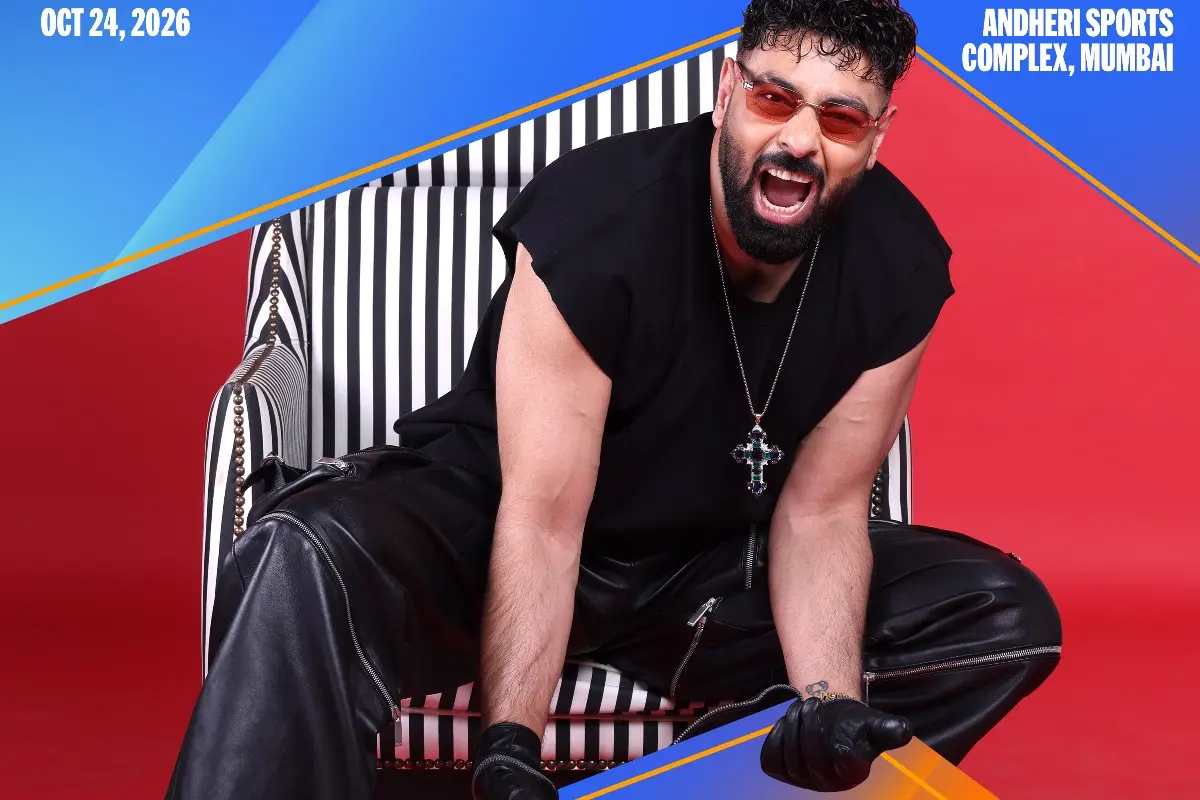
Crucially, recognizing that sports alone may not initially fill a stadium for an unfamiliar game, the organizers orchestrated a high-profile co-headlining music performance. By booking elite Indian rappers Badshah and KR$NA, MLB and its ticketing partner BookMyShow effectively transformed an athletic exhibition into a marquee cultural festival, ensuring that hip-hop devotees and pop-culture enthusiasts would flood the gates alongside sports traditionalists.
Supporting Context & Metrics: The Intersection of Sport, Music, and Youth Culture
To fully appreciate the mechanics of MLB’s strategy in India, one must examine the macroeconomic and cultural trends driving the country’s live entertainment and sports sectors.

The Demographics of New India
India is currently home to the world’s largest youth population, with over 65% of its 1.4 billion citizens under the age of 35. This demographic cohort is characterized by:
- Disposable Income Growth: Urban centers like Mumbai, Delhi, and Bengaluru boast rising middle-to-upper-class populations eager to spend on experiential entertainment, concerts, and live sports.
- Cross-Pollination of Interests: Modern Indian youth do not compartmentalize their interests. A fan of cricket is equally likely to be a consumer of global streetwear, a follower of international basketball (NBA), and a devoted listener of desi hip-hop.
- The Rise of Alternative Sports: While cricket remains supreme, sports like football (English Premier League), kabaddi (Pro Kabaddi League), and combat sports (UFC) have demonstrated that Indian audiences readily embrace non-traditional or newly packaged sporting formats if presented with high production values.
Badshah’s Athletic DNA and Hip-Hop Crossover
The choice of Badshah as a musical anchor is particularly astute given his deep, pre-existing integration into the sports ecosystem. Badshah is not merely a chart-topping commercial artist; he has deliberately positioned himself at the intersection of music, lifestyle, and athletics.
- Basketball Affinity: In 2025, Badshah participated in a high-profile 3v3 celebrity match at the BudX NBA House in Mumbai—an event that notably also featured trailblazing Indian hip-hop artist Hanumankind, whose track Big Dawgs achieved global viral status.
- International Footprint: Earlier this year, Badshah traveled to Los Angeles to compete in the prestigious Ruffles Celebrity Game, rubbing shoulders with global entertainment icons and professional athletes.
By embedding Badshah into the MLBx lineup, organizers are capitalizing on his proven ability to bridge the gap between urban youth culture and competitive sports. Alongside KR$NA—widely respected in the Indian underground and mainstream hip-hop communities for his razor-sharp lyricism and technical prowess—the musical pairing guarantees an audience that spans both commercial pop consumers and hardcore hip-hop purists.
Official Statements and Industry Insights
Key stakeholders behind the Mumbai initiative have emphasized that MLBx is not just an isolated marketing stunt, but a foundational step in long-term audience cultivation.
Anil Makhija, Chief Operating Officer of Live Entertainment and Venues at BookMyShow—the platform managing ticket sales and consumer access for the event—underscored the multi-dimensional nature of the experience:
"MLBx’s first-ever event in India offers audiences a new way to experience a globally celebrated sport while bringing sports and music fans together around a shared live experience."
This sentiment reflects BookMyShow’s broader corporate thesis: that modern live entertainment in India thrives on hybridization. By merging athletic competition with a high-end music festival, the risk of consumer hesitation toward an unfamiliar sport is neutralized by the guaranteed entertainment value of a co-headlined concert.
From MLB’s perspective, international expansion can no longer rely solely on linear television broadcasting rights agreements in foreign time zones. Leagues must establish physical, sensory touchpoints in growth markets. By utilizing short-form competition (MLBx), localized celebrity endorsement (Suryakumar Yadav), and indigenous cultural drivers (Badshah and KR$NA), MLB is constructing a localized localization framework that respects Indian cultural preferences while exporting American sports heritage.
Future Outlook: Can Baseball Find a Permanent Home in India?
As the lights go up at the Andheri Sports Complex on October 24, industry analysts will be watching closely to evaluate whether this hybrid model can yield sustainable dividends. Several critical questions remain for the future of baseball in South Asia:
1. Grassroots Infrastructure and Participation
While a one-day exhibition featuring superstar cricketers and rappers generates massive social media impressions and ticket sales, transitioning temporary curiosity into long-term participation requires grassroots infrastructure. For baseball to take root, investment will be needed in school-level training programs, local coaching clinics, and accessible equipment. RISE Worldwide and MLB will need to outline a post-event roadmap that moves beyond annual promotional pop-ups into sustained community engagement.
2. Media Rights and Digital Consumption
In India, sports survival is dictated by broadcast ubiquity. While linear television still holds massive clout, digital-first streaming platforms (such as JioCinema, Disney+ Hotstar, and FanCode) dominate youth media consumption. Future growth will depend on how effectively MLB packages MLBx highlights for platforms like Instagram Reels, YouTube Shorts, and WhatsApp distribution channels, where viral sports culture is born in India.
3. The Blueprint for Other Global Leagues
If MLBx succeeds in Mumbai, it will serve as a definitive case study for other North American and European sports leagues looking to crack the Indian market. The formula—pairing an abbreviated, high-energy version of a traditional sport with domestic sports heroes and native pop-culture tastemakers—may well become the gold standard for international sports expansion in the 21st century.
Conclusion
Major League Baseball’s venture into India via MLBx is a masterclass in modern sports diplomacy and cultural adaptation. By acknowledging that traditional baseball cannot be copy-pasted into a cricket-obsessed society, MLB has instead built a bridge using the pillars of domestic stardom, urban hip-hop culture, and experiential entertainment. Whether this high-stakes gamble transforms casual concertgoers into lifelong baseball fans remains to be seen, but one thing is certain: the playbook for international sports marketing has officially been rewritten in Mumbai.