
Executive Overview
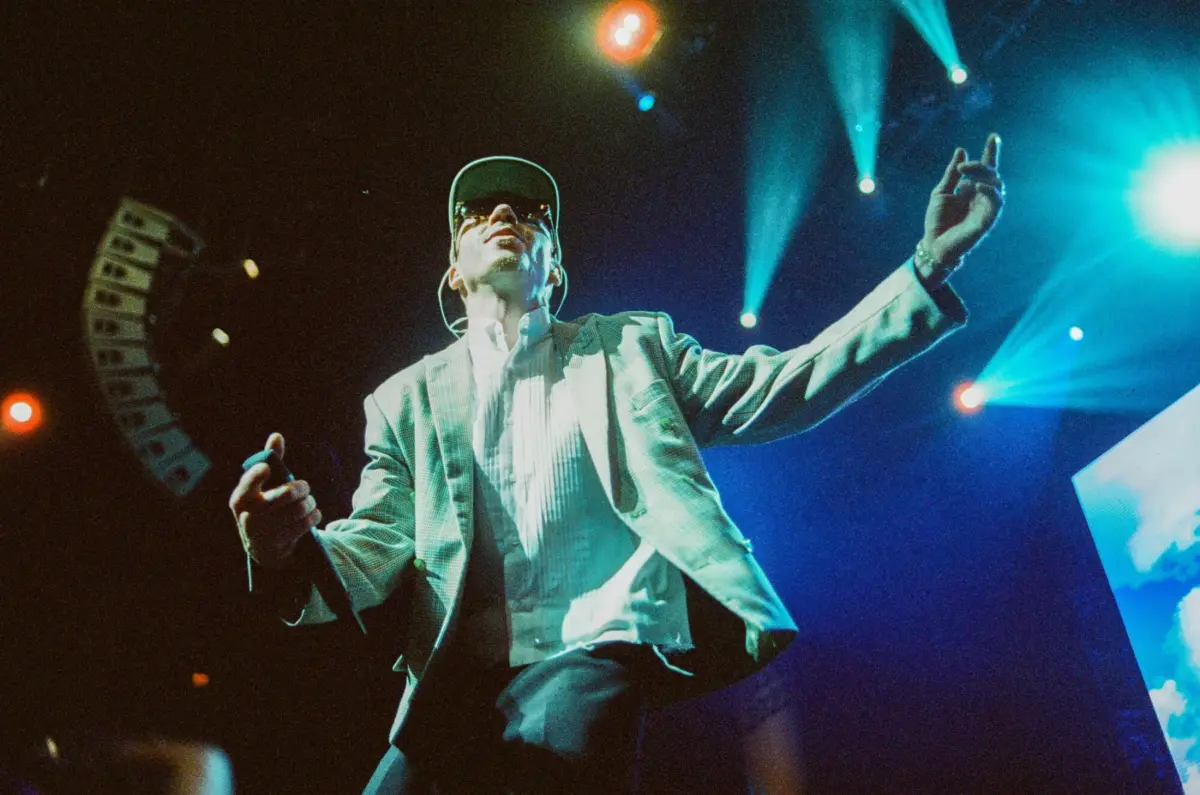
The intersection of mainstream pop music and geopolitical activism reached a volatile flashpoint over the weekend of September 4–5, 2026, during Ed Sheeran’s ongoing Loop tour at New Jersey’s MetLife Stadium. Macklemore, performing as a direct support act for the British pop superstar, used his platform before tens of thousands of concertgoers to issue impassioned "Free Palestine" chants, perform his controversial 2024 protest track "Hind’s Hall," and levy sweeping criticisms against various global governments and domestic agencies.
What followed was an immediate and fierce polarization within the entertainment industry. The Israeli-American Council (IAC) spearheaded a coordinated push to cancel the rapper’s remaining appearances on the tour, while high-profile artists including P!nk and Boy George publicly rebuked the performance. Conversely, Macklemore has refused to retract his statements, framing his onstage commentary as a moral obligation to human rights and equality.
This unfolding controversy highlights a deepening ideological chasm within the global music community, raising fundamental questions about the boundaries of free speech, the responsibilities of opening acts on corporate stadium tours, and the toll of the ongoing Israel-Hamas conflict on Western cultural institutions.
Detailed Chronology
Friday, September 4: The Initial Outburst at MetLife Stadium
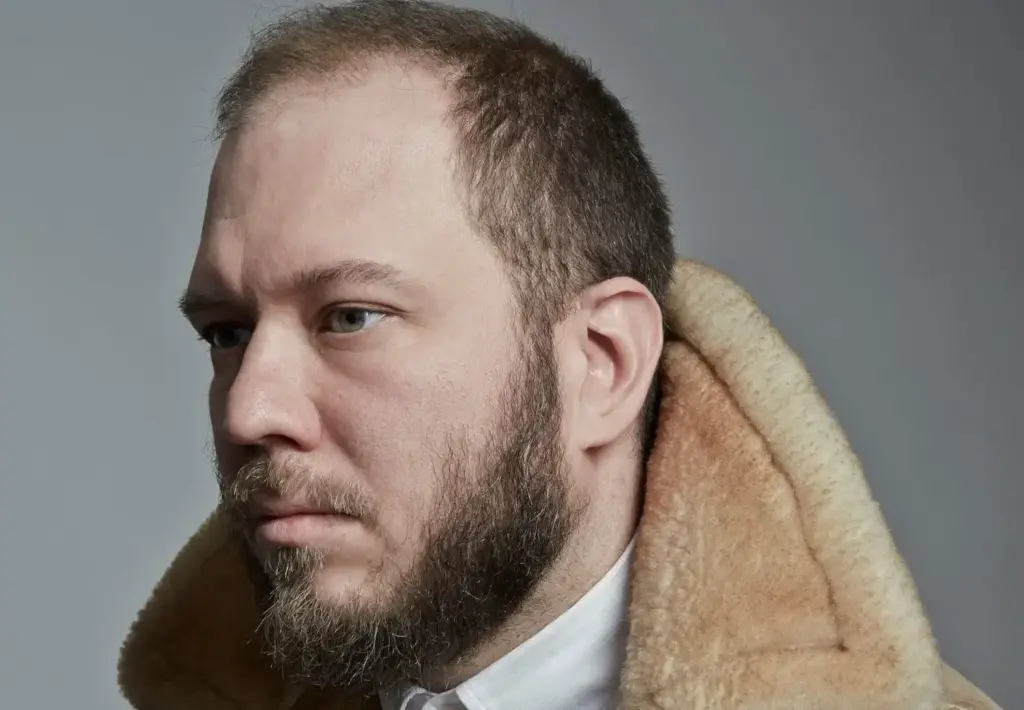
The friction began during the opening night of Ed Sheeran’s two-night residency at MetLife Stadium in East Rutherford, New Jersey. Stepping onto a stage built for an audience of more than 89,000 fans, Macklemore (born Benjamin Haggerty) broke away from standard concert banter to address the humanitarian crisis in the Middle East.
"A big part of the reason why I wanted to do this tour in the first place is so I could stand up in stadiums like this and say two words that are very near and dear to my heart: ‘Free Palestine,’" the 43-year-old rapper told the massive crowd. "I said, ‘Free Palestine!’ I want those words to be loud and clear, so that people from Gaza all the way to the West Bank know that we have not forgotten about them."
During this set, Macklemore performed "Hind’s Hall," a track released in 2024 that protests the Gaza war and aligns itself with pro-Palestinian university campus demonstrations. The song’s title honors five-year-old Palestinian girl Hind Rajab, who was killed by Israeli forces in the Gaza Strip, and references the renaming of a Columbia University building during student-led protests.
Macklemore concluded his Friday remarks by addressing his own internal hesitation: "And if I let that fear I felt on the plane yesterday stop me from speaking my heart in order to keep my own comfort and the audience’s comfort, that is the day I no longer continue to be on stage. So, I say ‘Free Palestine!’ I say, free America, free Cuba to the Congo to Sudan to Iran, and all the people in America who have to live in fear because of this terrorist organization ICE."

Saturday, September 5: Doubling Down and Expanding the Rhetoric
Rather than dialing back his rhetoric following the immediate digital backlash, Macklemore doubled down during his Saturday night set at the same venue. Repeating his pro-Palestinian chants, he sought to clarify his stance regarding the Jewish community, while expanding his critique of international and domestic politics.
"To all of my Jewish brothers and sisters: criticism of Israel, criticism of apartheid, being against genocide in no way is a criticism of you," Macklemore told the MetLife Stadium audience. "My message is for peace; love for all human beings to be treated with dignity, respect, and equality. So I say Free Palestine, I say Free Lebanon, I say Free Cuba, I say Free Congo, Free Sudan, I say Free all people in America living in fear of this terrorist organization ICE. None of us will be free until we are all free."
The Immediate Aftermath and Digital Fallout
Within hours of the weekend performances, digital ecosystems erupted. Advocacy groups mobilized petitions, while fellow artists took to social media to register their approval or disdain. Pop superstar P!nk amplified an Instagram Story originally posted by the watchdog organization StopAntisemitism. Without adding personal commentary, the shared post criticized Macklemore’s performance, echoed calls for fan ticket refunds, and asserted that concertgoers were "owed apologies," according to TMZ.
Concurrently, Culture Club frontman Boy George—who recently released an AI-generated pro-Israel reggae song titled "We Will Dance Again"—entered the fray. He published an AI-generated image of Ed Sheeran wearing a T-shirt that read "Whack Mack No More" and reinforced his position on X (formerly Twitter) by declaring, "I have never been an @EdSheeran fan and nothing has changed."
Supporting Context & Metrics
The Geopolitical Context
Macklemore’s lyrics and speeches directly reference a war that has redefined international relations and humanitarian discourse since late 2023. The ongoing conflict began following Hamas’s invasion of southern Israel on October 7, 2023, an attack that resulted in the deaths of approximately 2,000 Israelis and foreign nationals, alongside the abduction of more than 250 hostages.
In the nearly three years since, Israel’s retaliatory military campaign in the Gaza Strip has decimated regional infrastructure. According to health officials and reports verified by organizations like the Associated Press and PBS Newshour, the Palestinian death toll in Gaza has surpassed 73,000, with nearly 174,000 individuals wounded.
While South Africa and various international bodies have accused Israel of committing genocide in the enclave—allegations that the Israeli government has repeatedly and forcefully denied—pro-Palestinian advocates maintain that cultural figures have a moral imperative to use large platforms to protest the humanitarian toll. Conversely, critics argue that importing polarizing foreign conflicts into secular, commercial entertainment spaces alienates fans who paid to experience music rather than political indoctrination.
Tour Logistics and the Standoff
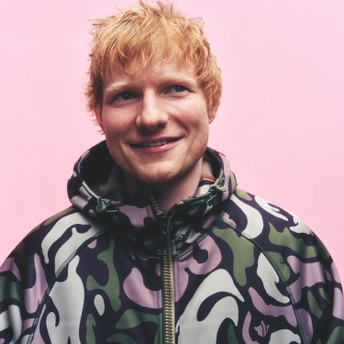
The controversy places Ed Sheeran in an uncomfortable position. As the headliner of the Loop tour, Sheeran’s massive stadium production serves as the commercial vehicle carrying Macklemore across North America. The tour features multiple subsequent stadium dates slated through early November. At press time, Sheeran’s camp has maintained a strict silence; spokespersons for the British singer did not return Billboard’s requests for comment, and Sheeran has not publicly addressed Macklemore’s speeches or the ensuing calls for intervention.
Official Statements and Industry Reactions
The Israeli-American Council’s Petition
The most organized institutional opposition came via the Israeli-American Council (IAC), which launched an urgent petition demanding Macklemore’s immediate removal from the remaining eight U.S. stadium dates he is scheduled to open for Sheeran.
The IAC’s petition statement outlines the core argument against the rapper’s onstage political commentary:
"This was an Ed Sheeran concert — not a political rally, not a protest, and not an activist event. The issue is not whether Macklemore has the right to hold political views. The question is where the line should be drawn when an opening act uses a global concert platform to advance a one-sided political agenda. This becomes even more troubling when the message relies on selective imagery, biased messaging, and disputed claims presented to a massive audience as fact, without context or complexity."
Macklemore’s Public Defense
Macklemore defended his actions via X, sharing footage of his Saturday night speech accompanied by a succinct philosophical defense:
"Wanting all humans to be treated equal should never be controversial."
By framing his actions through the lens of human rights rather than partisan politics, the rapper has attempted to insulate himself from accusations of antisemitism while maintaining solidarity with Palestinian civilians caught in the crossfire of the ongoing war.

Future Outlook
The clash at MetLife Stadium serves as a bellwether for the music industry as it grapples with how artists navigate global conflicts in live performance settings.
-
Tour Continuity: The immediate question centers on whether Ed Sheeran or the tour promoters will bow to pressure from advocacy groups like the IAC. Removing Macklemore from the remaining eight stadium dates would establish a potent precedent regarding the contractual limits of political speech for opening acts, whereas keeping him on the bill risks sustained protests and localized disruptions at future stops.
-
The Weaponization of AI and Social Media: The involvement of legacy artists like Boy George—who utilized AI-generated imagery to mock the tour—and pop heavyweights like P!nk signals that this debate is no longer confined to niche political forums. It is actively dividing the pop aristocracy, potentially creating permanent professional schisms among peers.
-
The Precedent for Live Entertainment: As global tensions persist, concert venues are increasingly becoming proxy battlegrounds for ideological expression. Promoters, booking agents, and stadium executives will likely face mounting pressure to draft clearer guidelines regarding political discourse on stage, balancing an artist’s freedom of expression against the commercial expectations of ticket-holding consumers seeking escapism.
Ultimately, Macklemore’s refusal to back down ensures that the "Free Palestine" chant delivered at MetLife Stadium will echo far beyond the New Jersey tarmac, casting a long shadow over the remainder of the Loop tour and reshaping conversations about the responsibilities of modern pop stardom.