
Executive Overview
For over two decades, the VocalEssence WITNESS School Program has served as a cornerstone of arts-integrated humanities education across Minnesota classrooms. At the heart of this initiative is a unique collaborative partnership between veteran pianist and music director Anita Ruth and celebrated vocal performer T. Mychael Rambo. What began three decades ago as a chance encounter in a downtown Minneapolis cabaret has evolved into a vital educational dynamic that exposes thousands of elementary and secondary students to the history, culture, and enduring legacy of African American Spirituals.
Through hands-on school residencies, interactive workshops, and live performances, Ruth and Rambo have brought the nuanced narrative of enslaved Africans into K-12 environments. By pairing historical contextualization with music, the duo has consistently reached students who face severe emotional, behavioral, and learning challenges. The program demonstrates that music-integrated instruction does not merely supplement standard history curricula; for many non-traditional learners, it serves as a primary vehicle for social-emotional engagement, communication breakthroughs, and cognitive processing.
This report examines the history, methodology, and observed impacts of the VocalEssence WITNESS initiative through the lens of Anita Ruth’s twenty-year tenure as a Teaching Artist, analyzing how artist-in-residence models bridge historical pedagogy with inclusive classroom practice.
Detailed Chronology
[Late 1990s]             [Early 2000s]               [Mid-2000s–Present]          [Ongoing Legacy]
Initial Encounter        Transition to Teaching      Expanded Residencies         Systemic Impact
Ruth & Rambo meet at     Rambo invites Ruth to       Classroom workshops reach     Breakthrough moments
Ruby's Cabaret in        Plymouth Music Series;      thousands; focus on          in special education;
Minneapolis.             onstage pivot to WITNESS.   Spirituals & empowerment.     enduring mentorship.
1. The Genesis: Ruby’s Cabaret (Late 1990s)
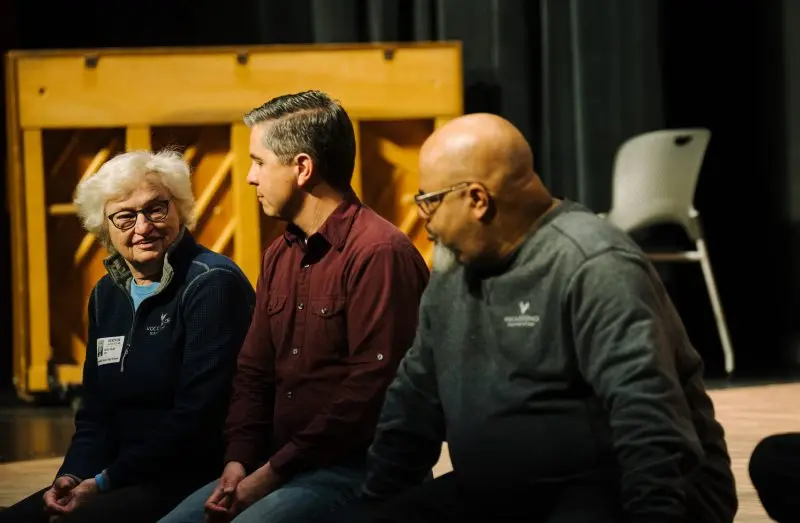
The professional relationship between Anita Ruth and T. Mychael Rambo began approximately thirty years ago at Ruby’s Cabaret, a prominent performance space in downtown Minneapolis. Ruth, an accomplished accompanist and musical director, was hired to play alongside Rambo, whose vocal performance and stage presence were already well known in the local theatrical community. The encounter established a shared artistic rapport grounded in mutual respect and collaborative flexibility.
2. Transition to Educational Outreach: The Plymouth Music Series
Shortly after their initial cabaret work, Rambo invited Ruth to accompany him during a series of school auditorium presentations. These performances were sponsored by the Plymouth Music Series—the regional performing arts organization founded by Philip Brunelle, which was later rebranded as VocalEssence.
During an early performance in front of a student audience, an unscripted moment altered the trajectory of Ruth’s career. Mid-show, Rambo turned to Ruth at the piano and publicly challenged her passive role, asking, "What are you doing behind that piano?"
This dynamic shift encouraged Ruth to move beyond traditional musical accompaniment and take on an active, dialogic role in front of the students. Guided by Rambo’s mentorship, Ruth formally auditioned and joined the organization as a fully accredited Teaching Artist for the newly expanding WITNESS program.
3. Expansion of the VocalEssence WITNESS Program (2000s–Present)
Over the subsequent two decades, Ruth and Rambo refined their joint pedagogical model. Rather than relying solely on large-scale auditorium lectures, the duo embedded themselves directly into classrooms through multi-day residencies.
Their curriculum centered on the musical repertoire of enslaved Africans, explicitly demonstrating how Spirituals functioned as mechanisms of emotional resilience, historical record-keeping, and covert communication along the Underground Railroad. The duo collaborated with an array of regional music educators—including vocal instructors such as Jason Etten—and incorporated compositions by contemporary Black artists and songbuilders like Melanie DeMore.
4. A Key Case Study: The Classroom Breakthrough
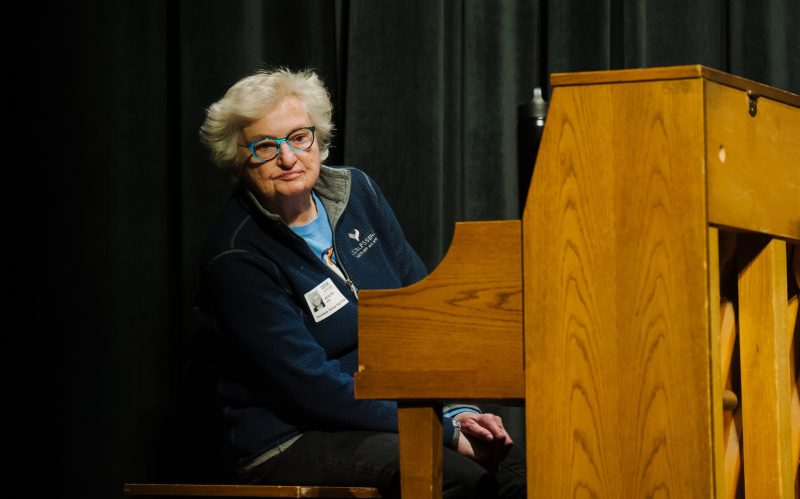
During a residency held in a specialized Minneapolis public school classroom reserved for students with severe emotional and learning disabilities, Ruth and Rambo encountered a fourth-grade female student who exhibited complete selective mutism and behavioral isolation. Classroom educators reported that the child routinely refused to speak, join group circles, or participate in structured activities.
During the session, as the class learned a participatory piece by singer-songwriter Melanie DeMore, the student remained seated near the periphery of the room, looking out the window. Over a ten-minute instructional period, observers noted that the child gradually shifted her physical posture, edging closer to the instrument.
Eventually reaching the piano, the student was invited by Ruth to join her on the bench. The student verbally responded with a clear "Yes!"—marking her first spoken interaction with external visitors in the classroom setting. The child subsequently accepted a tambourine, maintaining rhythm alongside the ensemble for the remainder of the workshop.
Supporting Context & Metrics
Programmatic Framework: VocalEssence WITNESS
The VocalEssence WITNESS program was established to address systemic gaps in the K-12 humanities curriculum regarding the contributions of African American creators, historical figures, and musical traditions. Originally launched under the Plymouth Music Series banner, the program operates on a dual model:
- Teacher Training & Curriculum Guides: Providing educators with standards-aligned materials detailing Black history through choral repertoire.
- Teaching Artist Residencies: Placing professional musicians, dancers, theater artists, and literary practitioners directly into partner schools.
+-----------------------------------------------------------------------------------+
|                    VocalEssence WITNESS Operational Model                         |
+-----------------------------------------------------------------------------------+
|  1. Teacher Curriculum     | Comprehensive historical and musical guidebooks      |
|  2. Artist Residencies     | Multi-week, hands-on classroom instruction          |
|  3. Young People's Concerts| Culminating performances at major regional venues    |
+-----------------------------------------------------------------------------------+
Educational and Neurodevelopmental Impacts
Research in arts-integrated special education highlights several key mechanisms through which residency models like WITNESS influence non-traditional learners:
- Non-Verbal Auditory Pathways: Music engages alternative neural networks compared to standard verbal communication, allowing children with severe emotional distress or language delays to process instruction without the immediate pressure of direct speech.
- Social-Emotional Learning (SEL): Group rhythm work, such as shared percussion and call-and-response singing, fosters lower cortisol responses and promotes cooperative behavior among dysregulated students.
- Culturally Responsive Pedagogy: Framing historical trauma—such as the history of chattel slavery—through the triumphant, artistic expression of Spirituals provides students with complex frameworks for resilience and self-advocacy.
+-----------------------------------------------------------------------------------+
|             Observed SEL Outcomes in Arts-Integrated Residencies                  |
+-----------------------------------------------------------------------------------+
|  Metric Focus              | Observed Student Impact                             |
+----------------------------+------------------------------------------------------+
| Emotional Regulation       | Reduced resistance to group participation           |
| Auditory/Motor Co-location  | Heightened rhythmic synchronized engagement           |
| Verbal Spontaneity         | Increased willingness to communicate voluntarily     |
+-----------------------------------------------------------------------------------+
Official Statements
Perspectives from the Artists and Educators
Reflecting on the evolution of her work over the past twenty years, Anita Ruth emphasized the transformative personal and professional impact of her collaboration with T. Mychael Rambo and the broader VocalEssence organization:
"With T. Mychael’s support and modeling, I became a full-fledged WITNESS artist. This began an amazing collaboration with T. Mychael, the other VocalEssence Teaching Artists, and the VocalEssence organization… Together, we were able to bring the true history of enslaved Africans to the students who needed to know this story. And best of all, we brought the story to hundreds of students through music."
Addressing the unique capacity of the Spirituals repertoire to engage students across diverse learning spectrums, Ruth noted:
"T. Mychael is a wonderful interpreter of the songs created by enslaved Africans—the Spirituals. The effect of the enrichment of African American history that VocalEssence Teaching Artists provide is invaluable. I have gained so much knowledge and important insights from working with these wonderful people."
Recalling the breakthrough moment with the fourth-grade student in the special education setting, Ruth stated:
"We were teaching the kids a wonderful Melanie DeMore song and she was sitting away from the class, looking out the window. As we were teaching, I could see she was edging closer to the group. After ten minutes she had worked her way to the piano. I asked if she wanted to sit with me on the bench, and she said ‘Yes!’ The teacher was amazed at that, but even more so when she picked up a tambourine and started to play with us! It was truly an example of the power of music."
Future Outlook
As urban school districts navigate post-pandemic educational recovery, resource allocation for specialist arts instruction remains a critical area of debate. The long-term sustainability and strategic evolution of residency programs like VocalEssence WITNESS depend on several key factors:
1. Integration of Trauma-Informed Pedagogy
Program developers are increasingly incorporating explicit trauma-informed training into the orientation process for Teaching Artists. By understanding the neurological underpinnings of childhood trauma, artists can better adapt their classroom strategies when working with neurodivergent or emotionally vulnerable populations.
2. Sustainable District Partnerships
To maintain consistent reach across metropolitan public schools, arts organizations are seeking multi-year funding frameworks that combine philanthropic backing, state arts council grants, and district humanities budgets. Stable funding ensures that high-need classrooms receive consistent multi-week residencies rather than isolated, one-time performances.
3. Intergenerational Artist Mentorship
The decades-long success of the Ruth-Rambo partnership highlights the necessity of structured mentorship pipelines within arts organizations. As legacy artists transition into consultative roles, programs are actively recruiting emerging teaching artists to pair with seasoned veterans, ensuring that both performance quality and specialized pedagogical techniques are preserved for future generations of students.