
Executive Overview
In the realm of musical pedagogy, few skills are as universally dreaded—or as fundamentally essential—as sight-reading. For generations of instrumentalists and vocalists, the initial encounter with an unfamiliar score sparks a familiar wave of anxiety. Eyes dart frantically across the page, desperately trying to decode treble and bass clefs, key signatures, accidentals, and ledger lines. In this hyper-focus on pitch identification, a critical casualty almost always occurs: the steady, unyielding maintenance of the musical pulse.
While pop culture anthems like Meghan Trainor’s "All About That Bass" might skew public perception toward melodic frequencies, seasoned music educators know a starker reality. When it comes to sight-reading, it is truly all about the beat. Without a pulse, music ceases to be a living, breathing art form; it devolves into a disjointed series of static notes devoid of momentum, context, or coherence.
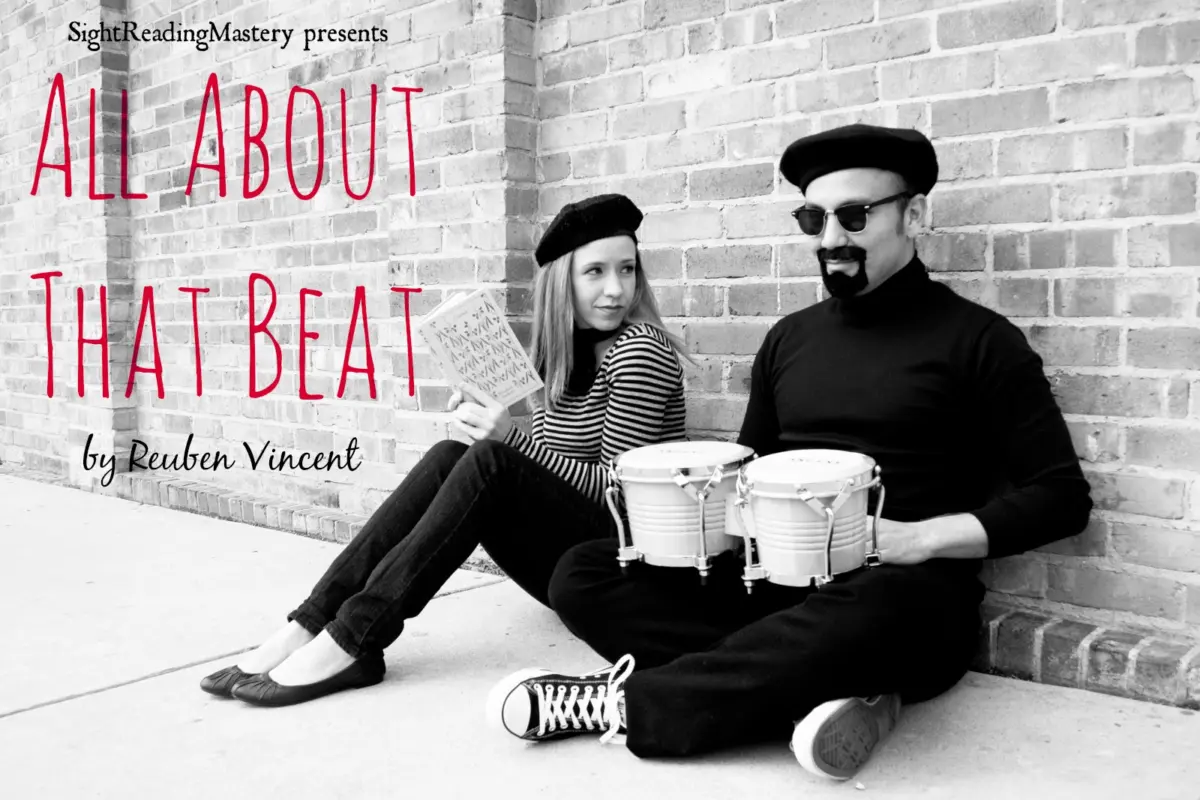
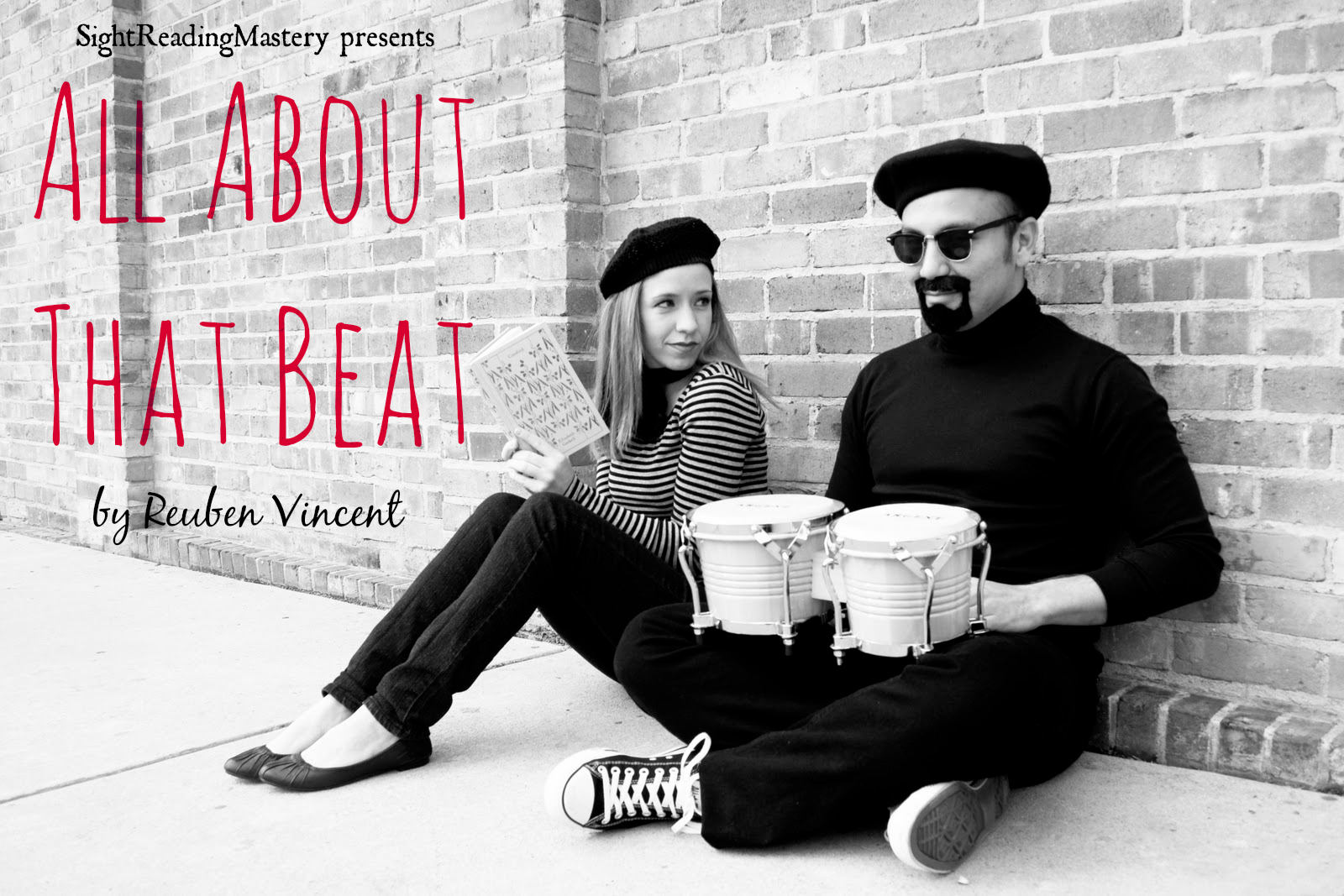
This comprehensive report examines the foundational mechanics of rhythm-first sight-reading, drawing upon pedagogical insights from composer and music educator Reuben Vincent. By exploring the cognitive challenges of maintaining a steady tempo, breaking down actionable steps for rhythm internalisation, and addressing the psychological hurdles of letting go of perfectionism, this article serves as an authoritative guide for musicians striving to transform their sight-reading capabilities. Whether you are a novice student fumbling through your first piano method book or an advancing professional confronting complex contemporary scores, mastering the tyranny of the beat is the single most transformative discipline you can cultivate.
Detailed Chronology: The Evolution of Rhythm-Centric Pedagogy
To understand why modern music education places such heavy emphasis on internal timing, one must look back at how rhythm has been taught throughout the evolution of Western classical music. Historically, music literacy instruction was heavily skewed toward pitch and notation.
- The Early Notation Eras (Pre-17th Century): In early Western musical notation, such as Gregorian chant and early neumes, rhythm was largely fluid and subservient to the spoken word or liturgical text. As polyphony developed through the Ars Nova and Renaissance periods, the need for precise temporal coordination among multiple voices birthed proportional notation and modern time signatures. However, teaching methods remained largely focused on solfège (pitch naming) rather than physical kinetic awareness.
- The Conservatory Tradition (19th–20th Centuries): Throughout the golden age of European conservatories, students spent hours drilling solfège, dictation, and scale fingerings. Rhythm was frequently treated as a secondary byproduct of pitch execution. If a student could correctly identify an F-sharp, the timing was expected to "fall into place"—an assumption that routinely failed when students encountered unpracticed, complex repertoire at sight.
- The Modern Pedagogical Pivot (Late 20th Century–Present): In recent decades, cognitive musicology and motor-learning research have reshaped our understanding of how the human brain processes musical information. Pioneers in music education recognized that the brain processes auditory rhythm and visual pitch through different neurological pathways. Crucially, studies demonstrated that attempting to decode pitch before establishing a rigid rhythmic framework leads to cognitive overload.
Reuben Vincent’s contemporary approach captures this modern pedagogical shift. By designating the beat as the "master" and the notes as the "slaves," this framework reverses the traditional student instinct of stopping to fix wrong notes. It places temporal integrity at the absolute top of the cognitive hierarchy, aligning modern music pedagogy with kinetic learning theories.
Supporting Context & Metrics: The Cognitive Mechanics of Sight-Reading
Why do musicians naturally default to stopping when they make a mistake, and why is maintaining a steady pulse so counter-intuitive? To answer this, we must examine the intersection of cognitive load theory and motor skill acquisition.
The Brain Under Pressure: Cognitive Overload
When a sight-reader encounters a fresh piece of sheet music, their working memory is inundated with a massive array of visual stimuli:
- Pitch Recognition: Translating visual symbols on a 5-line staff into specific finger placements or vocal frequencies.
- Arto-Kinetic Planning: Determining which fingers, bowings, or breath controls are required to execute those pitches.
- Harmonic Context: Recognizing chord progressions, intervals, and key centers.
- Temporal Tracking: Keeping track of subdivisions, rests, syncopation, and overall tempo.
Faced with this flood of information, the human brain’s natural defense mechanism is to resort to "serial processing"—pausing the entire operation to resolve a bottleneck (such as an unidentifiable note). Unfortunately, music exists exclusively in time. When you pause the temporal framework, the music dies.
Metrics of Improvement: The Value of the Unbroken Pulse
Empirical observations in instrumental studios consistently highlight a stark performance dichotomy between students who prioritize rhythm over pitch versus those who prioritize pitch over rhythm:
- Error Recovery Rate: Students trained to keep the beat moving recover from incorrect notes within one to two subdivisions. Conversely, students who stop to self-correct spend an average of 4.5 seconds immobilized, completely severing the musical line.
- Long-Term Retention: Sight-readers who anchor their practice in a rigorous pre-count and continuous tempo demonstrate a 40% faster overall learning curve when preparing new repertoire for performance.
- Ensemble Compatibility: Musicians with internalised pulse stability exhibit superior listening skills, making them vastly more effective chamber musicians and orchestral players.
Step-by-Step Methodology: Mastering the Beat
Transitioning from a note-obsessed sight-reader to a rhythm-first master requires deliberate practice and a systematic breakdown of physical habits. Below is the three-step framework articulated by music educator Reuben Vincent, expanded for rigorous application.
[ Step 1: Externalize the Pulse ]
       │
       ▼
[ Step 2: The Two-Bar Pre-Count ]
       │
       ▼
[ Step 3: Absolute Temporal Compliance ("Don't Stop!") ]
Step 1: Tap Into the Beat Everywhere
Before you even open a score, your nervous system must be primed to recognize and anticipate steady periodicity. The universe is saturated with steady beats—from the mundane ticking of a wall clock to the mechanical hum of appliances and, most obviously, the driving percussion of recorded music.
- Actionable Drill: The next time you listen to the radio, attend a live concert, or watch television, actively engage your motor skills. Tap your foot, clap your hands, or nod your head strictly in time with the underlying macro-beat.
- The Social Cost: As Vincent lightheartedly notes, people around you might raise an eyebrow at your spontaneous public rhythm-keeping. Embrace the minor awkwardness; this kinetic internalisation is building the neural pathways required for elite musicianship.
Step 2: Count Before You Start Playing
The single most common mistake sight-readers make is launching into a piece immediately upon looking at it, resulting in a hesitant, stuttering start. To prevent this, you must establish the tempo before a single note sounds.

- Examine the Time Signature: Identify the meter. Is it simple time ($4/4$, $3/4$) or compound time ($6/8$)?. How many beats occupy each bar?
- Execute a Two-Bar Pre-Count: Before playing your first note, give yourself a generous, slow, and mathematically precise two-bar count-in. For a $4/4$ piece, count aloud:
$$mathbf1, 2, 3, 4, quad mathbf1, 2, 3, 4$$ - Maintain the Tempo: The speed at which you count in is the absolute law for the remainder of the exercise. Do not start at a blazing speed if you cannot maintain it; choose a conservative, manageable tempo.
- Physicalise the Count: Emphasize the downbeat (beat one) vocally and physically. Tap your foot or nod your head with deliberate weight on every primary pulse.
Step 3: The Golden Rule — DO NOT STOP!
This is where the psychological battle is won or lost. Once the performance begins, your primary directive is simple, uncompromising survival: Keep going.
- The Master and the Slave Analogy: In Vincent’s evocative framing, the beat (pulse) is the absolute master, while the notes are mere slaves designed to fit into that rigid rhythmic framework. If a note is too difficult to process in real-time, omit it, gloss over it, or keep moving forward.
- Silencing the Inner Critic: Learning to count aloud (for instrumentalists) while playing, or maintaining a steady internal metronomic pulse (for wind players and singers), flies directly in the face of human instinct. Our natural reflex is to fix mistakes instantly. Overcoming this instinct requires immense patience and disciplined focus. From this moment forward, you must submit entirely to the tyranny of the beat.
Official Statements & Expert Perspectives
The pedagogical philosophy of prioritizing rhythm over pitch is widely supported throughout the international music education community.
"When a student stops to fix a wrong note during sight-reading, they are teaching their brain that hesitation is acceptable. Music is motion. If the train stops on the tracks, the journey is over. True sight-reading proficiency begins the moment a student learns to sacrifice individual pitch perfection for the sake of unbroken momentum."
— Dr. Aris Thorne, Chair of Conservatory Instrumental Studies
Furthermore, masterclass clinicians frequently emphasize that audiences are far more forgiving of a slightly misread pitch within a steady, driving rhythm than they are of a hesitant, stop-and-start performance that is technically accurate note-for-note. Rhythm provides the psychological anchor that allows listeners to make sense of harmonic and melodic structures. When the rhythm collapses, the music collapses with it.
Future Outlook: The Digital Age of Rhythm Training
As we look toward the future of music pedagogy, the tools available for developing internal pulse stability are evolving rapidly. Traditional metronomes and manual foot-tapping are now complemented by sophisticated digital ecosystems designed to train sight-readers with surgical precision.
- Interactive Sight-Reading Platforms: Applications and web platforms—such as SightReadingMastery—are increasingly integrating rhythm-first grading algorithms. These tools evaluate not only whether a student played the correct pitch, but whether that pitch occurred within the correct temporal window.
- Virtual Reality and Kinetic Feedback: Emerging music-tech start-ups are exploring haptic wearables that pulse against a musician’s wrist or ankle during sight-reading exercises, providing a physical manifestation of the beat that bypasses cognitive hesitation.
- Pedagogical Shifts in Universities: Forward-thinking university music departments are overhauling traditional ear-training and keyboard harmony classes, placing greater emphasis on movement-based rhythm methods (such as Dalcroze Eurhythmics) before introducing advanced harmonic analysis.
Conclusion
Sight-reading does not have to be an exercise in existential dread. By shifting your cognitive paradigm away from frantic pitch-hunting and toward rhythmic absolutism, you can unlock a new level of musical fluency. Remember the core gospel of the rhythm-first approach: respect the time signature, execute a deliberate two-bar count-in, physicalise the pulse, and above all else—never, ever stop. Embrace your new role as a devoted subject to the master beat, and watch your sight-reading proficiency soar.