
Executive Overview
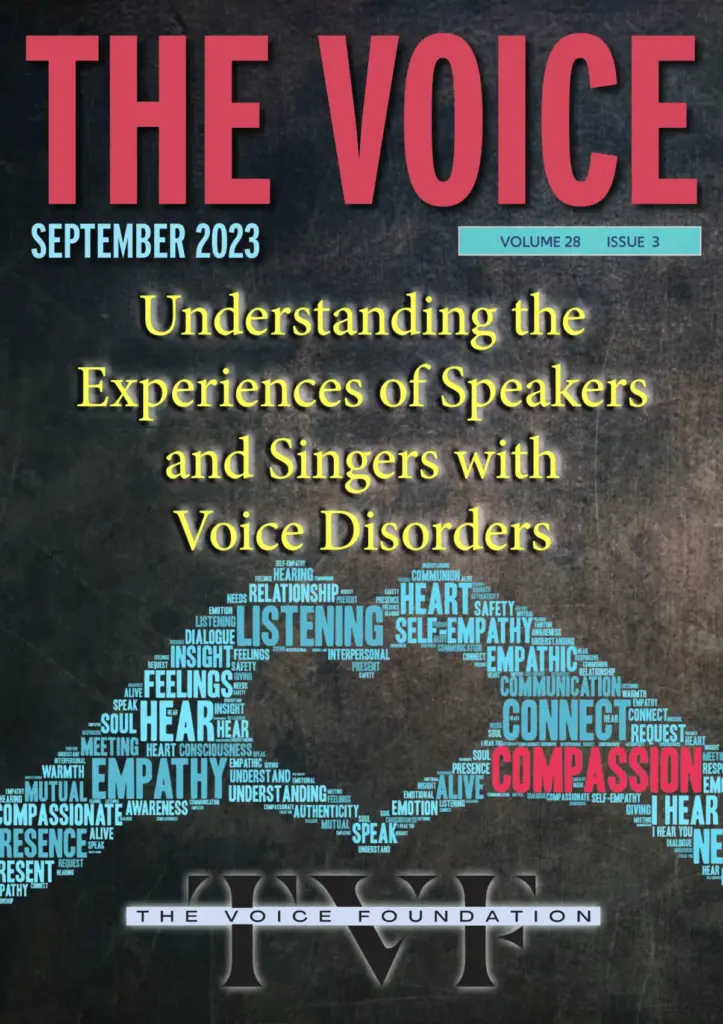
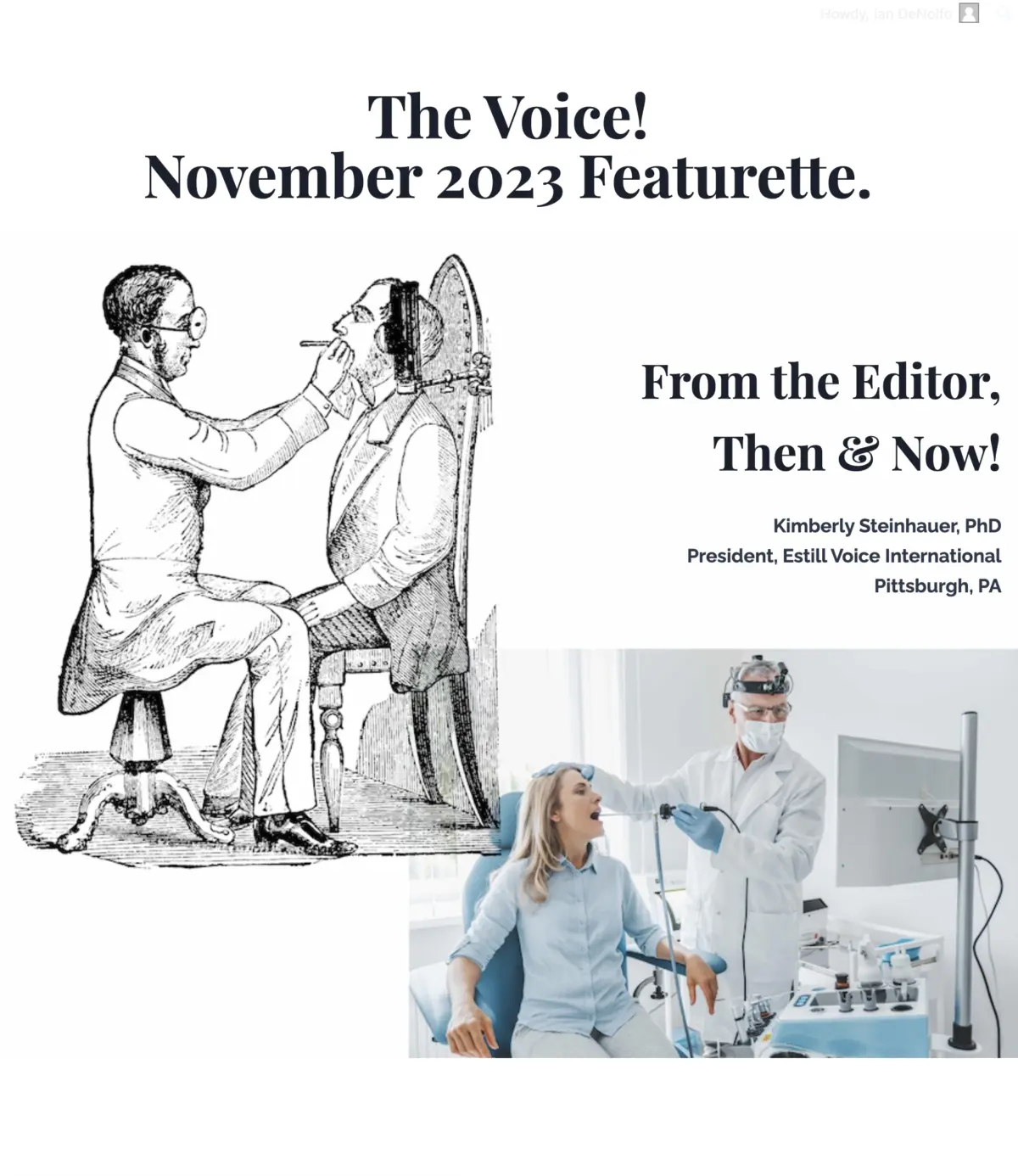
The intersection of vocal science, artistic expression, and institutional dedication forms the bedrock of modern voice pedagogy and medicine. In this special investigative edition of The Voice, guest editor Dr. Kimberly Steinhauer, President of Estill Voice International and a prominent figure based in Pittsburgh, Pennsylvania, presents a retrospective and prospective analysis of the leaders who steer The Voice Foundation. Drawing inspiration from contemporary digital media’s popular “Then & Now” cultural phenomena, this issue transcends simple nostalgia. Instead, it offers a rigorous exploration into the personal motivations, unwavering devotion, and academic drive that sustain the foundational pillars of the global vocal community.
The genesis of this special investigative feature traces back directly to the 2023 Symposium, where the prestigious G. Paul Moore Lecture was delivered by the accomplished Margaret Baroody, M.M. Baroody’s lecture masterfully illuminated the profound institutional knowledge, historical milestones, and legacy of The Voice Foundation. Her insights acted as a catalyst for Dr. Steinhauer, prompting her to formulate an illuminating survey titled “Ten Questions for our Leaders.”
This comprehensive survey probes the minds of the organization’s core executive leadership:
- Ian DeNolfo, Executive Director
- Dr. Michael Johns III, Advisory Board Chairman
- Dr. Robert T. Sataloff, Chairman of the Board
While these leaders are quick to honor the countless dedicated individuals working tirelessly behind the scenes, their responses afford the global community a rare, intimate look at the driving forces behind The Voice Foundation. Through this exploration, readers gain a deeper understanding of how yesterday’s academic aspirations have transformed into today’s institutional triumphs, ensuring that the science and art of the human voice continue to evolve for generations to come.
Detailed Chronology: From Academic Aspirations to Institutional Leadership
To fully appreciate the current state of vocal science and the leadership guiding The Voice Foundation, one must examine the developmental trajectory of those at the helm. The narrative of Then & Now is deeply personal yet universally applicable to anyone devoted to the vocal arts.
The Formative Years: The "Then"
For Dr. Kimberly Steinhauer, the foundational phase of her career was defined by a multidisciplinary quest. As she notes in her editorial reflections, her younger self harbored a distinct trinity of passions: a profound love for music, an intellectual fascination with science, and an intrinsic joy in teaching. During an era when academic specializations often forced rigid silos—demanding that students choose strictly between the arts and the hard sciences—Steinhauer sought a synthesized path.
This journey required pursuing rigorous undergraduate and graduate degrees that bridged the gap between acoustic physics, laryngeal anatomy, and vocal performance. The ambition then was not merely to master a single craft, but to understand the systemic mechanics of how sound is produced, perceived, and perfected. Concurrently, alignment with The Voice Foundation represented an aspirational pinnacle—a community of elite researchers, otolaryngologists, speech-language pathologists, and vocal pedagogues who shared a unified vision of elevating vocal health and science.
The Maturation of a Discipline
Parallel to Steinhauer’s personal academic journey, the broader landscape of vocal science was undergoing a monumental shift. Decades ago, vocal pedagogy relied heavily on imagery, subjective sensation, and anecdotal tradition. However, the establishment of collaborative forums like The Voice Foundation transformed the discipline into an evidence-based science.
Leaders who stepped into organizational roles over the years faced the challenge of translating complex laryngeal stroboscopy, aerodynamic measurements, and spectral analyses into practical, accessible tools for singers, actors, and professional voice users. The "Then" era of many current leaders was marked by pioneering research in labs and clinics, fighting to establish voice care as a legitimate, recognized subspecialty of medicine and the arts.
The Contemporary Reality: The "Now"
Fast-forward to the present day, and the landscape has shifted dramatically. Dr. Steinhauer reflects on her "now" status with a humorous caveat—confessing that her current photograph is, in fact, a bit of a "then" snapshot itself—yet her professional commitment remains undiminished. Today, she operates as a singer, researcher, and educator, embodying the exact multidisciplinary synthesis she dreamed of decades ago.
Furthermore, her role has expanded from an aspiring community member to an active editor and institutional steward. The leaders featured in the "Ten Questions for our Leaders" survey similarly reflect this duality: individuals who have spent decades mastering their respective domains yet remain intensely hands-on in steering The Voice Foundation through the complexities of the 21st century.
Supporting Context & Metrics: The Architecture of Voice Science
To understand the weight of the leadership insights featured in this issue of The Voice, it is essential to contextualize the scale and impact of The Voice Foundation within the broader ecosystem of medical science and artistic training.
The Multidisciplinary Ecosystem
The Voice Foundation is globally recognized as the world’s oldest and leading organization dedicated to all aspects of the voice. Its annual symposia draw international delegations comprising:
- Otolaryngologists (Ear, Nose, and Throat Specialists): Physicians focused on the surgical and medical management of vocal pathologies.
- Speech-Language Pathologists (SLPs): Clinicians specializing in voice rehabilitation and voice therapy.
- Vocal Pedagogues and Teachers of Singing: Professionals bridging the gap between classical/contemporary commercial music training and vocal health.
- Scientists and Researchers: Physicists, engineers, and biologists studying acoustic phonetics, tissue engineering, and laryngeal biomechanics.
+-------------------------------------------------------------------+
|               THE VOICE FOUNDATION ECOSYSTEM                      |
|                                                                   |
|   [Otolaryngology] <---> [Speech-Language Pathology]             |
|          ^                            ^                           |
|          |                            |                           |
|          v                            v                           |
|   [Vocal Pedagogy] <---> [Voice Science & Research]              |
+-------------------------------------------------------------------+
The Impact of Institutional Knowledge
As highlighted by Margaret Baroody’s G. Paul Moore Lecture at the 2023 Symposium, institutional knowledge is the lifeblood of progress. In fields as delicate as voice care, where a micro-fractional change in vocal fold closure can alter a professional career, historical continuity is vital.
Metrics from decades of symposium proceedings indicate exponential growth in peer-reviewed publications originating from Foundation-affiliated researchers. These studies have revolutionized treatments for:
- Vocal fold nodules, polyps, and hemorrhages.
- Neurological voice disorders such as spasmodic dysphonia.
- Age-related voice changes (presbyphonia).
- The physiological demands of Contemporary Commercial Music (CCM) styles (belting, rock, musical theatre).
By capturing the perspectives of current leaders—Ian DeNolfo, Dr. Michael Johns III, and Dr. Robert T. Sataloff—this special issue of The Voice preserves institutional memory, offering a roadmap for future generations of investigators.

Official Statements and Leadership Insights
The centerpiece of Dr. Steinhauer’s editorial vision is the curated survey, “Ten Questions for our Leaders.” While the full survey spans detailed personal and professional inquiries, the core thematic takeaways from the executive leadership illuminate the philosophy driving the organization forward.
Dr. Robert T. Sataloff: Chairman of the Board
As a world-renowned otolaryngologist, conductor, and author, Dr. Robert T. Sataloff has been a towering figure in voice medicine for decades. In his reflections, Dr. Sataloff consistently emphasizes the critical necessity of interdisciplinary collaboration.
"The voice is our primary vehicle for human connection, art, and communication. No single discipline—whether medicine, science, or art—can fully unlock its mysteries in isolation. The true success of The Voice Foundation lies in our historic and ongoing commitment to breaking down silos and bringing diverse minds to the same table."
Dr. Sataloff’s insights remind the global community that while technological tools have advanced exponentially, the core mission remains humanitarian: restoring, preserving, and elevating the human voice.
Dr. Michael Johns III: Advisory Board Chairman
Bringing extensive clinical expertise and academic leadership, Dr. Michael Johns III focuses on the translational aspects of voice science—moving discoveries from the research laboratory directly to the clinical bedside and the teaching studio.
"When we look at where we were ‘then’ versus where we are ‘now,’ the acceleration of diagnostic precision is staggering. High-speed digital imaging, advanced acoustic analysis, and regenerative medicine approaches for vocal fold scarring were once theoretical concepts. Today, they are standard aspirations. Our leadership challenge is to ensure that The Voice Foundation remains the premier platform where these breakthroughs are vetted, shared, and normalized globally."
Ian DeNolfo: Executive Director
As Executive Director, Ian DeNolfo navigates the operational, administrative, and strategic currents of the Foundation. DeNolfo’s perspective underscores the unseen labor that sustains a global non-profit organization.
"While our clinicians and researchers grab headlines with groundbreaking discoveries, the engine of The Voice Foundation is fueled by a passionate community of members, volunteers, and staff who work tirelessly behind the scenes. Seeing our leaders reflect on their journeys—from enthusiastic students to established authorities—provides an inspiring blueprint for anyone entering the field today."
Future Outlook: The Next Horizon of Vocal Research and Education
As The Voice moves past this retrospective milestone, the leadership team is firmly focused on the future. The convergence of emerging technologies and shifting artistic paradigms presents both unprecedented challenges and extraordinary opportunities.
1. Artificial Intelligence and Machine Learning in Voice Analysis
The next decade will undoubtedly see AI play a transformative role in voice assessment. Machine learning algorithms are currently being developed to detect early pathological changes—such as micro-lesions or neurogenic tremors—long before they become apparent to the naked human ear or standard stroboscopy. The Voice Foundation is uniquely positioned to serve as the ethical and scientific standard-bearer for these emerging technologies, ensuring they augment, rather than replace, human clinical judgment.
2. Regenerative Medicine and Vocal Fold Tissue Engineering
One of the most elusive goals in laryngology has been the regeneration of scarred vocal fold lamina propria—the delicate tissue responsible for mucosal wave propagation. Ongoing research into stem cell therapies, bio-scaffolding, and biomaterials promises to revolutionize treatment for patients suffering from severe vocal trauma or post-surgical scarring. Foundation leaders are actively cultivating platforms to showcase these high-stakes biotechnological advancements.
3. Global Accessibility and Education
Historically, specialized voice science and top-tier medical care were concentrated in major metropolitan academic medical centers. However, the post-pandemic normalization of hybrid academic conferencing, digital publishing, and global telemedicine has broken down geographic barriers. The Voice Foundation is expanding its digital footprint, ensuring that educators, singers, and medical professionals in developing regions have access to the same rigorous educational resources as those in established global hubs.
4. Sustaining the Pipeline of Passion
Ultimately, as Dr. Kimberly Steinhauer’s editorial illustrates, the heart of the Foundation beats because of individual passion. The seamless integration of music, science, and teaching that drew early investigators to the field remains the vital spark needed for the future. By intentionally documenting the "Then & Now" trajectories of its leaders, The Voice Foundation ensures that the human story behind the science is never lost.
Conclusion
The special investigative issue of The Voice, curated by Dr. Kimberly Steinhauer, is much more than a collection of biographical reflections. It is a testament to the power of multidisciplinary dedication, institutional memory, and relentless scientific inquiry. By honoring the mentors of the past while aggressively interrogating the challenges of the present, leaders like Dr. Robert T. Sataloff, Dr. Michael Johns III, Ian DeNolfo, and countless others behind the scenes are securing a vibrant future for the vocal arts.
As the boundaries of technology, medicine, and artistry continue to expand, The Voice Foundation remains the indispensable anchor of the global vocal community—proving that whether viewed then through the lens of youthful aspiration or now through the wisdom of established authority, the human voice is endlessly worthy of our finest scientific and artistic devotion.