
Executive Overview
The intersection of vocal science, clinical practice, and patient experience took center stage following the conclusion of the landmark 52nd Annual Symposium of The Voice Foundation in Philadelphia. As members transitioned from the vibrant summer months into the autumn academic season, the organization’s leadership announced a decisive strategic pivot: placing the lived experiences of speakers and singers with voice disorders at the absolute forefront of both clinical research and therapeutic application.
This shift, highlighted in the latest organizational communications and spearheaded by insights from specialized speech-language pathology (SLP) sessions, addresses a historic gap in vocal medicine. For decades, voice care has leaned heavily on objective, physiological measurements—such as stroboscopy, vocal fold oscillation patterns, and aerodynamic metrics. While these clinical tools remain foundational, clinicians and researchers are increasingly recognizing that the quantitative data often fails to capture the profound psychological, professional, and social toll that voice disorders inflict on patients.
By centering the subjective realities of vocal performers, educators, and everyday speakers, The Voice Foundation aims to reshape how clinical care is tailored. This comprehensive report explores the motivations behind this paradigm shift, the dialogues that ignited it at the Philadelphia symposium, the broader implications for the future of voice science, and the actionable frameworks being deployed to align modern medicine with the human stories behind the vocal cords.
Detailed Chronology: From the Philadelphia Symposium to the Autumn Agenda
The momentum driving this current focus on patient experience did not emerge in a vacuum; it represents the culmination of years of progressive dialogue within the vocal science community, crystallized during the landmark gatherings of 2023.
The Spring Kickoff: The 52nd Annual Symposium in Philadelphia
The narrative began in the heart of Philadelphia, where leading laryngologists, speech-language pathologists, vocal pedagogues, and scientists converged for The Voice Foundation’s 52nd Annual Symposium. Known globally as the premier multidisciplinary conference on care of the professional voice, the event serves as a crucible for cutting-edge research.
During one of the conference’s premier speech-language pathology sessions, researchers presented a series of qualitative and mixed-methods studies designed to unpack what it genuinely means to live with a voice disorder. These presentations moved beyond standard clinical outcomes—such as vocal fold closure or jitter and shimmer percentages—to investigate how patients navigate identity loss, career disruption, anxiety, and social isolation when their primary mode of communication is compromised.
The Engagement Phenomenon
What caught the attention of conference organizers and session moderators was the unprecedented level of audience engagement. Rather than passively listening to data presentations, attendees—comprising clinicians, researchers, and vocal artists alike—intervened with deeply inquisitive questions and impassioned commentary.
The collective sentiment in the room pointed to an undeniable professional consensus: the voice care community is experiencing a strong demand to better understand the patient’s perspective. Attendees challenged presenters on how to bridge the chasm between clinical treatment goals and the patient’s personal functional goals. For instance, a clinician might view a patient’s recovery as successful once pathology has cleared, but the patient may still feel profoundly inadequate when attempting to project their voice in a noisy classroom or return to a demanding singing career.
The Late-Summer Synthesis and Newsletter Rollout
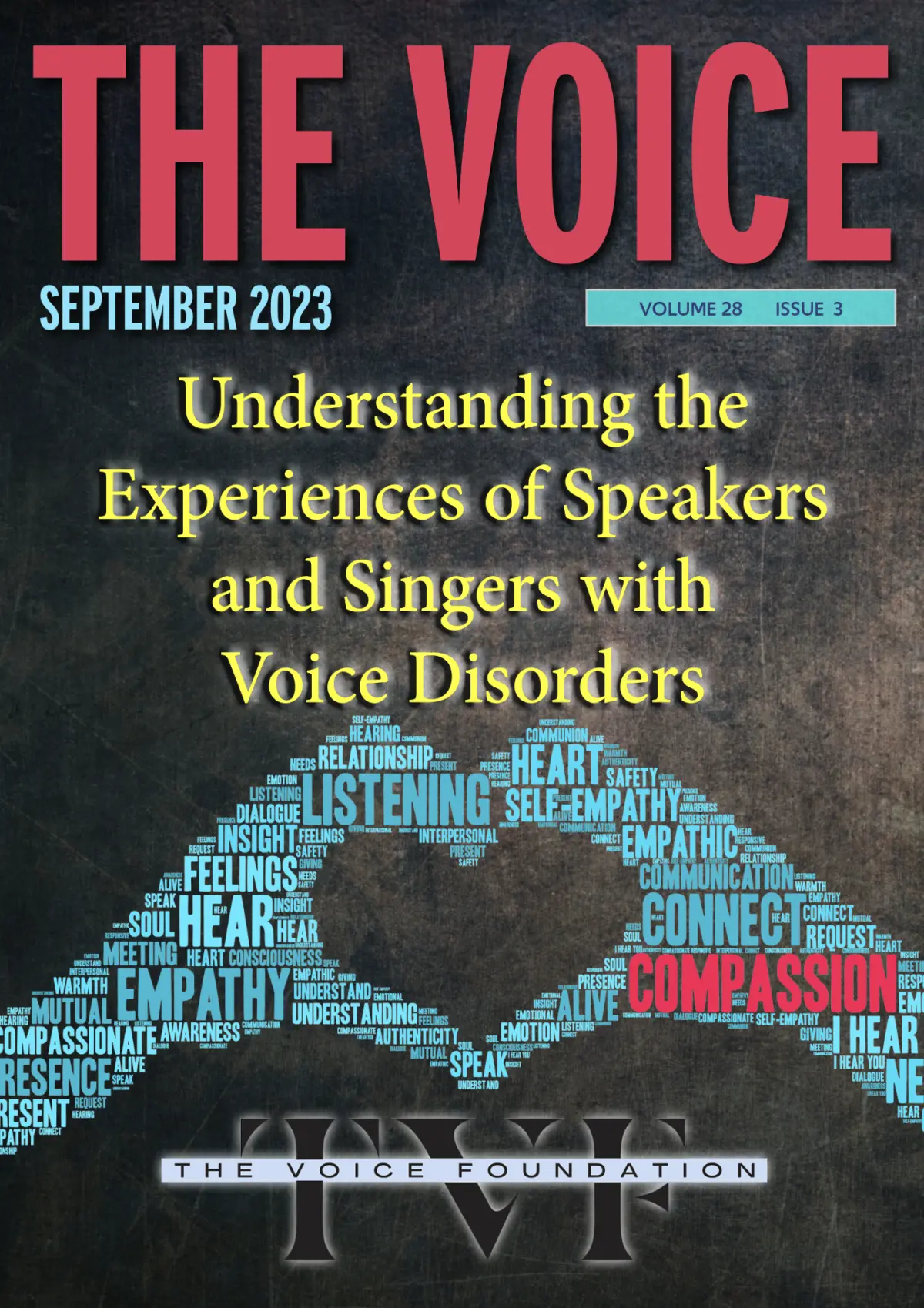
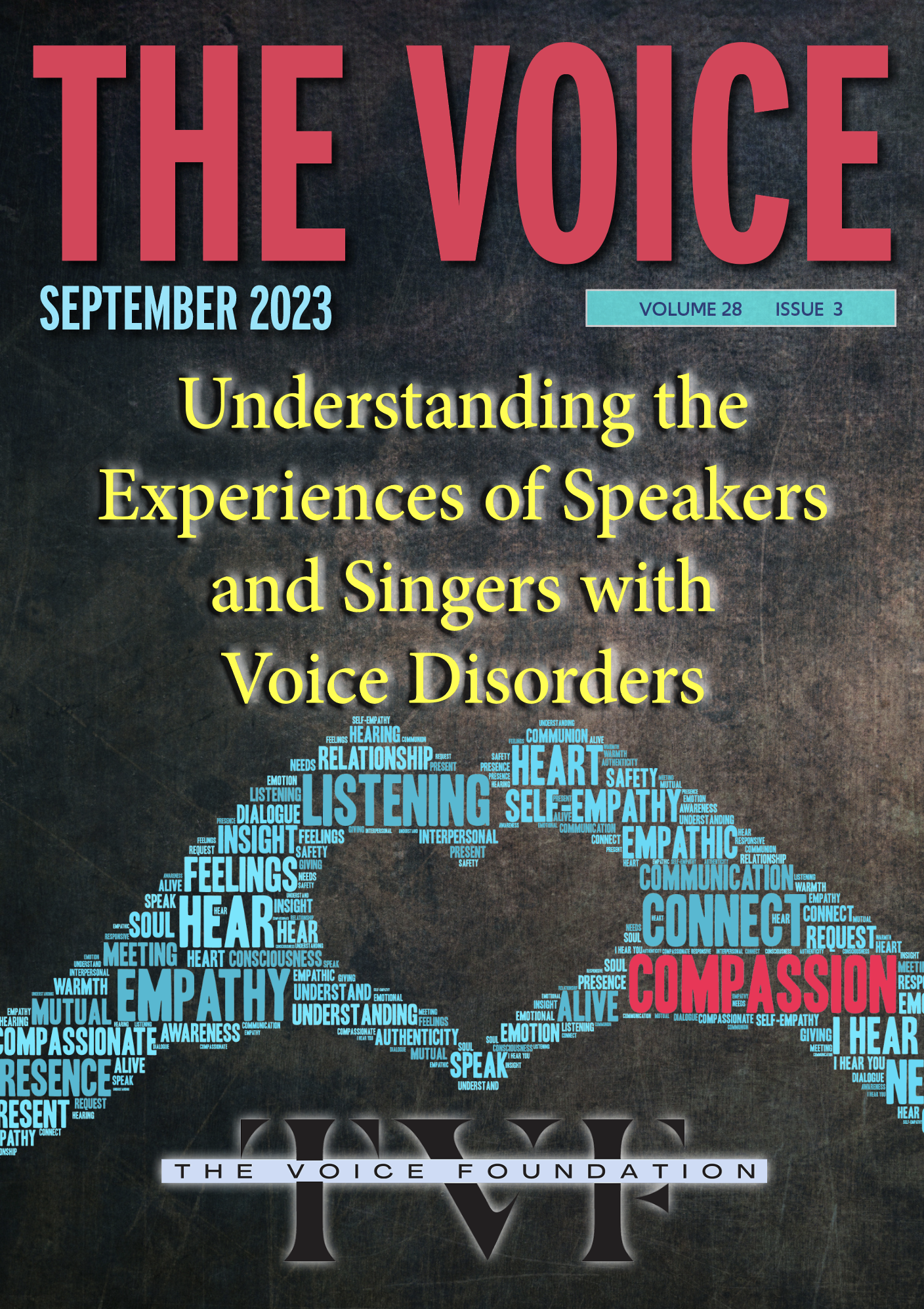
Following the symposium, leadership and editorial boards synthesized the feedback, questions, and qualitative data generated in Philadelphia. Recognizing that these discussions struck a chord with the broader membership, the organization dedicated its subsequent communications—most notably highlighted in the seasonal membership updates—to deep-diving into the patient experience.

This thematic focus was chosen deliberately to serve a dual purpose:
- To motivate future research by highlighting gaps where qualitative data intersects with quantitative diagnostics.
- To inform current clinical practice by encouraging practitioners to immediately integrate patient-reported outcome measures (PROMs) into their day-to-day evaluations.
Supporting Context & Metrics: The Hidden Burden of Voice Disorders
To understand why The Voice Foundation is championing this patient-centric approach, one must examine the profound impact voice disorders have on modern society, alongside the metrics that quantify this burden.
The Scale of Vocal Dysfunction
Voice disorders are far more common than the general public realizes. Epidemiological studies indicate that approximately 3% to 9% of the U.S. population suffers from a voice disorder at any given time. Within specific occupational groups—such as teachers, sales professionals, fitness instructors, call center operators, and, most notably, professional singers—the lifetime prevalence skyrockets. Up to 50% of teachers, for instance, experience voice problems that impact their occupational capacity during their careers.
The Economic and Professional Toll
When a voice fails, livelihoods often fail with it. Unlike musculoskeletal injuries that may allow an individual to continue working with physical accommodations, many modern professions demand verbal communication as an essential, non-negotiable tool.
- Productivity Loss: Voice disorders lead to increased absenteeism and "presenteeism" (working while impaired), costing employers billions annually in lost productivity.
- Career Termination: For elite vocal performers—opera singers, recording artists, and theater actors—a chronic pathology like vocal fold nodules, hemorrhages, or paresis can spell the premature end of a cherished career, leading to severe financial distress.
Psychosocial Dimensions: Beyond the Physical
The metrics that truly underline the need for patient-centered care lie in psychosocial health assessments. Research consistently demonstrates that individuals with chronic dysphonia (impaired voice quality) report levels of anxiety and depression comparable to patients suffering from other chronic, debilitating medical conditions such as cardiac disease or severe hearing loss.
Key psychological themes uncovered in recent qualitative studies include:
- Identity Fragmentation: Many speakers and singers view their voice not merely as an anatomical tool, but as an extension of their very soul and identity. Losing control over it triggers a profound grief response.
- Stigmatization and Misunderstanding: Because voice disorders are often invisible, sufferers frequently face skepticism from employers, friends, and even family members who mistake hoarseness for mere fatigue or minor illness.
- Social Withdrawal: The sheer exhaustion of having to repeat oneself, coupled with anxiety over being understood, often leads individuals to withdraw from social interactions, compounding feelings of isolation.
Official Statements and Perspectives from the Field
The shift toward prioritizing the lived patient experience has drawn enthusiastic support from leading voices within The Voice Foundation community, reflecting a generational evolution in medical humanities and clinical empathy.
Bridging the Science-Humanity Divide
In communications distributed to the global membership, leadership underscored that while technological advancements in laryngeal imaging and regenerative medicine are accelerating at a breakneck pace, technology alone cannot heal a patient.
"We possess extraordinary tools today—lasers, high-speed digital imaging, microscopic surgical precision, and advanced acoustic analysis," noted a senior clinician involved in the symposium curation. "Yet, if our diagnostic metrics do not align with what the patient actually feels, values, and needs in their daily life, our treatment remains incomplete. True clinical excellence demands that we listen just as acutely as we scope."
The Clinical Shift: Integrating PROMs
Speech-language pathologists who presented at the Philadelphia symposium emphasized the vital role of Patient-Reported Outcome Measures (PROMs) such as the Voice Handicap Index (VHI) and the Singing Voice Handicap Index (SVHI).
Proponents of this methodology argue that PROMs should no longer be treated as secondary research tools or optional clinic questionnaires, but rather as core diagnostic pillars. By measuring how a voice problem impacts a patient’s physical, emotional, and social domains, clinicians can co-create rehabilitation plans that respect the individual’s autonomy and personal definitions of success.
Future Outlook: Where Voice Care Goes From Here
As The Voice Foundation looks ahead toward upcoming symposia and research cycles, the mandate to honor the patient experience is expected to catalyze several major developments in the field of laryngology and speech science.
1. Interdisciplinary Research Agendas
Future grant allocations and research initiatives are anticipated to favor projects that successfully merge biomedical engineering with qualitative social sciences. Researchers will be encouraged to study not only how vocal fold tissue heals at a cellular level under various therapeutic regimes, but also how different therapeutic modalities impact the patient’s psychological well-being, return-to-work timeline, and quality of life.
2. Redefining Vocal Pedagogy and Training
The insights gathered from patient narratives are also expected to filter down into vocal training academies and educational institutions. By teaching young singers, actors, and prospective educators about vocal health through the lens of real patient stories, the next generation of artists will be better equipped to recognize early warning signs of vocal fatigue, practice preventive care, and destigmatize seeking professional intervention.
3. Patient-Clinician Partnership Models
Ultimately, the movement championed by The Voice Foundation points toward a collaborative care model. In this framework, the patient transitions from being a passive recipient of medical authority to an active partner in their own rehabilitation journey. By validating the emotional and professional stakes tied to every unique voice, clinicians can deliver care that is not only scientifically rigorous, but profoundly and humanely restorative.
Conclusion
The 52nd Annual Symposium in Philadelphia will be remembered not only for its breakthroughs in laryngeal science, but as a turning point where the voice care community collectively paused to listen to the human stories behind the pathology reports. By placing the speaker and singer at the center of the narrative, The Voice Foundation has set a new benchmark for medical practice—one that proves that healing a voice requires understanding the person behind it.