
Executive Overview
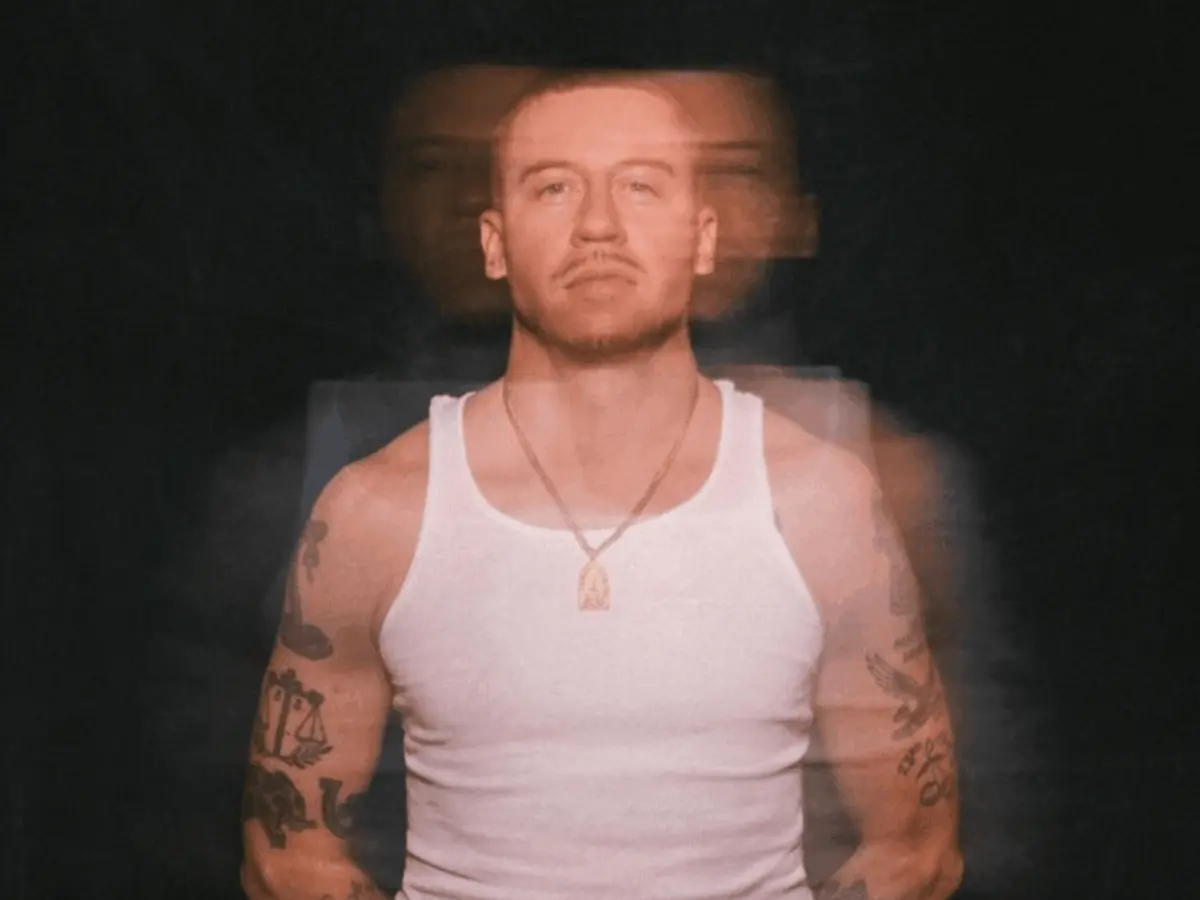
The intersection of mainstream pop music and global geopolitics reached a volatile new flashpoint yesterday when American rapper Macklemore was formally removed as the opening act for Ed Sheeran’s high-profile United States stadium tour. The dismissal followed a coordinated ultimatum delivered by prominent venue owners—spearheaded by New England Patriots owner and Gillette Stadium proprietor Robert Kraft—who stated they would cancel the remaining tour dates at their facilities if Macklemore remained on the bill.
The decision culminates weeks of escalating tensions ignited by Macklemore’s on-stage advocacy for Palestine during Sheeran’s early September concerts at MetLife Stadium in New Jersey. What began as a routine expression of political solidarity has rapidly ballooned into a multifaceted industry crisis, drawing sharp rebukes from high-profile artists like Pink, severe pushback from Jewish community leaders, and fervent counter-statements from the rapper himself.
Beyond the immediate tour fallout, this controversy lays bare deep structural divisions within the global entertainment industry. It forces an urgent reckoning over free expression, the boundaries of political discourse on stage, the fine line between anti-Zionism and antisemitism, and the immense economic leverage held by corporate venue owners over live music touring acts. As Ed Sheeran remains publicly silent, the fallout serves as a watershed moment for how major music tours navigate the treacherous waters of international conflict.
Detailed Chronology: From MetLife Stadium to Tour Dismissal
The sequence of events leading to Macklemore’s removal reveals a rapid acceleration of political, social, and corporate friction.
September 4–5, 2024: The MetLife Stadium Pronouncements
The controversy trace its origins to Ed Sheeran’s two-night stadium run at MetLife Stadium in East Rutherford, New Jersey. Taking the stage as a direct support act, Macklemore used his platform to address the ongoing humanitarian crisis in the Middle East.
On the first night, September 4, the rapper told the packed stadium: "A big part of the reason why I wanted to do this tour in the first place is so I could stand up in stadiums like this and say two words that are very near and dear to my heart: Free Palestine!" He added, "I want those words to be loud and clear, so that people all the way in Gaza to the occupied West Bank know that we have not forgotten about them."
Recognizing the immediate gravity and polarization of his remarks, Macklemore addressed the audience again the following night. In an attempt to clarify his stance, he stated: "To all of my Jewish brothers and sisters, criticism of Israel, criticism of apartheid, being against genocide, it in no way is criticism of you. This message is for peace, love, for all human beings to be treated with dignity, respect, and equality."
Mid-September: The Industry Backlash and Pink’s Intervention
Despite Macklemore’s attempts at clarification, the commentary triggered immediate shockwaves across the American music community. Pop superstar Pink amplified the growing friction when she reposted content critical of the rapper’s remarks.
Faced with instant backlash over her digital endorsement, Pink issued a comprehensive statement via Instagram to clarify her position. She wrote: "He stood in front of a stadium full of music-loving families, with violent images from a war on the screens, dedicated a song to the movement of his choice, and then took the mic to tell all of the Jews in the stadium that it wasn’t about them. You don’t get to decide that for us. That’s what prompted my repost. Not ‘Free Palestine,’ and not anyone’s right to say it. I have never asked for another artist to be silenced and I’m not asking now. I don’t need anyone fired, and I don’t need a refund."
Late September: The Venue Owners’ Ultimatum
Behind closed doors, the political fallout transformed into a severe logistical and financial threat for the tour’s promoters, the Messina Touring Group. According to statements released by Macklemore, major stadium owners across the United States began mobilizing against his continued participation on the tour.
Macklemore detailed these developments in a candid Instagram post, claiming that Robert Kraft played a pivotal role in organizing the opposition. According to the rapper, Ed Sheeran personally informed him of the developments: "Ed told me that Kraft said I would not be allowed to perform in his stadium. Ed also told me that Kraft had rallied some of the other stadium owners and collectively they gave him an ultimatum: if Macklemore stays on the tour, you will not be allowed to play in our venues."
Faced with the prospect of massive financial losses and canceled stadium dates across the country, the tour organizers ultimately relented, leading to Macklemore’s removal from the remaining itinerary.
Official Statements and Counter-Statements
The war of words surrounding the dismissal has highlighted fundamentally incompatible viewpoints regarding political speech, historical context, and accountability within the arts.
Robert Kraft and Venue Ownership Perspective
In a lengthy and pointed statement provided to Variety, Robert Kraft articulated the rationale behind the venue owners’ collective action. Kraft did not frame the decision around the suppression of Palestinian advocacy, but rather around what he characterized as a pattern of deeply offensive rhetoric.
"This decision is not about diminishing the suffering of innocent Palestinians or denying anyone the right to advocate on their behalf. Their pain and loss are real," Kraft stated.
However, he emphasized that "that advocacy should not come at the expense of the Jewish community or obscure the responsibility of Hamas, a United States and globally designated terrorist organisation whose horrific actions have caused immeasurable suffering for Palestinians and Israelis alike."
Kraft explicitly cited material shared during the New Jersey shows, alongside what he termed a "broader history of antisemitic rhetoric and imagery" that has caused severe hurt within the Jewish community.
Macklemore’s Response and Defense of Speech
In his detailed social media response, Macklemore vigorously defended his artistic expression and accused critics of weaponizing accusations of antisemitism to shield political entities from accountability.
"Antisemitism is real. And that is exactly why the word matters too much to be used as a shield against criticism of the Israeli state," Macklemore wrote.
He continued, "When criticizing Israel, opposing Zionism or saying ‘Free Palestine’ gets conflated with hatred of Jewish people, it doesn’t protect Jewish people. It protects Israel from accountability."
Supporting Context, Metrics, and Historical Precedents
To fully understand the velocity of this controversy, industry observers must look beyond the immediate tour dates and examine the historical baggage both the artist and the broader cultural landscape carry.
Historical Controversies Involving Macklemore
Critics of the rapper, including Robert Kraft and Pink, have pointed to prior incidents to contextualize their opposition. Most notably, a 2014 controversy erupted when Macklemore performed at Seattle’s Experience Music Project wearing a costume featuring a prominent fake nose, a fake beard, and a wig—widely condemned at the time as a classic antisemitic caricature. Though Macklemore issued a public apology at the time, insisting the costume was meant to be anonymous and not intentionally Jewish, the incident has resurfaced heavily in current debates.
Furthermore, the release of his song "Hind’s Hall 2"—named in honor of Hind Rajab, a six-year-old Palestinian girl killed in Gaza—drew immense scrutiny for its inclusion of the slogan "from the river to the sea."
- The Critical View: Major advocacy groups and Jewish organizations argue the phrase is an explicit call for the dissolution of the State of Israel and the displacement or ethnic cleansing of its Jewish population.
- The Proponent View: Macklemore and other pro-Palestinian activists maintain that the phrase is a democratic call for freedom, human rights, and equal citizenship for Palestinians living across the entire geographic region.
The Economic Scale of Stadium Tours
The logistical reality of modern stadium tours underscores why venue owners hold immense leverage over concert promoters. A tour of Ed Sheeran’s magnitude represents tens of millions of dollars in ticket sales, merchandise revenue, local hospitality boosts, and corporate sponsorships.
| Tour Metric / Element | Impact / Significance |
|---|---|
| Primary Promoter | Messina Touring Group (MTG) |
| Headline Act | Ed Sheeran (Publicly silent on the controversy as of press time) |
| Initial Flashpoint | MetLife Stadium, New Jersey (Capacity: ~82,500) |
| Key Stakeholder | Robert Kraft (Gillette Stadium owner / New England Patriots CEO) |
| Financial Exposure | Millions in potential venue gate receipts and associated local tourism revenue |
When venue proprietors threaten to lock out a tour, promoters are forced to make immediate, hard-nosed economic calculations. Sidelining a support act is frequently viewed as a necessary sacrifice to preserve the viability of multi-city, multi-million-dollar itineraries.
Future Outlook: Implications for the Live Music Industry
The ousting of Macklemore from Ed Sheeran’s tour marks a critical inflection point for the live music business, leaving several unresolved questions for the future of entertainment:
- The Erosion of Safe Spaces for Political Speech:
As artists increasingly use large-scale platforms to voice opinions on global conflicts—from Ukraine to the Middle East—promoters and venue managers are establishing rigid boundaries. The precedent set by the Kraft-led ultimatum suggests that corporate venue owners will increasingly assert veto power over artist lineups to protect brand safety and community relations. - The Weaponization of Boycotts:
The incident demonstrates that boycott threats are no longer restricted to grassroots consumer campaigns. High-net-worth venue owners and major institutional stakeholders are now willing to leverage physical access to infrastructure to dictate who can and cannot perform on public stages. - The Silence of Headliners:
Ed Sheeran’s continued public silence on the matter highlights the difficult tightrope major headliners must walk. Caught between supporting their chosen collaborators and maintaining commercial relations with massive stadium conglomerates, top-tier artists may increasingly think twice before selecting politically outspoken support acts.
Ultimately, the Macklemore-Sheeran tour controversy underscores a permanent shift in live entertainment. The stage is no longer insulated from the geopolitical realities of the outside world; instead, it has become a frontline battleground where culture, capital, and ideology violently collide.