
Executive Overview
In an era marked by heightened social fragmentation and historical reckoning across urban centers, VocalEssence—one of Minnesota’s premier choral and cultural arts institutions—launched a multi-site community engagement program titled Healing Beats Sessions. Designed as an intergenerational, cross-cultural intervention, the project brought together diverse demographics across the Twin Cities through the lens of West African and Gullah Geechee folk arts traditions.
Led by renowned vocal artist, composer, and cultural ambassador Melanie DeMore, the series engaged five distinct community sites across Minneapolis and St. Paul over several months. The program operated at a crucial intersection of artistic expression, trauma-informed dialogue, and public safety reform. By partnering with organizations as varied as the St. Paul Police Department and two Minneapolis alternative high schools—Longfellow High School and the Minneapolis Academy and Career Center—the initiative sought to bridge long-standing institutional and racial divides through shared rhythm, oral history, and collaborative creation.
Across the five sites, the project directly engaged 210 participants. Each session integrated traditional Gullah stick pounding, communal vocal arrangements, personalized stick decorating, and facilitated cross-generational dialogue. The program culminated in a public presentation where participants were invited to join VocalEssence on stage during its flagship performance, VocalEssence WITNESS: Leading with Love. Comprehensive post-session evaluations indicate that the program achieved significant qualitative success, serving as a replicable model for arts-driven civic reconciliation and emotional healing.
Detailed Chronology
[Phase 1: Institutional Alignment & Outreach]
  ├── Partnership established with St. Paul Police Dept.
  └── Engagement with Minneapolis Alternative High Schools (Longfellow, MACC)

[Phase 2: Multi-Site Workshop Execution]
  ├── 5 sites hosted across Minneapolis & St. Paul
  ├── Total of 210 participants engaged
  └── Core Curriculum: Gullah history, rhythm work, stick decorating, storytelling

[Phase 3: Data Collection & Artistic Culmination]
  ├── Post-session qualitative evaluations & word-cloud modeling
  └── Participant integration into "VocalEssence WITNESS: Leading with Love" stage concert
Institutional Design and Partnership Formation
The conceptual framework for the Healing Beats Sessions originated within VocalEssence’s broader outreach strategy, specifically aligned with its long-running WITNESS program, which celebrates the contributions of African American artists to regional and national culture. Recognizing the lingering community trauma in the Twin Cities following years of social unrest and public safety scrutiny, organizers sought an approach that bypassed traditional conversational formats in favor of embodied, rhythmic engagement.
In late late-stage planning, VocalEssence secured commitments from key municipal and educational stakeholders:
- The St. Paul Police Department: Aiming to foster non-traditional, humanizing interactions between law enforcement personnel and local residents outside the context of emergency response.
- Longfellow High School: A Minneapolis alternative public high school tailored primarily for pregnant and parenting teens, providing a safe harbor for historically underserved young women.
- Minneapolis Academy and Career Center (MACC): An educational institution focused on non-traditional high school completion, career pathways, and individualized student support.
The Workshop Arc: From Silence to Syncopation
Over the course of several months, Melanie DeMore conducted immersive sessions across the five participating sites. Each workshop followed a meticulously structured four-part curriculum designed to build trust, establish bodily rhythm, and lower interpersonal defenses:
- Cultural and Historical Contextualization: DeMore introduced participants to the history of the Gullah Geechee people—descendants of enslaved Africans who inhabited the Sea Islands along the coasts of Georgia, South Carolina, North Carolina, and Florida. She explained how enslaved populations, stripped of traditional African drums by slaveholders fearful of coordinated uprisings, developed stick pounding as a substitute percussion system using broom handles, wooden poles, and hardwood floors.
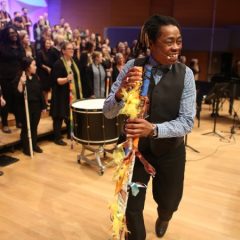
- Rhythmic Embodiment and Stick Pounding: Participants were provided handcrafted wooden pounding sticks. DeMore led the groups through foundational polyrhythms, teaching them how to transform physical impact against the floor into a cohesive, driving beat accompanied by call-and-response vocalizing.
- Visual Customization and Craftsmanship: Moving from kinetic expression to visual artistry, participants engaged in stick decorating workshops. They applied colors, symbols, and personal motifs to their wooden sticks, converting functional rhythmic instruments into personal historical artifacts.
- Facilitated Dialogue and Oral Storytelling: Each session concluded with open-circle discussions. The dynamic of joint physical creation allowed participants—ranging from high school students to active-duty law enforcement officers—to speak openly about grief, community identity, systemic stress, and shared humanity.
The Concert Stage Integration
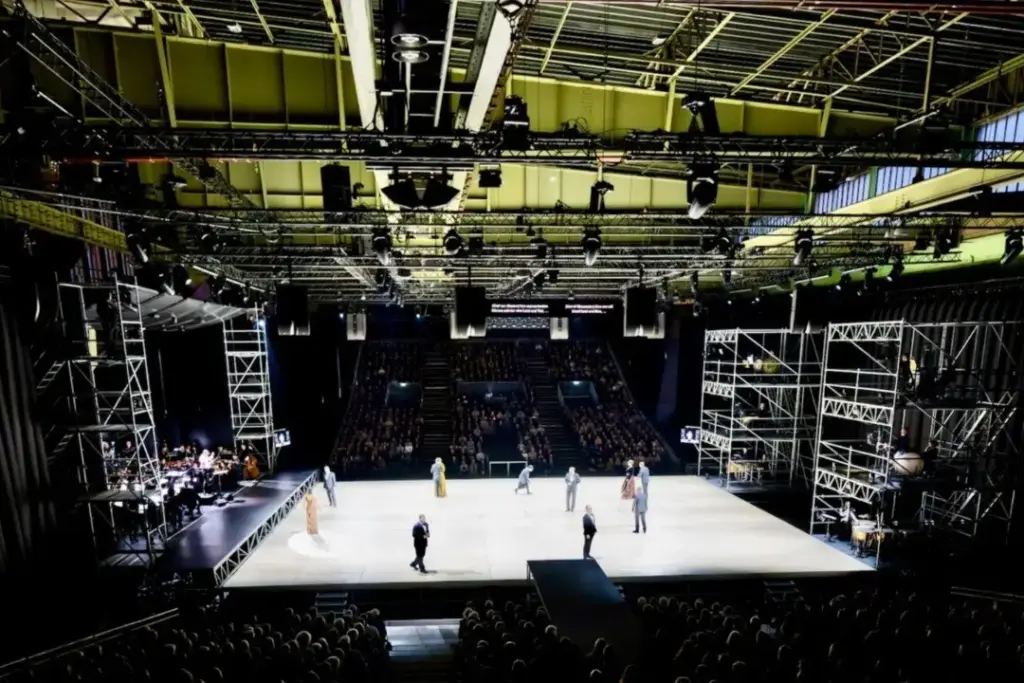
The project moved beyond localized workshops by offering participants a pathway to public performance. Every participant retained ownership of their decorated pounding stick and received an open invitation to perform alongside VocalEssence professional singers. This culminated in a massed artistic presentation at the VocalEssence WITNESS: Leading with Love concert, transforming community participants from audience members into active contributors on a major civic stage.
Supporting Context & Metrics
The Cultural Tradition of Gullah Stick Pounding
To understand the social mechanism of the Healing Beats Sessions, one must examine the cultural mechanics of the Gullah Geechee tradition. Isolated on barrier islands off the southeastern American coast, the Gullah people preserved more of their African linguistic and cultural heritage than almost any other African American community.
       HISTORICAL EVOLUTION OF GULLAH STICK POUNDING

[ West African Drumming Traditions ]
                │
                ▼  (Enslavement & Drum Prohibition)
[ Adaptation: Hardwood Floors + Wooden Poles ]
                │
                ▼  (Preservation in Sea Islands)
[ Sacred & Secular Ring Shouts / Polyrhythmic Art ]
                │
                ▼  (Modern Civic Adaptation)
[ VocalEssence 'Healing Beats' Community Building ]
When enslavers prohibited the use of traditional West African drums, the enslaved population adapted. They utilized the architecture of plantation praise houses—specifically hardwood plank flooring—and wooden walking sticks to replicate complex African time signatures. This practice became central to the "Ring Shout," a sacred music tradition characterized by counterclockwise movement, singing, and rhythmic pounding.
Melanie DeMore, an internationally recognized authority on this art form, leverages stick pounding not merely as a historic reenactment, but as a therapeutic technology. The physical act of striking wood in unison produces rhythmic entrainment—a physiological phenomenon where individuals’ heart rates, brainwaves, and physical movements synchronize, generating a visceral sense of collective safety and shared focus.
Quantitative and Qualitative Program Evaluation
A total of 210 individuals participated across the five sites. To evaluate the efficacy of the initiative, VocalEssence implemented post-session surveys capturing qualitative feedback and emotional resonance.
+--------------------------------------------------------------------+
|               PARTICIPANT FEEDBACK METRIC SUMMARY                  |
+--------------------------------------------------------------------+
|  Total Reach          | 210 Registered Participants                |
|  Site Distribution    | 5 Metro Area Locations (Mpls & St. Paul)   |
|  Core Institutional   | St. Paul Police Dept., Longfellow High,   |
|  Partners             | Minneapolis Academy & Career Center (MACC) |
|  Primary Outgrowth    | Stage Performance in "WITNESS" Concert     |
+--------------------------------------------------------------------+
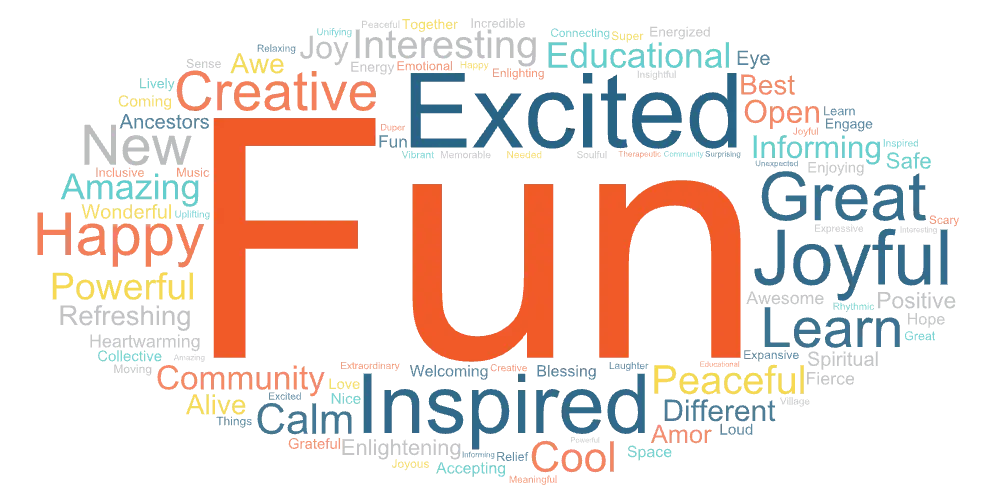
A semantic analysis of the survey responses reveals clear clustering around themes of psychological safety, intergenerational connection, and emotional relief. The qualitative data, compiled into an empirical word-cloud mapping, demonstrated high frequencies for specific descriptors:
                          WORD-FREQUENCY DOMAINS

    COMMUNITY & COHESION          EMOTIONAL & THERAPEUTIC           CULTURAL & ANCESTRAL
  ------------------------      ---------------------------        ----------------------
  • Collective                  • Therapeutic                      • Ancestors
  • Connecting                  • Safe Space                       • Enlightening
  • Unifying                    • Relief                           • Educational
  • Village                     • Peaceful                         • Soulful
  • Inclusive                   • Energized                        • Meaningful
The data shows that despite the radical divergence in participant backgrounds—spanning teenage mothers in alternative education and uniformed police officers—the shared experience consistently produced perceptions of safety, mutual respect, and emotional release.
Official Statements
The qualitative assessments gathered by VocalEssence highlighted the deep impact the workshops had on participants’ worldviews and self-perception within the broader community.
One participant emphasized the crucial need for dedicated, unhurried space to process personal and collective trauma:
"Telling our stories takes time and space."
— Participant, Healing Beats Session
Another attendee reflected on the spiritual and historical continuity fostered by the Gullah stick-pounding ritual, pointing to a sense of shared human responsibility that transcends professional or social divides:
"We are all connected. We are all ancestors."
— Participant, Healing Beats Session
Organizers noted that the presence of Melanie DeMore was pivotal to achieving these outcomes. DeMore’s approach frames community singing and rhythm not as technical artistic displays reserved for trained musicians, but as essential tools for human survival and civic health. By bringing these traditions into non-traditional environments—such as police station meeting rooms and high school classrooms—the program disrupted institutional barriers, allowing participants to interact on equal emotional footing.
Future Outlook
The success of the Healing Beats Sessions offers a compelling blueprint for municipal leaders, arts organizations, and social justice advocates seeking innovative approaches to community cohesion.
                       FUTURE IMPLEMENTATION MATRIX

┌────────────────────────────────────────────────────────────────────────┐
│ Institutional Integration                                              │
│ ├─ Embed rhythmic healing programs in police academy training         │
│ └─ Expand creative arts initiatives in alternative high schools       │
└────────────────────────────────────────────────────────────────────────┘
                                   │
                                   ▼
┌────────────────────────────────────────────────────────────────────────┐
│ Community & Municipal Expansion                                        │
│ ├─ Establish long-term residencies with regional cultural bearers      │
│ └─ Scale cross-sector partnerships across public safety & education   │
└────────────────────────────────────────────────────────────────────────┘- Institutionalizing Arts-Based Public Safety Initiatives: The participation of the St. Paul Police Department demonstrates the feasibility of embedding arts-based engagement into broader public safety strategies. Future iterations could integrate similar cultural workshops into police academy curricula or routine community-policing schedules to sustain trust building over time.
- Expanding Alternative Education Arts Access: The strong response from students at Longfellow High School and MACC highlights the vital role trauma-informed, culturally grounded arts play in non-traditional educational environments. School administrators and arts administrators are exploring ways to turn these periodic workshops into sustained, long-term artist residencies.
- Scalability of the VocalEssence Model: As urban centers nationwide navigate issues of social cohesion, public safety reform, and historical reconciliation, VocalEssence’s model—combining historical artistic traditions, multi-sector institutional partnerships, and public concert integration—presents a scalable framework for using arts as a catalyst for genuine civic healing.