
Executive Overview
The global music industry finds itself at the intersection of live entertainment, corporate real estate, and geopolitical discourse following a high-profile controversy on Ed Sheeran’s ongoing Loop Tour. What began as a routine cancellation has cascaded into a wide-reaching cultural flashpoint, forcing artists, promoters, and venue executives to answer for decisions made at the highest levels of the entertainment business.
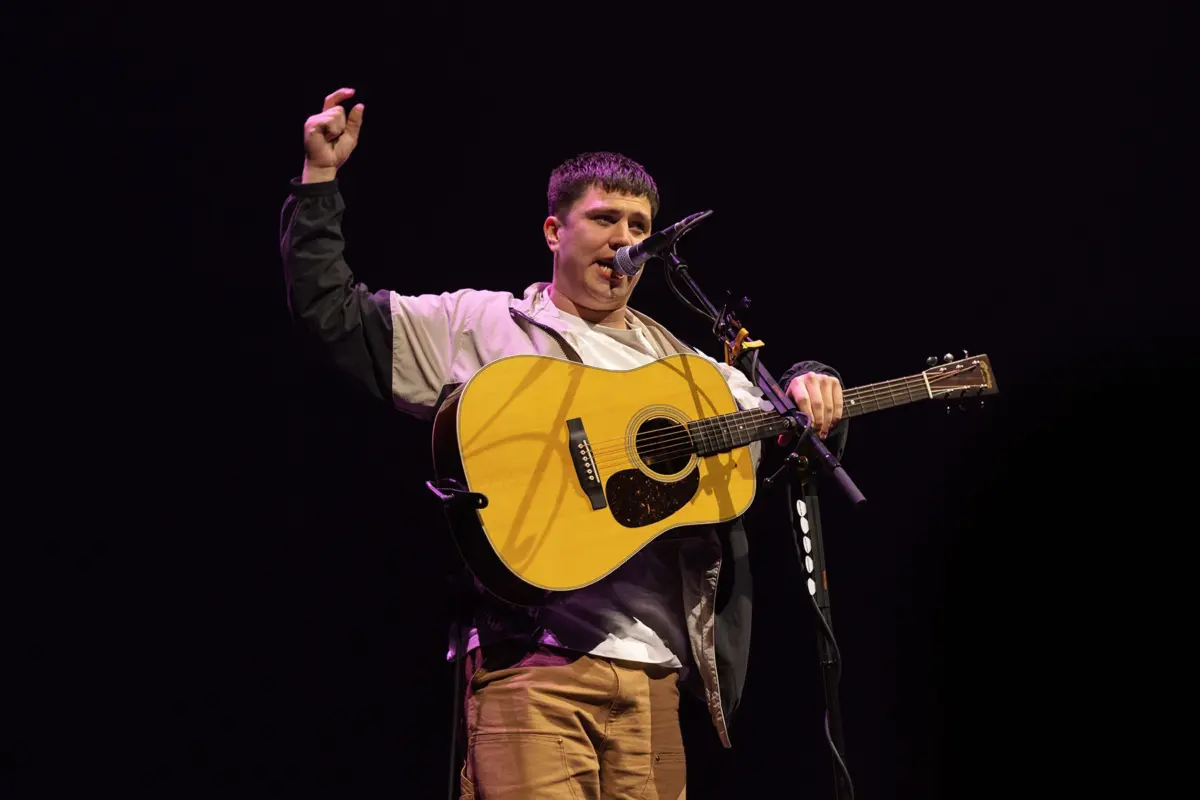
At the center of the recent discourse is Aaron Rowe, one of several supporting acts who chose to withdraw from Sheeran’s tour following the abrupt removal of hip-hop artist Macklemore. Macklemore was cut from eight scheduled appearances after performing his 2024 protest track, "Hind’s Hall," and voicing pro-Palestinian sentiments during two consecutive concerts at MetLife Stadium in New Jersey.
While the removal sparked immediate backlash from fans and fellow musicians who accused the tour of censorship, Rowe has shifted the narrative. In a candid public statement, Rowe argued that public criticism is being misdirected at Ed Sheeran, pointing instead toward the corporate power structures governing major concert venues—specifically citing Robert Kraft and the Kraft Group, owners of Gillette Stadium.
This deep-dive investigative report examines the chronology of the Loop Tour crisis, the mechanics of corporate venue pressure, the ripple effects across the tour’s lineup, and the broader implications for free expression within the live music ecosystem.
Detailed Chronology: From MetLife Stadium to the Tour’s Resumption
The crisis unfolded rapidly across a series of high-stakes events in September 2025, transforming a major international tour into a battleground over political speech and corporate influence.
September 4–5, 2025: The Catalyst at MetLife Stadium
During Ed Sheeran’s high-profile, two-night stint at MetLife Stadium in East Rutherford, New Jersey, supporting artist Macklemore took the stage and utilized his platform to address the ongoing conflict in the Middle East. Performing his politically charged 2024 single, "Hind’s Hall"—a song written in solidarity with student protests and Palestinian civilians—Macklemore explicitly voiced pro-Palestinian views.
While the live audience largely received the performance with enthusiasm, the fallout behind the scenes was immediate. The intersection of mainstream pop concerts and direct political messaging triggered swift internal discussions among tour promoters, venue operators, and management teams.
Mid-September 2025: The Ouster and Promoter Explanations
Shortly following the New Jersey performances, the Messina Touring Group and tour organizers announced that Macklemore had been dropped from his remaining eight scheduled appearances on the Loop Tour. The decision sent shockwaves through the industry, with critics immediately questioning whether the artist was being penalized for expressing political views.
As public pressure mounted, venue operators reportedly warned tour organizers that upcoming concerts could not proceed if Macklemore remained on the bill. Ed Sheeran subsequently addressed the situation, clarifying that the decision to remove Macklemore originated from the tour’s promoters and venue stakeholders rather than from himself. Sheeran stated that he personally engaged with venues, promoters, and various activists in a frantic bid to find a compromise, ultimately admitting he was powerless to overrule the venue-level bans.
September 18, 2025: Aaron Rowe Breaks the Silence
With the tour’s reputation hanging in the balance, supporting artist Aaron Rowe took to Instagram on Friday, September 18, to address the mounting controversy. Rather than piling onto the criticism directed at the headliner, Rowe urged the public to look past the marquee name and examine the corporate entities pulling the strings behind the scenes.
"I’m gonna be honest. I think you are all focusing on the wrong person here," Rowe stated in his video address. "All I keep hearing is Ed Sheeran this, Ed Sheeran that — when you really should be focusing on the likes of Robert Kraft."

Rowe acknowledged that while Sheeran’s public handling of the crisis "could have been a lot better," the headliner’s team was operating under extreme panic. Crucially, Rowe added: "I haven’t had a chance to talk to Ed too much, but I fully believe he knows that was a mistake."
Supporting Context & Metrics: The Anatomy of a Boycott
The fallout from Macklemore’s removal extended far beyond a single tour date, resulting in a systemic unraveling of the Loop Tour’s supporting lineup and drawing multi-million-dollar financial pledges into the public eye.
The Artists’ Exodus
The decision to drop Macklemore prompted an unprecedented wave of solidarity boycotts across the tour’s roster:
- Aaron Rowe, Lukas Graham, and FINNEAS officially withdrew from their scheduled support slots.
- Beoga, the celebrated Irish folk band that frequently serves as part of Sheeran’s touring ensemble, pulled out of their role entirely.
Explaining his departure earlier in the week, Rowe noted that he could not "stand by and allow billionaires to use their position of power to silence" artists speaking out in defense of Palestinian human rights.
Venue Power and the Kraft Connection
The scrutiny directed at Robert Kraft stems from the ownership structure of Gillette Stadium in Foxborough, Massachusetts, where Macklemore had been slated to support Sheeran on September 25 and 26. The Kraft Group—led by billionaire businessman Robert Kraft—exercised ultimate authority over the venue’s booking policies. Reports from the Messina Touring Group confirmed that venue leadership issued explicit warnings that the stadium gates would remain closed to the tour if Macklemore was permitted to perform.
Financial Commitments and Philanthropy
As the cultural debate intensified, the financial stakes scaled correspondingly. Macklemore publicly pledged to donate $1 million of his net earnings from the tour to organizations providing humanitarian aid to Palestinians. Furthermore, the hip-hop artist publicly challenged Robert Kraft to match the contribution.
In response to the public challenge and subsequent requests from Ed Sheeran himself, Kraft announced a $2 million philanthropic commitment directed toward humanitarian relief efforts, bringing a tangible financial outcome to an otherwise contentious ideological dispute.
Official Statements & Industry Perspectives
The Loop Tour controversy has exposed deep divisions regarding the responsibilities of headlining acts, the rights of supporting artists, and the degree of control corporate venue owners should wield over live performance content.
- Ed Sheeran’s Stance: Facing simultaneous pressure from activists, fans, and industry insiders, Sheeran maintained that his hands were tied by logistical and contractual realities. By emphasizing that the directive came from promoters and venue executives, Sheeran attempted to distance his personal artistic vision from the corporate censorship allegations.
- Aaron Rowe’s Defense: Rowe’s intervention represents a nuanced critique within the artistic community. While standing firm on his decision to walk away from the tour in defense of free speech, Rowe directed his fiercest criticism upward—targeting corporate venue monopolies rather than his fellow artist. His belief that Sheeran privately regrets the handling of the situation highlights the internal friction faced by major artists navigating corporate live music infrastructure.
- Promoter and Venue Realities: Representatives for the Messina Touring Group defended their operational decisions by citing public safety, venue contract compliance, and the immense financial risks associated with large-scale stadium disruptions. However, critics argue that yielding to political pressure sets a dangerous precedent for artistic freedom on the global stage.
Future Outlook: The Loop Tour Resumes and Industry Ramifications
As the dust begins to settle, the Loop Tour is scheduled to resume operations on Saturday night at Lincoln Financial Field in Philadelphia. Promoters confirmed that no opening acts are currently listed on the bill for the Philadelphia date, leaving a starkly altered stage production compared to the tour’s initial launch.
Long-Term Implications for Live Music
The events surrounding Ed Sheeran’s Loop Tour are likely to have lasting repercussions across the live entertainment industry:
- Contractual Protections for Artists: Artists and management agencies are expected to seek clearer contractual guardrails regarding venue censorship and political expression, ensuring that supporting acts cannot be arbitrarily removed based on ideological disagreements.
- Scrutiny of Venue Monopolies: The prominent naming of figures like Robert Kraft in public discourse highlights a growing public awareness of the corporate conglomerates that control major American stadiums, potentially sparking increased activism centered around venue booking practices.
- The Intersection of Music and Activism: With performers increasingly utilizing major platforms to address global humanitarian issues, promoters and venues will face continuous pressure to balance commercial interests with the fundamental principles of free artistic expression.
Ultimately, Aaron Rowe’s defense of Ed Sheeran reframes the controversy not as a localized dispute between musicians, but as a systemic clash between creative freedom and corporate control—a debate that will undoubtedly shape the live music landscape for years to come.