
Executive Overview
In the contemporary landscape of independent music, few artists document the friction between physical vulnerability and creative endurance quite as candidly as Monds-Watson. With the release of "Transmitter Park," the critically acclaimed songwriter delivers the third preview of their eagerly awaited upcoming studio album, Decembers. Following the atmospheric breadcrumbs laid down by previous singles "Death Valley Fridge Magnet" and the project’s evocative title track, "Transmitter Park" serves as both a geographic marker and an emotional watershed.
The upcoming album acts as a sprawling sonic travelogue, tracing Monds-Watson’s intricate trajectories from their foundational home turf in Derry, Ireland, across the vast, lonely asphalt expanses of the United States. Yet, while the record is outwardly characterized by movement, transit, and cross-continental displacement, its beating heart is resolutely internal. "Transmitter Park" zeroes in on a specific, fragile juncture in New York City—a moment of profound catharsis where years of accumulated physical strain, vocal trauma, and autoimmune complications finally broke past the artist’s defenses.
Far from a standard promotional single release, "Transmitter Park" represents a crucial turning point in Monds-Watson’s career and personal life. For years, the songwriter’s survival mechanism relied on an unyielding, almost stubborn resilience—a deliberate hardening against adversity designed to weather any storm. However, as chronicled in the track’s genesis, true healing often requires the terrifying surrender of control. This comprehensive report examines the anatomy of "Transmitter Park," exploring the geographic inspiration behind the music, the grueling health battles that preceded its creation, and the broader thematic architecture of the forthcoming Decembers album.
Detailed Chronology: From the Streets of Brooklyn to the Recording Studio
To understand the weight of "Transmitter Park," one must retrace the precise sequence of events that birthed the composition. The narrative begins in the bustling, sensory-overload environment of New York City, where Monds-Watson found themselves adrift amid an excess of solitude.
The New York Interlude
City life can act as a magnifying glass for internal anxieties, amplifying feelings of displacement. For Monds-Watson, navigating the sprawling grid of Brooklyn and Manhattan required establishing micro-objectives—tactical coping mechanisms designed to combat the paralyzing weight of urban anonymity.
"I was in New York with a lot of time to myself," Monds-Watson recalls, detailing the psychological landscape that preceded the song’s creation. "I love setting a task when I’m lost in a city. My plan was to go to Levain and get a cookie."
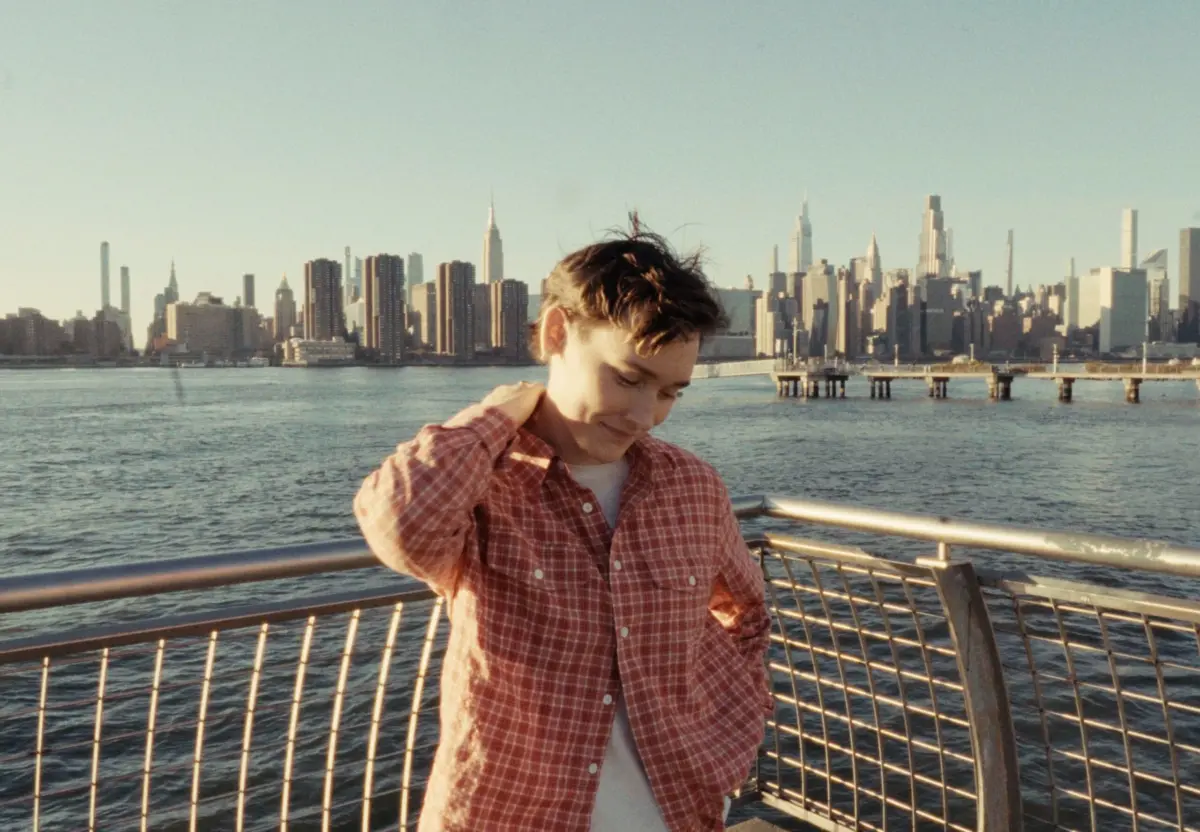
What began as a simple culinary quest transformed into a profound existential encounter. Following the routine errand, the songwriter wandered toward the edge of the East River, eventually arriving at Transmitter Park—a waterfront green space nestled in the Greenpoint neighborhood of Brooklyn—for the very first time.
The Breaking Point at Transmitter Park
Arriving at the park after nightfall, Monds-Watson was met with a cinematic vista: the glittering, imposing silhouette of the Manhattan skyline illuminated across the dark water. In that stillness, separated from the comforting familiarity of Derry and insulated by the anonymity of the metropolis, the emotional dam finally broke.
"It was nighttime, and looking out at Manhattan I found myself crying, and I just let myself cry."
For an artist whose entire life had been defined by emotional armor and functional endurance, this unprompted release of grief was unprecedented. It was not a cry born of immediate despair, but rather the delayed shockwave of a body and mind processing years of unrelenting pressure.
"This song is about me trying to make sense of that," Monds-Watson explains. "I’m someone who is trying to get better. My whole life, my process was to not break too easily, to be resilient."
The Long Road to Recovery
The emotional unspooling at Transmitter Park did not occur in a vacuum. It was the culmination of a multi-year gauntlet involving severe health challenges that threatened not only Monds-Watson’s career, but their fundamental identity as a vocalist.
In the years leading up to the writing sessions for Decembers, the artist faced a compounding series of medical hurdles. Most alarmingly, persistent vocal issues threatened the primary instrument of their artistic expression. Concurrently, a diagnosis of an autoimmune disease forced Monds-Watson into an exhausting battle with their own body.
"The last few years, the voice issues, the autoimmune disease, my body has had a lot to grapple with," they reflect. "I think I collected all of those things, and it wasn’t until I was on my own in New York that I allowed myself to not push the feelings away."
Crucially, the tears shed at Transmitter Park were tied to the nascent stages of recovery rather than active crisis. Through dedicated vocal rehabilitation regimens and medical management of the autoimmune condition, a measure of physical relief had finally materialized. It was this sudden influx of safety—the easing of chronic pain and the return of functional vocal capabilities—that finally permitted the artist to let down their guard. "At that stage, I was getting better, and vocal rehab helped a lot," Monds-Watson notes. "So I had some relief, and it just happened: breaking, coming fully undone."
Supporting Context & Metrics: The Geographic and Sonic Architecture of Decembers
To fully appreciate the significance of "Transmitter Park," it is essential to contextualize the single within the broader framework of the Decembers album cycle. Monds-Watson’s musical identity has long been rooted in place—in the atmospheric textures of their native Derry and the expansive, often melancholic horizons of the American landscape.
The Geography of Decembers
The upcoming record functions as a cartographic diary, capturing a nomadic period in the artist’s life. The transition from the intimate, rain-slicked streets of Derry to the sun-bleached, desolate stretches of American highways provides a striking juxtaposition.
- Derry, Ireland: Representing the anchor point, the origin of memory, and the community structures that shaped Monds-Watson’s early artistic voice.
- The American Road: Symbolizing motion, escape, and the therapeutic anonymity of travel. This phase yielded singles like "Death Valley Fridge Magnet," which captures the surreal isolation of desert transit.
- New York City: Acting as the emotional crucible. While the American road offered movement, New York offered stillness—a forced confrontation with self that culminated in the events at Transmitter Park.
The Tonal Evolution: Singles Analysis
The rollout of Decembers has been characterized by a distinct progression in tone and thematic depth:
| Single Title | Thematic Focus | Geographic Anchor | Emotional State |
|---|---|---|---|
| "Decembers" (Title Track) | Passage of time, cyclic grief, temporal reflection | Derry / General Transit | Nostalgic, introspective |
| "Death Valley Fridge Magnet" | Isolation, surrealism of American transit | Desert Southwest, USA | Dislocated, searching |
| "Transmitter Park" | Vulnerability, physical reckoning, acceptance | Brooklyn, New York | Cathartic, undone, healing |
Musically, "Transmitter Park" bridges the atmospheric ambient indie styling of Monds-Watson’s earlier output with a newly forged lyrical directness. The production reflects the physical reality of vocal rehabilitation—there is a deliberate space left in the mix, allowing the fragility and recovered strength of the vocals to command the listener’s attention without artificial fortification.
Official Statements & Direct Quotations
The transparency with which Monds-Watson discusses their creative process offers rare insight into the intersection of physical trauma and artistic output. Below are key excerpts and contextual statements regarding the creation of "Transmitter Park":
- On the Inception of the Song in Brooklyn:
"I was in New York with a lot of time to myself. I love setting a task when I’m lost in a city. My plan was to go to Levain and get a cookie. Afterwards, I went to Transmitter Park for the first time. It was nighttime, and looking out at Manhattan I found myself crying, and I just let myself cry."
- On Re-evaluating Lifelong Coping Mechanisms:
"This song is about me trying to make sense of that. I’m someone who is trying to get better. My whole life, my process was to not break too easily, to be resilient."
- On the Accumulation of Physical and Medical Trauma:
"The last few years, the voice issues, the autoimmune disease, my body has had a lot to grapple with. I think I collected all of those things, and it wasn’t until I was on my own in New York that I allowed myself to not push the feelings away."
- On the Relief of Vocal Rehabilitation and Surrender:
"At that stage, I was getting better, and vocal rehab helped a lot. So I had some relief, and it just happened: breaking, coming fully undone."
Future Outlook: What Lies Ahead for Monds-Watson and Decembers
As the music industry anticipates the full-length release of Decembers, the conversation surrounding Monds-Watson has shifted decisively toward themes of sustainable artistry, health advocacy, and emotional authenticity.
The Live Performance Landscape
The physical hurdles faced by Monds-Watson—particularly the rigorous demands placed on vocal cords recovering from trauma and the unpredictable nature of managing an autoimmune condition—have necessitated a thoughtful restructuring of how the artist approaches touring and live performance. Vocal rehabilitation is not merely a temporary fix, but an ongoing maintenance protocol. Consequently, upcoming tour dates in support of Decembers are expected to reflect a more deliberate, health-conscious scheduling model, prioritizing vocal longevity and physical well-being over the grueling, high-velocity itineraries typical of modern indie touring.
Artistic Evolution and Legacy
With "Transmitter Park," Monds-Watson has established a new benchmark for their songwriting. By abandoning the protective armor of stoicism and leaning directly into the terrifying experience of emotional collapse, the artist has unlocked a profound new layer of connection with their audience.
The forthcoming album Decembers promises to be a defining document of our cultural moment—an era where artists are increasingly forced to reckon with the human costs of relentless output. Through the lens of geographic displacement and internal healing, Monds-Watson’s journey from Derry to Brooklyn, and from illness to recovery, serves as a masterclass in resilience redefined. True strength, "Transmitter Park" suggests, does not lie in refusing to break, but in possessing the courage to pick up the pieces when the storm has finally passed.