
Executive Overview
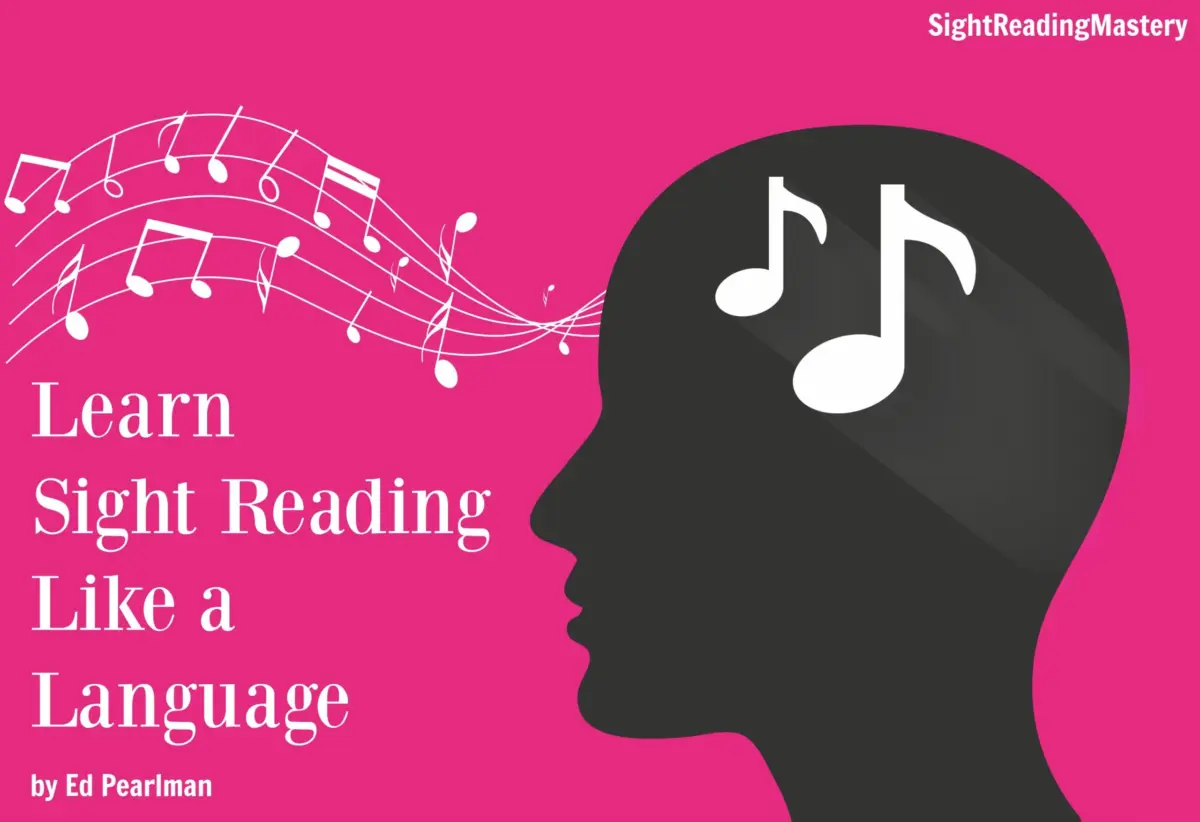
For centuries, instrumentalists and vocalists alike have approached the written score as a complex cryptographic puzzle rather than a living language. Musicians frequently fall into the trap of visual translation—decoding a note on the page, identifying its letter name, determining its corresponding physical fingering on the instrument, and only then executing the sound. Much like an amateur language student mentally translating "buenos días" into "good morning" before speaking, the classical musician who relies on analytical translation inevitably stalls. True fluency, whether in verbal discourse or musical performance, requires bypassing the conscious intermediary step of translation to achieve direct comprehension and execution.
In this comprehensive examination of musical pedagogy, veteran classical violinist and traditional fiddler Ed Pearlman presents a revolutionary, multi-tiered framework designed to transform how students approach sight-reading. Rather than viewing the musical staff as a collection of isolated notes, Pearlman’s methodology—developed over decades of international performance and instruction—treats sheet music as an organic language. By systematically breaking down the cognitive load across five distinct, progressive levels (ranging from raw rhythmic execution to comprehensive note recognition), musicians can build the neural pathways necessary for seamless, instantaneous performance. This report explores the psychological mechanics of musical fluency, details Pearlman’s five-stage practice regimen, and examines the broader implications of this pedagogical shift for modern music education.
Detailed Chronology: The Evolution of Sight-Reading Pedagogy
The traditional approach to teaching music reading has historically prioritized accuracy over fluency. Since the widespread adoption of standardized staff notation during the Guido d’Arezzo era and the subsequent Renaissance and Baroque codifications, students have been taught to meticulously parse every clef, ledger line, and accidental.
The Historical Bottleneck
Historically, conservatory training emphasized micro-analysis. Instructors instructed pupils to:
- Scan the signature and clef.
- Identify individual note heads.
- Calculate intervals mathematically.
- Assign fingerings.
- Synthesize these elements into a physical action.
While this meticulous approach ensures high accuracy in prepared repertoire, it creates a catastrophic bottleneck during sight-reading. In real-time performance, the human brain lacks the processing bandwidth to execute this multi-step algorithm for every single note while simultaneously maintaining tempo, phrasing, and ensemble cohesion. The result is the ubiquitous "stop-and-start" syndrome that plagues amateur musicians worldwide.
The Paradigm Shift toward Linguistic Immersion
In recent decades, progressive pedagogues have looked to cognitive linguistics to reshape music education. By drawing parallels between second-language acquisition (SLA) theories—specifically Stephen Krashen’s principles of language immersion and subconscious acquisition—music educators began experimenting with holistic reading strategies.
Ed Pearlman’s contribution to this evolution is the formalization of a step-by-step cognitive scaffolding technique. Rather than demanding that a student process rhythm, pitch, interval, and note name simultaneously, Pearlman’s framework isolates each cognitive variable. Introduced incrementally over years of workshops, private instruction, and digital resource development (including platforms like SightReadingMastery and Fiddle-Online), this five-level progression allows the brain to automate lower-level mechanical tasks—such as rhythmic pulse and contour recognition—freeing up cognitive space for higher-order musical expression.
Supporting Context & Metrics: The Cognitive Load of Music Processing
To understand why Pearlman’s methodology yields rapid improvements, one must examine the cognitive neuroscience of reading music. Functional neuroimaging studies demonstrate that professional sight-readers exhibit unique neural activation patterns compared to amateurs. While novices display heavy activation in areas associated with visual-spatial translation and working memory (indicating intense serial processing), experts show streamlined pathways that link visual input directly to motor output centers in the cerebellum and motor cortex.
The Cost of Mental Translation
Cognitive psychologists refer to this as the "translation penalty." When a musician translates a note to a letter name (C#), and then to a fingering (third finger, high position on the A string), they consume valuable working memory. Working memory capacity is strictly limited—typically handling only four to seven items of information simultaneously. A complex passage of 16th notes exceeds this capacity instantly, causing cognitive overload, hesitation, and tempo collapse.
Rhythmic Primacy and Contour Mapping
Pearlman’s methodology aligns with data showing that the brain processes temporal structures (rhythm) and spatial structures (contour) faster than symbolic abstractions (letter names). By prioritizing rhythms and directional profiles in the early stages of sight-reading practice, the musician builds a foundational framework. Once the temporal grid and spatial trajectory are secured, adding pitch specificities requires exponentially less cognitive effort.
| Sight-Reading Level | Primary Cognitive Focus | Target Skill / Outcome | Corresponding Linguistic Analogy |
|---|---|---|---|
| Level 1 | Temporal Grid | Tapping/executing rhythms accurately without pitch. | Internalizing the cadence and syllable stress of a foreign language. |
| Level 2 | Spatial Contour | Tracking relative pitch movement (higher, lower, same). | Recognizing the rising and falling inflection of spoken dialogue. |
| Level 3 | Diatonic Anchoring | Playing within a key signature, prioritizing flow over perfection. | Speaking in a known dialect, accepting minor grammatical slips for the sake of conversation flow. |
| Level 4 | Interval Recognition | Instantly identifying steps, thirds, and leaps visually. | Recognizing common multi-word phrases and idioms as single units. |
| Level 5 | Symbolic Labeling | Mental or vocal articulation of note names while playing. | Meta-linguistic awareness (knowing the formal grammar of the words being spoken). |
Official Guidelines: The Five-Level Sight-Reading Framework
Ed Pearlman’s pedagogical approach is structured into five progressive tiers. Crucially, these levels are distinct from the difficulty grading systems found in standardized music libraries; rather, they represent operational modalities through which any given piece of music can be approached.
Level 1: Rhythms Only
The foundation of musical fluency is temporal stability. In Level 1, the musician selects a steady tempo and simply taps, claps, or speaks the rhythm of an unfamiliar passage, completely ignoring pitch.
- Pedagogical Rationale: Rhythms possess zero meaning when divorced from their temporal context—much like a single 64th note played in isolation (echoing the classic cautionary joke among orchestral musicians regarding violists boasting about ultra-fast subdivisions). By isolating rhythm, the student trains the internal metronome and learns to visualize entire measures of rhythmic groupings rather than agonizing over isolated beats.
Level 2: Note Profile (Contour Reading)
Maintaining the rhythmic discipline established in Level 1, the musician now introduces the instrument (or voice), playing through the passage while focusing exclusively on the contour of the melody.
- Pedagogical Rationale: The goal here is not note-perfect execution, but directional accuracy. The performer must track whether subsequent notes ascend, descend, or remain static. By scanning entire measures for their spatial profile, the musician eliminates the debilitating habit of micro-fixating on single note heads.
Level 3: Focusing the Picture (Diatonic Context)
Before engaging with this tier, the musician must establish a strong tonal anchor by identifying the key signature and playing a corresponding scale—paying deliberate attention to the location of the half-steps within the passage’s operational range.

- Pedagogical Rationale: Armed with key awareness, the musician plays the passage with strict adherence to tempo. If uncertainty arises regarding a specific pitch, the rule is absolute: never stop or slow down for a timing error. The musician may guess a note based on the contour and key context, but the rhythmic pulse remains inviolable. If maintaining tempo proves too challenging, the student is advised to reduce the tempo or isolate single measures.
Level 4: Seeing Intervals
At this advanced stage, the musician trains the eye to recognize specific musical distances instantly, shifting away from step-by-step reading to geometric recognition.
- Pedagogical Rationale: Just as a literate adult reads whole words rather than sounding out individual letters, a fluent sight-reader reads intervals as visual shapes. A scale appears as a continuous step-by-step movement alternating between line and space notes. A third appears as a jump from line-to-line or space-to-space. Larger leaps (such as fourths and fifths) become recognizable visual geometries through repeated exposure.
Level 5: Names of Notes (The Meta-Cognitive Layer)
The final tier involves actively thinking or speaking the letter names of the notes while executing them in real time.
- Pedagogical Rationale: Pearlman notes that this final step is technically optional for pure performance fluency, as conscious note-naming is not strictly required to "speak" the musical language. However, it serves as a rigorous diagnostic test of focus. If a musician can articulate note names without disrupting rhythm or contour, their cognitive mastery of the score is complete. For those struggling with this layer, targeted tools like SightReadingMastery’s Note Recognition utilities can accelerate symbol-to-cognition speed.
Future Outlook: The Digital Frontier of Musical Fluency
As music education continues to intersect with digital technology, methodologies like Ed Pearlman’s five-tier framework are finding new, scalable applications. The future of sight-reading pedagogy points toward interactive software that can dynamically adjust musical exercises based on a student’s real-time error tracking, separating rhythmic hesitation from pitch inaccuracies.
Furthermore, the philosophical shift from analytical decoding to immersive linguistic fluency is beginning to influence conservatory entrance standards and early-childhood music curricula. By redefining sheet music not as an obstacle course of technical hurdles, but as an expressive, readable literature akin to a novel or a foreign newspaper, educators are cultivating a generation of more confident, expressive, and resilient musicians.
For performers looking to integrate these practices, the prescription is clear: step away from the slow, laborious trap of note-by-note translation. Embrace the rhythm, map the contour, anchor the key, recognize the intervals, and let the music flow naturally from the page to the ear.