
Executive Overview
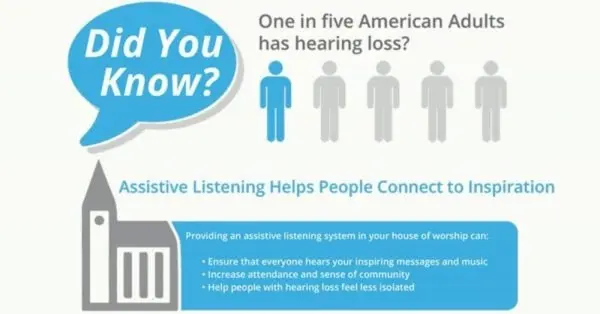
In the modern landscape of congregational ministry, inclusivity extends far beyond physical accessibility ramps and wheelchair-friendly seating. For millions of worshippers dealing with hearing loss, the true barrier to spiritual engagement lies in the acoustic environment of the sanctuary. Sermons, prayers, and musical performances can easily be swallowed by cavernous acoustics, architectural reverberation, and background noise, leaving hearing-impaired attendees feeling isolated during what should be a communal experience.
To combat this silent barrier, an increasing number of houses of worship are turning to Assistive Listening Systems (ALS). However, installing such a system is not merely a technical upgrade; it is a profound ministry initiative. Successful implementation requires a strategic, multi-step approach that evaluates congregation demographics, navigates equipment budgets, trains operational staff, and fosters a culture of radical hospitality.
This comprehensive report outlines the essential roadmap for churches, temples, and religious facilities seeking to implement or upgrade their assistive listening infrastructure. Drawing from industry insights and expert guidelines provided by audio specialists such as CCI Solutions and Listen Technologies, this article details the systematic path from initial assessment to community-wide integration, ensuring that every congregant can hear the spoken word with clarity, emotion, and impact.
Detailed Chronology: The Four-Step Implementation Roadmap
Transforming a worship space into an acoustically inclusive environment requires meticulous planning and execution. Houses of worship are encouraged to follow a proven, four-phase chronological framework to ensure seamless adoption.
[Phase 1: Assessment] ---> [Phase 2: Budgeting & Sourcing] ---> [Phase 3: Staff Training] ---> [Phase 4: Community Awareness]Phase 1: Understand Your Congregation’s Needs
The foundational mistake many facility managers make is purchasing audio equipment based on assumptions rather than data. The first and most critical step in introducing an Assistive Listening System is conducting a comprehensive needs assessment of the congregation.
- The Congregation Survey: Leaders should distribute a targeted survey to members to evaluate their current auditory experiences during services. Questions must explicitly ask about instances of difficulty hearing, the frequency of missed announcements or sermons, and whether respondents currently use hearing aids.
- Evaluating Hearing Aid Compatibility: It is vital to determine if congregants’ hearing aids are equipped with telecoils (t-coils). A t-coil is a tiny copper wire wrapped around a core inside a hearing aid that acts as a wireless receiver, pulling in electromagnetic signals from loop systems or induction neckloops. Knowing how many members utilize t-coils dictates whether an induction loop system, an FM system, or an infrared system is the most appropriate technological fit.
Phase 2: Fully Understand Your Options and Budget
Once congregation data has been collected and analyzed, leadership must evaluate the financial and technical scope of the project. Estimating the cost of assistive listening equipment requires balancing high-performance audio delivery with fiscal stewardship.
- Professional Consultations: Organizations like CCI Solutions offer invaluable assistance during this phase, providing free consultations to help church boards navigate equipment expenses, architectural integration, and budgetary constraints.
- Creative Funding and Grants: Because ALS installations directly support accessibility mandates and community welfare, churches often explore creative funding avenues. Dedicated fundraising campaigns, special building-fund allocations, or regional disability-inclusion grants can significantly offset capital expenditures.
Phase 3: Prepare for Operational Success
Hardware is only as effective as the people operating it. The long-term viability of an Assistive Listening System hinges on the preparedness of staff members and volunteers.
- Appointing "Listening Ambassadors": Front-of-house staff, ushers, and welcome desk volunteers should be designated as Assisted Listening Ambassadors. Their role is to proactively identify individuals who might benefit from an assistive device and warmly offer assistance.
- Hands-on Training and Troubleshooting: Volunteers must receive thorough training on how to clean, maintain, store, and distribute receivers. When handing a device to a user, staff should take a brief moment to explain its basic functions, volume controls, and ear-piece options.
- Visual Reference Materials: To ensure consistency, facilities should maintain a laminated quick-reference guide containing Frequently Asked Questions (FAQs) directly at the distribution counter. This minimizes friction and builds staff confidence during high-traffic Sunday mornings.
Phase 4: Create Awareness and Community Integration
Even the most advanced audio system is useless if the congregation does not know it exists. Launching an ALS requires an intentional, multi-channel marketing and educational campaign.
- Signage and Wayfinding: Proper, ADA-compliant signage must be prominently displayed near entrances, welcome desks, and sanctuary doors, indicating that Assisted Listening Devices are available and directing patrons to where they can be acquired.
- Multi-Media Reminders: Bulletins, digital slide decks, pre-service announcement loops, and church websites should feature regular reminders regarding the availability of assistive listening technology.
- Live Demonstrations: Hosting a dedicated live training session or orientation allows curious congregants—and their families—to test the equipment in a low-pressure environment.
- External Outreach: Advertising the new accessibility features to the surrounding local community can breathe new life into visitor numbers. Many individuals with age-related or congenital hearing loss actively avoid community gatherings simply because they cannot participate fully; broadcasting a church’s commitment to hearing inclusion serves as a powerful beacon of welcome.
Supporting Context & Metrics: The Hidden Crisis of Hearing Loss in Worship
To truly appreciate the urgency of implementing Assistive Listening Systems, one must examine the broader socio-demographic and acoustic realities facing modern religious communities.
The Demographics of Hearing Impairment
According to public health data, hearing loss is one of the most prevalent chronic conditions affecting adults globally. In the United States alone, tens of millions of individuals experience some degree of hearing reduction, with numbers steadily climbing as the population ages.
- The Aging Demographic: Traditional and contemporary congregations often skew toward older demographics—a cohort statistically most likely to experience presbycusis (age-related hearing loss).
- The Isolation Factor: Hearing loss is rarely just a physical ailment; it is deeply psychological. Studies consistently link unmanaged hearing loss to social isolation, depression, and cognitive decline. When a congregant can no longer follow a sermon, they often stop attending altogether, retreating from the very community support network they need most.
The Acoustic Challenge of Houses of Worship
Architecturally, houses of worship are uniquely hostile environments for speech intelligibility.

- Reverberation Times (RT60): Historic cathedrals, modern mega-churches, and traditional sanctuaries are intentionally designed with hard, reflective surfaces (stone, wood, glass, and concrete) to enhance the resonance of pipe organs, choirs, and acoustic instruments.
- The Intelligibility Paradox: While long reverberation times make music sound rich and majestic, they ruin speech clarity. Reflected sound waves overlap with direct sound from the sound system, creating a muddy acoustic smear. For a person with normal hearing, the brain can often parse this; for a person with hearing loss, it turns speech into an unintelligible blur.
Quantitative Impact of Assistive Technologies
Implementing an ALS directly bypasses environmental reverberation and distance loss.
- Signal-to-Noise Ratio (SNR): By transmitting the audio source directly from the microphone (pastor’s lavalier or podium mic) straight to the listener’s ear or hearing aid, an ALS dramatically improves the Signal-to-Noise Ratio.
- Retention and Engagement: Facilities that have implemented comprehensive listening toolkits report a measurable increase in attendance and prolonged engagement from senior members, validating the initial capital investment as a vital ministry growth tool.
Official Statements and Industry Insights
Audio professionals and accessibility advocates emphasize that technology in worship should always serve a pastoral purpose.
"Reaching out to those who feel disconnected from your community due to hearing loss is central to sharing the message of inclusion. Genuinely compassionate service involves being aware of and caring for the needs of everyone, especially those dealing with impairments. Make sure they are able to hear the beauty and emotion of the spoken word in your church by providing them with the equipment they need to stay connected."
— Industry Advisory, CCI Solutions & Listen Technologies
Experts stress that accessibility should never be treated as an afterthought or a bureaucratic checklist item. When houses of worship integrate assistive technologies seamlessly into their workflow, they signal a deep theological commitment to human dignity. Every individual—regardless of physical ability—deserves unhindered access to the spiritual nourishment, comfort, and community found in the spoken message.
Future Outlook: The Evolution of Acoustic Inclusion
As audio technology continues to advance at a rapid pace, the future of assistive listening in houses of worship promises even greater integration, discretion, and ease of use.
The Rise of Auracast™ and Bluetooth LE Audio
Traditional assistive listening systems relied heavily on dedicated FM receivers, infrared emitters, or hardwired induction loops. While these remain reliable, the emerging horizon belongs to Bluetooth Low Energy (LE) Audio and Auracast™ broadcast audio technology.
- Direct-to-Smartphone Streaming: Future-forward systems will allow houses of worship to broadcast high-quality audio directly to congregants’ smartphones, earbuds, or Bluetooth-enabled hearing aids.
- Reduced Stigma: By leveraging personal smartphones and everyday wireless earbuds, the perceived stigma of walking up to a counter to request a specialized, medical-looking receiver is entirely eliminated. Attendees can simply open an app on their phone, connect to the church’s secure audio stream, and adjust the volume to their exact personal preference.
Holistic Accessibility as the Standard
Looking ahead, the definition of a "modern worship center" will increasingly rely on holistic accessibility metrics. Visual presentation software, sign language interpretation, sensory-friendly rooms for neurodivergent individuals, and advanced Assistive Listening Systems will no longer be viewed as luxury add-ons. Instead, they will be recognized as core components of operational excellence.
For religious leaders ready to take the next step, extensive resources are already available. Organizations can download specialized implementation assets, such as the Listen Technologies Church Assistive Listening Toolkit, which provides sample congregation surveys, printable signage templates, and bulletin announcements.
By taking proactive steps today, houses of worship can ensure that no voice is left unheard and no soul is left disconnected.