
Executive Overview
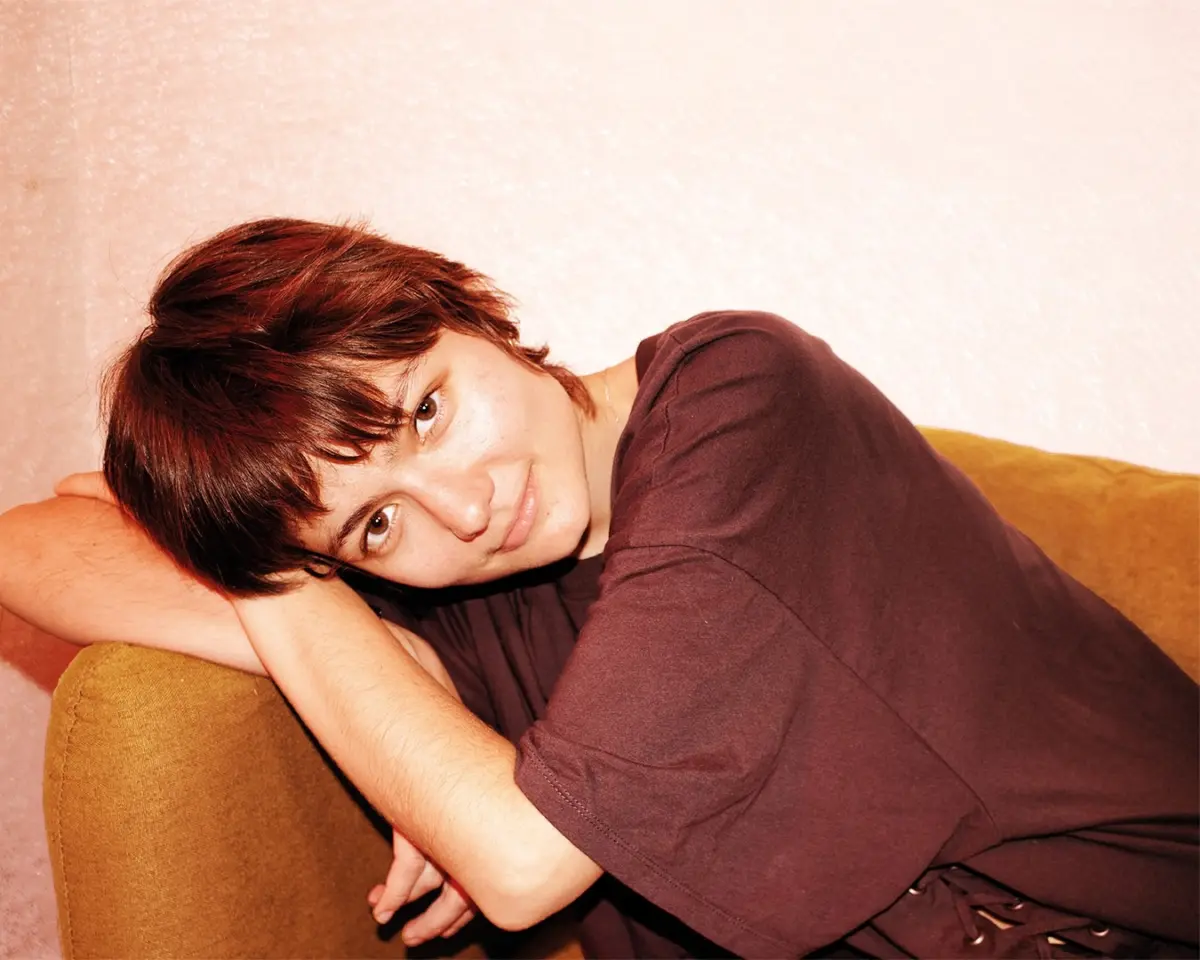
In the rapidly evolving landscape of contemporary independent music, few emerging artists manage to bridge the chasm between academic rigor and forward-thinking electronic production as seamlessly as Weikart. The Paris-based, Boston-raised artist, composer, and multi-instrumentalist has officially stepped into the international spotlight with her debut full-length album, Contact. Comprising 12 meticulously crafted tracks, the record stands as a testament to Weikart’s comprehensive artistry; she wrote, arranged, and produced the overwhelming majority of the project independently.
Contact is not merely a collection of songs, but a sonic synthesis. It marries a rigorous classical conservatory background—steeped in formal piano and vocal training—with the tactile, experimental textures of modern electronic music production that she has explored over recent years. Released alongside an ambitious European tour schedule and spearheaded by the evocative lead single "L’amour se construit," the album marks a major milestone in Weikart’s burgeoning career. Having already captured the attention of jazz juries and tastemakers across France, the artist is poised to expand her reach to global audiences, cementing her status as a multidisciplinary voice to be reckoned with.
Detailed Chronology and Artistic Evolution
Formative Years and Dual Roots
Weikart’s artistic DNA is deeply rooted in a transatlantic trajectory. Born and raised in Boston—a historic hub for both traditional academia and vibrant underground music scenes—she later relocated to Paris, a cultural crucible that profoundly influenced her sonic palate. This bilingual and bicultural foundation allowed her to absorb disparate musical philosophies, blending American experimentalism with the nuance and elegance of the European jazz and classical traditions.
Her early classical training provided a solid structural framework, emphasizing discipline, harmonic complexity, and technical proficiency. However, rather than remaining confined to the conservatory, Weikart gravitated toward the limitless possibilities of electronic composition. This dual identity—balancing the acoustic warmth of the grand piano and the human voice with the synthetic precision of electronic soundscapes—became the defining characteristic of her creative output.
The Path to Contact
Before arriving at the fully realized vision of Contact, Weikart steadily built her reputation through a series of critically lauded releases. As a solo artist, she introduced her distinct voice to the world through two EPs and an earlier album. Additionally, her collaborative spirit manifested in her work under the moniker Beatrice Melissa, a joint project with Parisian artist Beatrice M. that yielded an additional EP and album, further broadening her stylistic boundaries and cementing her presence in the European underground.
Her undeniable technical skill and innovative compositional approach soon garnered institutional recognition. In 2022, Weikart was awarded the prestigious Nancy Jazz Pulsations emerging artist award, a accolade that signaled her arrival as a major talent on the French jazz scene. The momentum continued into 2023 when she secured the instrumentalist prize at the highly competitive La Défense National Jazz Competition.
These accolades paved the way for the creation of Contact. Entering Studio Nocturnes with engineer Marius Duflot, Weikart embarked on a meticulous recording process designed to capture the organic resonance of her instrumentation alongside crisp electronic elements. The project then traveled across continents for post-production: it was mixed by acclaimed artist and producer Chris Cohen at his home studio in Richmond, California, and finalized by mastering engineer Mike Nolte (known for his work with Of Montreal) at Transition Mastering.
Supporting Context, Metrics, and Production Anatomy
Album Anatomy and Tracklist Architecture
Spanning 12 distinct movements, Contact is sequenced to take the listener on an emotional and sonic journey. The tracklist balances vocal-driven narratives with instrumental explorations, showcasing Weikart’s versatility as both a songstress and an arranger.
The Contact Tracklist:

- "Crash"
- "Mesurer le vent"
- "Contact"
- "The Intersection"
- "Appétit.e"
- "Expectations"
- "L’amour se construit"
- "L’amour pt. 2"
- "Not right"
- "New angles" (Feat. Manu Delta)
- "Catching up"
- "Bicycle"
The inclusion of collaborations, such as the feature by Manu Delta on "New angles," introduces dynamic interplay within the album’s otherwise tightly controlled auteur vision. Meanwhile, thematic continuities—evident in companion pieces like "L’amour se construit" and "L’amour pt. 2"—demonstrate Weikart’s penchant for narrative depth and structural motifs.
Visual Aesthetic and Artwork
The physical and digital presentation of Contact is just as deliberate as its audio engineering. The album artwork (designed under Weikart’s creative direction) visually encapsulates the themes of the record: a striking balance between natural human vulnerability and cold, geometric modernity. By utilizing restrained color palettes and evocative imagery, the cover art serves as a visual threshold, inviting listeners into the intimate, yet expansive world constructed within the 12 tracks.
Official Statements and Thematic Analysis
Unpacking "L’amour se construit"
At the heart of the album’s campaign is the lead single, "L’amour se construit," a title that translates roughly from French as "love is built." In discussing the conceptual foundation of the track, Weikart offers profound insight into the emotional philosophy driving her music.
"It’s a plea to not only accept but welcome the inevitable messiness that accompanies our emotions around love," Weikart explains. "Perhaps we can find solace in embracing imperfection and the contradictions that lie at the heart of what it means to be human."
This sentiment permeates the entirety of Contact. Rather than presenting a sanitized, idealized version of modern romance or electronic music, Weikart leans into friction. The juxtaposition of pristine classical piano lines against glitchy, unpredictable electronic textures mirrors the psychological contradictions she describes. The music acknowledges that genuine human connection is constructed through labor, trial, error, and vulnerability.
Future Outlook: Live Performances and Global Trajectory
With Contact now officially released, Weikart is translating her intricate studio creations into a compelling live experience. Her schedule reflects an artist in high demand, bridging intimate club settings and prestigious festival stages across Europe.
Having already built momentum through a successful summer European tour—highlighted by a triumphant, sold-out performance in Paris at the renowned Jazz à la Villette festival—Weikart’s autumn and winter calendar is packed with notable appearances:
- October 14: Nancy Jazz Pulsations (Nancy, France)
- October 20: Festival Off Off Off (Troyes, France)
- November 22: Le Ciel (Grenoble, France)
- November 27: Les Femmes S’en Mêlen (Montreuil, France) – Performing with Momoko Gill
- December 9: Sowieso (Berlin, Germany)
- December 16: Pôle07 (Annonay, France)
These performances offer audiences a rare opportunity to witness Weikart’s multidisciplinary prowess in real time. Utilizing her conservatory-trained dexterity on piano and vocals alongside live electronic manipulation, her shows are expected to further elevate her standing as an innovative force in contemporary music.
As Contact continues to find its audience across international streaming platforms and physical distribution channels, Weikart stands at the precipice of a major career breakthrough. By refusing to compromise between intellectual rigor and emotional accessibility, she has delivered a debut album that not only honors her extensive training but boldly charts a new course for the future of independent electronic and neo-classical music.