
Executive Overview
In the sprawling, often untamed landscape of mid-1960s jazz, few figures occupied as singular or disruptive a space as Rahsaan Roland Kirk. A multi-instrumentalist whose physical incapacity—total blindness—was utterly eclipsed by his visionary sight, Kirk approached the boundaries of genre with a relentless, almost aggressive curiosity. His discography is a masterclass in perpetual motion, a testament to an artist who refused to settle comfortably into any single idiom.
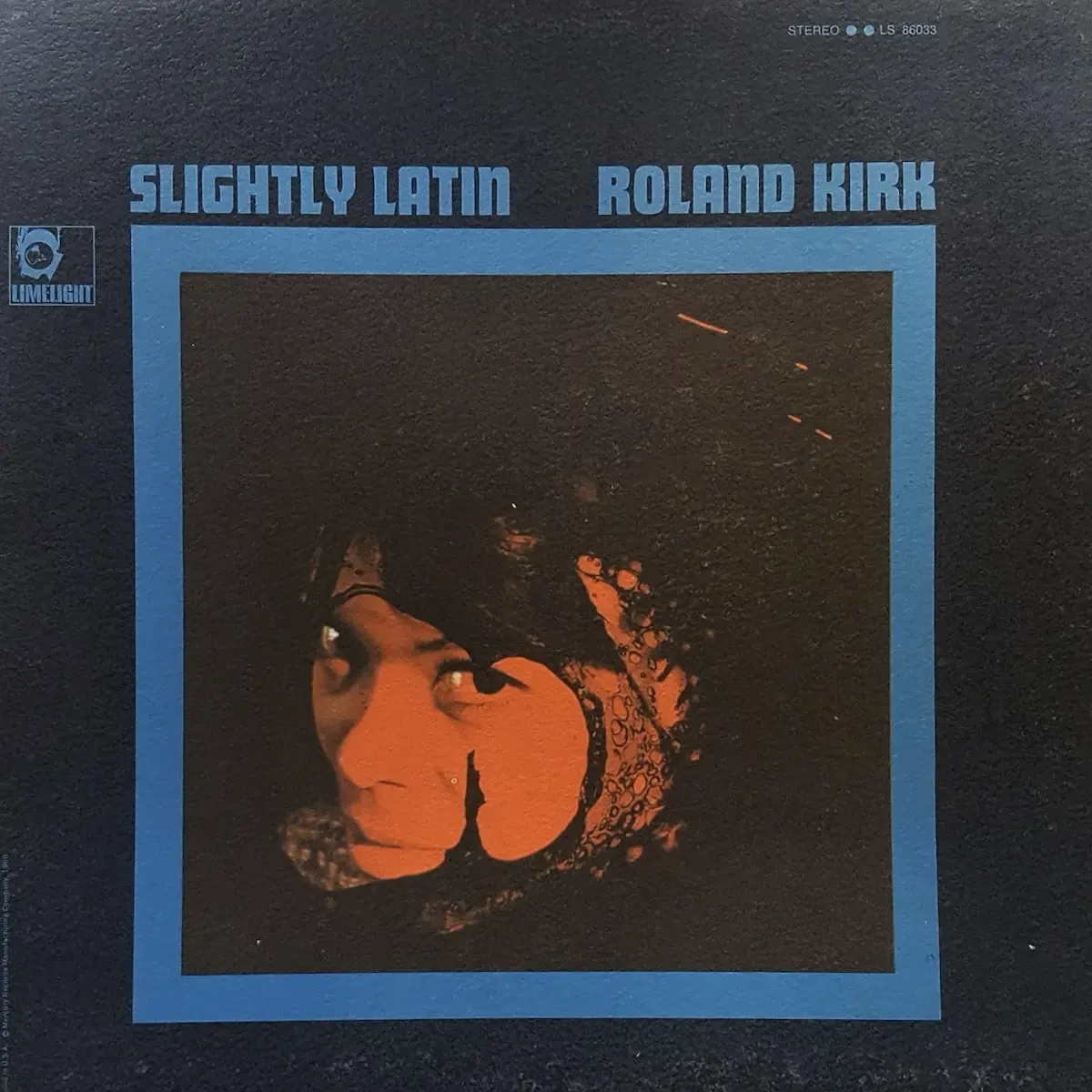
Released on Limelight Records (catalog number LML 4019) following recording sessions on November 16–17, 1965, Kirk’s latest long-player—frequently discussed in the context of his broader stylistic evolution—arrives as a welcome course correction. For critics and aficionados who found his previous outings occasionally waylaid by superfluous electronic effects, this album represents a triumphant return to organic vigor. It harnesses Kirk’s boundless energy and channels it through an expanded, highly dynamic ensemble that includes a vocal choir, rich brass arrangements, and an eccentric arsenal of auxiliary instrumentation.
This retrospective unpacks the intricate mechanics of a recording session that bridges the gap between avant-garde exploration and accessible rhythmic drive. By assembling an elite cohort of sidemen—including pianist Horace Parlan, trombonist and arranger Garnett Brown, and flugelhornist Martin Banks—Kirk manages to temper his notoriously angular, agitated lines with warm, grounding textures. The result is a work of striking coherence, proving that advanced, modern jazz could push the outer limits of timbre and arrangement without sacrificing its emotional core or rhythmic pulse.
Detailed Chronology and Track-by-Track Analysis
The two-day studio sessions in November 1965 yielded a remarkably diverse collection of performances, capturing Kirk at a creative crossroads where traditional post-bop idioms, Latin rhythmic pulses, and avant-garde soundscapes collided.
The Opening Salvo: Aggression and Bouncing Tempos
The album opens with a dual-track punch—Walk On By (listed simply as Walk) and Raouf—that sets an uncompromising tone. Far from a gentle welcome, these initial cuts throw the listener directly into the fray. The atmosphere is thick with what contemporary reviewers described as "ferocious banditry," a small-war aesthetic where the ensemble clashes and coalesces in real-time. The opening number serves as a sprawling, energetic jam session loosely tethered to its thematic core, establishing an urgent group dynamic propelled by the inclusion of a vocal group arranged by Coleridge Perkinson.
Shifting gears immediately afterward, It’s All In The Game introduces a medium, bouncing tempo that plays directly to Kirk’s unique strengths. Much like his celebrated treatment of Domino and other unconventional choices, this track showcases an artist utterly at home within structured melodic frameworks. Horace Parlan delivers a series of luminous piano solos, demonstrating how deeply the musical partnership between leader and pianist had matured by late 1965. Parlan’s accompaniment acts as a reliable anchor, deftly navigating Kirk’s sudden harmonic and rhythmic shifts.
The Baritone Debut and the Mingusian Echoes
One of the most significant milestones of these sessions is Kirk’s introduction of the baritone saxophone to his recorded repertoire. On Juarez, a piece bearing unmistakable stylistic DNA from Charles Mingus’s legendary Tijuana suite, Kirk deploys the baritone with devastating effect. While no less dynamic than his work on tenor, manzello, or stritch, his baritone voice possesses a grounded, slightly less frantic resonance that cuts cleanly through the arrangement.
Juarez stands as one of the most electrically charged cuts on the entire LP. Martin Banks contributes gorgeous, soaring flugelhorn lines, while Garnett Brown delivers a broadly modern trombone solo—a testament to how Brown’s professional footprint in rhythm-and-blues idioms successfully broadened his harmonic vocabulary. Beneath them, the rhythm section—featuring bassist Edward Mathias, drummer Gerald Brown, percussionist Manuel Ramos, and conga player Montego Joe—operates at maximum capacity, throwing "everything including the kitchen sink" into the mix to forge a dense, immersive sonic tapestry.
Experimental Timbres: Bagpipe Chanters and R-and-B Sensibilities
Garnett Brown’s influence extended far beyond his trombone work; he was also heavily responsible for the album’s sophisticated charts. Shaky Money (often abbreviated as Money) bears the unmistakable, punchy sheen of the Slide Hampton sound. Following a clever, structurally taut introduction, the track unfurls into a bizarre yet compelling passage pairing a live trombone with a Scottish bagpipe chanter.
This unexpected juxtaposition—where "McScotland is in McPeril"—produces a texture that defies conventional jazz categorization. The nearest sonic parallel is the distinctive, weeping wail of Sonny Terry’s blues mouth harp. While the inclusion of the bagpipe chanter is undeniably novel and works brilliantly within the confines of this single track, it remains a pungent spice best utilized sparingly.
Latin Flavors and Vocal Textures
The vocal choir returns to center stage on Nothing But The Truth (titled Nothing), a Latin-flavored blues vehicle that highlights Kirk’s fat-toned, soulful tenor saxophone. The track swings with palpable heat, proving that while the choir might not entirely revolutionize Kirk’s compositional framework—the recording could conceivably stand just as tall without them—they certainly do not obstruct the momentum. Parlan once again steps forward for a crystalline solo before the track dissolves into an eccentric maze of playful, gibbering vocalizations.
The Latin undercurrent resurfaces on And I Love Her. Tackling a Beatles original via a distinctively tropical lens, Kirk proves himself to be a natural inheritor of Latin jazz rhythms. His work across tenor and manzello demonstrates an innate understanding of clave and rhythmic displacement, transforming a pop standard into a vehicle for fiery, transcendent improvisation.
Avant-Garde Soundscapes: Ebrauqs and Safari
For listeners seeking deeper immersion into Kirk’s idiosyncratic universe, the latter half of the record delivers uncompromising experimentalism. Safari, composed by bassist Edward Mathias, serves as an atmospheric feature for the low end, accompanied by the entire ensemble playing rhythm on various unconventional objects. Kirk contributes ghostly, atmospheric flute lines. While opinions on this track have historically been sharply divided—some critics championing it as the album’s creative pinnacle, others finding its abstract nature less immediately engaging—it undeniably expands the stylistic boundaries of the session.
The apex of sonic adventurism, however, is reached on Ebrauqs. Opening the track, Kirk deploys sound effects, wooden flutes, and raw acoustic anomalies that he famously quipped "might sound odd to some squares." Beyond the bevy of Mingusian groans that pepper the background, the track incorporates a Japanese Nagoya harp, custom "trick sticks with pipes" constructed by Kirk himself, chimes, bells, and celeste. Despite the density of this avant-garde toolkit, the performance remains remarkably grounded, anchored by a stout-hearted, fiercely articulate trumpet solo from Virgil Jones.
Supporting Context & Metrics: Personnel and Production
To fully appreciate the weight of Limelight LML 4019, one must examine the stellar lineup assembled in the studio on November 16 and 17, 1965. Kirk’s operational philosophy demanded sidemen who possessed not only technical mastery but also the stylistic flexibility to pivot instantly between hard bop, rhythm and blues, Latin dance forms, and free-wheeling sonic abstraction.
Core Personnel Roster
- Rahsaan Roland Kirk: Piccolo, stritch, bagpipe chanter, manzello, flutes, whistles, siren, tenor saxophone, baritone saxophone.
- Virgil Jones: Trumpet.
- Garnett Brown: Trombone and primary horn arrangements.
- Martin Banks: Flugelhorn.
- Horrace Parlan: Piano.
- Edward Mathias: Bass.
- Gerald Brown: Drums.
- Manuel Ramos: Percussion.
- Montego Joe: Congas.
- Coleridge Perkinson: Choir/Vocal arrangements.
Album Metrics & Track Listing
- Label: Limelight Records
- Catalog Number: LML 4019 (32s)
- Recording Dates: November 16–17, 1965
- Side One Length: Approx. 20 minutes (Walk On By, Raouf, It’s All In The Game, Juarez, Shaky Money)
- Side Two Length: Approx. 19½ minutes (Nothing But The Truth, Safari, And I Love Her, Ebrauqs)
The symbiotic relationship between Kirk’s multi-instrumental wizardry and the rhythm section’s polyrhythmic foundation established a new benchmark for mid-60s jazz production. By balancing commercial accessibility—such as the infectious bounce of It’s All In The Game—with radical timbral experiments like Ebrauqs, the production team successfully captured the lightning-in-a-bottle energy of a live Kirk performance while maintaining high fidelity standards.
Official Statements and Critical Reception
Contemporary critical response to Kirk’s mid-60s output frequently wrestled with the sheer volume of ideas he introduced simultaneously. Reviewers writing for jazz periodicals in late 1965 and early 1966 were quick to contrast this Limelight release with his immediately preceding efforts, noting a welcome departure from electronic gimmickry toward a more acoustic, harmonically rich environment.
Industry insiders and jazz historians have long pointed to the presence of arrangers like Garnett Brown and Coleridge Perkinson as a decisive turning point for Kirk’s recorded catalog. In retrospective evaluations, critics have highlighted how the addition of a brass section—specifically Brown’s warm, earthy trombone voicing—acted as a crucial counterweight to Kirk’s notoriously angular, breathless runs across the stritch and manzello.
Furthermore, Kirk’s own commentary regarding his avant-garde excursions—such as his tongue-in-cheek warnings to "squares" regarding the wooden flutes and custom sound effects on Ebrauqs—illustrates an artist fully conscious of his role as both provocateur and entertainer. Rather than alienating his audience, Kirk’s uncompromising commitment to novel instrumentation earned him a dedicated following among listeners who craved a modern jazz vocabulary that refused to stagnate in academic orthodoxy.
Future Outlook and Lasting Legacy
Decades removed from the smoke-filled studio sessions of November 1965, the recordings compiled on Limelight LML 4019 occupy a vital chapter in the broader narrative of improvised music. Rahsaan Roland Kirk’s restless pursuit of uncharted acoustic territory paved the way for future generations of genre-agnostic musicians who viewed musical boundaries not as walls, but as doors.
As contemporary jazz continues to absorb global folk traditions, electronic textures, and cross-genre collaborations, the blueprint established by Kirk, Parlan, Brown, and their compatriots feels remarkably prescient. The ability to seamlessly integrate the wail of a Scottish bagpipe chanter with a Latin-infused blues rhythm section—all while maintaining narrative coherence and emotional depth—remains a rare and formidable achievement.
For modern collectors, jazz historians, and adventurous listeners alike, this era of Kirk’s career serves as an enduring reminder that jazz at its highest level is an act of perpetual discovery. There are no dull moments in the world of Rahsaan Roland Kirk; there is only the sound of a master builder continuously reshaping the architecture of sound, inviting anyone willing to listen into a universe where convention is merely the starting point.