
Executive Overview
The sprawling grounds of South Hill Park once again boldly adopted the motif of the sun playing the alto saxophone as the official insignia for the second annual Bracknell Jazz Festival. Organiser John Cumming and his team entered the weekend carrying high expectations following the inaugural success of the event, and as it transpired, their confidence was entirely justified. Mother Nature smiled upon the festival, bathing the Berkshire estate in benevolent summer weather that elevated the proceedings far beyond the mere logistics of a weekend musical gathering.
While purists might reasonably argue that the overarching programme lacked the raw, unadulterated punch of the previous year’s lineup, the atmospheric resonance of the festival more than compensated for any slight dips in musical consistency. Over the course of the weekend, Bracknell proved to be a fascinating crucible of modern jazz, traditional sounds, avant-garde exploration, and blues history.
From the lofty aspirations of international headliners to the triumphant, scene-stealing sets of home-grown British talent, the festival offered a panoramic view of the contemporary jazz landscape. Yet, it was not without its friction points. The curation wrestled with the uneasy marriage of rock-jazz hybrids and traditional purism, throwing into sharp relief the ongoing ideological debates surrounding the genre’s evolution. Ultimately, the festival stood as a testament to the vibrant health of the British jazz ecosystem—even if certain visiting virtuosos left audiences somewhat cold, and local heroes ultimately stole the crown.
Detailed Chronology and Performance Analysis
The Headliners and High-Profile Disappointments
Among the most anticipated fixtures on the bill was American guitarist Ralph Towner, making his highly publicised debut appearance in Britain. Given Towner’s glittering pedigree—having collaborated with luminaries such as Stan Getz, Gary Burton, and Keith Jarrett, alongside his tenure with the celebrated ensemble Oregon—expectations had justifiably reached fever pitch.
Unfortunately, Towner’s performance proved to be the weekend’s most palpable disappointment. His overarching stylistic approach carried the clinical, sterile air of a masterclass guitar lesson rather than a living, breathing performance. While his technical facility was never in question, his phrasing lacked natural momentum, and moments of genuine, visceral swing were frustratingly sparse. Though capable of conjuring moments of breathtaking harmonic beauty, Towner ultimately evoked the curious, incongruous mental image of Yehudi Menuhin attempting to navigate the jazz idiom: technically proficient, yet profoundly miscast.
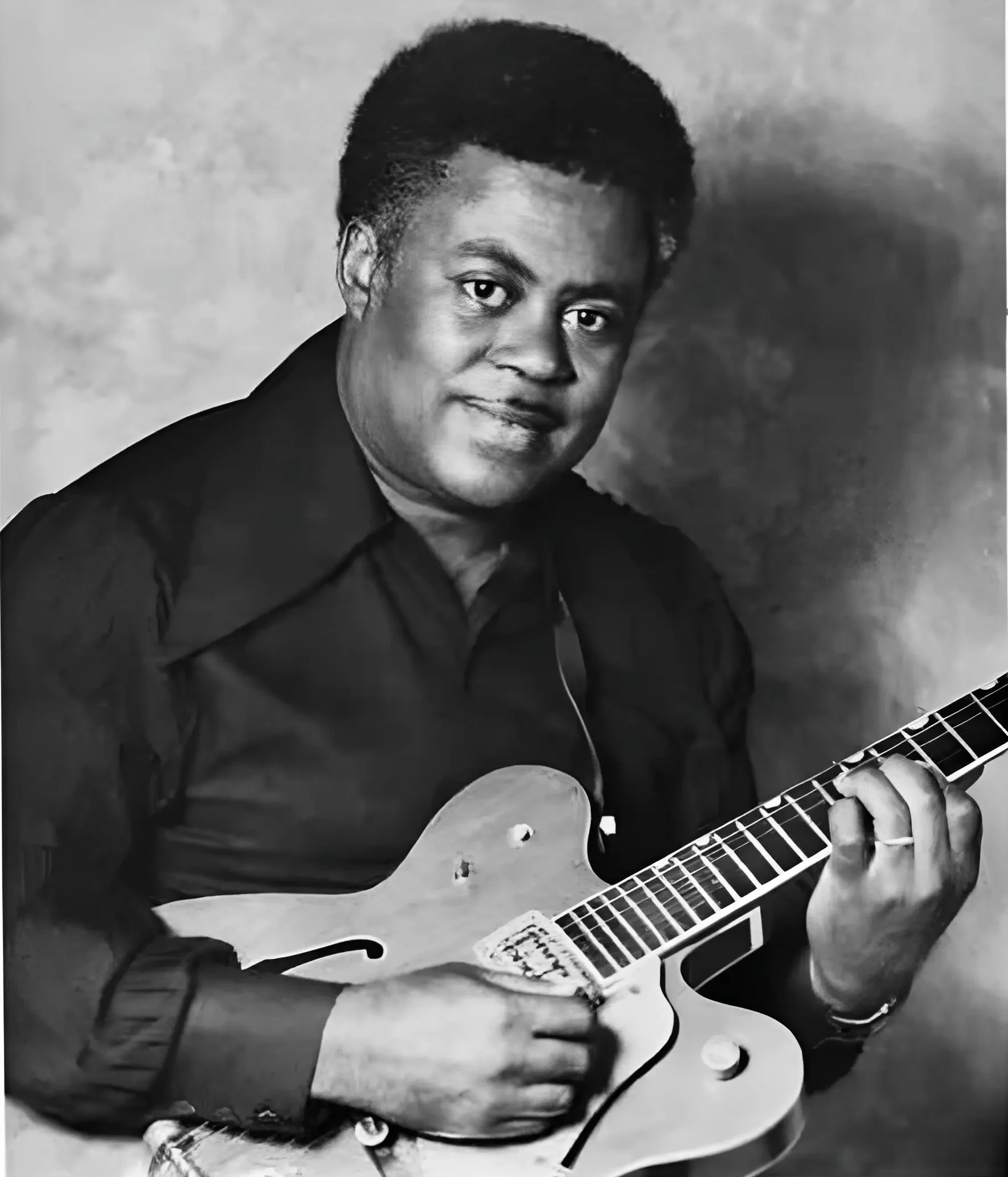
By total contrast, Eddie “Guitar” Burns delivered a masterclass in raw, unvarnished authenticity. Burns’s technical execution could charitably be described as suspect, yet he wielded an undeniable emotional gravity. Having previously shared stages with blues titan Sonny Boy Williamson, Burns treated the Bracknell audience to a sublime selection from the legendary Bluebird Song Book. Delivering staple tracks such as My Little Woman, Whiskey Headed Woman, and his signature crowd-pleaser Bottle Up And Go, Burns played with a conviction and deep-seated blues intuition that cemented his status as a master practitioner of the form. His immaculate sense of timing alone offered a silent, scathing tutorial to the overly academic Towner.
Saxophone Powerhouses and the Rock-Jazz Dilemma
Stepping up the thermodynamic energy of the festival, tenor saxophonist Johnny Griffin embraced the theatricality of overstatement. Griffin’s set was a masterclass in sheer power, inventive melodic framing, and deep jazz sensibility. His internal clock remains miraculous; listeners found themselves perpetually awestruck by his ability to sustain a breathless, hyper-inventive stream of consciousness at tempos exceeding eighty bars to the minute without ever sacrificing clarity or emotional engagement.
However, the persistent integration of rock-jazz fusion across the programme continued to spark debate among festivalgoers. For critics with a preference for straight-ahead acoustic jazz, the genre was arguably over-represented. Yet, within that sub-category, the Brian Smith/Terry Smith Quintet shone brilliantly. Terry Smith, often dogged by a reputation for unpredictable inconsistency, selected Bracknell as the venue to deliver a masterclass in guitar-based thematic development. Supported by Alan Jackson’s propulsive, driving drum work, Smith’s playing pushed the boundaries of the set to dizzying heights.
Similarly, Turning Point delivered a far more cohesive and compelling performance than their previous outing at Ronnie Scott’s. Bolstered by Jeff Clyne’s commanding, anchoring bass, Brian Miller’s articulate keyboard textures, and Dave Tidball’s immaculate intonation, the ensemble commanded a rapturous response from the audience.
Conversely, John Stevens’s Away struggled to find its footing, suffering from an identity crisis born of musical hybridity. While Stevens remains unquestionably one of Europe’s premier percussionists, he appeared directionless within this specific ensemble framework. Oscillating wildly between moments of unpredictable, avant-garde audacity and safe, metronomic rock grooves designed to appease the broader audience, the group ultimately failed to leave a lasting impression.
Red Brass similarly confounded expectations regarding what constitutes a "jazz festival" act. Though trombonist Paul Nieman and reed specialist Chris Biscoe are undeniably formidable jazz musicians, the group’s structural policy leans heavily toward a showcase for their vocalists. While their musical standards were undeniably high, one could not help but feel that their artistic energies would have been better spent absorbing the earthy authenticity of Guitar Burns for half an hour.
Avant-Garde Explorations and Mainstream Victories
The Southern Jazz Quintet provided a delightful surprise, presenting a tight, elegant programme of hard-bop arrangements. The set was significantly elevated by Bob Jenkins’s robust, Hank Mobley-esque tenor saxophone work, beautifully counterbalanced by Johnny Watmough’s delightfully incongruous, cool-toned alto lines.
In the realm of free improvisation, Company proved predictably exceptional. The trio of Derek Bailey, Evan Parker, and Lol Coxhill became locked into an telepathic web of modern counterpoint. Bailey’s idiosyncratic soloing was razor-sharp, while Parker delivered an unaccompanied soprano saxophone solo that easily ranked among the defining individual contributions of the entire weekend. The Stan Tracey/Mike Osborne Duo matched this high-water mark, while the Lennie Best Quartet provided an impeccably tasteful springboard for guest tenor titan Don Rendell.
The festival’s finest contribution to mainstream jazz arrived via the London Jazz Big Band. Hindered by transit nightmares that saw the ensemble travel from London to Bracknell via Durham, Bruce Turner was initially absent from the lineup. That the band barely missed a beat is a testament to the muscular drive of the brass section—featuring trumpeters Colin Smith, Al Fairweather, and Ray Crane, alongside trombonists John Picard, Mike Hogh, and Tony Milliner—and Stan Greig’s commanding leadership from the piano bench. Although the rhythm section occasionally lacked a fluid swing feel, the ensemble built up an undeniable, roaring head of steam.
Humphrey Lyttelton maintained his reputation for reliable excellence, presenting a curated programme rich in fresh compositions while ruthlessly pruning the standard "potboilers." Lyttelton also bore the challenging logistical responsibility of showcasing the astonishing, lightning-fast footwork of tap dancer Will Gaines, executing the task with characteristic charm and musical empathy. By the time this set commenced, Bruce Turner had successfully completed his odyssey from the North, immediately integrating himself into the front line with his trademark nonchalant, endlessly creative flair.
Logistical mishaps plagued coverage of the traditional jazz offerings; a sudden flat tyre robbed attendees of the Excelsior Brass Band, while overlapping commitments inside the vibrant marquee forced a regrettable miss of Sammy Rimington. Nevertheless, the San Jacinto Jazz Band more than salvaged the traditional banner with two stellar, structurally sound sets in the Cellar Bar, marked by exemplary riff interplay behind the soloists and a commendably light, driving rhythm section.
Supporting Context & Metrics
Despite the heavy influx of international headliners and American talent on the festival bill, the most resonant triumphs of the weekend emerged organically from the domestic British scene.
Saturday evening in the Cellar Bar reached its emotional and artistic zenith with the Mike Osborne Trio. Louis Moholo’s drums reverberated with thunderous authority from the back corner of the room, while Harry Miller anchored the low end with his customary commanding presence.
Osborne himself, however, was a genuine revelation. He played not merely with fiery, unbridled swing, but with an intellectual rigour and formal architectural control that suggested a meticulously rehearsed, transcribed suite. Yet, no sheet music was present; it was an incandescent, spontaneous masterclass of modern improvised music.
+-----------------------------------------------------------------+
|               BRACKNELL JAZZ FESTIVAL: QUICK METRICS            |
+---------------------------+-------------------------------------+
| Total Days of Festival    | 2 Days                              |
| Primary Venue             | South Hill Park, Bracknell          |
| Standout Local Act        | Mike Osborne Trio / Stan Tracey     |
| Mainstream Highlight      | London Jazz Big Band                |
| Most Disappointing Set    | Ralph Towner                        |
+---------------------------+-------------------------------------+
Equally triumphant was the Stan Tracey Octet, assembled to perform Tracey’s ambitious multi-movement suite, The Bracknell Connection. Backed by his fiercely loyal core sidemen, Tracey masterminded an unqualified artistic victory. The performance featured breathtaking solo contributions from Malcolm Griffiths, Art Themen, Don Weller, and Harry Beckett.
The four-part composition presented a notoriously punishing chart, yet musical miscues were virtually non-existent. The performance culminated in a rapturous, well-deserved standing ovation from a spellbound audience.
Official Statements and Industry Reception
Reflecting on the weekend’s events, festival organizers and participating musicians highlighted the unique cultural ecosystem fostered at South Hill Park. While no formal press conferences were convened, backstage sentiment pointed overwhelmingly to the event’s growing prestige as a vital institutional anchor for British jazz.
Industry observers noted that Bracknell has successfully carved out a distinct identity, bridging the ideological chasms between traditionalist revivalism, straight-ahead bop, and avant-garde exploration.
The overwhelming public and critical reception of homegrown artists like Stan Tracey and Mike Osborne signaled a growing industry confidence in indigenous talent—a sentiment echoed quietly by visiting international performers who found themselves humbled by the technical and emotional depth of the British scene.
Future Outlook
As the dust settles on South Hill Park and the temporary stages are dismantled, attention inevitably turns toward the horizon of the 1975 installment. The resounding success of the second annual Bracknell Jazz Festival has laid down a formidable gauntlet for the future.
The central challenge facing organiser John Cumming moving forward will be maintaining this delicate equilibrium between commercial crowd-pleasers, challenging avant-garde acts, and traditional stalwarts—all while fielding the inevitable booking headaches and logistical puzzles that come with curating a festival of this scale.
If the artistic heights scaled by the Stan Tracey Octet and the Mike Osborne Trio are any indication, the mental strain and logistical ulcers endured by Cumming in assembling this year’s "bash" were profoundly worthwhile. Jazz aficionados across Britain can only look forward with bated breath, hoping that next year’s iteration matches the ambition, courage, and sheer musical brilliance that illuminated Bracknell this summer.