
Executive Overview
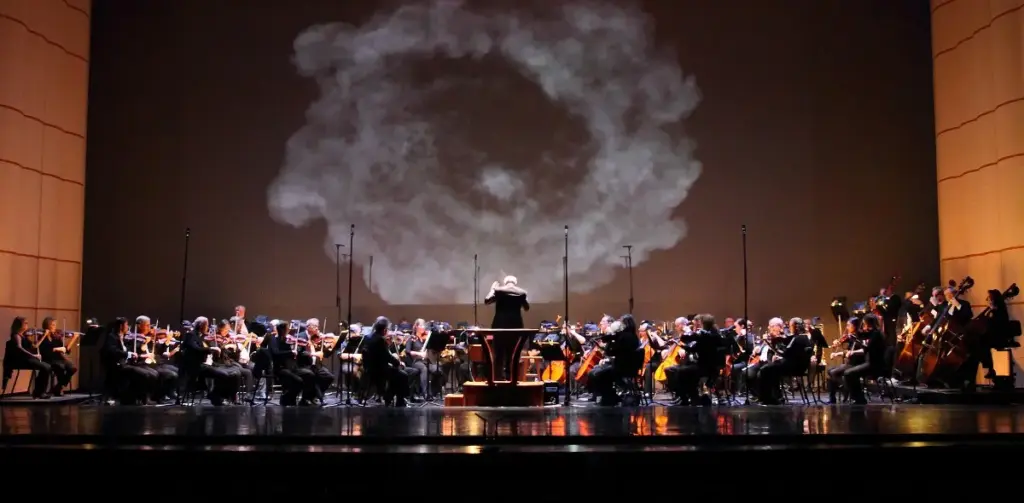
In a significant convergence of regional orchestral prowess and sacred choral traditions, the Omaha Symphony has partnered with the St. Cecilia Cathedral Choir to present a flagship performance for the Cathedral Voices 2026 series. Anchored by Johann Sebastian Bach’s monumental Magnificat in D Major, BWV 243, the evening stands as a major cultural event in the American Midwest, bringing historical Baroque masterworks to one of North America’s most acoustically distinct ecclesiastical venues.
The performance showcases a curated trajectory of sacred Baroque literature, featuring compositions by Heinrich Schütz, Antonio Vivaldi, George Frideric Handel, and J.S. Bach. Hosted within the Spanish Renaissance Revival architecture of Omaha’s St. Cecilia Cathedral, the production fuses full symphonic orchestration, multi-voiced choral arrangements, vocal soloists, and the cathedral’s historic pipe organ. Beyond its local acoustic presentation, the event leverages a broad digital footprint via livestreaming initiatives spearheaded by the New Dawn Choral Collective, establishing a global broadcast link for sacred music scholars, educators, and classical music audiences.
+-----------------------------------------------------------------------------------+
|                            CATHEDRAL VOICES 2026                                 |
|                                                                                   |
|  [ Omaha Symphony ]  +  [ St. Cecilia Cathedral Choir ]  +  [ Pipe Organ / Solos ]|
|                                         |                                         |
|                                         v                                         |
|  +-----------------------------------------------------------------------------+  |
|  |                             REPERTOIRE PROFILE                              |  |
|  |  • Heinrich Schütz: Early German Polyphony & Sacred Concerto                 |  |
|  |  • Antonio Vivaldi: Venetian Instrumental/Choral Brilliance                 |  |
|  |  • George Frideric Handel: Ceremonial Choral Architecture                     |  |
|  |  • J.S. Bach: Magnificat in D Major, BWV 243 (Climactic Masterwork)          |  |
|  +-----------------------------------------------------------------------------+  |
|                                         |                                         |
|                                         v                                         |
|  +-----------------------------------------------------------------------------+  |
|  |                              DELIVERY VECTORS                               |  |
|  |  1. Live Cathedral Acoustic Performance (Omaha, NE)                          |  |
|  |  2. Global Livestream Access (New Dawn Choral Collective Network)            |  |
|  +-----------------------------------------------------------------------------+  |
+-----------------------------------------------------------------------------------+
Detailed Chronology: Programming, Curation, and Musical Architecture
The programmatic structure of the Cathedral Voices 2026 concert offers a comprehensive survey of late Renaissance and Baroque sacred polyphony, systematically building toward Bach’s orchestral-choral tour de force.
Historical Development of the Repertoire
========================================================================================
[1620s] Heinrich Schütz -------> Early Protestant polyphony & Italianate motet style
[1710s] Antonio Vivaldi -------> Venetian sacred brilliance & concerto-groove structures
[1720s] George Frideric Handel -> Grand ceremonial anthems & choral architecture
[1733]  J.S. Bach -------------> Magnificat in D Major, BWV 243 (High Baroque climax)
========================================================================================
Phase I: The Foundations of German Sacred Music (Heinrich Schütz)
The concert opens with the austere, text-driven sacred concertos of Heinrich Schütz (1585–1672). As the primary figure responsible for introducing the Italian Venetian polychoral style to Northern Europe, Schütz’s inclusion establishes the theological and musical context of early Lutheran polyphony. The performance highlights his precise use of decoratio nobis—the rhetorical transformation of sacred texts into dramatic musical gestures—offering a transparent acoustic entry point that highlights the vocal clarity of the St. Cecilia Cathedral Choir.
Phase II: The Venetian and English High Baroque (Antonio Vivaldi & George Frideric Handel)
Transitioning into the 18th century, the program contrasts Schütz’s contrapuntal restraint with the vibrant theatricality of Antonio Vivaldi (1678–1741) and the ceremonial grandeur of George Frideric Handel (1685–1759).
- Vivaldi’s Sacred Contributions: Known for dynamic string writing and rhythmic vigor, Vivaldi’s sacred literature utilizes bright motor rhythms and expressive vocal lines that leverage the ambient reverberation of cathedral spaces.
- Handel’s Choral Masterstrokes: Handel’s anthems provide an expansive showcase for the combined power of the Omaha Symphony’s brass and string sections alongside full chorus, demonstrating his signature structural balance between homophonic clarity and fugal counterpoint.
Phase III: The Climax—J.S. Bach’s Magnificat in D Major, BWV 243
The centerpiece of the evening is J.S. Bach’s Magnificat in D Major, a 12-movement work composed for five-part chorus (SSATB), five vocal soloists, and a festive Baroque orchestra including festival trumpets, timpani, flutes, oboes, strings, and continuo.
Originally composed in E-flat major (BWV 243a) for the Christmas Vespers of 1723 in Leipzig, Bach revised the work around 1733 into D major, removing specific Christmas interpolations to create a concise, universally applicable masterpiece for major feast days.
Structure of Bach's Magnificat in D Major, BWV 243
+----+----------------------------------+-----------------------+-----------------------+
| Mvt| Text/Title                       | Scoring               | Key / Form            |
+----+----------------------------------+-----------------------+-----------------------+
| 1  | Magnificat anima mea             | Chorus (SSATB)        | D Major / Tutti       |
| 2  | Et exultavit spiritus meus       | Soprano II Solo       | D Major / Aria        |
| 3  | Quia respexit humilitatem        | Soprano I Solo        | B Minor / Aria        |
| 4  | Omnes generationes               | Chorus (SSATB)        | F# Minor / Fugal      |
| 5  | Quia fecit mihi magna            | Bass Solo             | A Major / Aria        |
| 6  | Et misericordia                  | Alto & Tenor Duet     | E Minor / Pastorale   |
| 7  | Fecit potentiam                  | Chorus (SSATB)        | D Major / Virtuosic   |
| 8  | Deposuit potentes                | Tenor Solo            | F# Minor / Aria       |
| 9  | Esurientes implevit bonis        | Alto Solo             | E Major / Aria        |
| 10 | Suscepit Israel                  | Trio (SSA)            | D Minor / Cantus Firmus|
| 11 | Sicut locutus est                | Chorus (SSATB)        | D Major / Fuga        |
| 12 | Gloria Patri                     | Chorus (SSATB)        | D Major / Doxology    |
+----+----------------------------------+-----------------------+-----------------------+
The composition is notable for its rapid stylistic transitions, intense structural symmetry, and dense counterpoint. Highlights include:
- The dramatic entrance of the five-part chorus in the opening Magnificat anima mea, featuring triadic trumpet fanfares and rapid melismatic vocal lines.
- The fugal complexity of Omnes generationes, where vocal voices enter in rapid succession to symbolize all generations coming together.
- The dramatic tone-painting in Deposuit potentes (He hath put down the mighty), where descending unison string figures contrast with an energetic tenor solo line.
- The closing Gloria Patri, which unifies the entire composition by revisiting the melodic material of the opening movement during the Sicut erat in principio ("As it was in the beginning").
Supporting Context & Metrics: Acoustic Engineering and Architectural Heritage
The Acoustic and Architectural Footprint of St. Cecilia Cathedral
Designed by renowned architect Thomas Rogers Kimball in 1905 and consecrated in 1959, St. Cecilia Cathedral is one of the ten largest cathedrals in the United States. Spanning 225 feet in length and featuring vaulting ceilings that reach over 80 feet, the building’s solid masonry construction creates a unique acoustic environment characterized by a multi-second reverberation decay time.
Acoustic Metrics Comparison: Standard Concert Hall vs. Cathedral Space
+------------------------------------+--------------------------+--------------------------+
| Metric Parameter                   | Standard Concert Hall    | St. Cecilia Cathedral    |
+------------------------------------+--------------------------+--------------------------+
| Mid-Frequency Reverberation Time   | 1.8 - 2.2 Seconds        | 4.2 - 5.5 Seconds        |
| Low-Frequency Resonance (Bass)     | Controlled / Absorptive  | Extended / Resonant      |
| Choral Sound Dispersion            | Directional (Stage)      | Omnidirectional / Ambient|
| Optimum Musical Style              | Symphonic / Romantic     | Sacred Polyphony / Baroque|
+------------------------------------+--------------------------+--------------------------+
While high reverberation can obscure fast-moving contrapuntal lines in modern orchestral settings, early Baroque instrumentation—particularly when voiced alongside an authentic pipe organ system—uses this ambient decay to create a unified, room-filling sound. The integration of the cathedral’s pipe organ alongside the Omaha Symphony provides a historical basso continuo foundation that grounds the high-register polyphony of Bach’s trumpets and woodwinds.
Demographic Reach and Educational Impact
The Cathedral Voices series serves as a key bridge between professional orchestral musicians, collegiate vocalists, music educators, and community arts advocates across the Great Plains region.
Target Audience Demographics - Cathedral Voices Series
========================================================================================
[35%] Sacred Music Scholars & Church Musicians
[25%] Classical Music Enthusiasts & Symphony Subscribers
[20%] Educators, Collegiate Vocal Students, & Performance Students
[20%] Regional Patrons & International Digital Viewers (Livestream)
========================================================================================
Music educators and vocal students throughout Nebraska and neighboring states utilize performances within the Cathedral Voices portfolio as benchmark studies in historical performance practice, vocal diction, and acoustic balancing techniques.
Official Statements and Institutional Alignment
Representing the artistic and administrative vision behind the collaborative effort, musical leadership across both participating institutions highlighted the strategic and cultural significance of the Cathedral Voices 2026 series.
"Performing Bach’s Magnificat within the walls of St. Cecilia Cathedral allows us to bridge the gap between historical composition and living acoustic art," stated an artistic representative for the Cathedral Voices programming committee. "This is not merely a concert performance; it is an immersive historical experience where the building itself acts as an active instrument alongside the Omaha Symphony and the Cathedral Choir."
A senior spokesperson from the vocal ensemble leadership emphasized the collaborative depth required to execute the complex 18th-century repertoire:
"The structural complexity of Bach’s five-part SSATB scoring demands absolute clarity and vocal precision. Working in tandem with the Omaha Symphony, our choristers are engaging with a masterwork that challenges every facet of vocal technique, from rapid melismatic articulation to dynamic balance against a full Baroque brass and wind ensemble."
Regarding digital accessibility and global outreach, representatives from the New Dawn Choral Collective highlighted the importance of high-definition streaming for sacred music preservation:
"Broadcasting masterworks of this caliber through digital streaming platforms breaks down geographic barriers. By offering open access to live performances held in landmark spaces like St. Cecilia Cathedral, we ensure that scholars, choral enthusiasts, and students worldwide can experience high-level sacred arts regardless of location."
Future Outlook: The Evolution of Sacred Arts & Regional Orchestral Residencies
The success of collaborative ventures like the Magnificat performance underscores a growing trend across the American classical music landscape: the strategic convergence of regional symphonic orchestras with historic sacred spaces. As traditional concert halls face shifting patron demographics and rising operational overhead, cathedral residencies provide established symphonies with unique acoustic settings and direct links to specialized local audiences.
Strategic Trajectory of Classical Sacred Collaborations
+-----------------------------------------------------------------------------------+
| Historical Sacred Literature  -->  Regional Symphonic Partnerships                |
+-----------------------------------------------------------------------------------+
                                         |
                                         v
+-----------------------------------------------------------------------------------+
| Architectural Acoustics Utilization  -->  Hybrid Digital Stream Distribution      |
+-----------------------------------------------------------------------------------+
                                         |
                                         v
+-----------------------------------------------------------------------------------+
| Expanded Global Access  +  Sustained Arts Education & Cultural Preservation       |
+-----------------------------------------------------------------------------------+
Key Trends Shaping Future Cathedral Series:
- Hybrid Performance Models: Integration of high-definition, multi-camera audio/video livestreams (such as those hosted via the New Dawn Choral Collective) will increasingly become standard for sacred masterworks programs, expanding regional arts organizations’ reach to global audiences.
- Historical Performance Practice (HPP): Modern symphonies are increasingly adopting period-informed performance techniques—including non-vibrato string articulation, historical bowings, and Baroque pitch standards—when performing in sacred acoustic environments.
- Cross-Institutional Educational Partnerships: Joint masterclasses, open rehearsals, and student musician mentorship programs tied to major series events like Cathedral Voices 2026 ensure long-term artistic pipeline development across regional universities and vocal academies.
As the Cathedral Voices 2026 series advances, the collaboration between the Omaha Symphony and the St. Cecilia Cathedral Choir sets a high standard for sacred music preservation, technical precision, and community engagement throughout the Midwest and beyond.
Event & Media Access Summary
- Featured Work: Johann Sebastian Bach’s Magnificat in D Major, BWV 243
- Participating Ensembles: Omaha Symphony, St. Cecilia Cathedral Choir, Vocal Soloists
- Venue: St. Cecilia Cathedral, Omaha, Nebraska 68131, United States
- Series: Cathedral Voices 2026
- Digital Access: Livestream broadcast details released seven days prior to performance via New Dawn Choral Collective