
Date: 3 August 2026
Source: Sinfonia Smith Square / Architectural Heritage Desk
Location: London, United Kingdom
Executive Overview
In a milestone development for the capital’s cultural infrastructure, Sinfonia Smith Square has formally announced a major £200,000 capital grant awarded by the prestigious Wolfson Foundation. This critical funding infusion directly underpins Doors Open: Transforming Lives Through Music, the most ambitious and comprehensive architectural redevelopment of Smith Square Hall since the historic Grade I listed building was first converted into a dedicated classical concert venue in 1969.
The transformative project addresses decades of deferred maintenance, accessibility challenges, and space constraints within the baroque masterpiece, originally designed by Thomas Archer and consecrated as St John’s Smith Square in the early 18th century. By blending sensitive heritage conservation with modern infrastructural upgrades, the initiative seeks to remove the landmark from Historic England’s precarious Heritage at Risk Register.
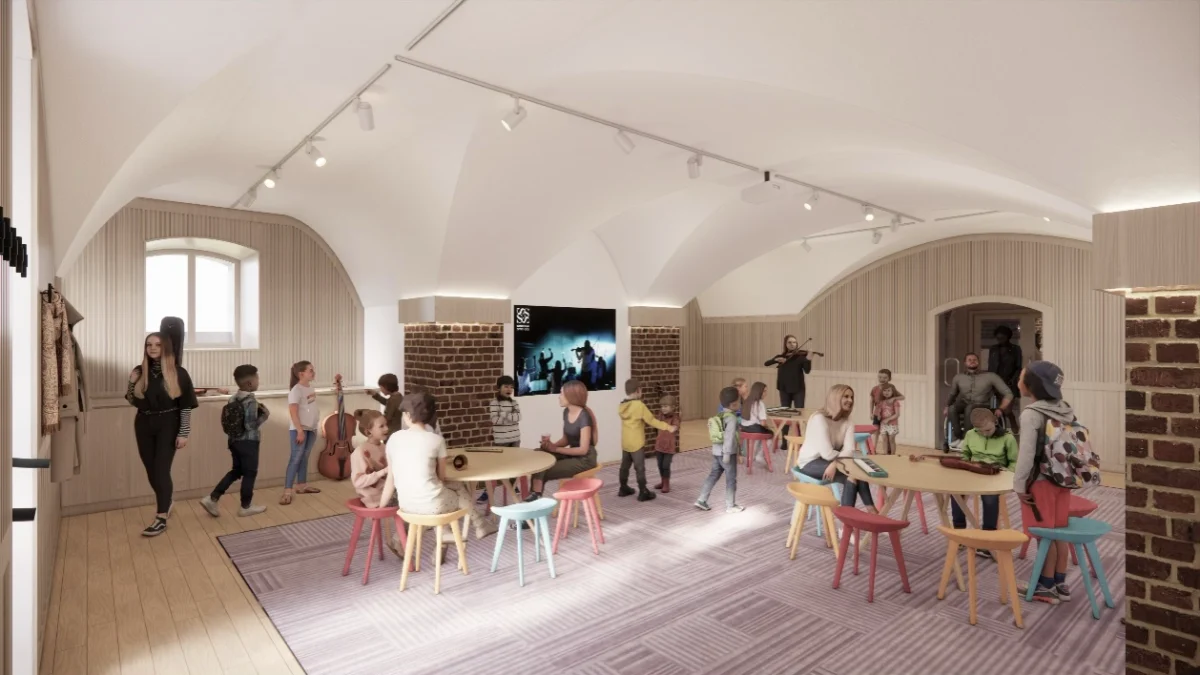
Beyond structural preservation, the initiative represents a profound philosophical shift in how classical music institutions integrate with their local and national communities. The plans comprehensively overhaul the building’s interior capabilities—most notably converting the atmospheric undercroft crypt into a cutting-edge educational hub for schools and community outreach, while simultaneously expanding rehearsal and administrative facilities for the internationally renowned Sinfonia Smith Square Orchestral Fellowship.
With construction slated to commence in late 2027 and a grand public reopening projected for 2029, the revitalized Smith Square Hall anticipates welcoming upwards of 90,000 visitors annually. This strategic expansion is designed to cement the venue’s status as a vibrant epicentre for orchestral excellence, youth development, and inclusive public engagement in the heart of Westminster.
Detailed Chronology: From Baroque Masterpiece to Modern Cultural Hub
To understand the magnitude of the Doors Open redevelopment, one must trace the extraordinary, multifaceted history of the site—a narrative spanning nearly three centuries of architectural triumphs, wartime devastation, daring rescue missions, and triumphant musical revivals.
1713–1728: The Architectural Genesis
The story of Smith Square Hall begins in the waning years of Queen Anne’s reign. Designed by the visionary baroque architect Thomas Archer—a contemporary of Sir John Vanbrugh and Nicholas Hawksmoor—the church of St John’s Smith Square was constructed between 1713 and 1728. Funded by the Commission for Building Fifty New Churches, Archer’s design broke radically from the restrained Palladianism favoured by many of his peers.
Characterized by its dramatic four monumental corner towers, dynamic elevations, and soaring elliptical dome reminiscent of continental European architecture, the building quickly became a polarizing architectural landmark. Affectionately (and sometimes derisively) dubbed "Queen Anne’s Footstool" due to its distinctive proportions and four corner turrets, the building nonetheless stood as a towering achievement of English Baroque design.
1941: The Flames of the Blitz
For over two centuries, the building served as an Anglican parish church. However, the catastrophic events of the Second World War fundamentally altered its destiny. On the night of 10 May 1941, during the height of the Blitz, incendiary bombs rained down on Westminster. St John’s took a direct hit. The interior was gutted by intense fires, leaving behind little more than the charred exterior masonry shell and the haunting outline of its structural walls.
For nearly three decades, the roofless ruin sat as a poignant monument to the ravages of war, occupying prime real estate in political London while serving no practical civic or spiritual function. By the 1960s, demolition was actively being considered to clear the site for modern development.
1969: The Phoenix Rising as a Concert Hall
The salvation of St John’s began through the tenacity of Lady Parker of Waddington and a dedicated group of preservationists and music lovers who formed the St John’s Smith Square Trust. Recognizing the building’s sublime acoustic potential—largely owing to its lofty barrel-vaulted ceiling and dense masonry construction—they spearheaded a massive fundraising and restoration campaign.
Architect Marshall Sisson was tasked with the sensitive interior reconstruction. While the exterior baroque facade was faithfully restored to Archer’s original specifications, the interior was ingeniously transformed into a world-class 600-seat concert hall. When it officially opened its doors in 1969, it immediately filled a crucial gap in London’s cultural ecosystem, offering an intimate, resonant performance space ideally suited for chamber orchestras, choral ensembles, and solo recitals. Over the ensuing decades, it earned an enviable reputation as a beloved institution for both established maestros and rising classical stars.
2002–Present: The Birth of Sinfonia Smith Square
Parallel to the building’s musical renaissance, another vital institution was taking shape. Founded in 2002 as the Southbank Sinfonia (and later rebranding as Sinfonia Smith Square following a historic merger with the hall), the organization established a groundbreaking orchestral Fellowship. Designed to bridge the notoriously difficult gap between conservatoire graduation and professional orchestral employment, the Fellowship has spent over two decades nurturing raw talent, molding hundreds of young musicians into polished professionals.
2026 and Beyond: The Doors Open Era
By the mid-2020s, despite its bustling artistic calendar, the physical fabric of Smith Square Hall was showing acute signs of strain. The building’s 1969 infrastructure had become outdated, failing to meet modern environmental standards, accessibility mandates, and the dynamic operational needs of a 21st-century orchestra. Entering Historic England’s Heritage at Risk Register served as an urgent alarm bell, prompting trustees and executive leadership to formulate the comprehensive Doors Open capital campaign—culminating in the pivotal £200,000 grant from the Wolfson Foundation in August 2026.
Supporting Context & Metrics: The Anatomy of the Redevelopment
The £200,000 award from the Wolfson Foundation—an independent charity that supports excellence in science, health, education, and heritage/humanities—represents a foundational validation of the project’s architectural and social merits. However, the scope of Doors Open extends far beyond surface-level repairs. It is a holistic modernization initiative grounded in rigorous data, community demographics, and institutional metrics.
Technical and Structural Scope of Work
The overarching ambition of the project is to marry meticulous heritage conservation with forward-looking infrastructural design. Key technical elements include:
- Building Envelope Restoration: Specialist stone conservators will repair and repoint the weathered Portland stone exterior, clean soot-damaged baroque carvings, and stabilize the four iconic corner towers.
- Environmental Upgrades: Replacing archaic heating, ventilation, and electrical systems with high-efficiency, low-carbon alternatives to reduce the building’s carbon footprint and protect delicate instruments and historical fabric.
- Acoustic Optimization: Upgrading interior acoustic dampening and sound-isolation panels without compromising the hall’s celebrated natural reverberation.
Transforming the Undercroft Crypt
One of the most innovative features of the master plan involves the building’s historic crypt. Historically utilized primarily for storage, plant rooms, and cramped administrative functions, the sprawling undercroft will undergo a radical transformation.
- Dedicated Learning Spaces: The crypt will be repurposed into state-of-the-art educational facilities tailored for school groups, youth orchestras, and early-years music engagement.
- Creative Workshops: Flexible studio areas will be installed to host composition masterclasses, digital audio production workshops, and interactive community sound art projects.
Empowering the Orchestral Fellowship
The Sinfonia Smith Square Fellowship is widely regarded as one of the most successful orchestral training grounds in Europe. The redevelopment addresses a chronic shortage of appropriate infrastructure for these young professionals:
- Expanded Rehearsal Studios: New acoustic rehearsal rooms will allow multiple chamber sections to practice simultaneously without acoustic bleed.
- Artist Wellness and Administration: Improved dressing rooms, digital editing suites, and administrative hubs will streamline the Fellowship’s day-to-day operations, ensuring that early-career musicians train in an environment that mirrors professional European concert houses.
Accessibility and Inclusion Metrics
Currently, Smith Square Hall struggles with compliance under modern disability access frameworks due to its 18th-century footprint and 1960s interior retrofit. The Doors Open project prioritizes universal access:
- Step-Free Access: Installation of discreet, high-capacity lifts and redesigned entrance pathways to ensure wheelchair users and visitors with mobility impairments can access all public areas of the building, including the stage and the crypt.
- Sensory and Assistive Technologies: Integration of advanced induction loops, tactile wayfinding signage, and sensory-friendly relaxed spaces to accommodate neurodivergent patrons.
Economic and Visitor Projections
The business case submitted by Sinfonia Smith Square underscores the substantial civic dividends the project will yield:
- Visitor Capacity: Projections indicate that the revitalized hall will attract in excess of 90,000 visitors annually, representing a projected 35% increase over pre-renovation attendance figures.
- Community Reach: Through the crypt’s new educational facilities, the organization aims to double its annual student and youth engagement touchpoints, partnering directly with inner-London schools where music education funding has faced severe contraction.
- Heritage Status: The primary engineering metric remains the successful removal of the property from Historic England’s Heritage at Risk Register, safeguarding a priceless piece of Westminster’s architectural heritage for future generations.
Official Statements and Stakeholder Perspectives
The announcement of the Wolfson Foundation grant has elicited widespread enthusiasm across the British arts, heritage, and philanthropic sectors. Leaders from Sinfonia Smith Square, architectural bodies, and funding institutions have emphasized the transformative potential of the initiative.
A Spokesperson for the Wolfson Foundation remarked on the award:
"The Wolfson Foundation is delighted to support Sinfonia Smith Square in this ambitious and visionary project. St John’s Smith Square is a masterpiece of English Baroque architecture, but it is also a living, breathing home for music. Doors Open brilliantly bridges the gap between preserving our irreplaceable heritage and fostering the next generation of musical talent. We are proud to play a foundational role in securing the future of this iconic Westminster landmark."
The Chief Executive of Sinfonia Smith Square shared institutional insights regarding the project’s broader mission:
"Receiving this generous grant from the Wolfson Foundation is a monumental vote of confidence in our vision for Smith Square Hall. When we look at the trajectory of Doors Open, we are not merely fixing masonry or upgrading HVAC systems; we are fundamentally redefining our civic role. For decades, this magnificent building has hosted breathtaking performances. With these new spaces—particularly our dedicated learning hub in the crypt and expanded facilities for our Fellowship—we will open our doors wider than ever before. We are ensuring that classical music is accessible, educational, and deeply rooted in the community."
A Senior Architectural Conservator associated with the project noted the technical challenges:
"Restoring a Grade I listed Thomas Archer church is an exercise in immense precision. Every stone, every structural intervention must respect the architectural integrity conceived in the 18th century, while accommodating the rigorous acoustic and mechanical demands of a 21st-century concert hall. Removing the building from Historic England’s Heritage at Risk Register is our ultimate benchmark, and the Wolfson Foundation grant provides the critical momentum needed to execute this delicate balancing act."
Future Outlook: The Road to 2029
As the ink dries on the grant agreements, Sinfonia Smith Square faces a meticulously planned, high-stakes operational runway leading up to the grand reopening at the close of the decade.
Phase One: Design Finalization and Pre-Construction (Late 2026 – Mid-2027)
Over the coming months, architectural teams, acoustic engineers, and heritage consultants will finalize detailed design specifications and secure final statutory consents from Westminster City Council and Historic England. Concurrently, development teams will work alongside major institutional donors and individual philanthropists to raise the remaining capital required to meet the total project budget.
Phase Two: Construction and Temporary Displacement (Late 2027 – 2028)
Construction hoarding will go up in late 2027 as heavy engineering works commence. During the primary construction phase, Sinfonia Smith Square will execute a carefully coordinated touring and residency strategy, partnering with other prominent London venues, churches, and cultural spaces to ensure that the Orchestral Fellowship’s training schedule and the organization’s public concert series continue without interruption.
Phase Three: Commissioning, Opening, and Legacy (2029)
The climax of the decade-long strategic vision will arrive in 2029 with the official reopening of Smith Square Hall. Featuring a gala inaugural concert season showcasing current and alumni Fellows, the launch will signal a new chapter for the venue.
By successfully marrying the architectural grandeur of Thomas Archer’s baroque vision with cutting-edge educational infrastructure and uncompromising accessibility, Sinfonia Smith Square is positioning itself not just as a concert venue, but as a dynamic cultural anchor for Westminster and the wider United Kingdom for generations to come.