
Executive Overview
In the traditional landscape of music pedagogy, the acquisition of technical instrument proficiency has historically overshadowed the cognitive architecture of sight-reading. Generations of students have been conditioned to approach musical notation as a cryptographic puzzle to be systematically decoded: translating a visual symbol on a staff into a note name, mapping that name to a specific physical finger placement on an instrument, verifying the accuracy of the deduction, and finally executing the mechanical production of sound.
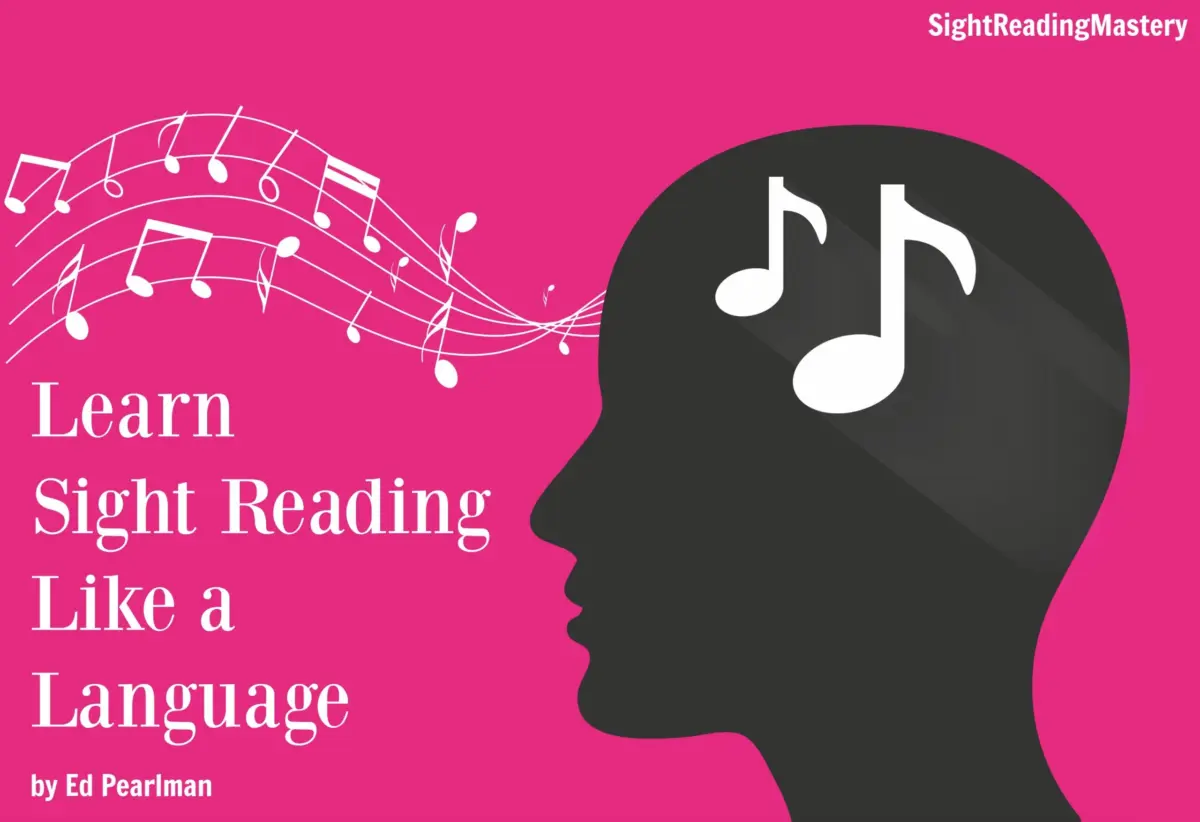
According to seasoned classical violinist, fiddler, and educator Ed Pearlman, this cumbersome cognitive translation process is fundamentally flawed. In language acquisition, ultimate fluency is achieved only when the brain bypasses the intermediary step of translating foreign words back into one’s native tongue. When a speaker encounters the phrase "buenos días," true comprehension occurs instantaneously; the mind registers the intrinsic meaning without consciously parsing "good morning."
Sight-reading music demands an identical cognitive shortcut. Musicians cannot afford the luxury of processing notes sequentially in a linear, calculated fashion while simultaneously maintaining a strict tempo, dynamic contour, and expressive phrasing. When forced to calculate every variable on the fly, performers invariably stumble, rush, drag, or break down entirely.
To resolve this pedagogical bottleneck, Pearlman has formulated a progressive, five-tiered developmental framework. Designed for instrumentalists and vocalists alike, this methodology shifts the focus away from mechanical translation and toward holistic visual-auditory integration. By systematically stacking competencies—beginning with foundational rhythms and culminating in cognitive note-naming—practitioners can bridge the chasm between raw notation and seamless musical expression. This report explores the mechanics of Pearlman’s framework, the cognitive science underpinning musical fluency, and actionable strategies for long-grade instructional integration.
Detailed Chronology of the Sight-Reading Bottleneck
The historical evolution of Western music notation has consistently oscillated between two distinct pedagogical philosophies: the analytical approach and the experiential approach. From the rigid solfège systems of Guido d’Arezzo in the eleventh century to the modern conservatory models of the nineteenth and twentieth centuries, educators have debated whether students should learn to read music by intellectual dissection or by intuitive osmosis.
Historically, the analytical model dominated. Students spent months, sometimes years, mastering music theory, clef reading, and interval calculation before ever attempting to perform complex sight material. While this produced conservatory graduates with formidable theoretical knowledge, it frequently fostered a crippling psychological barrier known colloquially as "sight-reading anxiety."
The Pitfalls of Linear Decoding
When a novice musician looks at an unfamiliar score, the brain is flooded with a constellation of stimuli: clef signs, key signatures, time signatures, accidentals, dynamic markings, articulations, and note heads.
- Visual Intake: The eye captures a series of notes on a staff.
- Translation: The brain converts the visual spatial relationship into an alphanumeric designation (e.g., "that is a ledger-line middle C").
- Motor Mapping: The mind transmits a neural signal to the fingers or vocal cords, instructing them where to move (e.g., "press the third finger on the A-string").
- Execution: The sound is produced.
- Verification: The ear evaluates whether the produced sound matches expectations.
This sequential pipeline takes fractions of a second per note, but when compounded across a measure containing sixteenth notes or rapid syncopation, the cognitive load exceeds human processing capacity. The performer experiences mental traffic congestion, leading inexorably to missed notes, dropped beats, and rhythmic collapse.
Pearlman’s framework represents a modern pedagogical pivot away from this bottleneck. By treating musical notation as a distinct language rather than a set of mathematical instructions, his graduated levels train the brain to process groups of visual data simultaneously—treating entire measures of music the way a literate adult treats words in a paragraph, perceiving them as single, cohesive units of meaning.
Supporting Context & Metrics: The Science of Musical Literacy
Cognitive psychologists and neuroscientists studying musical processing have long noted the striking parallels between linguistic literacy and musical sight-reading. Functional Magnetic Resonance Imaging (fMRI) studies reveal that expert sight-readers exhibit neurological activation patterns strikingly similar to those of fluent readers of human languages.
The Role of Chunking in Cognitive Processing
A foundational concept in cognitive psychology is "chunking"—the process by which the brain groups individual pieces of information into larger, meaningful collections.
- The Novice Reader: Processes musical notation note-by-note, quickly exceeding the brain’s short-term working memory capacity (which psychological research, famously summarized by George A. Miller, estimates at approximately seven items, give or take two).
- The Expert Reader: "Chunks" musical data. A scale passage is perceived not as eight individual notes ($C-D-E-F-G-A-B-C$), but as a single directional gesture (an ascending C-major scale). A chord is perceived as a vertical harmonic entity rather than three discrete pitches.
Pearlman’s five levels are, fundamentally, a structured exercise in chunking. By isolating specific parameters of the score—rhythm first, followed by contour, key signature integration, and interval recognition—the pedagogical model prevents cognitive overload. The student learns to master each layer of abstraction independently before fusing them into a unified performance act.
| Level | Core Focus | Primary Cognitive Objective | Common Pitfall to Avoid |
|---|---|---|---|
| Level 1 | Rhythms Only | Isolate temporal relationships; master macro-beats. | Attempting to assign specific pitch names to notes. |
| Level 2 | Note Profile | Map directional contour (higher, lower, same). | Pausing to calculate exact scalar intervals. |
| Level 3 | Focusing the Picture | Integrate key signatures and half-steps; preserve tempo. | Sacrificing tempo/timing accuracy for pitch perfection. |
| Level 4 | Seeing Intervals | Recognize spatial intervals (steps, thirds, fifths) visually. | Treating every interval as a new calculation rather than a visual shape. |
| Level 5 | Names of Notes | Overlay conceptual note-naming onto fluent performance. | Allowing cognitive note-naming to derail rhythmic momentum. |
The Five-Tiered Sight-Reading Framework
To implement this philosophy effectively, Ed Pearlman has broken down the practice of sight-reading into five distinct, progressively challenging levels. Crucially, these levels are distinct from the standardized grade levels used to measure the objective difficulty of a musical piece (such as those found on platforms like SightReadingMastery). Instead, these represent methodological lenses through which any piece of music can be analyzed and practiced.
Level 1: Rhythms Only
The foundational building block of all music is time. Without rhythm, notes are merely abstract frequencies lacking narrative drive.
- The Methodology: Select a passage, establish a steady tempo (using a metronome or internal pulse), and simply tap, clap, or speak (using neutral syllables) the rhythm of the notes.
- The Objective: Train the eye to scan ahead and process the rhythmic architecture of an entire measure at a time. Rhythms possess no intrinsic meaning in isolation; they derive their power entirely from their relationship to surrounding beats.
- Ancillary Anecdote: Pearlman humorously invokes the classic musician’s trope—the violist who boasts to a violinist about his ability to play sixty-fourth notes, only to play a single one when challenged. The joke underscores a vital truth: rhythmic fluency requires continuity, not just isolated technical capability.
Level 2: Note Profile
Having mastered the rhythmic grid in Level 1, the practitioner now introduces pitch, but with a vital constraint: absolute accuracy of note names is intentionally bypassed.
- The Methodology: Maintain the exact tempo and rhythmic integrity established in Level 1. As you play or sing the passage, focus exclusively on the contour—whether the notes move higher, stay the same, or drop lower relative to the preceding note.
- The Objective: Develop visual-spatial awareness of the melodic line. By prioritizing the overall shape (or "profile") of the melody over the precise micro-tonal verification of each note, the musician keeps the musical engine moving forward without stalling.
Level 3: Focusing the Picture
At Level 3, the musician introduces structural tonality, merging the rhythmic and contour foundations with the specific tonal landscape of the piece.
- Pre-Practice Protocol: Before touching the instrument, examine the key signature. Play a scale in that specific key to anchor your muscular and aural memory, paying explicit attention to the location of the half-steps (semitones), which often appear only once or twice within a given phrase.
- The Methodology: Begin sight-reading the passage, maintaining the timing and note profile of Level 2, but now attempting to land on the correct pitches within the key signature.
- The Golden Rule: Never sacrifice timing for pitch accuracy. If uncertainty arises regarding a specific note, make an educated guess based on the key signature and interval profile, but do not pause, hesitate, or drag the tempo. If this level proves overwhelming, reduce the tempo or isolate the practice to one or two measures at a time.
Level 4: Seeing Intervals
Level 4 shifts the visual processing of the staff from vertical points to geometric relationships.

- The Methodology: Train your eyes to recognize standard spatial intervals at a glance:
- Scales (Steps): Consecutive notes moving fluidly from a line note to an adjacent space note, or vice versa.
- Thirds: Notes moving from one line to the very next line up or down, or from one space to the next space.
- Larger Leaps (Fourths, Fifths, and beyond): While initially more challenging to decode instantly, visual recognition of wider intervals (such as a fifth spanning a line to two lines away) becomes second nature through consistent, incremental exposure.
- The Objective: Eradicate the need to read note names individually by substituting geometric shape recognition. Just as readers recognize words by their overall silhouette rather than spelling out individual letters, advanced sight-readers recognize intervals by their physical topography on the staff.
Level 5: Names of Notes
The final tier introduces a cognitive layer that many traditional pedagogues mistakenly place at the very beginning of the learning process: the explicit naming of notes in the mind or out loud.
- The Methodology: As you execute the passage with proper rhythm, contour, key integration, and interval awareness, consciously think or speak the letter names of the notes being played.
- The Pedagogical Status: Pearlman emphasizes that this step is strictly optional for basic sight-reading fluency, as mechanical note-naming is not strictly essential to the language of reading and playing music. However, it is an invaluable diagnostic tool. By layering note-naming on top of an already fluid sight-reading process, performers can test their concentration and ensure that their fundamental literacy is robust.
- Support Tool: For musicians struggling with instantaneous note identification, supplementary tools such as the Note Recognition features offered on platforms like SightReadingMastery provide targeted drills to accelerate notation processing speed.
Official Statements and Pedagogical Insights
The philosophy underlying Pearlman’s methodology reflects a broader, modern consensus among master teachers who advocate for experiential, immersion-based learning over rigid, dry academic drill.
"When you’re learning a language, the goal is to be able to understand and speak without having to mentally translate the words into your native language… It’s the same in music. You want to play directly from sight. You’ll get bogged down if you try to see the notes on paper, translate them into names and finger numbers… you won’t have time to do all this and stay in tempo."
— Ed Pearlman, Classical Violinist, Fiddler, and Educator
Educational theorists point out that Pearlman’s graded approach mirrors the constructivist theories of cognitive development. By scaffolding the learning process—isolating rhythms first, adding gross motor contours next, integrating key signatures, teaching geometric intervals, and finally crowning the process with explicit nomenclature—the framework respects the cognitive bandwidth of the human brain. It dismantles a complex, multi-variable task into manageable, sequential micro-habits.
Future Outlook: Integrating Sight-Reading Mastery into Modern Curricula
As music education continues to evolve in the digital age, the democratization of sight-reading resources—via interactive web platforms, archived pedagogical blogs, and digital sheet music repositories—presents unprecedented opportunities for students and professionals alike.
However, digital accessibility alone does not guarantee instructional efficacy. Without a structured mental framework, students surfing through endless libraries of sight-reading examples often fall back on inefficient, brute-force repetition. They read a piece once, stumble through it, look at the correct answers, and move on, failing to develop the underlying neurological pathways required for true sight-reading fluency.
The widespread adoption of Pearlman’s five-tiered framework offers a robust corrective to this scattershot approach. Conservatory departments, private studio instructors, and independent self-taught musicians can integrate these principles into daily routines:
- Dedicated Micro-Sessions: Dedicate the first five to ten minutes of every practice session exclusively to sight-reading, rotating through the five levels across a weekly schedule.
- Tempo Discipline: Utilize metronomes strictly, enforcing the rule that rhythmic continuity supersedes pitch perfection in early-stage read-throughs.
- Holistic Assessment: Regularly audit practice routines to ensure that students are not regressing into the trap of linear note-to-finger translation.
By redefining music reading not as a cryptographic decoding exercise, but as a fluid, immersive linguistic practice, educators can dismantle the psychological anxiety that has hindered generations of musicians. Through systematic mastery of rhythms, profiles, key signatures, intervals, and nomenclature, performers can finally unlock the true expressive potential of the written score, transforming the page into a living, breathing musical dialogue.