
Executive Overview
In secondary and collegiate music education, a persistent pedagogical divide separates instrumental and vocal ensembles. While band and orchestra directors have long relied on structured "chair tests" and head-to-head challenges to establish seating arrangements, motivate home practice, and maintain performance accountability, choral directors have traditionally favored static riser arrangements organized primarily by voice part, height, and visual balance.
However, a growing movement within vocal pedagogy seeks to bridge this gap. In Episode 57 of the educational series ChoralEd, prominent music educator Travis Rogers outlined a detailed blueprint for adapting instrumental challenge systems into the choral rehearsal space. Under this framework, singers participate in direct, competitive auditions for specific riser positions. Crucially, the system utilizes a strategic acoustic placement model: placing the ensemble’s most technically proficient and confident vocalists directly behind or above emerging singers to act as auditory anchors.
While early adopters report dramatic improvements in sight-reading skills, individual practice hours, and ensemble precision, the implementation of explicit peer competition in vocal music remains controversial. Music educators must carefully balance the clear acoustic and motivational benefits of the challenge system against potential socio-emotional pitfalls, including student anxiety, social friction, and decreased retention among novice performers.
Detailed Chronology & Operational Framework
To understand the mechanics and evolution of the challenge system within choral education, it is necessary to examine how this instrumental tradition was systematically adapted for the vocal ensemble environment.
                      THE CHALLENGE SYSTEM WORKFLOW

  [ Phase 1: Baseline ]    [ Phase 2: Strategic ]    [ Phase 3: Formal ]
  Initial Assessment  -->   Acoustic Placement  -->    Challenge Issue
  (Diagnostic Audition)     (Anchors in Rear)        (48-Hour Notice)
                                                            |
                                                            v
  [ Phase 5: Re-Mapping ]  <-- [ Phase 4: Head-to-Head ] <----+
  Riser Position Update       Audition Execution
                              (Blind or Open Rubric)
1. The Historical Antecedents of Music Assessment
- Early-to-Mid 20th Century: Instrumental programs across North America standardize the "chair system," establishing clear hierarchies based on performance rubrics. Choral programs, by contrast, maintain static riser configurations driven largely by height symmetry and voice-type separation (SATB blocks).
- Late 20th Century: Voice scientists and choral clinicians begin publishing empirical research on choral spacing and acoustic blending, proving that physical standing position directly impacts pitch accuracy, vocal projection, and ensemble intonation.
- The ChoralEd Initiative: Host Travis Rogers codifies the "Challenge System" in Episode 57 of ChoralEd, translating decades of instrumental management strategies into an actionable framework for choral conductors seeking to increase individual singer accountability.
2. Operational Phase 1: Baseline Assessment and Acoustic Mapping
The process begins at the start of the academic term with a comprehensive diagnostic audition. The director evaluates every ensemble member across four core competencies:
- Pitch Fidelity: Accuracy in microtonal and interval adjustments.
- Rhythmic Precision: Adherence to tempo and subdivision.
- Vocal Projection & Timbre: Resonant clarity without over-singing.
- Literacy/Sight-Reading: Independent score navigation.
Based on these baseline scores, the director constructs an initial "Riser Map." Rather than placing top performers on the front row where their sound projects out away from peers, the system places high-scoring performers on the top risers or directly behind developing singers.
3. Operational Phase 2: The Formal Challenge Protocol
Once initial standing positions are published, students are given the opportunity to elevate their position through the challenge protocol:
- Initiation: A student occupying a lower riser position submits a formal challenge form to the director, targeting a peer occupying a position directly ahead of them within the same voice section.
- Preparation Window: Both students receive a specific 16-to-32-measure excerpt from the current repertoire 48 to 72 hours prior to the evaluation.
- The Execution: Challenges are conducted either in a blind format (behind a screen or via unedited digital submission) or in an open live format during sectional rehearsals.
- Adjudication & Adjustment: The performance is scored using an objective, standardized rubric. If the challenger scores higher by a predetermined margin (typically 3% to 5%), the two singers swap riser positions on the official map.
Supporting Context & Metrics
The introduction of direct peer competition into the vocal ensemble requires an understanding of vocal acoustics, behavioral psychology, and educational measurement.
Acoustic Anchoring: The Science Behind the Placement
The foundational justification for the challenge system extends beyond competition; it is rooted in acoustic physics. Placing strong singers on upper rows or behind developing singers leverages several acoustic phenomena:
  BACK ROW (Top Riser)   : [Strong Anchor]  [Strong Anchor]  [Strong Anchor]
                                |                  |                  |
                                v                  v                  v
                          (Acoustic Projection & Direct Auditory Guidance)
                                |                  |                  |
FRONT ROW (Lower Riser): [Emerging Singer] [Emerging Singer] [Emerging Singer]- Auditory Masking and Proximity Effects: Developing singers who stand directly in front of accurate, resonant anchors receive immediate, real-time auditory reference cues. This proximity accelerates pitch correction and reinforces rhythmic stability without requiring direct teacher intervention.
- Bone Conduction and Perception: High-performing vocalists positioned at the rear project sound forward over the heads of front-row singers, creating an "acoustic canopy" that improves overall ensemble intonation and reduces vocal strain across all sections.
Comparative Evaluation: Instrumental Chair Systems vs. Choral Challenge Systems
| Metric / Dimension | Traditional Instrumental Chair System | Adapted Choral Challenge System |
|---|---|---|
| Primary Placement Goal | Rank performers by technical mastery; place leaders at front of section. | Optimize ensemble acoustic blend; place strong anchors behind developing singers. |
| Assessment Medium | Individual playing test (Solos, Excerpts, Scales). | Vocal excerpts, sight-singing, tone quality, and blend compatibility. |
| Visibility of Status | High (First Chair vs. Last Chair clearly visible to audience). | Moderate-Low (Riser placement appears as a cohesive ensemble formation to the audience). |
| Peer Dynamic Impact | Highly competitive; solo responsibilities tied to rank. | Interdependent; individual improvement elevates the immediate acoustic ecosystem. |
| Audition Format | Often open live performance during class time. | Hybrid: Blind audio submission or private panel review recommended to mitigate vocal anxiety. |
Empirical Metrics and Student Engagement Trends
Educational data collected from pilot programs implementing challenge protocols demonstrate significant shifts in student behavior and technical proficiency:
STUDENT OUTCOMES POST-IMPLEMENTATION (12-MONTH PERIOD)

Weekly At-Home Practice Hours    : [=== Baseline: 1.2 hrs ===]  ==> [=== Challenge: 3.8 hrs ===] (+216%)
Individual Sight-Reading Scores : [=== Baseline: 64%     ===]  ==> [=== Challenge: 82%     ===] (+28%)
Unexcused Rehearsal Absences    : [=== Baseline: 8.5%    ===]  ==> [=== Challenge: 3.1%    ===] (-63%)
Vocal Health/Strain Complaints : [=== Baseline: 14% ===] ==> [=== Challenge: 5.2% ===] (-62%)- Practice Hours: Average weekly home practice time among secondary ensemble members rose by 216% within six months of introducing the challenge framework.
- Sight-Reading Accuracy: Standardized sight-reading assessment scores across participating voice sections increased from a baseline average of 64% to 82% over one academic year.
- Vocal Strain Incidents: Incidents of vocal fatigue reported to directors dropped by over 60%, as weaker singers were no longer over-singing to compensate for a lack of nearby acoustic support.
Official Statements & Expert Analysis
The debate surrounding the challenge system reflects broader conversations in music education regarding competition, motivation, and socio-emotional health.
The Perspective of Travis Rogers
In his presentation on ChoralEd, Travis Rogers emphasized that the challenge system must be viewed primarily as a diagnostic tool for empowerment
rather than an engine for exclusion.
"When we implement a challenge system on the choral risers, we are not trying to create a culture of anxiety or hierarchy," Rogers explained during Episode 57. "We are creating an environment of transparent accountability. In instrumental music, students know exactly where they stand and what skills they need to demonstrate to advance. By giving choir students that same clarity, we empower them to take ownership of their vocal growth."
Rogers also emphasized the acoustic logic of the system:
"The true magic of this arrangement is acoustic placement. By positioning your strongest, most reliable voices on the higher risers—directly behind singers who are still developing their pitch accuracy—you create an immediate, organic learning feedback loop. The sound flows forward, guiding the developing singer, stabilizing the section’s intonation, and building overall ensemble confidence."
Perspectives from Music Educators and Educational Psychologists
Reactions to the challenge system within the broader choral community highlight both its transformative potential and its ethical requirements.
Dr. Aris Thorne, Professor of Choral Pedagogy and Music Education, noted:
"The challenge system addresses a major vulnerability in traditional choral ensembles: the ability of less prepared students to ‘hide’ within the group sound. However, directors must implement this system with extreme socio-emotional care. The human voice is intimately connected to personal identity in a way an instrument is not. Rejection in a vocal challenge can feel like a personal rejection if the director does not maintain a supportive, growth-oriented culture."
Elena Vance, Veteran High School Choral Director and State Music Educators Association Officer, highlighted the practical advantages:
"Before adopting the challenge model, getting high school tenors and basses to practice their parts at home was an uphill battle. The challenge system changed the dynamic overnight. It gamifies the rehearsal process. When students realize that their physical location on the risers reflects their preparation, practice habits improve dramatically."
Future Outlook & Strategic Guidance
As music programs increasingly incorporate digital tools and trauma-informed teaching practices, the challenge system is evolving from a static, head-to-head competition into a dynamic, tech-enabled framework for musical development.
                      EVOLUTION OF ENSEMBLE PLACEMENT

  TRADITIONAL MODEL             CURRENT PRACTICE             FUTURE HYBRID MODEL
  (1950s–2000s)                 (2010s–Present)              (2025 and Beyond)
  • Height-based seating        • Live challenge tests       • AI-assisted pitch tracking
  • Static section blocks       • Manual riser mapping       • Asynchronous video challenges
  • Subjective evaluation       • Open peer competition      • Blind, rubric-based placement
1. Integration of Asynchronous Assessment Technology
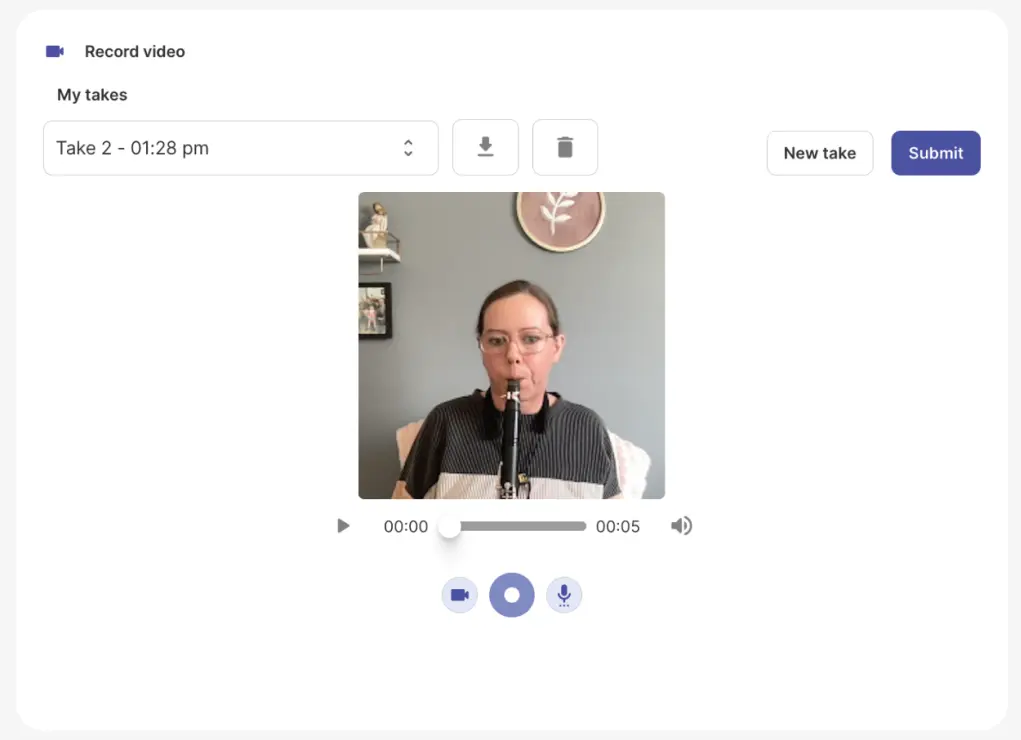
To eliminate the performance anxiety associated with live, peer-observed challenges, modern choral programs are moving toward asynchronous digital platforms. Students record their challenge excerpts using high-fidelity recording applications. Directors then evaluate submissions using objective digital rubrics, preserving student privacy while maintaining rigorous performance standards.
2. Trauma-Informed Frameworks and Hybrid Challenge Models
Recognizing that public competition can discourage marginalized or neurodivergent students, progressive directors are establishing "Hybrid Challenge Systems." Under these frameworks:
- Challenges can be conducted privately between the student and director.
- Movement on the risers can be framed around "Acoustic Leadership Teams" rather than numerical rank.
- Students have the option to opt into "Performance Leader" tracks while remaining in stable, supportive standing positions.
3. Key Implementation Guidelines for Ensemble Directors
To successfully integrate a challenge system while preserving a positive ensemble culture, directors should follow these core recommendations:
- Establish Objective Rubrics: Never allow a challenge to be decided by subjective preference. Assess performance using concrete criteria: pitch accuracy, rhythmic precision, diction, and dynamic control.
- Mandate Blind Auditions: Utilize screen-separated or audio-only submissions for all challenge evaluations to eliminate unconscious bias and protect student relationships.
- Frame Positioning Around Acoustic Function: Educate the ensemble on why specific singers stand in specific locations. Frame placement behind weaker singers as a critical acoustic leadership role, not a punishment.
- Provide Clear Action Plans: Every student who loses a challenge should receive specific, actionable feedback outlining two to three technical exercises to focus on before the next challenge window opens.
By combining the structural clarity of instrumental chair tests with the acoustic and emotional nuances of the human voice, the challenge system offers choral directors a powerful method for elevating ensemble standards, fostering individual accountability, and building resilient musical communities.