
Executive Overview
The contemporary jazz landscape exists in a perpetual state of dialogue with its own rich history. Few genres are as simultaneously preoccupied with their foundational lineages and driven by relentless forward momentum. This duality is powerfully manifested in two major recent releases from titans of the art form: saxophonist Azar Lawrence’s Turn The Music Up (Trazar Records) and trumpeter Wadada Leo Smith’s Constellations And Hemispheres (Burning Ambulance).
Though both artists emerged during the crucible of the late 1960s and early 1970s avant-garde and spiritual jazz movements, their approaches to revisiting, recontextualizing, and advancing their oeuvres diverge in fascinating ways. Lawrence looks backward to propel himself forward, revisiting the fertile ground of his mid-1970s solo albums alongside seminal works by associates McCoy Tyner and Pharoah Sanders. His release is a warm, groove-oriented, and texturally rich ensemble statement that bridges the gap between classic spiritual jazz, soul-funk backings, and contemporary Brazilian-infused fusion.
Conversely, Wadada Leo Smith’s Constellations And Hemispheres stands as a monumental exercise in architectural composition and post-production wizardry. At 85 years old, the legendary trumpeter and Association for the Advancement of Creative Musicians (AACM) luminary rejects mere nostalgia. Instead, he amalgamates sessions recorded across a half-decade into a sprawling, multi-textured suite of sonic exploration. Utilizing expansive studio craft, fluctuating ensemble configurations, and an all-star cast of collaborators, Smith delivers a complex meditation on space, timbre, and structural rigor.
This report provides an in-depth journalistic analysis of these two significant releases, examining their historical backdrops, personnel configurations, structural dynamics, and aesthetic merits. Through careful dissection of both albums, we gain a panoramic view of where modern improvised music stands today: honoring the past while continuously testing the boundaries of the studio and the stage.
Detailed Chronology and Artistic Evolution
Azar Lawrence: From the Spiritual Vanguard to Turn The Music Up
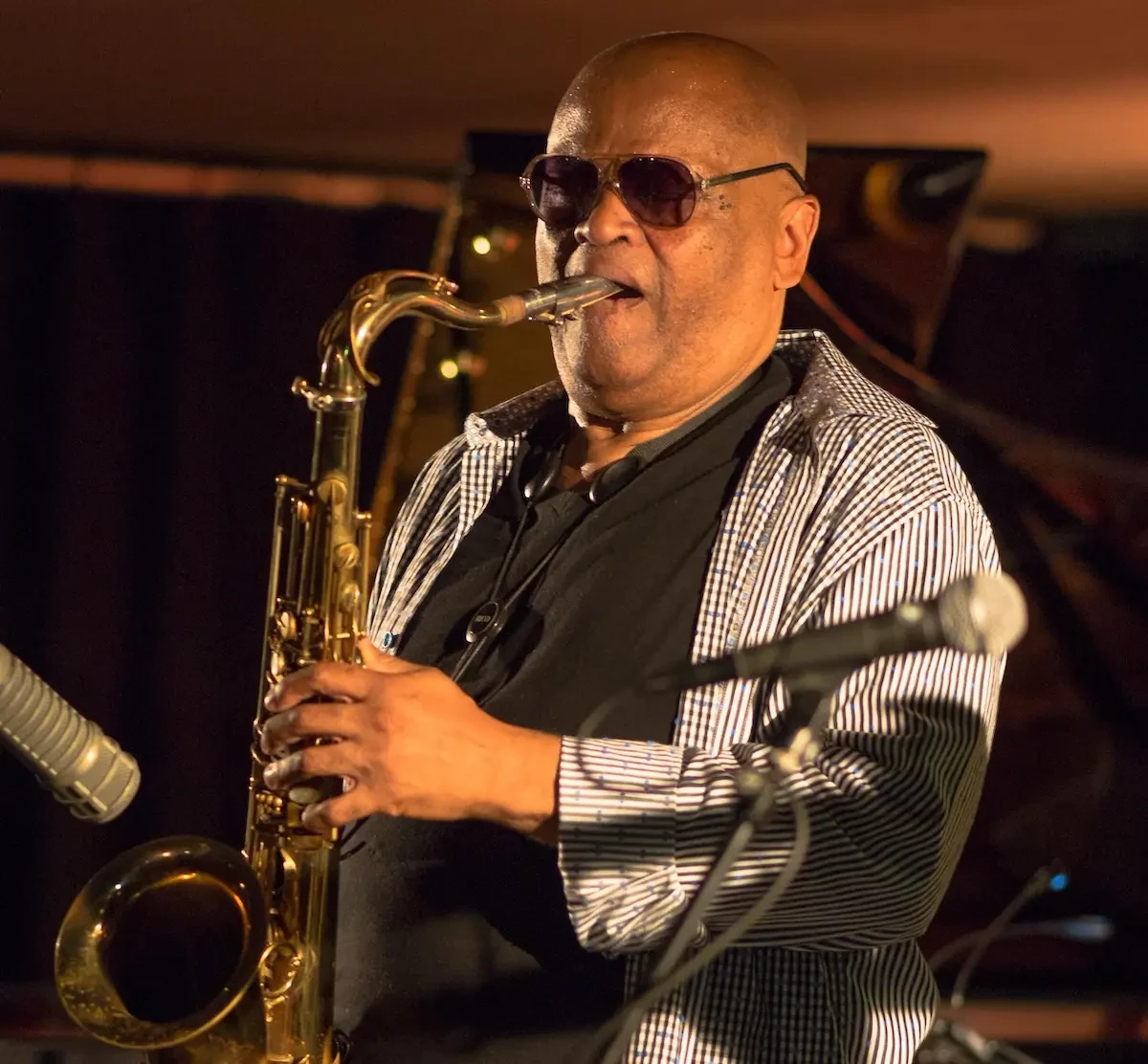
Azar Lawrence’s career is a masterclass in versatility and resilience within the jazz ecosystem. He initially rose to prominence in the early 1970s as a leading torchbearer of the spiritual jazz movement, most notably through his incendiary work with pianist McCoy Tyner. During an era when the commercial viability of acoustic and modal jazz faced severe headwinds, Lawrence demonstrated remarkable adaptability. When work for avant-garde and straight-ahead jazz artists grew scarce, he pivoted smoothly into the commercial sphere, lending his muscular yet soulful saxophone tone to the backing bands of R&B and funk royalty such as Marvin Gaye and Earth, Wind & Fire.
Today, Lawrence maintains a foot firmly planted in the straight-ahead jazz world as a prominent member of the acclaimed supergroup The Cookers. However, his latest artistic statement, Turn The Music Up (released via Trazar Records), finds him looking inward and backward to re-examine his formative years as a leader. Recorded in Venice, California, across 2024 and 2025, the album serves as a conscious retrospective of his first two solo efforts: 1974’s Bridge Into The New Age and 1975’s Summer Solstice.
Rather than mere note-for-note re-creations, Turn The Music Up treats these historical compositions as living, breathing blueprints. Lawrence incorporates material deeply tied to his personal relationships and mentors, including a composition from McCoy Tyner’s classic Atlantis album, as well as a poignant reading of The Creator Has A Master Plan—a staple from the repertoire of his late friend and collaborator, Pharoah Sanders. This specific track arrives at a moment of renewed cultural relevance for the composition, coinciding with fresh, acclaimed interpretations by modern vocalists Tyreek McDole and Ekep Nkwelle.
The core ensemble assembled for these sessions is a tightly knit, highly capable unit comprising trumpeter Brian Swartz, guitarist Taka Mori, pianist and keyboardist Robert Turner, bassist Gerald Brown, and drummer Yayo Morales, with vocal contributions by Lynne Fiddmont. A notable focus of the album is the spotlight given to two compositions by Brazilian composer and guitarist Amaury Tristao: Highway and Novo Ano, both of which originally anchored Summer Solstice.
Wadada Leo Smith: A Lifetime of Sonic Architecture
To trace the trajectory of Wadada Leo Smith is to trace the evolution of avant-garde composition and trumpet performance over the last six decades. Emerging in the late 1960s with a completely original, highly personalized voice on the instrument, Smith became a central architect of the Chicago-based Association for the Advancement of Creative Musicians (AACM), an organization that fundamentally altered the global paradigm of improvised music.
As a successor to the post-Miles Davis improvisational tradition, Smith has spent a lifetime cultivating a sound that is instantly recognizable. When played through a mute, his tone possesses a uniquely burnished, "cloudy" quality—one that evokes a sense of deep mystery and historical weight. Yet, despite being 85 years old, Smith exhibits the creative stamina of an artist half his age.
Constellations And Hemispheres (Burning Ambulance) is the culmination of various recording sessions conducted in New Haven, Connecticut, between 2017 and 2022. Known for his staggering prolificacy—a trait he shares with contemporary Anthony Braxton—Smith requires listeners to approach his extensive catalog with selectivity. While some of his recent releases focus on immediate, spontaneous group interaction (such as his 2024 collaborative album Angel Falls with Sylvie Courvoisier on Intakt), Constellations And Hemispheres leans heavily into Smith’s brilliant compositional and post-production sensibilities.
Utilizing extensive studio manipulation, Smith and his mixing engineers have combined material from multiple temporal windows to build a unified, intricately layered sonic universe. The album’s centerpiece is a sprawling, 22-minute suite titled Dark Matter, Particles Of Light, Mirror Of The Unseen, which serves as a masterclass in shifting sonic perspectives. By deliberately juxtaposing contrasting musical environments—a strategy he similarly deployed on his acclaimed 2023 release Fire Illuminations—Smith crafts an immersive listening experience that demands deep, analytical attention.
Supporting Context & Metrics
Comparative Matrix: Personnel, Production, and Aesthetic Intent
| Metric / Attribute | Azar Lawrence: Turn The Music Up | Wadada Leo Smith: Constellations And Hemispheres |
|---|---|---|
| Primary Artist | Azar Lawrence (Tenor & Soprano Saxophones) | Wadada Leo Smith (Trumpet) |
| Recording Location & Era | Venice, CA (2024–2025) | New Haven, CT (2017–2022) |
| Label | Trazar Records | Burning Ambulance |
| Core Ensemble | Brian Swartz (t), Taka Mori (g), Robert Turner (kyb), Gerald Brown (b), Yayo Morales (d), Lynne Fiddmont (v) | Bobby Naughton (vib), Bill Laswell (b), Melvin Gibbs (b), Pheeroan akLaff (d) |
| Guest / Expanded Lineup | N/A (Focused septet configuration) | Sylvie Courvoisier (p), Marcus Gilmore (d), Lamar Smith (g), Brian Jarawa Gray (perc), Mauro Refosco (perc) |
| Aesthetic Framework | Spiritual jazz revival, groove-oriented, Brazilian fusion, historic retrospective | Avant-garde composition, post-production studio synthesis, avant-jazz, chamber improvisation |
| Core Repertoire | Original 70s tracks, McCoy Tyner, Pharoah Sanders, Amaury Tristao covers | Original suites and interconnected movements (Dark Energy, Lake Tanganyika, etc.) |
| Total Runtime | Approx. 50 minutes (50:02) | Approx. 59 minutes (59:11) |
Repertoire and Tracklist Analysis
Azar Lawrence: Turn The Music Up
- Runtime: 50 minutes, 2 seconds
- Tracklist:
- Highway
- Novo Ano
- Atlantis
- Lost Tribes Of Lemuria
- The Creator Has A Master Plan
- Fatisha
- Summer Solstice
The sequencing of Turn The Music Up creates an undulating wave of emotional and rhythmic intensity. Beginning with the breezy, Brazilian-inflected cadences of Amaury Tristao’s Highway and Novo Ano, Lawrence establishes an immediate warmth and accessibility. The inclusion of Atlantis pays direct homage to his tenure with McCoy Tyner, though critics have noted occasional production choices—such as a fade ending on the track—that slightly blunt the raw, driving momentum characteristic of Tyner’s original live aesthetic.
The emotional peak of the album arrives with The Creator Has A Master Plan, a spiritual jazz anthem originally penned by Pharoah Sanders and Leon Thomas. Lawrence handles the piece with profound reverence, recognizing its enduring cultural footprint. Tracks like Lost Tribes Of Lemuria and Fatisha pull the listener back into the cosmic, modal explorations that defined Lawrence’s 1970s work, before the album gracefully concludes with the title track of his 1975 release, Summer Solstice.
Wadada Leo Smith: Constellations And Hemispheres
- Runtime: 59 minutes, 11 seconds
- Tracklist:
- Dark Energy
- Lake Tanganyika
- Dark Matter, Particles Of Light, Mirror Of The Unseen (22-minute suite)
- Deep Canyons On Mars
- Meditation On Love
Wadada Leo Smith’s tracklist reads like a cosmic and geographical itinerary, moving from the microscopic subatomic scale (Dark Matter, Particles Of Light…) to planetary expanses (Deep Canyons On Mars) and deeply personal emotional states (Meditation On Love).
The album’s architecture relies heavily on contrasting instrumental textures. The rhythm section is uniquely fortified by the presence of two legendary bassists—Bill Laswell and Melvin Gibbs—alongside veteran drummer Pheeroan akLaff and vibraphonist Bobby Naughton. Across various tracks, this core configuration is augmented by pianist Sylvie Courvoisier, drummer Marcus Gilmore, guitarist Lamar Smith, and percussionists Brian Jarawa Gray and Mauro Refosco. The 22-minute central suite functions as the album’s anchor, fluidly shifting textures between intimate trio conversations and thunderous octet explosions.
Official Statements and Critical Reception
Navigating the Tensions of Modern Jazz Criticism
The critical reception of both Turn The Music Up and Constellations And Hemispheres highlights the ongoing debate within jazz criticism regarding the balance between spiritual resonance, compositional density, and production polish.
In assessing Azar Lawrence’s work, reviewers have engaged in a nuanced debate regarding arrangement and execution. Some contemporary writers have raised questions regarding the dense instrumentation of Lawrence’s septet—which at times incorporates up to four additional guest dynamics—arguing that an abundance of sonic elements can occasionally overshadow the innate spirituality of the material. As the old adage in art suggests, "less is more."
However, this critique is often tempered by the sheer delight the music provides. While certain stylistic choices—such as the vocal scatting deployed on Highway and the aforementioned fade-out conclusion on Atlantis—may not appeal to every purist of the 1970s spiritual jazz canon, the overall project is widely recognized as a deeply worthwhile endeavor. It showcases an elder statesman revisiting his foundational artistic statements with warmth, technical proficiency, and profound gratitude for his fallen peers.
Conversely, Wadada Leo Smith’s release has been praised for its uncompromising intellectual rigor and visionary studio architecture. Smith’s approach to Constellations And Hemispheres is unmistakably knotty and involved. By integrating sessions recorded over a five-year span through extensive post-production creativity, Smith avoids the trap of conventional, rushed album cycles.
Critics have categorized Constellations And Hemispheres as a premier example of Smith’s compositional brilliance. While purists of spontaneous, unedited performance might prefer his strictly live or immediate studio documents—such as the aforementioned Angel Falls—Smith’s latest record is hailed as a masterclass in long-form structural pacing. By juxtaposing contrasting musical environments, Smith creates a listening experience that rewards close analytical listening, proving that his creative faculties remain as sharp and unyielding as they were during his foundational years with the AACM.
Future Outlook
As we look toward the future of improvised music, the releases of Azar Lawrence and Wadada Leo Smith offer vital lessons in artistic longevity and legacy preservation. Both artists demonstrate that the traditional boundaries separating acoustic modal jazz, fusion, avant-garde composition, and modern studio production are increasingly porous.
Azar Lawrence’s journey with Turn The Music Up suggests a growing trend among veteran artists: looking back to the catalysts of their youth not out of creative fatigue, but to re-anchor themselves in times of cultural and industrial shift. By bridging the gap between historical touchstones (Pharoah Sanders, McCoy Tyner) and contemporary vocalists exploring the same spiritual lineage, Lawrence ensures that the vocabulary of 1970s spiritual jazz continues to inform the ears of younger generations. Future projects from Lawrence will likely continue to explore this synthesis of groove, soul, and cosmic exploration, serving as a vital living link to a golden era of jazz.
On the other hand, Wadada Leo Smith’s approach points toward an uncompromisingly forward-thinking, multidisciplinary future for composition. Smith’s willingness to span years of archival recording sessions into a cohesive, multi-movement suite demonstrates that jazz composition can operate with the same architectural grandiosity as classical concert music, without sacrificing the raw, intuitive spark of improvisation. As Smith continues his remarkably prolific output into his late eighties, his work serves as an enduring blueprint for artists seeking to transcend generational divides and stylistic pigeonholes.
Ultimately, both Turn The Music Up and Constellations And Hemispheres reinforce the vitality of the modern jazz ecosystem. Whether through Lawrence’s joyous, soulful embrace of historic spiritual jazz repertoires or Smith’s cerebral, avant-garde studio constructions, these two masters prove that the past and the future of improvised music are part of the exact same continuous, unbroken continuum.