
Executive Overview
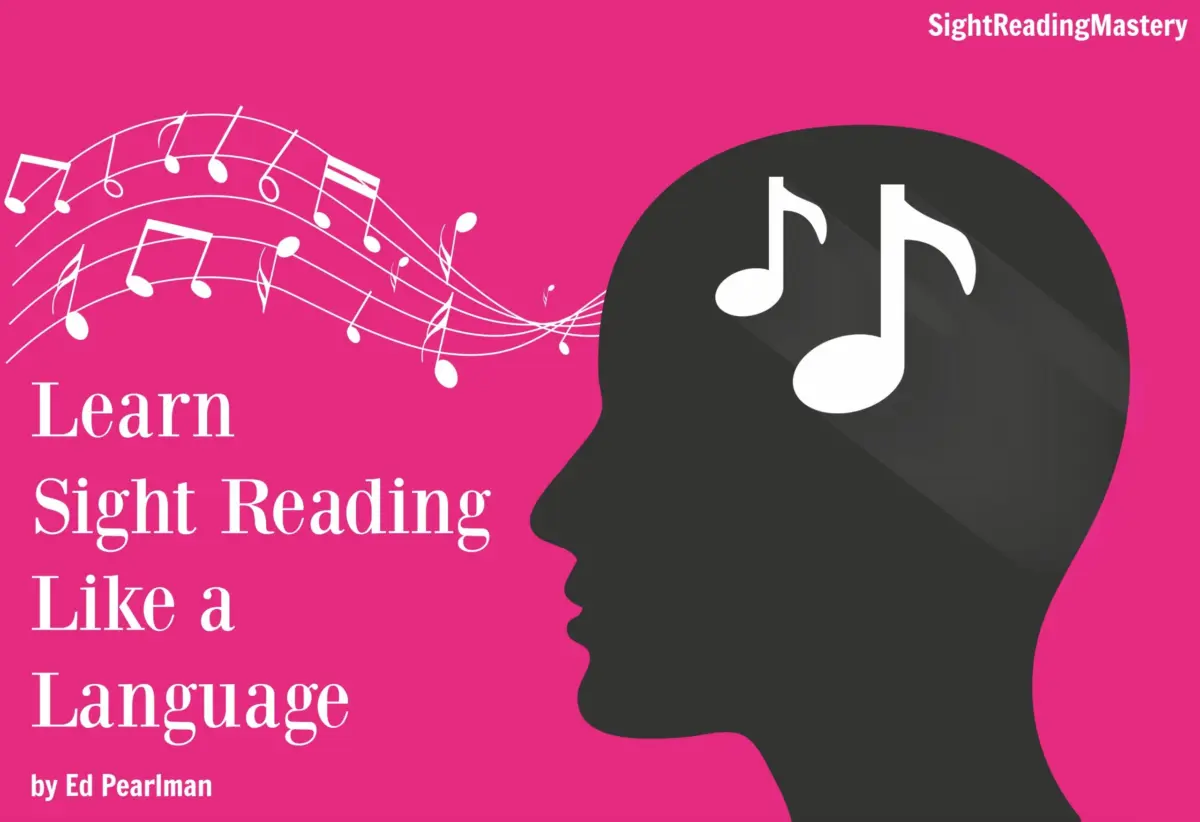
In the realm of musical pedagogy, few skills are as universally revered—and as chronically underdeveloped—as sight-reading. Much like mastering a spoken language, the ultimate objective of reading music is not the laborious process of translation, but rather the instantaneous, intuitive translation of written symbols into sounding art. Yet, generations of instrumentalists and vocalists remain shackled to a mechanical, note-by-note decoding process. They look at a staff, identify a note name, calculate its finger number, verify its position, and finally execute the pitch. This mental bottleneck destroys tempo, shatters musicality, and transforms performance into an exercise in algorithmic calculation.
In this comprehensive feature, we examine a revolutionary five-tier pedagogical framework designed by veteran musician and educator Ed Pearlman. By treating musical notation not as a secret code to be solved, but as a living, breathing language, this methodology helps performers bypass internal translation entirely. From clapping raw rhythms to processing complex intervals and visual contours, this structured progression offers a blueprint for achieving true fluency. Whether you are a classical pianist, a choral singer, or a traditional fiddler, adopting this progressive framework will fundamentally alter how you interact with the page, empowering you to perform with unwavering confidence, structural awareness, and unbroken momentum.
The Philosophy of Fluency: Why Mental Translation Fails
To understand the core thesis of Pearlman’s methodology, one must first examine the cognitive parallels between linguistic acquisition and musical literacy. Consider the experience of learning a foreign language. When an instructor introduces the Spanish phrase "¡Buenos días!", the beginner’s immediate instinct is to map those foreign phonemes directly back to their native tongue: "good morning."
While this mental translation offers temporary reassurance that the learner has correctly comprehended the vocabulary, it acts as a cognitive anchor. It delays reaction time, clogs working memory, and prevents the individual from ever achieving true conversational fluency. True fluency in a language begins the moment the brain associates the spoken or written word directly with its conceptual meaning, bypassing the native language entirely.
[Traditional Approach - The Translation Bottleneck]
Visual Note ──> Identify Letter Name ──> Calculate Fingering ──> Verify Pitch ──> Execute
(Result: Delayed tempo, robotic phrasing, cognitive overload)

[Fluent Approach - The Direct Lexical Pathway]
Visual Contour/Interval ──> Immediate Auditory/Kinesthetic Execution
(Result: Unbroken tempo, holistic musicality, structural comprehension)
The exact same cognitive trap ensnares developing musicians. When confronted with an unfamiliar score, untutored players attempt to decode every single symbol in isolation. They look at a notehead, determine it is a G on the second line of the treble staff, remember which finger corresponds to G on their instrument, execute the note, and immediately repeat the exhausting process for the next note.
In a moderato tempo of 120 beats per minute, a musician executing eighth notes has roughly a quarter of a second per note. Attempting to mentally process a multi-step translation algorithm within that timeframe is an exercise in futility. The inevitable result is a catastrophic breakdown of tempo, hesitation, and a mechanical, unmusical execution. As Pearlman notes, keeping time is the ultimate priority; if a musician sacrifices rhythm to hunt for individual note names, the music dies on the page.
Detailed Chronology and Pedagogical Progression
To dismantle the mental translation habit, Pearlman outlines a progressive, five-level methodology. Each tier introduces a new layer of cognitive processing while reinforcing the layers that came before. Crucially, these levels are distinct from the standardized "grade levels" used by publishers to measure a piece’s technical difficulty; rather, they represent micro-skills that build upon one another to create a holistic sight-reading apparatus.
Level 1: Rhythms Only — The Skeletal Foundation
The journey to sight-reading fluency begins with the complete eradication of pitch. At Level 1, the performer selects a metronome tempo, ignores the staff entirely, and simply taps, claps, or speaks the rhythm of the passage.
- The Core Objective: Train the brain to process rhythmic units across an entire measure rather than obsessing over individual note values.
- Pedagogical Rationale: Rhythms possess zero meaning in isolation; they are entirely relational. A quarter note is only a quarter note because of its relationship to the beat and surrounding subdivisions. By isolating rhythm, the student learns to perceive metric flow globally.
- The Humorous Caveat: Pearlman illustrates the absurdity of micro-focusing on isolated components via a classic musician’s joke: A violist approaches a violinist, boasting that he has mastered the art of playing hyper-fast 64th notes. Intrigued, the violinist demands a demonstration. The violist promptly plays a single 64th note. Without metric context and forward momentum, the technical feat is entirely meaningless.
Level 2: Note Profile — Mapping the Visual Contour
Once the rhythmic foundation is secure, the performer advances to Level 2. Maintaining the exact tempo and rhythmic accuracy established in the first step, the musician now incorporates the physical direction of the notes—whether they ascend, descend, or remain on the same pitch.
- The Core Objective: Cultivate the ability to read the topography of the musical line without verifying specific pitch names.
- Pedagogical Rationale: The eye must learn to track the shape of the musical phrase. Does the melody leap upward in a sudden arc, or does it step downward in a gentle slope? By focusing on the "note profile" across an entire measure, the student begins to see musical lines as rolling hills and valleys rather than a disconnected series of alphabetical dots. Pitch accuracy is secondary here; maintaining unyielding rhythmic integrity is paramount.
Level 3: Focusing the Picture — Establishing Key and Boundaries
With rhythm and contour mastered, Level 3 introduces specific pitch parameters anchored within a tonal center.
- The Preparatory Ritual: Before looking at the sight-reading excerpt, the musician must identify the key signature and play a corresponding major or minor scale. Crucially, the player must actively locate where the half steps reside within that scale—identifying the one or two semitone frictions present in the immediate range of the passage.
- The Execution: The performer begins sight-reading on the correct starting note, combining the rhythmic drive of Level 1 and the contour awareness of Level 2 with tonal awareness.
- The Golden Rule of Momentum: If the musician encounters an ambiguous note, they are strictly forbidden from pausing, hesitating, or dragging the tempo. They must make an educated guess based on the contour and key signature. A wrong pitch is an acceptable transient error; a broken rhythm or a delayed tempo is a fatal infraction. If this proves challenging, performers are advised to slow the metronome down or limit their focus to single, highly controlled measures.
Level 4: Seeing Intervals — Geometric Literacy
At Level 4, the musician transitions from broad contours to precise geometric relationships: intervals.
- Line-and-Space Recognition: The performer must train their eyes to instantly recognize the visual architecture of distance on the staff. A standard step (a second) is visually identified by consecutive notes moving from a line to an adjacent space, or vice versa.
- Thirds and Beyond: A third is recognized when a note on a line moves to the next line up or down (skipping a space), or a space moves to the next space.
- Advanced Geometries: While wider leaps (fourths, fifths, octaves) initially require more cognitive bandwidth, persistent exposure trains the visual cortex to recognize them as distinct geometric shapes. For example, a fifth spans from a line to two lines away, or a space to two spaces away. Visualizing these intervals as geometric shapes allows the hand and fingers to react instinctively.
Level 5: Names of Notes — The Optional Overlay
The final tier in Pearlman’s framework is note nomenclature: actively naming the notes in one’s mind (or out loud) while executing them.

- A Counterintuitive Truth: Pearlman emphasizes that this step is entirely optional for effective sight-reading. Because naming notes is not biologically essential to the linguistic process of seeing and playing music, advanced performers can operate at elite levels without ever verbally or mentally translating staff positions into alphabetical letters.
- Diagnostic Value: However, adding this cognitive layer serves as an exceptional diagnostic test. It measures whether your core sight-reading engine (rhythm, contour, interval) is robust enough to run background processes without crashing. If adding note names causes your timing to collapse, it reveals that your foundational fluency at Levels 1 through 4 is still dependent on the old translation bottleneck. For those struggling with this phase, targeted supplemental tools—such as dedicated note-recognition software—can accelerate rapid visual-to-alpha mapping.
Supporting Context & Metrics: The Cognitive Architecture of Reading
To fully appreciate why Pearlman’s methodology yields such rapid improvements, one must examine the cognitive science of reading music. Neurological studies comparing expert sight-readers with amateur musicians reveal stark contrasts in eye-movement patterns and working memory utilization.
[Cognitive Load Comparison]

Amateur Sight-Reader (Linear Decoding):
[Note A] ──> [Process Name] ──> [Find Finger] ──> [Play] (Delay & Stutter)

Expert Sight-Reader (Chunking & Previewing):
[Entire Measure Preview] ──> [Global Gestalt Processing] ──> [Instant Motor Output]- The Power of Chunking: Expert readers do not process notes individually; their brains utilize "chunking," grouping clusters of notes into chords, scales, and arpeggiated patterns. By utilizing Levels 2 and 4 (Note Profiles and Intervals), Pearlman’s framework forces the developing brain to adopt chunking strategies early in the learning process.
- Eye-Hand Span (The Saccadic Window): Advanced sight-readers exhibit an "eye-hand span"—the visual distance between the eyes and the physical execution of the hands—that ranges from half a measure to multiple measures ahead of what is currently sounding. Amateurs, conversely, stare myopically at the exact note they are playing at that microsecond. By prioritizing strict tempo maintenance in Levels 1 through 3, students are forced to lift their gaze forward, widening their saccadic window and expanding their cognitive processing horizon.
Official Perspectives and Pedagogical Insights
Ed Pearlman’s career bridges two distinct musical worlds: the rigorous discipline of classical violin training in Chicago and Boston, and the fluid, auricular traditions of Celtic and Scottish fiddle music practiced across North America and the British Isles. This dual perspective heavily influences his philosophy on notation.
"When you practice sight-reading by systematically stripping away unnecessary cognitive burdens—such as premature note naming and mechanical translation—you unlock a profound intuitive capacity," Pearlman explains in his pedagogical notes. "Music is meant to be spoken fluently. When we teach students to treat the staff as a landscape of rhythms, profiles, and intervals rather than a sluggish decoding puzzle, we bridge the gap between written theory and living art."
Other leading music educators and cognitive psychologists echo these sentiments. Traditional conservatory training has long over-emphasized meticulous preparation of polished repertoire, often leaving students functionally illiterate when confronted with a fresh score on a bandstand or orchestra pit. Frameworks that prioritize horizontal momentum—such as Pearlman’s five-tier system—are increasingly recognized as essential antidotes to performance anxiety and reading paralysis.
Future Outlook: Integrating Fluency into Daily Practice
The ultimate test of any pedagogical framework lies in its long-term viability and integration into a musician’s daily routine. Transitioning from a translational reader to a fluent sight-reader cannot be accomplished through sporadic, high-pressure cramming sessions; it requires systematic, low-stakes daily exposure.
Recommended Implementation Strategies:
- The 5-Minute Daily Habit: Dedicate the first five minutes of every practice session exclusively to sight-reading material that is significantly below your technical performance level (ensuring that physical dexterity does not impede cognitive processing).
- Progressive Level Cycling: Take a single, simple eight-bar melody and run it through the five levels consecutively. Day 1: Tap rhythm only. Day 2: Play note profiles. Day 3: Add key signatures and strict timing. Day 4: Focus on interval geometry. Day 5: Add note names.
- Embrace Generative Practicing: Once you have exhausted standard published exercises, create your own variations, improvise counter-melodies against sight-reading prompts, or transpose exercises on the fly.
As the digital landscape expands—with platforms offering endless libraries of automated, graded sight-reading examples—musicians now have unprecedented access to material. By pairing these digital resources with Pearlman’s structured, language-based progression, players of all instruments can permanently eliminate the translation bottleneck. The result is a transformative musical freedom: the ability to look at a page of ink and sound, and simply speak the language.