
Executive Overview
The intersection of classic American literature, musical theatre, and modern digital engagement reached a crescendo this season as the hit Broadway adaptation of The Great Gatsby announced the triumphant winners of its highly anticipated "Old Sport Karaoke" fan competition. Launched late last summer, the nationwide digital campaign invited musical theatre enthusiasts and amateur vocalists alike to submit their own stylized covers of numbers from the Tony Award-winning score. Out of hundreds of submissions from across the country, a rigorous adjudication process whittled the field down to seven elite finalists, ultimately crowning three standout champions: Jordyn Smith, Jordan Leah Embrack, and Dylynne Cosand.
This innovative outreach effort underscores a broader industry trend: Broadway productions are increasingly leveraging user-generated content to deepen audience connection, bridge the gap between stage and screen, and sustain momentum in a crowded theatrical market. Playing to packed houses at The Broadway Theatre—with tickets currently on sale through an astonishing booking window stretching to June 2027—the production continues to anchor its cultural footprint not only through opulent design and a star-studded cast, but also through grassroots fan participation. As the industry navigates post-pandemic audience recovery and digital-first marketing, initiatives like Old Sport Karaoke serve as a masterclass in modern theatrical community-building, proving that the Roaring Twenties ethos of unbridled celebration translates seamlessly to the digital age.
Detailed Chronology of the Competition
The journey to crowning the three Old Sport Karaoke champions was a meticulously structured digital event that captured the imaginations of musical theatre fans worldwide.
Phase 1: Launch and Mobilization (August 25)
The campaign officially commenced on August 25, utilizing social media platforms and digital theatre outlets to issue an open call to performers. The parameters were straightforward yet creatively challenging: participants were tasked with filming and submitting original video covers of songs from the Broadway musical’s score—composed by Nathan Tysen and Jason Howland—showcasing both their vocal prowess and their personal connection to F. Scott Fitzgerald’s timeless narrative.
Phase 2: The Sifting Process (September–October)
Within weeks of the announcement, the production’s digital channels were flooded with hundreds of video submissions. Entrants ranged from trained vocalists to passionate shower singers, all vying for the ultimate prize package: coveted tickets to the Broadway staging and exclusive The Great Gatsby merchandise. A panel of judges comprised of production insiders and creative team members evaluated the submissions based on vocal quality, emotional delivery, and creative interpretation.
Phase 3: Narrowing the Field to the Magnificent Seven
Following weeks of deliberation, the creative team narrowed the sprawling pool of talent down to an elite group of seven finalists. These standout performers represented the pinnacle of the competition’s applicant pool, each offering a distinct stylistic take on the musical’s soaring ballads and jazz-infused anthems.
Phase 4: The Grand Reveal
The culmination of the months-long digital event arrived with the official announcement and showcase of the three ultimate winners: Jordyn Smith, Jordan Leah Embrack, and Dylynne Cosand. Selected for their exceptional vocal talents and undeniable affinity for the show, the trio was spotlighted in a promotional video release distributed across major theatrical networks. This digital showcase not only celebrated the winners’ achievements but also cemented their place in the ongoing lore of the Broadway production.
Supporting Context & Metrics: Inside the Phenomenon of Broadway’s The Great Gatsby
To fully understand the cultural resonance of the Old Sport Karaoke competition, one must examine the monumental scale and artistic pedigree of the Broadway production it promotes.
The Creative Engine
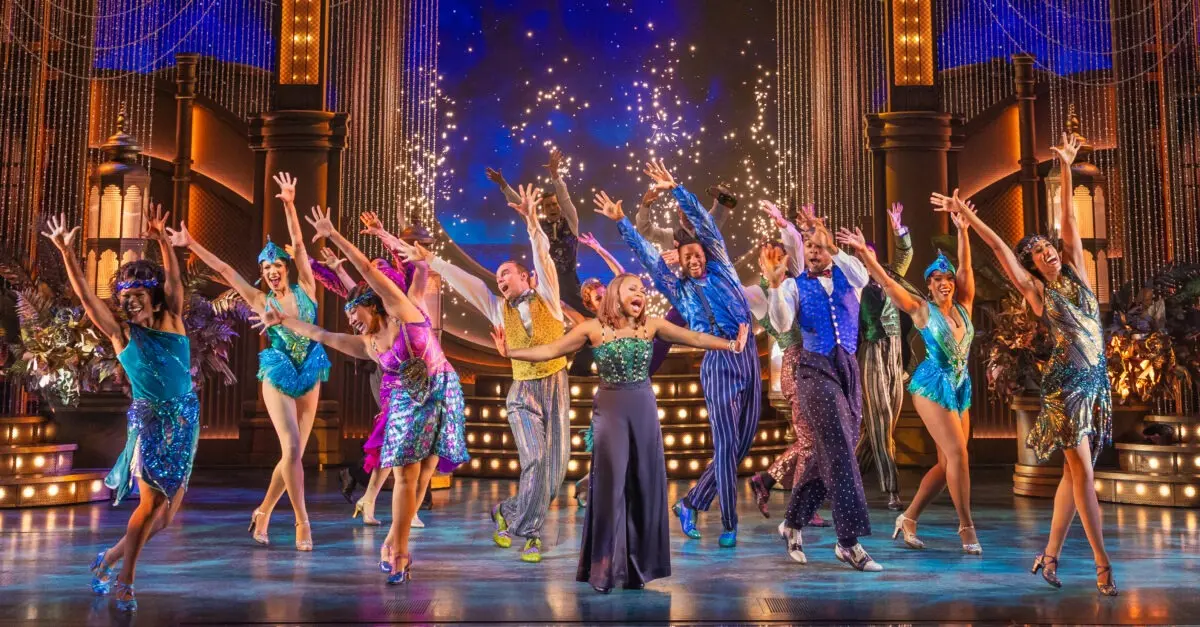
The Great Gatsby is brought to life by a powerhouse creative team. Based on F. Scott Fitzgerald’s definitive 1925 Jazz Age novel, the musical features a sophisticated book by Jonathan Larson Grant winner Kait Kerrigan (The Mad Ones), whose narrative restructuring captures both the tragedy and the sparkling excess of the original text. The score, blending contemporary musical theatre idioms with 1920s jazz influences, is crafted by the songwriting partnership of Nathan Tysen (lyrics) and Jason Howland (music and arrangements). Direction is helmed by Marc Bruni, with high-octane choreography by Dominique Kelley that transforms the stage into a perpetual, dizzying Manhattan-and-Long-Island gala.
The production’s design elements are equally staggering, anchored by Paul Tate de Poo III’s scenic and projection designs, Cory Pattak’s luminous lighting, Brian Ronan’s pristine sound design, and the intricate hair and wig work of Charles G. LaPointe and Rachael Geier. Most notably, the production earned critical and peer acclaim by capturing the 2024 Tony Award for Best Costume Design of a Musical, a testament to Linda Cho’s breathtaking, period-accurate, yet fiercely modern sartorial creations.
A Star-Studded Compendium of Talent
The cultural weight of the production is further amplified by its stellar revolving cast. The current Broadway company is led by high-profile talent spanning television, film, and theatrical stages:
- China Anne McClain (Disney’s Descendants) makes a highly anticipated musical stage debut as the golden-voiced, elusive Daisy Buchanan.
- Ryan McCartan (Heathers The Musical, Wicked) anchors the production in the titular role of the enigmatic, self-made millionaire Jay Gatsby.
- Olivier Award nominee Corbin Bleu (High School Musical franchise, Kiss Me, Kate) infuses warmth and grounded observation into the role of narrator Nick Carraway.
- Naturi Naughton-Lewis (Power, Fame) portrays the sharp, cynical golfer Jordan Baker.
- Linedy Genao (Bad Cinderella, On Your Feet!) brings tragic depth to the ill-fated Myrtle Wilson.
- John Behlmann (Tootsie, Shucked) commands the stage as the brutish, old-money antagonist Tom Buchanan.
- Charlie Pollock (Urinetown, The Good Wife) takes on the role of the desperate mechanic George Wilson.
- Eric Anderson (Moulin Rouge!, Waitress) rounds out the principal principals as the shadowy underworld figure Meyer Wolfsheim.
Supported by an expansive ensemble and swing corps—including Alexis Hasbrouck, Nathaniel Hunt, Traci Elaine Lee, Alicia Lundgren, Dariana Mullen, Dan Rosales, Dave Schoonover, Sara Sheperd, Kyla Stone, Preston Taylor, Damani Van Rensalier, Matt Wiercinski, Jonathan Young, Kurt Csolak, Joshua Dawson, Morgan Harrison, Justin Keats, Drew Lake, Brandon J. Large, Emily Anne Nester, Alex Prakken, and Elena Ricardo—the production operates as a finely tuned theatrical machine.
Operational Scale and Longevity
Commercially, The Great Gatsby represents an extraordinary anomaly in contemporary Broadway economics. While many productions struggle to secure bookings more than a few months in advance, this mounting commands an exceptionally robust sales trajectory. Tickets are currently on sale through an unprecedented booking window stretching all the way to June 7, 2027, at The Broadway Theatre. This forward-looking operational confidence reflects steady, lucrative tourism demands and a dedicated domestic fan base—a demographic that the Old Sport Karaoke competition was expertly designed to mobilize and reward.
Official Statements and Industry Perspective
While specific direct quotes from individual corporate producers regarding the karaoke contest were kept minimal, the strategic intent behind the campaign is clear within the broader context of modern theatrical marketing.
Industry analysts note that traditional print and television advertising no longer suffice when trying to capture younger demographics who consume culture primarily through short-form video platforms like TikTok, Instagram Reels, and YouTube Shorts. By inviting fans to actively participate in the art form—rather than serving as passive consumers—The Great Gatsby production team successfully bypassed standard advertising barriers.
"User-generated digital campaigns transform everyday consumers into brand ambassadors," notes a prominent New York-based theatrical marketing strategist who spoke on background. "When hundreds of people spend hours rehearsing, filming, and uploading your show’s music, you aren’t just running a contest; you are igniting an organic, peer-to-peer validation cycle that money simply cannot buy. For a show running as long-term as The Great Gatsby, keeping the digital ecosystem active and celebratory is vital to maintaining long-tail box office health."
Furthermore, the involvement of the creative team in reviewing submissions highlights a vital bridge between professional artistry and grassroots enthusiasm. By celebrating winners like Jordyn Smith, Jordan Leah Embrack, and Dylynne Cosand, the production signals to its audience that the boundary between the stage at The Broadway Theatre and the living rooms of America is permeable, driven by a shared, universal love for musical storytelling.
Future Outlook: What’s Next for The Great Gatsby on Broadway
As the dust settles on the Old Sport Karaoke competition, the horizon for The Great Gatsby remains exceptionally bright. With its booking calendar secured well into 2027, the production is firmly entrenched as a permanent fixture of the Midtown Manhattan theatrical landscape.
Upcoming Cast Transitions
The production’s ongoing vitality is also maintained through strategic cast refreshes. As announced in tandem with recent production updates, the company continues to generate fresh interest via high-profile casting rotations, including Chilina Kennedy’s upcoming return to the fold alongside the integration of new company members such as Max Monnig. These planned evolutions ensure that repeat visitors—the very same superfans who participate in digital campaigns like Old Sport Karaoke—find fresh artistic interpretations upon every return visit to West 53rd Street.
The Evolution of Fan Engagement
Looking forward, insiders hint that the immense success of the Old Sport Karaoke initiative may serve as a blueprint for future digital engagement campaigns. As Broadway producers continue to explore hybrid models of entertainment—combining live-stage spectacle with digital interactive components—initiatives that honor fan artistry are likely to become standard operating procedure.
For now, the three champions—Jordyn Smith, Jordan Leah Embrack, and Dylynne Cosand—stand as emblems of a successful cultural experiment. Their recorded performances, preserved online for posterity, serve as a reminder that the roaring spirit of the 1920s—defined by aspiration, vocal expression, and community celebration—finds a vibrant, living home on the modern Broadway stage.