
Executive Overview
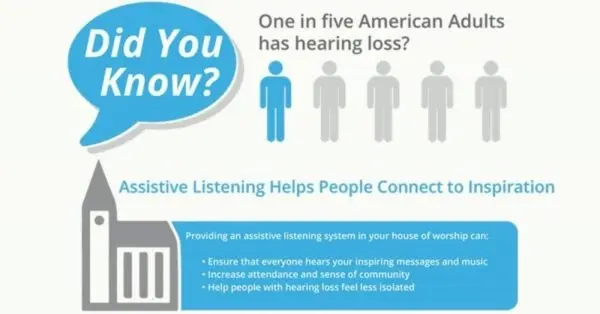
In an era defined by rapid technological advancement in audiovisual presentation, the fundamental mission of any house of worship remains fundamentally pastoral: to communicate a message of inclusion, community, and spiritual connection. Yet, for millions of congregants navigating hearing loss, the modern worship experience can frequently feel isolating. Acoustic challenges inherent in traditional sanctuary architecture—ranging from excessive reverberation and vaulted ceilings to long distances from the chancel—often conspire to render the spoken word and dynamic musical arrangements unintelligible.
To combat this silent barrier, faith communities are increasingly turning to advanced Assistive Listening Systems (ALS). However, the successful deployment of these technologies requires far more than a simple equipment purchase. It demands a deliberate, strategic framework that encompasses congregational assessment, budgetary forecasting, comprehensive staff training, and aggressive community outreach.
This special report explores the strategic imperatives of integrating an Assistive Listening System into a worship facility. Drawing upon expert methodologies provided by industry leaders such as CCI Solutions and Listen Technologies, this article outlines a four-step implementation blueprint designed to maximize return on investment, elevate the worship experience, and foster a truly inclusive environment. By approaching audio accessibility not merely as an accommodation, but as a core ministry initiative, churches can ensure that every member of their flock can fully engage with the beauty, nuance, and emotional resonance of shared worship.
Detailed Chronology: The Four-Step Implementation Framework
Implementing a sophisticated acoustic infrastructure requires a disciplined, step-by-step methodology. Risc-free integration relies on a carefully sequenced roadmap that moves from initial discovery to active community engagement.
Phase 1: Understanding Congregation-Specific Needs
The foundational error in audio system upgrades is the assumption that administrators inherently know the exact acoustic challenges faced by their congregation. Hearing loss is a deeply personal and often progressive condition; many individuals quietly struggle through services without voicing their frustrations to church leadership.
To build an effective ALS strategy, leadership must initiate a formal data-gathering process. The most reliable mechanism for this is a comprehensive, anonymous congregational survey. This survey should be meticulously designed to capture quantitative and qualitative metrics regarding the worship experience. Key inquiries should focus on:
- Acoustic Clarity: How well can the respondent hear the sermon, scripture readings, and prayers from their preferred seating location?
- Device Utilization: Do members currently utilize personal hearing aids or cochlear implants during services?
- T-Coil Compatibility: Crucially, do these hearing devices feature telecoil (t-coil) technology, which allows them to interface directly with induction loop systems or neck loops?
By collecting this data, audio committees can quantify the true scope of hearing impairment within their flock, ensuring that the chosen technology directly aligns with actual user needs rather than speculative assumptions.
Phase 2: Comprehensive Budgetary and Technological Assessment
Once the congregation’s demographic and technical needs are clearly defined, leadership must evaluate the financial and infrastructural landscape. Estimating the cost of an assistive listening solution requires balancing immediate capital expenditures against long-term operational durability.
Faith communities do not need to navigate this procurement landscape in isolation. Specialized AV integrators—such as CCI Solutions—offer expert consultations designed to help steering committees navigate expense projections and operational budgeting. These consultations typically evaluate existing soundboards, amplification systems, and sanctuary layouts to determine the most compatible ALS technology (whether Radio Frequency [RF], Infrared [IR], or Audio Induction Loop systems).
Furthermore, leadership should explore creative funding mechanisms to offset capital expenditures. Dedicated fundraising campaigns, memorial gift programs, and capital stewardship grants targeted at accessibility initiatives can successfully transform a prohibitive budget line item into an enthusiastically supported community project.
Phase 3: Operational Readiness and Staff Training
The most advanced assistive listening hardware is rendered useless if sanctuary staff, ushers, and hospitality volunteers lack the operational knowledge to manage it. Preparation is the linchpin of system adoption.
Staff and key volunteers must be designated as "Assisted Listening Ambassadors." These individuals require hands-on training covering device distribution, hygiene protocols, battery management, and basic troubleshooting. Crucially, whenever a congregant requests an assistive listening device (ALD), the ambassador should take a moment to offer brief, patient instruction on how to operate the unit and optimize its volume settings.
To prevent operational bottlenecks and reduce staff anxiety, administrators should compile clear reference materials. A laminated quick-reference guide featuring answers to Frequently Asked Questions (FAQs) must be permanently stationed at the Welcome Desk or reception counter where receivers are checked out and returned.
Phase 4: Strategic Awareness and Community Outreach
An installed system has zero impact if the target audience remains unaware of its existence. The final phase of the implementation chronology focuses on internal communication and external evangelism.
Internal marketing must be multi-channel and persistent:
- Signage: Install ADA-compliant, highly visible signage throughout the facility indicating that Assisted Listening Devices are available, clearly directing attendees to the distribution point.
- Print and Digital Reminders: Embed brief, welcoming notices regarding the availability of ALS units within weekly printed bulletins, digital newsletters, and pre-service multi-media slide presentations.
- Live Demonstrations: Consider hosting a dedicated post-service training session or informational workshop. This allows older adults and individuals with mild hearing loss to familiarize themselves with the technology in a low-pressure environment.
Simultaneously, churches should extend their outreach into the surrounding local community. Many individuals with hearing impairments have abandoned traditional religious services simply because they assumed houses of worship could not accommodate their needs. Advertising your church’s commitment to total acoustic accessibility can serve as a powerful attractor, drawing new visitors—and welcoming back former members—who have long sought an inclusive spiritual home.

Supporting Context & Metrics: The Imperative of Inclusion
To fully appreciate the urgency of adopting Assistive Listening Systems, one must examine the broader socio-demographic and psychological landscape of hearing loss in modern society.
According to data compiled by the World Health Organization (WHO) and the Hearing Loss Association of America (HLAA), age-related hearing loss (presbycusis) affects roughly one-third of adults aged 65 to 74, and nearly half of those older than 75. However, hearing impairment is by no means restricted to the elderly; millions of working-age adults and children navigate congenital or acquired hearing loss daily.
In a house of worship environment, untreated hearing loss leads directly to social isolation. When congregants can no longer comprehend the spoken word, they frequently stop attending fellowship hours, Bible studies, and main worship services. This detachment is antithetical to the core doctrines of most faith traditions.
+-----------------------------------------------------------------+
                 THE CYCLE OF ACOUSTIC ISOLATION
+-----------------------------------------------------------------+
  [ Sanctuary Acoustics / Vaulted Ceilings ]
         │
         ▼
  [ Decreased Speech Intelligibility ]
         │
         ▼
  [ Congregant Withdrawal & Isolation ]
         │
         ▼
  [ Disconnection from Faith Community ]
+-----------------------------------------------------------------+
Implementing an assistive listening infrastructure actively reverses this cycle. By providing direct-to-ear audio transmission that bypasses ambient room reverberation and background noise, ALS technology restores the clarity of spoken sermons, choral arrangements, and congregational participation.
Furthermore, the integration of these systems aligns with evolving legal standards and ethical expectations regarding public accommodation. While religious institutions are often exempt from certain stringent titles of the Americans with Disabilities Act (ADA), the moral imperative to provide equal access to all members of the community far surpasses minimum legal compliance. True pastoral leadership demands proactive universal design.
Official Statements & Industry Perspectives
Industry leaders, accessibility advocates, and acoustic engineers emphasize that audio accessibility should be treated as a foundational element of sanctuary design rather than an afterthought.
"Reaching out to those who feel disconnected from your community due to hearing loss is central to sharing the message of inclusion. Genuinely compassionate service involves being aware of and caring for the needs of everyone, especially those dealing with impairments."
— Accessibility Advocacy Consortium
Experts from technical resource providers echo this sentiment, stressing that the human element of technology deployment is just as critical as the hardware specifications.
"You can install the most expensive transmitter and receiver set on the market, but if your ushers don’t know how to charge the batteries, or if visitors are too intimidated to ask for a device, the system fails," notes an AV integration specialist at CCI Solutions. "That is why training and signage are not administrative checkboxes—they are the vital bridge between hardware and human connection."
Resources such as the Listen Technologies Church Assistive Listening Toolkit provide standardized templates, sample congregational surveys, standardized signage graphics, and bulletin announcement drafts. These resources streamline the administrative burden, empowering small- and large-scale congregations alike to deploy professional-grade accessibility programs without reinventing the wheel.
Future Outlook: The Next Generation of Acoustic Inclusion
As audio technology continues to evolve at a breakneck pace, the future of assistive listening in houses of worship points toward hyper-personalized, smartphone-integrated solutions.
While traditional RF and Infrared systems remain the backbone of public venue accessibility, emerging Wi-Fi-based assistive listening platforms are revolutionizing the user experience. These modern systems stream ultra-low-latency audio directly to a congregant’s personal smartphone or tablet via a dedicated app. Users can then route the crystal-clear audio feed straight into their Bluetooth-enabled hearing aids, cochlear implants, or personal earbud headphones.
This paradigm shift offers profound advantages:
- Dignity and Discretion: Users no longer need to check out specialized, bulky receivers from a public desk, eliminating the perceived stigma associated with asking for an assistive device.
- Customization: Smartphone-based apps allow users to fine-tune volume levels, adjust equalization settings, and tailor the audio output to their unique auditory profile.
- Scalability: Churches can support an exponentially larger number of simultaneous users without needing to maintain, clean, and recharge vast fleets of physical hardware receivers.
However, even as Wi-Fi streaming and Bluetooth LE Audio protocols become increasingly dominant, the fundamental principles outlined in this report remain immutable. Technology alone cannot foster community. Whether deploying legacy RF receivers or cutting-edge smartphone streaming apps, success depends entirely on the intentionality of church leadership: understanding user needs, budgeting wisely, training staff thoroughly, and communicating aggressively.
By embracing these comprehensive strategies, houses of worship can dismantle invisible barriers, ensuring that every soul within their doors can hear, absorb, and celebrate the spoken word in all its beauty and emotional depth.
For more detailed information on choosing the right Assistive Listening System, along with practical tools to ensure your ministry’s success—including sample surveys, compliance signage, and bulletin announcements—please download a copy of the Listen Technologies Church Assistive Listening Toolkit.