In the realm of language acquisition, the ultimate benchmark of fluency is the complete elimination of mental translation. When a native English speaker encounters the Spanish phrase "¡Buenos días!", comprehension is instantaneous; the brain does not process the individual words, mentally translate them to "Good morning," and then formulate a response. The translation layer acts merely as a retrospective security blanket, confirming correctness while actively impeding real-time, dynamic conversation.
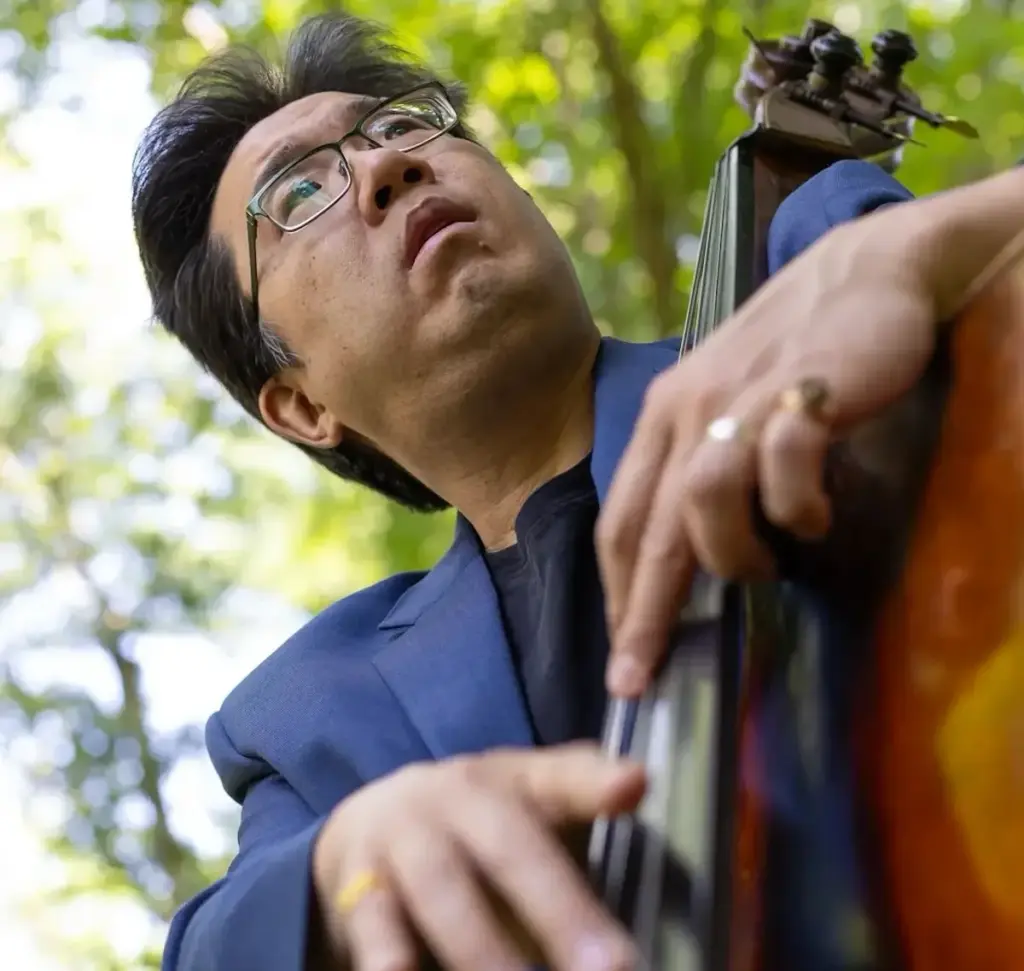
According to seasoned classical violinist, fiddle instructor, and educator Ed Pearlman, musical performance operates on the exact same cognitive architecture. True sight-reading proficiency—whether executed on an instrument or through vocal performance—demands an unmediated translation from visual notation to physical execution. Musicians who fall into the trap of decoding every single note symbol, mentally cataloging its letter name, determining its corresponding finger number, verifying its precision, and finally executing the stroke invariably bottleneck their cognitive processing speed. In high-tempo, real-time performance environments, this sequential, computational approach collapses under its own weight, destroying tempo and rhythmic integrity.
To combat this widespread pedagogical flaw, Pearlman has formulated a progressive, five-tier mastery framework designed to rewire how musicians interact with written scores. Ranging from foundational rhythmic parsing to advanced interval recognition, this methodology shifts the paradigm from micro-analysis to macro-comprehension. By decoupling the mechanical act of reading from the granular labeling of note names, instrumentalists and vocalists can cultivate a native "fluency" in musical grammar, drastically improving their interpretive agility and overall confidence.
Detailed Chronology: The Evolution of Notation and Cognitive Processing
Understanding why modern sight-reading instruction remains mired in slow, translation-heavy habits requires a brief examination of how written music evolved alongside cognitive psychology.
The Historical Bottleneck of Literacy
For centuries, Western musical notation developed primarily as a mnemonic device rather than a real-time performance script. In the medieval church, neumes served as rough directional reminders for chants whose melodies were already committed to memory. As notation grew increasingly sophisticated during the Renaissance and Baroque periods, the density of information packed into a single staff exploded. Clefs, key signatures, complex time meters, and intricate ornamentations demanded an analytical approach to reading.
However, as orchestral and chamber music expanded in the 18th and 19th centuries, the demand for a prima vista (sight-reading) performance skyrocketed. Orchestral musicians were routinely handed unfamiliar scores hours before public premieres. Those who succeeded were not necessarily those with the most pristine technical execution, but those who possessed superior cognitive chunking abilities—the capacity to view clusters of notes as unified structural objects rather than isolated data points.
The Shift Toward Linguistic Parallels
In contemporary music pedagogy, the intersection of cognitive science and music education has yielded fascinating insights into how the human brain processes symbols. Neuroimaging studies confirm that expert sight-readers utilize the same neural pathways for pattern recognition that expert readers use when scanning natural language texts. Just as an adult reader does not sound out every single syllable of a complex word, an elite pianist or vocalist does not decode notes in isolation.
Pearlman’s five-tier framework represents the practical codification of this cognitive reality. By addressing skill acquisition in a strict, additive sequence—rhythms first, followed by directional profiles, key-contextualized pitches, intervallic geometry, and finally nominal identification—the framework mirrors how children acquire spoken language: absorbing rhythm and inflection long before mastering formal spelling and grammar.
Supporting Context & Metrics: The Mechanics of the Five-Tier Framework
To successfully implement this pedagogical philosophy, practitioners must understand the specific mechanics of each tier. Pearlman emphasizes that these levels are pedagogical staging grounds, distinct from the standardized difficulty grades utilized by platforms like SightReadingMastery. Each tier must be mastered independently before being integrated into the next phase of practice.
The Exercise: Select a comfortable tempo and simply tap, clap, or speak out the rhythm of an unfamiliar passage without looking at the pitch names or finger placements.
The Cognitive Goal: Shift visual attention away from the micro-analysis of individual note heads and onto the rhythmic architecture of the measure.
Pedagogical Insight: Rhythms possess zero independent meaning in isolation; they are entirely relational. As Pearlman humorously illustrates via the classic musician joke—where a violist boasts about playing 64th notes and proves it by playing precisely one—rhythmic integrity is entirely dependent on sustained temporal flow. Training the brain to process rhythmic groupings across an entire measure ensures that momentum is never sacrificed for the sake of micro-accuracy.
Level 2: Note Profile (The Gestural Contour)
The Exercise: Retain the rhythmic tempo established in Level 1, but now introduce your instrument or voice. Focus exclusively on whether the notes move higher, stay the same, or drop lower relative to the preceding note.
The Cognitive Goal: Map the physical contour or "profile" of the melody while maintaining absolute rhythmic continuity.
Pedagogical Insight: Abandon the paralyzing compulsion to get every single note mathematically right. By prioritizing directional shape over absolute pitch precision, the musician learns to scan the horizon of the musical line, mirroring how the human eye sweeps across a line of text to grasp general meaning before parsing specific vocabulary.
Level 3: Focusing the Picture (Key Context and Integrity)
The Exercise: Before engaging the passage, analyze the key signature and play through the corresponding scale, paying explicit attention to the location of structural half-steps. Begin sight-reading while maintaining strict temporal discipline.
The Cognitive Goal: Marry directional contour with tonal reality.
Pedagogical Insight: If uncertainty arises regarding a specific pitch, the rule of engagement is absolute: never pause, halt, or compromise the tempo. Guess the note if necessary, but keep the rhythmic framework intact. If the passage proves too dense, temporarily reduce the tempo or isolate one to two measures at a time rather than breaking the rhythmic pulse.
The Exercise: Train the eye to instantly distinguish between step-wise motion (scales) and skip-wise motion (thirds, fifths, and beyond).
The Cognitive Goal: Recognize visual geometry on the staff. Consecutive notes moving from a line to an adjacent space signify a scale (step), whereas moving from a line to the next consecutive line (or space to space) signifies a third.
Pedagogical Insight: Wider intervals, such as fifths (spanning two lines or two spaces), require deeper familiarity. Over time, these visual intervals cease to require analytical calculation and are instead instantly perceived as geometric shapes, much like recognizing the silhouette of a familiar animal.
Level 5: Names of Notes (The Optional Nominal Layer)
The Exercise: Verbally or mentally articulate the letter names of the notes while executing them in real-time.
The Cognitive Goal: Test advanced focus and cognitive multitasking without destabilizing core sight-reading fluency.
Pedagogical Insight: Pearlman explicitly notes that internalizing note names is optional during active sight-reading because it is not strictly essential to the primary language of musical performance. However, for practitioners struggling with nominal fluency, supplementary diagnostic tools—such as dedicated note-recognition software modules—can accelerate this secondary competency.
Official Statements and Expert Perspectives
The pedagogical philosophy championed by Ed Pearlman is increasingly validated by leading instrumentalists, educators, and cognitive researchers worldwide.
Reflecting on decades of performance across classical violin and traditional fiddle traditions spanning North America and Scotland, Pearlman emphasizes that traditional music education has historically over-indexed on mechanical perfection at the expense of intuitive literacy.
"When you learn a language, your ultimate objective is immediate comprehension," Pearlman explains in his core instructional frameworks. "Music is no different. If an instrumentalist is forced to stop, decode, translate, and verify every single symbol on the page, they are operating like a primary-school student sounding out syllables letter by letter. True musical artistry requires us to read the phrase as a cohesive narrative sentence."
Music education theorists point out that Pearlman’s scaffolding approach effectively prevents "cognitive overload"—a well-documented psychological phenomenon where working memory becomes saturated by trying to simultaneously process pitch, rhythm, tempo, phrasing, and physical mechanics. By isolating each cognitive variable across the five levels, the practitioner systematically builds neural pathways until complex pattern recognition becomes second nature.
Future Outlook: The Modernization of Musical Literacy
As the landscape of music education undergoes a rapid digital transformation, traditional pedagogical methods are being paired with advanced technological tools. Platforms dedicated to sight-reading mastery are integrating interactive software, automated tempo tracking, and randomized generation engines to provide musicians with infinite variations of practice material.
However, technology alone cannot replace cognitive discipline. The future of effective music pedagogy relies on structured methodologies that prioritize fluid, systemic literacy over rote memorization and agonizingly slow note-to-note decoding.
For the contemporary instrumentalist or vocalist, adopting a framework modeled after natural language acquisition offers a profound competitive advantage. By treating the musical staff not as a cryptographic puzzle to be solved, but as a living, breathing language to be spoken fluently, musicians unlock a new tier of artistic expression. Through rigorous adherence to rhythmic integrity, directional contouring, key awareness, and interval geometry, the once-daunting task of sight-reading transforms from an anxious exercise in trial-and-error into an intuitive, joyful act of direct musical communication.