
Executive Overview
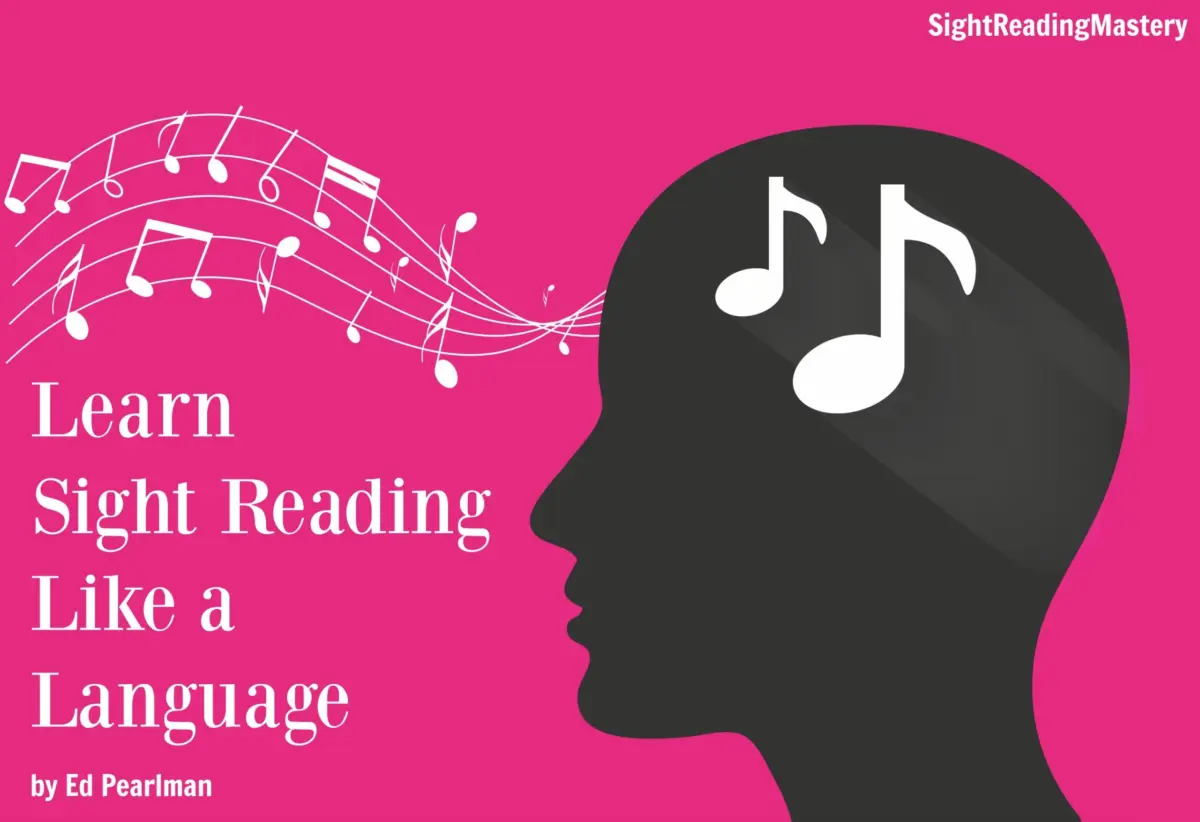
In the realm of language acquisition, the ultimate pedagogical benchmark is unambiguous: the learner must achieve the capacity to comprehend and articulate expressions without engaging in the cognitive bottleneck of mental translation. When a student encounters the Spanish phrase "¡buenos días!", optimal fluency demands that the semantic meaning is perceived natively, bypassing the intermediate mental translation to "good morning." While translation can serve as a reassuring analytical validation that a phrase has been structured correctly, the habit of constant translation ultimately acts as an anchor, weighing down the speaker and preventing the fluidity required for conversational mastery.
This exact neurological paradigm governs the world of musical performance. Whether applied to an instrumentalist navigating a complex violin passage or a vocalist shaping a challenging choral line, sight-reading functions as a musical language. Traditional methods of music education frequently fail because they trap students in a laborious, mechanical cycle: look at the musical notation, translate the symbol into a note name, cross-reference that name with a finger number or vocal placement, double-check the accuracy of the deduction, and finally, execute the sound.
Musicians who rely on this cumbersome, note-by-note translation process inevitably falter. The harsh reality of performance tempos leaves no room for such multi-step cognitive processing. True sight-reading mastery requires the musician to bypass conscious decryption, cultivating a direct, visceral connection between the visual stimulus on the page and the physical execution of the sound.
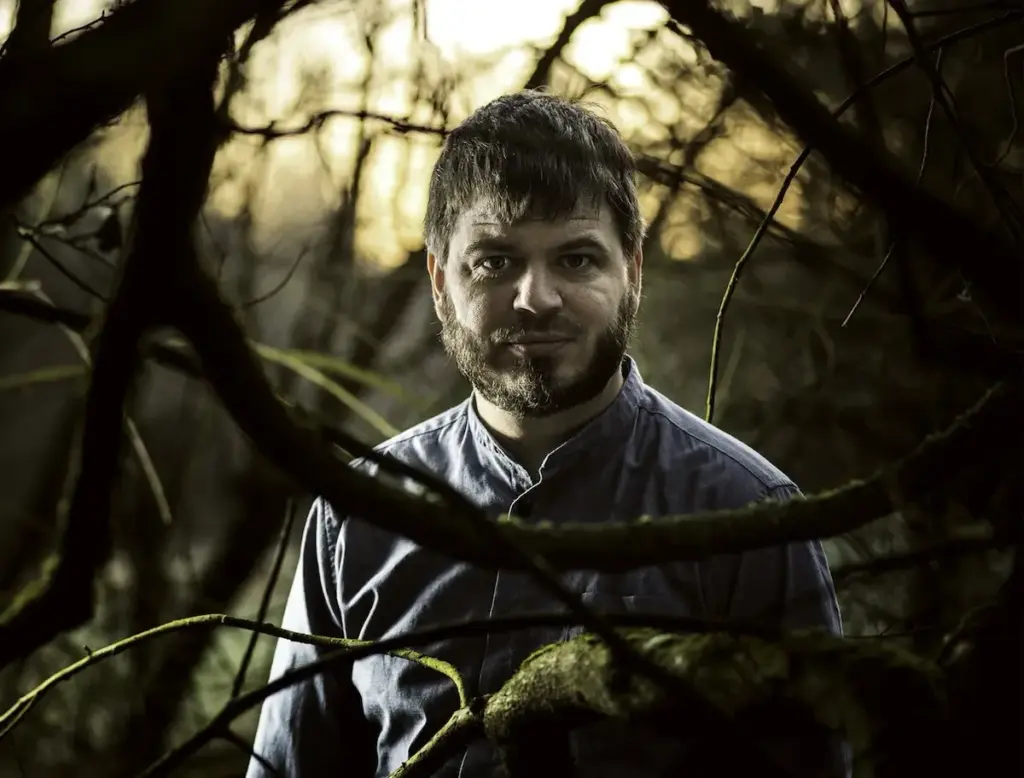
Authored by veteran classical violinist, fiddle player, and educator Ed Pearlman, a revolutionary framework is emerging to reshape how musicians approach this critical skill. Drawing on decades of performance and instructional experience across the United States, Canada, and Scotland, Pearlman proposes that sight-reading can be systematically conquered by applying a progressive, five-tiered developmental approach. By isolating specific components of musical notation—ranging from raw rhythmic structures to holistic note profiles, intervals, and finally, explicit note naming—musicians can train their brains to process sheet music with the effortless fluency of a native speaker.
Detailed Chronology: The Evolution of Sight-Reading Pedagogy
Historically, music pedagogy has wrestled with the tension between mechanical precision and intuitive expression. For centuries, traditional Western classical training prioritized analytical accuracy. Students were drilled in theory, solfège, and rote memorization, often treating sight-reading as an afterthought—an innate talent bestowed upon the musically gifted rather than a trainable, systematic discipline.
The Era of Note-By-Note Decryption
For generations, conservatory training relied heavily on the "decode-and-play" method. Instructors taught students to view the staff as a puzzle to be solved. Every ledger line, accidental, and clef mark required individual attention. While this rigorous analytical foundation produced technically sound performers, it inadvertently fostered widespread sight-reading anxiety. Students paralyzed by the fear of playing a "wrong" note would freeze, stutter, or drop out of time entirely.
The Paradigm Shift: Music as a Spoken Language
As cognitive science and music education converged in the late 20th and early 21st centuries, educators began to draw parallels between linguistic fluency and musical literacy. Pioneers in music cognition observed that expert sight-readers do not actually read every individual note; instead, they visually chunk information, recognizing patterns, scales, arpeggios, and rhythmic motifs in a single glance.
This cognitive evolution laid the groundwork for modern digital platforms and progressive methodologies, such as those championed by SightReadingMastery. Rather than viewing reading mistakes as catastrophic failures, contemporary pedagogy reframes them as natural byproducts of maintaining forward momentum. The central chronological milestone of this movement is the shift from perfectionist accuracy to unbroken temporal flow.
Supporting Context & Metrics: The Mechanics of the Five-Tiered Framework
To operationalize this philosophy, Ed Pearlman has structured a graded methodological framework consisting of five distinct levels. Designed to transition learners from foundational mechanics to advanced cognitive processing, each tier builds directly upon the previous one.
Note: These instructional levels are entirely distinct from the standardized "grade levels" utilized by platforms like SightReadingMastery to quantify the inherent technical difficulty of a given musical composition.
[Level 1: Rhythms Only]
       ↓ (Maintain Rhythm)
[Level 2: Note Profile]
       ↓ (Incorporate Key Signature & Scale)
[Level 3: Focusing the Picture]
       ↓ (Recognize Structural Intervals)
[Level 4: Seeing Intervals]
       ↓ (Optional Cognitive Layer)
[Level 5: Names of Notes]
Level 1: Rhythms Only — Establishing the Temporal Skeleton
The foundational building block of sight-reading is not pitch, but time. In Level 1, the musician selects a comfortable tempo and attempts simply to tap, clap, or speak the rhythm of an unfamiliar passage.
- The Core Objective: Shift cognitive focus away from individual notes and onto the proportional relationships of the rhythmic figures within each measure.
- Pedagogical Rationale: Rhythms possess zero meaning in isolation; they exist entirely in relation to one another. By stripping away pitch entirely, the student frees up cognitive bandwidth to master temporal continuity.
- The Musician’s Anecdote: As Pearlman humorously illustrates—with apologies to the viola community—the absurdity of ignoring rhythm in favor of micro-precision is akin to a violist boasting that they can play 64th notes, only to play a single, isolated note when challenged. Rhythms must be experienced as a continuous, flowing wave.
Level 2: Note Profile — Mapping the Contour
Once the rhythmic skeleton is secure, the musician advances to Level 2. Here, the performer maintains the exact temporal flow established in Level 1 while introducing pitch direction.
- The Core Objective: Play or sing the passage while exclusively tracking whether subsequent notes move higher, stay the same, or drop lower.
- Pedagogical Rationale: The performer completely ignores whether a specific note is a C-sharp or a G-natural. Instead, they focus entirely on the overall contour or profile of the phrase. By visualizing a whole measure at a time rather than agonizing over isolated notes, the brain adapts to processing musical lines as graphical shapes.
Level 3: Focusing the Picture — Grounding in the Key
Level 3 introduces the harmonic framework of the piece. Before playing a single note, the musician must take note of the key signature and actively perform a scale within that specific key, paying explicit attention to the placement of half steps.
- The Core Objective: Execute the sight-reading passage on the correct starting pitch, preserving the note profiles from Level 2 while maintaining strict, unyielding timing.
- Pedagogical Rationale: Strict timing takes absolute precedence over pitch accuracy. If uncertainty arises regarding a specific note, the performer is permitted to make an educated guess, but they are strictly forbidden from hesitating, pausing, or breaking the tempo.
- Troubleshooting: If maintaining this momentum proves too challenging, musicians are advised to scale back—either by reducing the metronome tempo or by isolating practice to one or two measures at a time until the pattern recognition solidifies.
Level 4: Seeing Intervals — Recognizing Musical Geography
At Level 4, the musician moves from general contours to specific geometric relationships on the staff.
- The Core Objective: Visually identify and physically execute precise intervals at a glance.
- Pedagogical Rationale: Performers must train their eyes to instantly distinguish standard intervals. For example, a stepwise motion (a scale) is visually recognized by notes moving alternately from a line to a space, or a space to a line. Conversely, a third is identified by notes moving from one line to the adjacent line, or one space to the adjacent space.
- Advanced Recognition: While wider leaps (such as fifths, which span two full line-to-line or space-to-space increments) present initial visual challenges, they are rapidly absorbed through consistent, high-volume exposure to diverse sight-reading examples.
Level 5: Names of Notes — The Optional Analytical Layer
The final tier addresses the traditional bottleneck of sight-reading: explicitly naming the notes.
- The Core Objective: Articulate or mentally whisper the note names in real-time as they are being played or sung.
- Pedagogical Rationale: It is crucial to note that Level 5 is strictly optional. Because the primary language of music is visual-spatial execution rather than verbal identification, naming notes is not strictly essential for fluent sight-reading. However, it serves as a powerful diagnostic tool. By layering note-naming on top of rhythms, contours, and intervals, musicians can stress-test their absolute focus.
- Digital Integration: For students struggling with rapid note identification, supplementary tools—such as the Note Recognition feature on SightReadingMastery—provide targeted environments to accelerate notation processing speeds without the pressure of live performance.
Official Statements & Expert Insights
Reflecting on the philosophy underpinning this methodology, Ed Pearlman emphasizes that true musical literacy cannot be achieved through brute-force memorization or sluggish intellectual decryption.

"When you’re learning a language, the goal is to be able to understand and speak without having to mentally translate the words into your native language," Pearlman explains. "It’s the same in music. You want to play directly from sight… You won’t have time to do all this [translate notes, finger numbers, and theory] and stay in tempo."
Pearlman, whose extensive career spans classical violin performance in cultural hubs like Chicago and Boston to decades of deep immersion in traditional fiddle styles across North America and Scotland, stresses that volume and exposure are non-negotiable. Spending dedicated daily time reading diverse musical examples builds an unconscious, intuitive feel for "speaking the language."
Furthermore, editorial guidance from educational platforms reinforces that these progressive steps are designed to be cumulative. Once a musician masters Level 1, that rhythmic awareness must be permanently retained as Level 2 is added, creating an ever-expanding foundation of cognitive automation.
Future Outlook: The Digital Transformation of Musical Fluency
As music education continues to evolve in the 21st century, the integration of structured, progressive frameworks like Pearlman’s five-tiered methodology is poised to redefine instrumental and vocal training.
The traditional conservatory model—often plagued by high rates of performance anxiety and underdeveloped sight-reading capabilities—is increasingly giving way to data-driven, habit-forming digital platforms. By decoupling the mechanical acts of rhythm, contour, interval recognition, and note naming, contemporary students are no longer forced to sink or swim in the deep end of full-score decryption.
Future advancements in music pedagogy will likely see the deeper automation of these principles through interactive software, real-time audio analysis, and adaptive learning algorithms. These technologies will be able to detect micro-hesitations in tempo, automatically isolating Level 1 rhythmic deficits or Level 3 key-signature blind spots before they fossilize into bad habits.
Ultimately, whether applied by a young string student in a local workshop, a choral singer preparing for a demanding weekend service, or a professional fiddler navigating Celtic ornamentations, the core message remains timeless. Sight-reading is not an innate magical gift; it is a structured, grammatical language. By treating sheet music with the same linguistic fluency as spoken prose, musicians unlock an unprecedented level of artistic freedom, transforming the page from an intimidating barrier into a direct, living conduit of musical expression.