
Executive Overview
For generations, music educators have faced a persistent pedagogical paradox: while sight-reading proficiency is universally acknowledged as the cornerstone of lifelong musicianship, effective instruction has been bottlenecked by a profound logistical failure. Strong sight-readers learn repertoire faster, navigate rehearsals with optimal efficiency, and enter festival performance evaluations with poise rather than anxiety. More critically, independent reading capability ensures that students continue making music long after graduation—whether participating in local community bands, sacred choirs, or informal ensemble jams.
However, the acquisition of this vital skill demands a steady, daily diet of fresh, unseen musical material. Traditional method books, while structurally sound, suffer from finite physical capacities. Once a student plays through a page two or three times, visual decoding ceases. Instead of reading notes, the student relies on muscle memory and rote memorization, rendering the exercise useless for true sight-reading development. Consequently, educators have historically been forced to spend countless hours every week manually composing, transposing, or hunting down leveled sight-reading snippets tailored precisely to their students’ current developmental milestones.
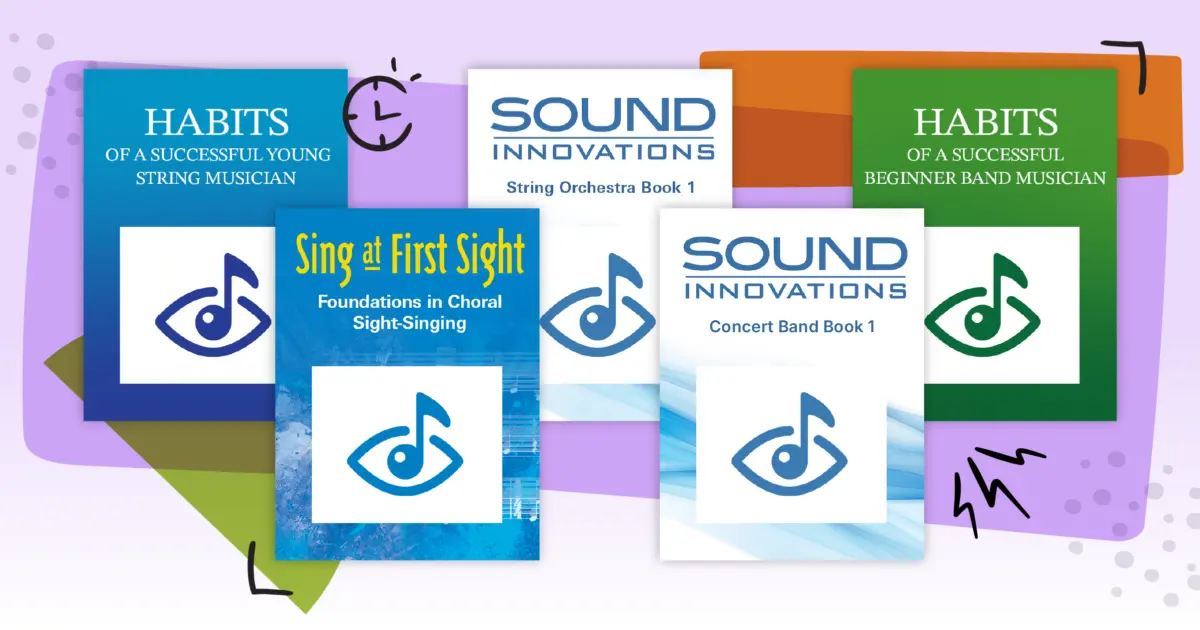
Enter MakeMusic’s latest pedagogical innovation: Correlated Sight Reading Generators. Available immediately within the MakeMusic Cloud ecosystem, these pre-built Sight Reading Studio templates bridge the gap between structured method books and limitless practice material. Designed to align lesson-by-lesson with widely trusted musical methods, these generators offer educators an infinite stream of unique, skill-matched exercises at the click of a button. By eliminating the administrative burden of material preparation, this new tool aims to give music teachers their prep time back while fundamentally transforming how students engage with notation at school and at home.
Detailed Chronology: The Evolution of Sight-Reading Pedagogy and Technological Intervention
To understand the significance of MakeMusic’s new release, one must examine the historical trajectory of sight-reading instruction within instrumental and vocal music classrooms.
The Era of Static Print and Manual Composition
For decades, music instruction has relied heavily on printed method books. While these volumes provide a logical progression of rhythmic and melodic concepts, their static nature has always presented a ceiling for skill acquisition. A typical method book might dedicate half a page to six short measures of quarter and half notes in a specific key signature. A diligent student can exhaust this material in less than five minutes.
To combat this limitation, conscientious educators developed elaborate workarounds:
- The Blackboard Method: Teachers spent valuable instructional minutes manually drawing staff lines, clefs, notes, and dynamic markings on chalkboards or whiteboards before class began.
- The Photocopy Copier Scrapbook: Educators maintained massive, disorganized physical filing cabinets filled with excerpts clipped from obscure method books, older anthologies, and out-of-print publications, often blurring the lines of copyright compliance in pursuit of fresh material.
- Handwritten Compositions: Late-night hours were frequently sacrificed as directors sat at pianos or notation software interfaces, painstakingly writing out dozens of mini-etudes to ensure their ensembles had enough unique material for a week of sight-reading drills.
The Digital Shift and the Birth of Sight Reading Studio
As music education gradually migrated into the digital age, software developers began recognizing the need for algorithmic assistance. The introduction of platforms like MakeMusic Cloud (formerly SmartMusic) revolutionized assessment and practice by providing immediate feedback on pitch and rhythm accuracy.
However, a gap remained between broad practice software and localized curriculum integration. While digital libraries offered general leveled sight-reading exercises, those exercises rarely matched the exact pedagogical pacing of the specific method books an ensemble director was using in class. If a band director was on Lesson 12 of a popular brass-and-woodwind method—focusing on a specific new note, a dotted-rhythm variation, and a flat key signature—finding a digital exercise that hit those exact parameters without introducing premature technical challenges was often an exercise in frustration.
The Breakthrough: Correlated Templates
Recognizing this friction point, MakeMusic’s development team spent months analyzing the structural architecture of premier method books. By mapping out the precise pedagogical milestones of these texts—noting exactly when specific notes, time signatures, rhythmic subdivisions, and articulation markings are introduced—engineers built an algorithmic bridge.
The resulting Correlated Sight Reading Generators, deployed in late 2026, represent the culmination of this effort. Rather than forcing teachers to choose between standardized method books and custom digital tools, the new system marries the two. By pulling pre-built Sight Reading Studio templates directly into alignment with standard curriculum milestones, MakeMusic has effectively transformed static print pedagogy into a dynamic, infinitely renewable resource.
Supporting Context & Metrics: The Cognitive and Practical Impact of Infinite Sight-Reading
The launch of the correlated generators arrives at a time when music educators are facing unprecedented time constraints and administrative creep. Examining the underlying data surrounding music literacy, classroom efficiency, and teacher retention reveals why this technological intervention is both timely and transformative.
The Cognitive Science of Sight-Reading
Neuroscientific research consistently demonstrates that sight-reading engages some of the most complex cognitive networks in the human brain. It requires the simultaneous translation of visual symbols into motor commands, rapid parsing of temporal structures, and anticipatory auditory imagining—all while maintaining a continuous forward momentum.
When a student memorizes a piece of music, the cognitive load shifts from real-time visual decoding to procedural memory retrieval. While memorization is valuable for performance mastery, it actively short-circuits the brain networks responsible for sight-reading fluency.
- The Novelty Imperative: Studies in cognitive psychology indicate that true reading fluency improves only when the brain is forced to process unfamiliar orthographic structures repeatedly.
- The Scalability Problem: To achieve fluency, a student requires roughly 10 to 15 minutes of fresh reading material per day. Over a 36-week school year, this translates to thousands of unique measures of music—a volume that no traditional published method book can physically contain.
Transforming the Classroom Experience
In a typical ensemble setting—whether a middle school concert band, a high school string orchestra, or an intermediate choir—managing student attention while transitioning to sight-reading drills is a delicate choreography.
Traditionally, the friction of setup led many directors to abandon daily sight-reading altogether, relegating it to an occasional diagnostic exercise prior to festival season. With the integration of correlated generators, the classroom workflow changes dramatically:
- Instantaneous Deployment: The educator identifies the current concept (e.g., introduction of the natural minor scale or syncopated eighth-sixteenth rhythms).
- One-Click Generation: Selecting the corresponding template within MakeMusic Cloud instantly generates a randomized, perfectly leveled exercise.
- Seamless Integration: Because the vocabulary of the exercise matches the lesson the students just completed, the activity reinforces conceptual understanding rather than inducing cognitive panic.
Empowering Independent Practice at Home
Perhaps the most profound impact of the new system is felt outside the physical classroom. Music education experts agree that sustainable progress relies heavily on autonomous home practice. However, students working independently often avoid sight-reading because it feels intimidating or because they lack access to appropriate, leveled material.
By leveraging MakeMusic Cloud at home, students can access the same correlated generators used in class.
- Zero Fear of Failure: Because infinite fresh examples are available, students realize that making a mistake on one exercise carries no penalty; they can simply click to generate a new iteration and try again.
- Gamified Mastery: Students can challenge themselves to successfully navigate three consecutive generated exercises before moving on to their repertoire pieces, building intrinsic motivation and confidence.
Official Statements and Pedagogical Perspective
Industry leaders and curriculum designers behind the MakeMusic initiative emphasize that the core philosophy of the new generators is to amplify human teaching, not replace it.
Dr. Elena Vance, Senior Curriculum Architect at MakeMusic, highlighted the deep alignment between the software algorithms and established instructional methodologies during the product rollout:
"For decades, we’ve watched brilliant, dedicated music educators spend their precious Sunday evenings manually writing out sight-reading examples because the book they love simply ran out of pages. Our goal with the correlated sight reading templates was to honor the master methods that teachers already trust, while removing the artificial limitations of paper. We didn’t want to invent a new way of teaching music; we wanted to supercharge the methods that are already proven to work."
According to Vance, the development process involved exhaustive reviews of curricular pacing guides to ensure that no generated exercise introduces technical demands ahead of schedule:
"If a lesson introduces the concept of cut time, our generator ensures that the preceding note values and rhythmic combinations align precisely with what the student has mastered up to that exact page. It’s pedagogical precision meets infinite scalability."
Field-testing educators have echoed these sentiments, pointing to the immediate psychological shift in their students. Marcus Holloway, a veteran high school band director who participated in the early beta testing phase, noted the change in festival preparation:
"Every spring, the sight-reading room at our regional festival was a source of dread. Students associated sight-reading with pop quizzes and failure. By integrating the MakeMusic generators into our daily five-minute warm-up routine, the mystery and fear completely evaporated. Because they see ten new, perfectly matched examples a week, walking into an assessment room and seeing an unfamiliar piece is no longer terrifying—it’s just Tuesday."
Future Outlook: The Next Horizon in Digital Music Education
As educational technology continues to mature, the release of MakeMusic’s correlated sight-reading templates signals a broader trend toward hyper-personalized, curriculum-aware software integration.
Expanding Method Coverage and Granular Customization
Looking ahead, MakeMusic has indicated plans to expand its library of correlated templates to encompass an even wider array of method series, spanning diverse stylistic traditions, global folk instruments, and advanced collegiate-level curricula. Furthermore, roadmap discussions point toward enhanced customization parameters, allowing educators to tweak specific algorithmic constraints—such as limiting intervals, restricting accidentals, or emphasizing specific articulation patterns—to address localized ensemble weaknesses.
AI-Assisted Diagnostic Tracking
As the ecosystem gathers anonymized usage and performance data, future iterations of the platform are expected to integrate advanced learning analytics. Imagine a system where MakeMusic Cloud automatically identifies that an entire woodwind section is struggling with dotted-eighth-sixteenth figures in a specific generated exercise, subsequently prompting the teacher with a targeted micro-lesson or custom-tailored reinforcement loop.
Sustaining the Lifelong Music Community
Ultimately, the grand vision extending from this technological leap reaches far beyond classroom walls and festival ratings. By democratizing access to frictionless, highly engaging sight-reading practice, tools like MakeMusic’s correlated generators help bridge the chasm between formal education and lifelong artistic expression. When students possess the confidence and literacy skills to pick up a piece of music they have never seen before—and play it successfully—they unlock a passport to musical participation that lasts a lifetime.
Conclusion
MakeMusic’s introduction of correlated sight reading templates marks a watershed moment for instrumental and vocal music education. By solving the age-old dilemma of static print limitations and exhaustive teacher prep work, the platform bridges the gap between structured pedagogical methods and infinite digital practice.
For educators buried under administrative demands, the generators offer the ultimate commodity: reclaimed time and renewed energy focused purely on artistry and mentorship. For students, the removal of reading barriers transforms a source of performance anxiety into an empowering tool for lifelong musical independence. As music programs continue to evolve in an increasingly digital landscape, innovations of this caliber ensure that the timeless art of reading music remains vibrant, accessible, and deeply engaging for generations to come.
Getting Started
Music educators and students interested in exploring the new functionality can log in to their accounts directly through the MakeMusic Cloud portal. By navigating to the correlated sight reading templates search hub, instructors can locate their preferred method book, jump straight to their current lesson syllabus, and deploy fresh, limitless sight-reading material in their classrooms today.