
Executive Overview
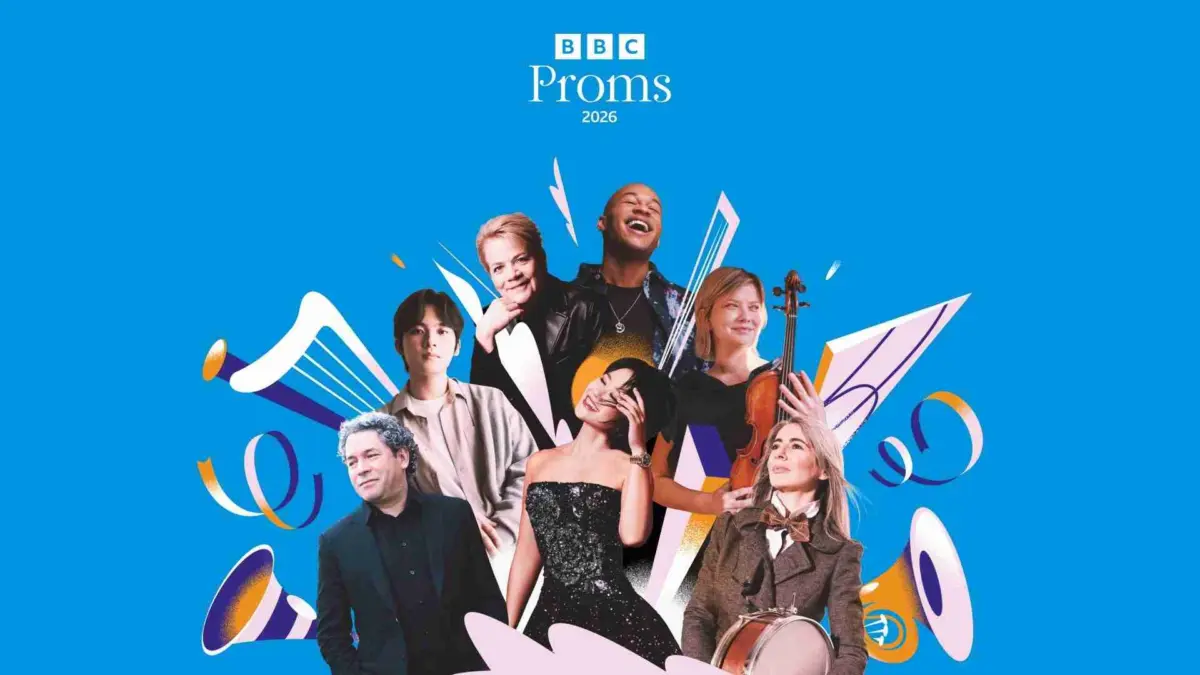
As the legendary Royal Albert Hall prepares to lower the curtain on another extraordinary summer of classical music, anticipation has reached a fever pitch for the Last Night of the Proms on Saturday, 12 September 2026. Hailed as classical music’s biggest and most exuberant party, the culminating event of the world’s most famous classical music festival promises an eclectic mix of high art, contemporary world premieres, and a star-studded tribute to a global icon.
The 2026 season has been nothing short of historic. Spanning eight weeks, the festival presented an astounding 86 concerts—72 at its spiritual home in South Kensington and 14 across various venues throughout the United Kingdom. Bringing together roughly 300,000 live attendees alongside millions of digital consumers, the festival has once again proven its unmatched cultural relevance in the modern media landscape. Interim figures reveal a record-breaking digital footprint, with BBC Sounds and BBC iPlayer logging 1.7 million unique accounts—a remarkable 32% year-on-year increase—generating 6.8 million plays and an astonishing 3.4 million listening and viewing hours between mid-April and early September.
Under the baton of Chief Conductor Sakari Oramo, the BBC Symphony Orchestra and Chorus, alongside the BBC Singers, will guide millions through a kaleidoscopic programme. This year’s finale boldly bridges the gap between centuries-old classical traditions and modern pop culture, highlighted by a symphonic homage to the late Queen of Country, Dolly Parton. Featuring powerhouse performances from Sheridan Smith, Beverley Knight, and country-pop duo Ward Thomas, alongside virtuosic displays from piano superstar Yuja Wang and acclaimed tenor Nicky Spence, the 2026 Last Night of the Proms is engineered to be an unforgettable cultural milestone.
Broadcast multimedia coverage will ensure that the magic reaches every corner of the UK and beyond. Television audiences can tune into BBC Two and iPlayer starting at 7:10 PM for Part 1, with the grand Finale transitioning to BBC One and iPlayer at 9:00 PM. Meanwhile, BBC Radio 3 and BBC Sounds will provide live, uninterrupted audio coverage from 7.10pm.
Detailed Chronology and Programme Breakdown
The 2026 Last Night of the Proms programme is a masterclass in musical programming, carefully balancing time-honored patriotic anthems with avant-garde contemporary compositions and unexpected genre fusions.
Part 1: Setting the Stage (7:10 PM Onwards)
The evening kicks off with exhilarating theatricality as the orchestra performs Leonard Bernstein’s Candide: Overture, immediately establishing a high-energy, celebratory tone. This is followed by Josef Foulds’ poignant Keltic Suite, ii. ‘Lament’, which offers a moment of reflective beauty before transitioning into the haunting operatic realms of Dvořák. Acclaimed Scottish tenor Nicky Spence takes center stage alongside the BBC Symphony Chorus and BBC Singers to deliver an exquisite rendition of Act I from Rusalka (“Vidino divná, přesladká”).
The momentum builds with the sweeping, cinematic grandeur of Bedřich Smetana’s Má vlast – Vltava (The Moldau), painting a sonic portrait of Bohemia’s most famous river. The first half also features a major contemporary highlight: the world premiere of Dithyramb, a BBC commission by Canadian composer and conductor Samy Moussa, performed with full choral backing.
The Piano Virtuoso and The Country Queen
As the evening progresses toward its dramatic peak, world-renowned pianist Yuja Wang makes a rare and highly anticipated Proms appearance. Wang will give the very first performance at the festival of Samuel Barber’s Pulitzer Prize-winning Piano Concerto, a piece renowned for its staggering technical demands and blazing emotional intensity.
Immediately following the classical pyrotechnics comes one of the most talked-about moments of the entire summer: To Dolly, With Love. Arranged by Fiona Brice, this bespoke orchestral medley serves as a heartfelt tribute to the late, great Dolly Parton. An all-star cast of British vocalists will step up to the Royal Albert Hall stage:
- Sheridan Smith will bring theatrical flair and infectious energy to 9 to 5.
- Beverley Knight will unleash her legendary vocal prowess on the timeless ballad I Will Always Love You.
- Ward Thomas will infuse the arena with harmonies on Jolene.
The Finale and Traditional Festivities (9:00 PM Onwards)
As the broadcast shifts to BBC One for the grand Finale, Gustav Holst’s The Planets contributes Jupiter, the Bringer of Jollity, radiating warmth and high spirits. Yuja Wang returns to the stage for a second time to tackle Alexander Tsfasman’s dazzling Suite for Piano and Orchestra (Jazz Suite), seamlessly blending classical precision with swinging jazz syncopation.
Nicky Spence returns for Scotch Snap (arranged by Stuart Calvert), followed by another major contemporary world premiere: Iris of Life by Academy Award-winning British composer Anne Dudley, performed with the BBC Singers.
The theatricality continues with Frank Loesser’s crowd-pleaser Guys & Dolls – “Sit Down, You’re Rockin’ the Boat”, featuring Spence, the BBC Symphony Chorus, and the BBC Singers.
Finally, the evening melts into the iconic, flag-waving traditions that define the Last Night. Sir Henry Wood’s Fantasia on British Sea Songs, Thomas Arne’s Rule, Britannia!, Edward Elgar’s Pomp and Circumstance March No. 1 (featuring the immortal words of Land of Hope and Glory), and Hubert Parry’s Jerusalem (arranged by Elgar) will sweep through the Royal Albert Hall. The night closes with the traditional communal singalong of Auld Lang Syne (arranged by Paul Campbell) and the National Anthem (arranged by Benjamin Britten), uniting the thousands in attendance and millions at home in a shared musical embrace.
Supporting Context & Metrics: A Record-Breaking Season
The success of the 2026 Last Night of the Proms does not exist in a vacuum; it is the crowning achievement of an exceptionally robust eight-week season. With 86 concerts staged across the United Kingdom—72 at the Royal Albert Hall and 14 in regional partner venues—the festival has reinforced its status as the bedrock of British cultural life.
Behind the scenes, the BBC’s digital strategy has yielded unprecedented dividends. Interim metrics reveal a digital renaissance for classical music consumption:
- Digital Reach: 1.7 million unique accounts accessed Proms content via BBC Sounds and BBC iPlayer between 13 April and 6 September 2026, marking a stellar 32% year-on-year increase.
- Engagement: Audiences generated 6.8 million individual plays, translating to 3.4 million total listening and viewing hours.
- Radio 3 Momentum: Weekly accounts on BBC Sounds for Radio 3 surged by 10% during the week commencing 17 August 2026—a powerhouse week featuring guest appearances from world-class ensembles such as The Met Orchestra, the Oslo Philharmonic, and the Berlin Philharmonic.
These numbers demonstrate that while the Royal Albert Hall remains the beating heart of the Proms, its digital arteries are pumping classical music into younger, broader, and more geographically diverse households than ever before.
Official Statements
The architects of this massive cultural undertaking have shared their reflections as the season draws to its triumphant close.
Sam Jackson, Controller of Radio 3 and BBC Proms, emphasized the communal and celebratory nature of the festival:
"This year’s Last Night of the Proms promises to be a joyous celebration, bringing together world-class performers, much-loved repertoire and memorable musical moments. Across eight weeks, audiences have embraced the Proms in record numbers on our broadcast platforms, while around 300,000 people have joined us at the Royal Albert Hall and at venues across the UK. We very much look forward to the centenary of the BBC Proms next year, but for now, we can’t wait to celebrate the end of the 2026 season in style!"
Suzy Klein, Head of Arts and Classical Music TV, highlighted the unifying power of public service broadcasting over the summer months:
"The BBC Proms has once again connected audiences across the UK and beyond through an extraordinary summer of live music. We’re incredibly proud of the range and quality of concerts across BBC television and BBC iPlayer, and the Last Night will provide the perfect finale to an unforgettable season. And while the season may be drawing to a close, audiences will be able to enjoy the Proms on BBC iPlayer for a whole year afterwards."
Future Outlook: Looking Ahead to a Centenary Milestone
As the final notes of Auld Lang Syne fade into the London night on 12 September, cultural analysts and music lovers alike will immediately turn their gaze toward the horizon. Sam Jackson’s teaser regarding the centenary of the BBC Proms next year has already set the classical music world abuzz.
Celebrating 100 years of the BBC Proms in 2027 will require an unprecedented scale of ambition, curation, and international collaboration. Founded in 1895 by Robert Newman and later championed by Sir Henry Wood to "make the best orchestras popular," the Proms became a BBC institution in 1927. Next year’s centenary will not only celebrate a century of broadcasting history but will also chart the course for the next hundred years of orchestral performance, education, and digital accessibility.
For now, however, the focus remains firmly on 12 September 2026. With presenters Katie Derham and Nick Mohammed guiding television viewers through the festivities, Tina Daheley capturing the backstage energy, and Petroc Trelawny and Georgia Mann anchoring the radio broadcast, the stage is set for a masterclass in musical performance.
Fans can catch Part 1 live on BBC Two and iPlayer from 7:10 PM, with the Finale broadcasting on BBC One and iPlayer from 9:00 PM. Radio listeners can tune into BBC Radio 3 and BBC Sounds starting at 7:10 PM. Audio broadcasts will remain available on BBC Sounds for 30 days, while television coverage will stay streamable on BBC iPlayer for a full year.