
Executive Overview
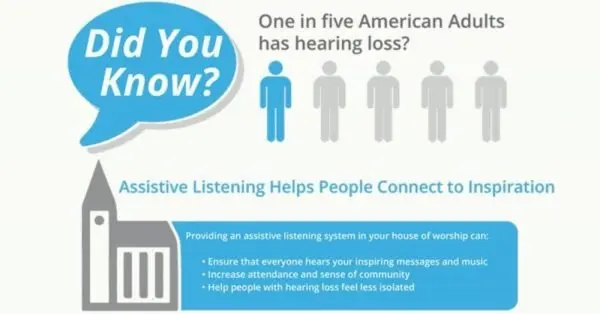
In an era where modern houses of worship strive to foster environments of radical inclusion, the acoustic experience of a Sunday service, community gathering, or spiritual sermon remains paramount. Yet, for millions of congregants grappling with hearing loss, participating fully in these services can often feel like an insurmountable challenge. Standard architectural acoustics, background noise, distance from the speaker, and reverberation in large sanctuaries frequently conspire to render spoken messages unintelligible, even for individuals with mild-to-moderate hearing impairments.
To bridge this profound communication gap, houses of worship are increasingly turning to advanced Assistive Listening Systems (ALS). However, the successful integration of these technologies requires far more than merely purchasing and plugging in audio hardware. It demands a strategic, highly deliberate approach encompassing congregation assessment, financial planning, rigorous staff training, and proactive community outreach.
This comprehensive report explores the multifaceted process of deploying an Assistive Listening System within a faith-based environment. Drawing upon industry expertise, operational frameworks provided by audio-visual integrators like CCI Solutions, and technological insights from manufacturers such as Listen Technologies, this article provides a definitive roadmap for leadership teams. By following a structured four-phase implementation model—understanding community needs, evaluating financial options, preparing operational staff, and driving widespread awareness—churches can ensure that every message is heard, every prayer is shared, and every member of the congregation feels genuinely embraced.
Detailed Chronology: The Four-Phase Implementation Roadmap
Successfully introducing an Assistive Listening System into a worship facility is a journey that requires careful planning and sequential execution. To ensure optimal adoption and maximum return on investment, facility managers, AV teams, and church leadership should follow a structured chronological framework.
[Phase 1: Needs Assessment] ──> [Phase 2: Equipment & Budgeting] ──> [Phase 3: Staff Preparation] ──> [Phase 4: Awareness & Outreach]Phase 1: Assess and Understand Community Needs
The foundational step in any accessibility initiative is establishing an empirical understanding of the demographic and technical requirements within your specific congregation. Assumptions regarding who can or cannot hear clearly during services can lead to misallocated resources.
- Conducting Congregation Surveys: The most effective method for evaluating listening needs is to distribute a comprehensive survey. This tool should be made available in both physical print formats (inserted into weekly bulletins) and digital formats (via email newsletters and church apps).
- Key Data Points to Collect: Surveys should explicitly ask congregants about their subjective experience during worship services. Questions should determine whether individuals struggle to hear the spoken word, whether they currently utilize hearing aids, and crucially, whether their personal hearing aids are equipped with telecoils (t-coils).
- Analyzing Architectural and Acoustic Realities: Alongside demographic surveys, leadership must evaluate the physical space. Consider dead zones in the sanctuary, areas prone to excessive echo, and how seating configurations impact sound propagation from the main sound reinforcement system.
Phase 2: Fully Understand Technical and Financial Options
Once the congregation’s needs have been mapped, the next phase involves navigating the vast landscape of assistive listening technologies and aligning them with the church’s financial capabilities.
- Evaluating Technology Standards: Houses of worship typically choose between Radio Frequency (RF) systems, Infrared (IR) systems, and Audio Induction Loop systems. Each technology presents distinct advantages depending on the physical architecture of the building and the prevalence of t-coil equipped hearing aids among members.
- Cost Estimation and Budgeting: Estimating the total cost of ownership involves looking beyond the initial hardware purchase to account for receivers, neck loops, charging stations, signage, and installation labor.
- Leveraging Professional Consultations: Organizations do not have to navigate this procurement phase alone. Specialized AV integrators, such as CCI Solutions, offer dedicated assistance and free consultations to help church boards align their accessibility goals with realistic expense and budgeting parameters.
- Fundraising and Financial Offsets: For many smaller or mid-sized parishes, capital expenditure for technology upgrades can be daunting. Exploring targeted fundraising campaigns, donor-subsidized giving initiatives, or grants specifically designated for disability accessibility can successfully offset these costs.
Phase 3: Prepare Operational Staff for Success
Even the most advanced Assistive Listening System will fail if the personnel responsible for distributing and managing the technology are unprepared. The human element is critical to the operational success of any accessibility deployment.
- Designating "Assisted Listening Ambassadors": Staff members and hospitality volunteers should be carefully trained to view themselves as ambassadors of inclusion rather than mere equipment clerks. Their posture, patience, and competence will dictate how comfortable congregants feel requesting a device.
- Comprehensive Operational Training: Volunteers must receive hands-on training regarding how to turn on, adjust, clean, and troubleshoot the listening devices. They should understand how to pair neck loops with t-coil hearing aids and how to sanitize units between services.
- Creating Just-In-Time Reference Materials: To minimize confusion during high-traffic Sunday morning check-in windows, facilities should maintain laminated, step-by-step instruction sheets and Frequently Asked Questions (FAQs) at the distribution counter or welcome desk. These quick-reference guides ensure consistency even as volunteer rosters rotate.
Phase 4: Create Lasting Awareness and Community Outreach
Procuring equipment and training staff is only half the battle; the final phase focuses on utilization. An unused system provides no value to the community. Driving adoption requires aggressive, multi-channel communication.
- Strategic Signage Deployment: Clear, universally recognized accessibility signage must be strategically placed throughout the facility. Visitors and regular attendees need to know instantly that Assisted Listening Devices are available and precisely where they can be obtained.
- Multi-Channel Media Reminders: Accessibility updates should not be a one-time announcement. Consistent reminders must be integrated into weekly printed bulletins, digital projection screens before services begin, and announcements made from the stage.
- Live Training and Demonstration Events: To demystify the technology, consider hosting a dedicated live demonstration or training session after a service. Allowing curious congregants to hold the receivers, test the audio clarity, and experience the difference firsthand removes psychological barriers to adoption.
- External Community Marketing: Outreach should extend beyond current members. Advertising the church’s commitment to accessibility via local community boards, senior living facility newsletters, and targeted digital marketing can draw in individuals who previously felt alienated by traditional worship environments.
Supporting Context & Metrics: The Reality of Hearing Loss in Worship
To fully appreciate the urgency of deploying Assistive Listening Systems, one must examine the broader socio-acoustic context of modern houses of worship. Hearing loss is one of the most prevalent chronic health conditions globally, yet it is frequently referred to as an "invisible disability."
Demographics and Acoustic Challenges
According to epidemiological data from health organizations worldwide, millions of adults experience disabling hearing loss, with prevalence increasing significantly among aging populations—a demographic that frequently forms the backbone of traditional church congregations. In a typical sanctuary, acoustic challenges compound these biological realities:
- Reverberation Times: Many architectural styles favored by historic and contemporary churches—featuring vaulted ceilings, hardwood floors, stone pillars, and expansive glass panels—create long reverberation times. While excellent for pipe organs and choral resonance, these acoustic properties smear spoken consonants, making speech intelligibility remarkably difficult for anyone with compromised hearing.
- The Distance Factor: Unlike a one-on-one conversation, church sanctuaries often separate the speaker from the listener by dozens or even hundreds of feet. As distance increases, the ratio of direct sound to reflected ambient room sound deteriorates rapidly.
- Signal-to-Noise Ratio: Ambient noise generated by HVAC systems, shuffling feet, whispered side conversations, and dynamic musical instruments often masks the quiet linguistic cues required for speech comprehension.
The Role of Assistive Listening Systems (ALS)
Assistive Listening Systems bypass these environmental obstacles by delivering an optimized, pristine audio signal directly from the sound system’s mixing console straight to the listener’s ear.

[Main Microphone/Mixer] ──(Direct Feed)──> [ALS Transmitter] ──(Wireless/Loop)──> [Receiver / T-Coil Hearing Aid] ──> [Clear Audio to Ear]- RF and Infrared Systems: These systems transmit audio via radio waves or light pulses to dedicated pocket-sized receivers worn by the user, who connects headphones or neck loops.
- Audio Induction Loops: These systems run a copper wire loop around the perimeter of a seating zone, generating an electromagnetic field that couples directly with the telecoils built into modern hearing aids and cochlear implants, eliminating the need for separate receivers entirely.
By implementing these technologies, churches directly address the physiological and environmental barriers that cause congregants to disengage from spiritual services.
Official Industry Insights and Perspectives
Industry leaders and accessibility advocates emphasize that providing assistive listening is not merely a compliance checkbox for building codes, but a profound expression of pastoral care.
The Philosophy of Inclusion
Audio-visual engineering and integration experts consistently argue that technical excellence in house-of-worship audio should be measured by its ability to serve every single member of the body, regardless of biological capacity. When a church invests in a high-quality Assistive Listening System, it communicates a powerful theological message: Every voice matters, and every story is worth hearing.
Listen Technologies, a pioneer in wireless listening solutions, notes in their comprehensive House of Worship Assistive Listening Toolkit that accessibility is a catalyst for community retention. Individuals who struggle to hear often quietly slip away from corporate worship, feeling isolated or embarrassed to interrupt audio technicians with their struggles. Proactive deployment of ALS technology reverses this trend, offering dignity, autonomy, and renewed engagement.
Integration Best Practices from CCI Solutions
According to system design consultants at CCI Solutions, the integration of assistive technology must be treated as an extension of the primary house-of-worship sound system rather than an afterthought. Consultation with professional integrators ensures that:
- Impedance and Gain Staging are properly managed between the mixing console and the transmission hardware.
- Coverage Zones are accurately calculated to eliminate dropouts or dead spots in overflow rooms, balconies, and cry rooms.
- Compliance Standards under the Americans with Disabilities Act (ADA)—which mandates assistive listening systems in public assembly areas—are fully met or exceeded.
Future Outlook: The Evolution of Accessibility in Worship
As audio-visual technology continues to evolve at a breakneck pace, the future of assistive listening in houses of worship promises even greater integration, discretion, and personalization.
The Rise of Bluetooth LE Audio and Auracast™
One of the most transformative technological horizons on the immediate horizon is the widespread adoption of Bluetooth Low Energy (LE) Audio and Auracast™ broadcast audio technology. Unlike traditional RF systems that require specialized, facility-owned receivers, Auracast™ enables audio transmitters in a sanctuary to broadcast crystal-clear, multi-channel sound directly to compatible personal smartphones, wireless earbuds, and next-generation hearing aids.
- Reduced Stigma: Congregants will no longer need to visit a welcome desk to request specialized, institutional-looking receivers. Instead, they will be able to access the church’s optimized audio stream seamlessly through their own everyday personal devices or hearing aids.
- Customized Audio Profiles: Future systems will increasingly allow users to tailor EQ settings, volume levels, and even language translation directly from their personal interfaces, creating a deeply personalized listening experience tailored precisely to their unique auditory curve.
Expanding Accessibility Beyond the Sanctuary
Looking forward, progressive houses of worship are recognizing that accessibility must extend far beyond the physical Sunday morning sanctuary experience. With the permanent integration of hybrid models—incorporating live-streamed services, archived video sermon libraries, and digital small-group podcasts—accessibility infrastructure must be holistic.
Future assistive listening deployments will increasingly coordinate with digital streaming encoders to ensure that closed-captioning, audio-described services, and clean auxiliary audio feeds are transmitted effortlessly to remote participants accessing services from home, nursing facilities, or hospital beds.
Conclusion
Ultimately, the integration of an Assistive Listening System is far more than an engineering upgrade or an administrative task; it is a vital ministry of presence. By systematically assessing community needs, budgeting thoughtfully, training compassionate staff, and promoting awareness aggressively, churches can tear down the invisible walls erected by hearing loss.
Ensuring that every congregant can fully absorb the beauty, nuance, and emotional depth of the spoken word remains an essential hallmark of a truly welcoming, compassionate, and inclusive faith community. For facilities seeking to take the next step, leveraging resources such as the Listen Technologies Church Assistive Listening Toolkit and partnering with experienced integrators will ensure long-term success in keeping every member connected to the heart of worship.