
Executive Overview
The contemporary global jazz landscape continues to thrive as a dynamic intersection of historical reverence and cross-cultural experimentation. Recent releases from both modern virtuosos and archival projects highlight the genre’s ongoing elasticity. This comprehensive review examines three distinct releases capturing different eras and aesthetic philosophies: trombonist Ryan Keberle’s homage to Brazilian icon João Donato with Collectiv Do Brasil, the stylistically adventurous debut of the Holland Court Jazz Trio titled Inverted Tango, and a newly highlighted archival pressing from trumpet legend Chet Baker capturing his complex, formative Italian period.
Together, these recordings demonstrate how jazz absorbs global rhythmic traditions—from South American bossa nova and Argentinian tango to West Coast cool and bebop—while maintaining an unwavering connection to its improvisational roots. Through an exploration of liner notes, production metrics, personnel pedigrees, and stylistic breakthroughs, this report provides an authoritative look at the enduring vitality of jazz across generations.
Detailed Chronology: From 1959 Milan Sessions to Contemporary Studios
1. The 1959 Italian Interlude: Chet Baker in Milan
The historical anchor of this review takes us back to late September and early October 1959, a pivotal and turbulent era in the life of trumpet icon Chet Baker. Recorded in Milan, Italy, the sessions that produced Sextet & Quartet (now reissued via WaxTime) captured Baker operating at the height of his lyrical powers alongside elite members of the Italian jazz renaissance.
At this juncture, Baker’s relationship with Italy was deeply entrenched. Following a successful 1955 European tour—marred tragically by the sudden death of his pianist Dick Twardzik in Paris—Baker found a profound artistic and personal affinity for the country. He eventually learned the language and regarded Italy as his second home. However, chaos shadowed his brilliance; just a month after these recording sessions concluded, Baker would be arrested in Lucca, Tuscany, leading to an 18-month imprisonment.
Despite the looming personal turmoil, the Milan recordings reflect an artist fully dialed into a West Coast jazz sensibility. Bolstered by Italian multi-instrumentalists Glauco Masetti on alto saxophone and Gianni Basso on tenor saxophone, Baker fronted an ensemble that effectively recreated the cool, sophisticated ethos of Los Angeles jazz clubs on European soil. The resulting album remains a vital historical document of a master navigating the precipice of personal crisis while producing timeless music.
2. Springtime in Brooklyn: The Holland Court Jazz Trio Debuts (June 2025)
Fast-forwarding to the modern era, June 18 and 19, 2025, marked a significant milestone for veteran bassist Frank Wagner and his newly minted Holland Court Jazz Trio. Teaming up with pianist Dave Marck and drummer Dave Meade—alongside guest violinist Ben Sutin—the ensemble entered a Brooklyn studio to record their debut album, Inverted Tango, released via Composers Concordance Records.
Wagner, an alumnus of the Berklee College of Music who studied under mentorship legends Steve Swallow and Ron McClure, brought decades of major-league experience to the session. Having previously shared stages with jazz and big-band royalty such as Buddy Rich, Glenn Miller, Milt Jackson, and Eartha Kitt, Wagner’s leadership anchored an eclectic, risk-taking session that bridges 20th-century classical minimalism, Argentine tango, and Jimi Hendrix-style rock energy.
3. Sao Paulo Sessions: Ryan Keberle’s Tribute to João Donato (2024)
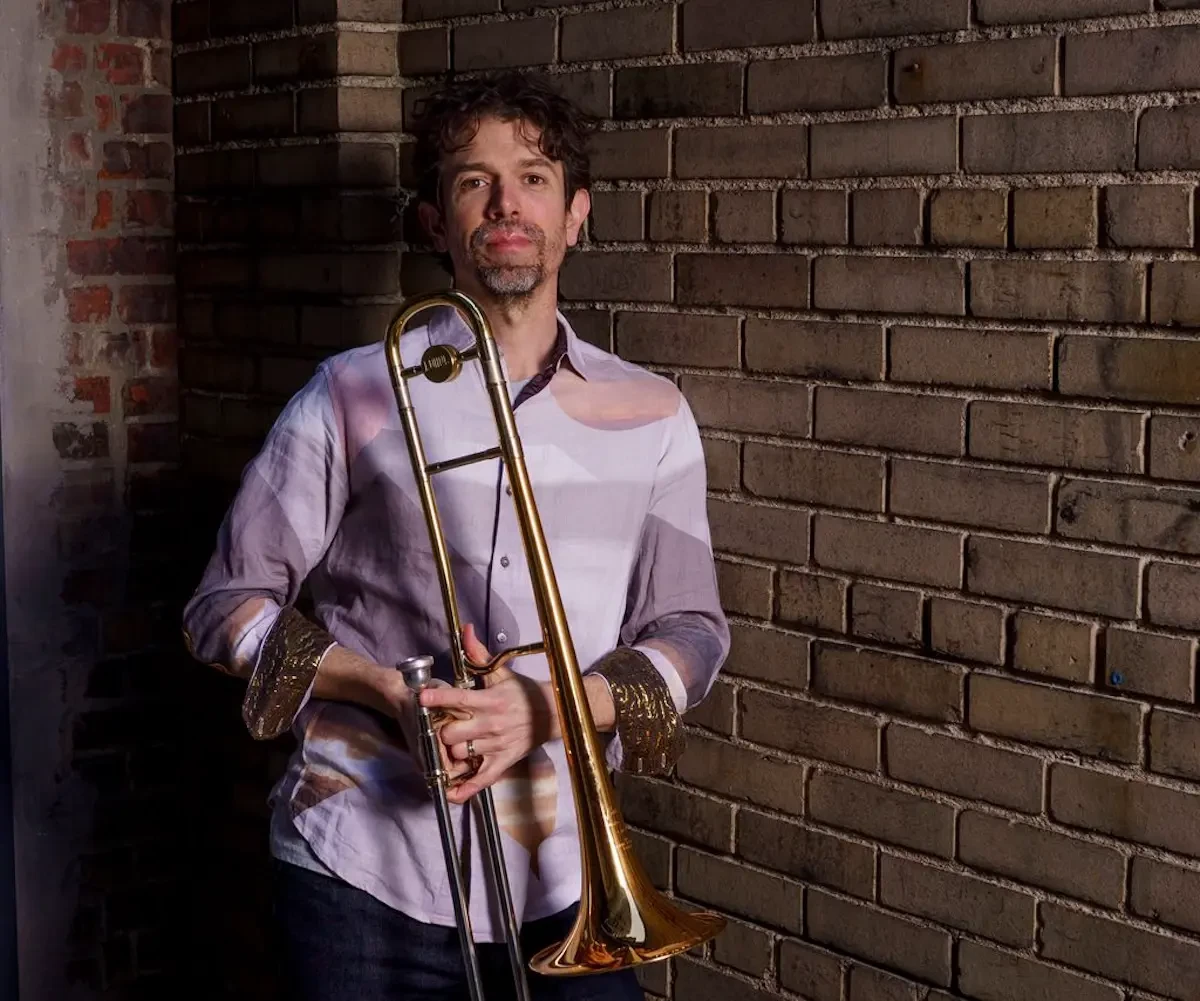
Bridging the timeline between historical reverence and contemporary execution, master trombonist Ryan Keberle traveled to São Paulo, Brazil, between January 17 and 19, 2024, to record his 14th album as a leader: Ryan Keberle’s Collectiv Do Brasil: Here Is Donato! (Alternate Side Records).
Fresh off tying for top position in the trombone category of the 2024 DownBeat Critics Poll alongside Michael Dease, Keberle turned his focus entirely to the oeuvre of João Donato, a foundational architect of bossa nova and modern Brazilian music. Working alongside a stellar rhythm section featuring pianist Felipe Silveira, bassist Felipe Brisola, drummer Paulinho Vicente, and percussionist Guegue Medeiros, Keberle delivered a masterclass in cross-cultural fluency, honoring a fellow trombonist whose career spanned collaborations with Tito Puente and Eddie Palmieri.
Supporting Context & Metrics
Personnel, Production, and Tracklist Breakdowns
Ryan Keberle’s Collectiv Do Brasil: Here Is Donato!
- Release Label: Alternate Side Records (ASR 022)
- Recording Location & Dates: São Paulo, Brazil; January 17–19, 2024
- Total Runtime: 40:35
- Personnel:
- Ryan Keberle – Trombone, Vocals
- Felipe Silveira – Piano, Electric Piano
- Felipe Brisola – Bass, Electric Bass
- Paulinho Vicente – Drums
- Guegue Medeiros – Percussion
- Complete Tracklist:
- Tema Teimoso
- Nana Das Aguas
- Nowhere To Go, Nothing To See
- E Minina
- Mentiras
- Nao Tem Nada Nao
- Celestial Showers
- Ate Quem Sabe
- Cade Jodel
- Lugar Comum
Holland Court Jazz Trio: Inverted Tango
- Release Label: Composers Concordance Records
- Recording Location & Dates: Brooklyn, NYC; June 18–19, 2025
- Total Runtime: 56:57
- Personnel:
- Frank Wagner – Bass
- Dave Marck – Piano
- Dave Meade – Drums
- Ben Sutin – Violin (Guest)
- Complete Tracklist:
- Inverted Tango
- Hi-Ya
- Phrygian Natural Fix
- A Flower Is A Lovesome Thing
- Invisible Enemy
- Domenica Canta
- Quiet Room
- Manic Depression
Chet Baker: Sextet & Quartet
- Release Label: WaxTime (771678)
- Recording Location & Dates: Milan, Italy; September 25 & October 6, 1959
- Total Runtime: 48:01
- Personnel:
- Chet Baker – Trumpet, Vocals
- Glauco Masetti – Alto Saxophone
- Gianni Basso – Tenor Saxophone
- Renato Sellani – Piano
- Franco Cerri – Bass
- Gene Victory – Drums
- Complete Tracklist:
- Lady Bird
- Cheryl
- Tune Up
- Line For Lyons
- Pent-Up House
- Look For The Silver Lining
- Indian Summer
- My Old Flame
- My Funny Valentine
Official Statements and Critical Analysis
The Art of the Slide: Ryan Keberle’s Brazilian Exploration
Critical reception of Keberle’s latest project centers on his uninhibited tone production. Eschewing mutes, Keberle deploys an open sound and legato timbre that immediately evokes comparisons to West Coast greats like Andy Martin and the legendary Urbie Green.
Reviewing the musical mechanics of the record, the interplay on Tema Teimoso stands out, featuring an extended montuno—a foundational rhythmic engine in Latin music—built on creative dialogue between Keberle and pianist Felipe Silveira. On tracks like E Menina and Celestial Showers, the high-energy Afro-Cuban rhythms push Keberle into his most inspired improvisational spaces. Meanwhile, Silveira introduces intriguing bitonality on Nao Tem Nada Nao, contrasting sharply with the sublime lyricism of Donato’s master-ballads, Mentiras and Ate Quem Sabe.
Minimalism meets Tango: Decoding the Holland Court Jazz Trio
Frank Wagner’s Inverted Tango defies easy categorization. The title track opens with a resonant bass ostinato that blooms into a minor-key theme reminiscent of Erik Satie. This nod to early 20th-century minimalism quickly pivots into a heartfelt tribute to Astor Piazzolla, the master of modern Argentine tango.
Humor and intellect permeate the tracklist. Hi-Ya serves as a playful contrafact of Thelonious Monk’s Bye-Ya, utilizing Caribbean rhythms while maintaining Monk’s signature 32-bar AABA form anchored by accented quarter-notes a fifth apart. Drummer Dave Meade anchors Phrygian Natural Fix with funky Latin grooves and percussive effects that draw favorable comparisons to Shelly Manne. The trio—augmented by Ben Sutin’s violin—takes a daring leap into rock history with a high-octane rendition of Jimi Hendrix’s Manic Depression, proving that jazz-rock fusion remains fertile ground when approached with acoustic rigor.
The Italian Blueprint: Chet Baker’s Sidemen and Repertoire
On the 1959 Milan sessions, the inclusion of Glauco Masetti and Gianni Basso provided Baker with an elite European foil. Masetti, restricted to the alto saxophone here, produces a fluent tone akin to Herb Geller, while Basso channels a swinging, Lester Young-inspired tenor style.
The program relies on standard repertoire staples, though notable inclusions like Sonny Rollins’s Pent-Up House (recorded here for the first time by Baker) and Eddie Vinson’s Tune Up (popularized by Miles Davis) showcase Baker’s affinity for sophisticated bebop vehicles. Baker is in peak form on Tadd Dameron’s Lady Bird and Charlie Parker’s blues workout Cheryl, while scaling back the horn section to feature his vulnerable, breathy trumpet work on ballad readings of My Old Flame and Indian Summer.
Future Outlook
The trajectory of these three releases points toward an encouraging future for the global jazz ecosystem. As veteran artists like Frank Wagner and Ryan Keberle continue to cross-pollinate jazz with global folk, classical, and Latin traditions, the boundaries of the genre expand organically. Concurrently, high-end archival labels continue to unpack historical periods—such as Chet Baker’s tragic yet creatively fertile European years—offering modern audiences essential context for how contemporary vocabularies were forged.
Looking ahead, we can expect an acceleration in genre-fluid projects where traditional acoustic instrumentation meets international rhythmic frameworks. Whether through the revival of bossa nova masters like João Donato or the radical reframing of rock classics by contemporary piano trios, jazz proves once again that its greatest strength lies in its limitless capacity for reinvention.