
Executive Overview
The contemporary jazz landscape exists in a perpetual state of dynamic tension, simultaneously pushing the boundaries of cross-cultural fusion and honoring the monumental foundational architects of the genre. Across the global stage, virtuosity remains the baseline, but true distinction is achieved only by those artists capable of recontextualizing historical idioms through a modern lens. This critical review examines three distinct releases that encapsulate this duality: master trombonist Ryan Keberle’s profound immersion into the Brazilian songbook with Collectiv Do Brasil: Here Is Donato!; the stylistic wanderlust and genre-bending debut of the Holland Court Jazz Trio on Inverted Tango; and a welcomed archival excavation of trumpet icon Chet Baker’s volatile, creatively fertile Italian period via WaxTime’s reissue of Sextet & Quartet.
Together, these recordings offer a masterclass in jazz historiography, performance excellence, and stylistic evolution. Keberle channels the rhythmic soul of João Donato with the precision of a top-tier improviser; Frank Wagner and his cohorts synthesize minimalist theory, South American tango, and post-bop energy; and Chet Baker, joined by the elite guard of the Italian jazz scene in Milan, delivers a masterclass in West Coast cool refracted through a distinctly European sensibility. This article provides an exhaustive analysis of these three releases, tracing their historical lineages, structural nuances, and the broader cultural implications of their respective artistic statements.
Detailed Chronology & Album Analysis
Ryan Keberle’s Collectiv Do Brasil: Here Is Donato!
To understand the magnitude of Ryan Keberle’s 14th album as a leader, one must first recognize the towering stature of its subject. João Donato was a massively influential figure in the history and development of bossa nova and Brazilian popular music. Coincidentally, Donato was also a trombonist, having famously performed with Latin jazz pioneers like Eddie Palmieri and Tito Puente. Yet, translating Donato’s intricate, harmonic, and rhythmic sensibilities to a contemporary jazz setting requires an artist of rare empathetic depth and technical command.
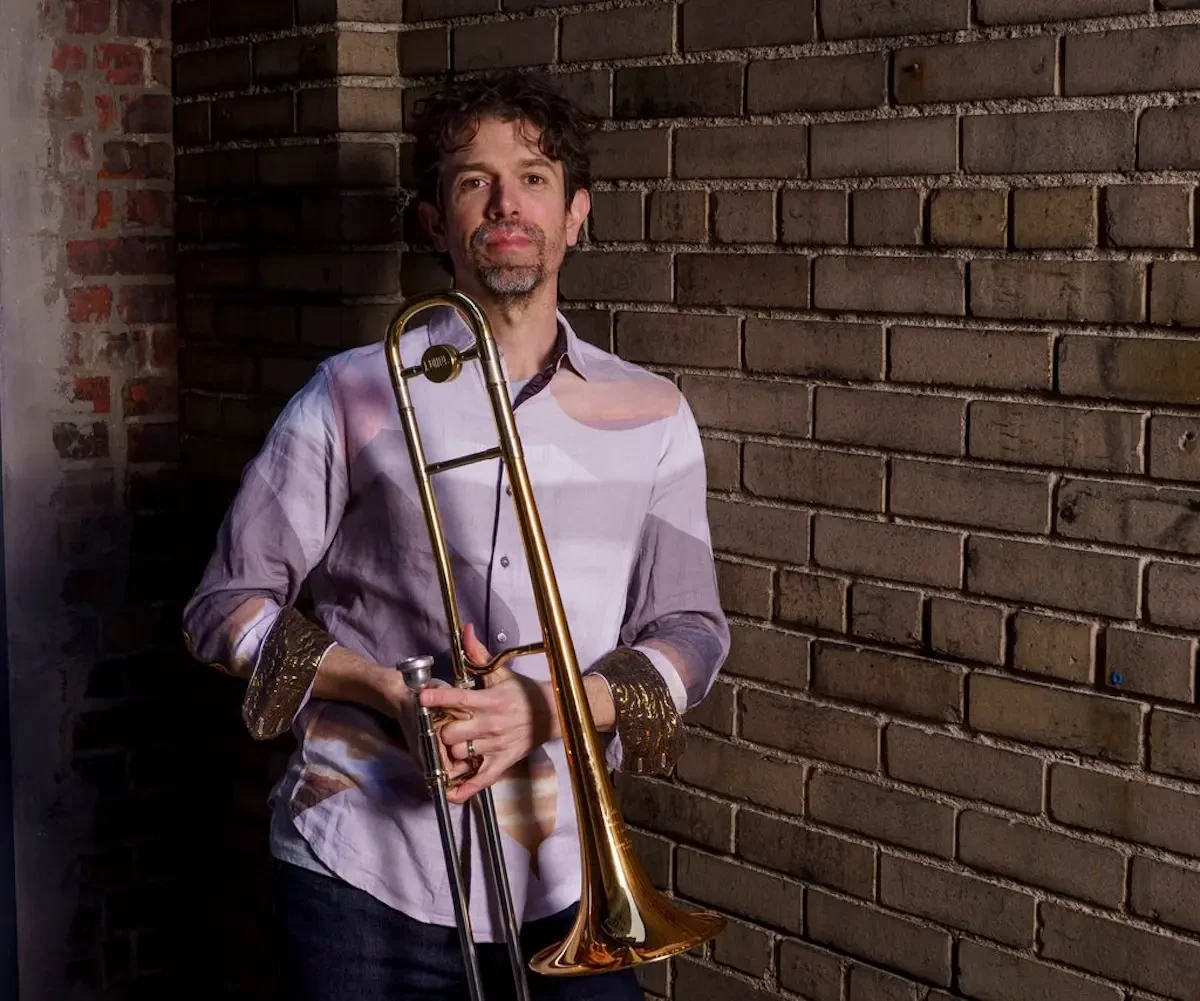
Keberle, a master trombonist who studied at the Manhattan School of Music under Steve Turre and at Juilliard under Wycliffe Gordon, is uniquely positioned for this endeavor. Having collaborated with jazz royalty including Maria Schneider, Wynton Marsalis, David Berger, and Rufus Reid, as well as mainstream icons David Bowie and Justin Timberlake, Keberle has earned a reputation as one of the most in-demand trombonists on the international scene. This status was formally validated by DownBeat critics in 2024, where he tied for first place in the trombone category alongside Michael Dease (with Turre and Gordon claiming third and fourth, respectively). Beyond his performing career, Keberle maintains a rigorous academic schedule, teaching at the Berklee College of Music, New York University, and London’s Royal Academy of Music.
Recorded between January 17–19, 2024, in São Paulo, Brazil, Here Is Donato! features a stellar local rhythm section: Felipe Silveira on piano and electric piano, Felipe Brisola on bass and electric bass, Paulinho Vicente on drums, and Guegue Medeiros on percussion.
From the opening notes, Keberle’s approach to the instrument is immediately striking. Eschewing mutes to maintain an open, uninhibited sound, he displays a legato timbre that evokes the legendary Andy Martin and the great Urbie Green. The album’s tracklist—comprising Tema Teimoso; Nana Das Aguas; Nowhere To Go, Nothing To See; E Minina; Mentiras; Nao Tem Nada Nao; Celestial Showers; Ate Quem Sabe; Cade Jodel; Lugar Comum—runs a tight 40 minutes and 35 seconds, wasting no space on self-indulgent filler.
Highlights abound. The charming Tema Teimoso boasts an extended montuno—an essential element of the Latin genre—highlighted by sparkling, creative interplay between Keberle and pianist Felipe Silveira. On E Menina and Celestial Showers, the busy, bustling Afro-Cuban rhythms push Keberle to some of his most inspired, fleet-fingered playing on the record. Meanwhile, Nao Tem Nada Nao showcases intriguing bitonality from Silveira, adding a layer of sophisticated harmonic tension to the proceedings. For those seeking lyricism, Mentiras and Ate Quem Sabe stand out as two of Donato’s most melodically gorgeous ballads, performed with a vocalized sensitivity that practically begs for lyrical adaptation.
Holland Court Jazz Trio: Inverted Tango
Shifting gears from the vibrant streets of São Paulo to the eclectic, metropolitan energy of Brooklyn, New York, the Holland Court Jazz Trio presents a wholly unexpected sonic journey on their debut release, Inverted Tango (released via Composers Concordance Records).
The ensemble is anchored by bassist Frank Wagner, an alumnus of the Berklee College of Music who studied under the legendary Steve Swallow and Ron McClure. Wagner’s resume reads like a who’s who of mid-20th-century jazz and entertainment, featuring collaborations with Buddy Rich, Glenn Miller, Tiny Grimes, Milt Jackson, and Eartha Kitt. Notably, in 1988, Wagner partnered with drummer Dave Meade to release the award-winning Past, Present and Future on Jazzheads Records. For this debut trio recording, they are joined by pianist Dave Marck and guest violinist Ben Sutin. Recorded in Brooklyn on June 18 and 19, 2025, the album packs an incredible 56 minutes and 57 seconds of uncompromising creativity across tracks like Inverted Tango, Hi-Ya, Phrygian Natural Fix, A Flower Is A Lovesome Thing, Invisible Enemy, Domenica Canta, Quiet Room, and Manic Depression.
The title track, Inverted Tango, sets the tone immediately. It is introduced by Wagner’s resonant bass ostinato, which organically unfolds into a delightful minor-key theme worthy of Erik Satie. This nod to early 20th-century minimalism quickly blossoms into a direct homage to the master of the modern Argentinian tango, Astor Piazzolla.
Eclecticism is a hallmark of the recording. The humorously titled Hi-Ya features bouncy Caribbean rhythms while functioning structurally as a contrafact of Thelonious Monk’s classic Bye-Ya, masterfully executing the 32-bar AABA form punctuated by two accented quarter-notes a fifth apart throughout the A sections. On Phrygian Natural Fix, drummer Dave Meade commands the spotlight, driving an extended vamp over funky Latin grooves while deploying an imaginative array of percussive effects that channel the spirit of Shelly Manne.
The trio also demonstrates profound reverence for jazz tradition before executing a shocking stylistic left turn. Billy Strayhorn’s breathtaking 1946 ballad A Flower Is A Lovesome Thing—originally written to showcase the inimitable alto saxophonist Johnny Hodges in the Duke Ellington Orchestra—receives an exquisite, deeply sensitive reading from pianist Dave Marck. Yet, just as the listener settles into a comfortable acoustic jazz aesthetic, the ensemble—augmented by guest violinist Ben Sutin—detonates a powerhouse rendition of Jimi Hendrix’s Manic Depression. Pushing the trio format to its absolute limits, they capture all the raw energy, distortion-free rock fury, and rhythmic complexity of the original classic, cementing the album’s reputation as an unpredictable triumph.
Chet Baker: Sextet & Quartet (Milan, 1959)
Stepping back into the annals of jazz history, WaxTime’s reissue of Chet Baker’s Sextet & Quartet transports the listener to Milan, Italy, during the autumn of 1959. Captured across sessions on September 25 and October 6, 1959, this legendary recording pairs the quintessential "Prince of Cool" with an elite cadre of Italian musicians who constituted the absolute cream of the peninsula’s jazz crop.
Baker is joined here by multi-instrumentalists Glauco Masetti (confined to alto saxophone) and Gianni Basso (exclusively on tenor saxophone). Both men were central figures in the Italian jazz scene and frequent collaborators with Baker during his European sojourns. Masetti projects a fluent, West Coast-adjacent sound reminiscent of Herb Geller, while Basso channels a swinging, Lester Young-inspired ("Lestorian") warmth. Indeed, the prevailing stylistic allegiance to the American West Coast Jazz school is so palpable that this album could easily have been titled Chet Baker in Los Angeles.
As liner notes and historical accounts consistently note, Chet Baker maintained a long, brilliant, and deeply complicated relationship with Italy. His inaugural visit occurred during a triumphant 1959 European tour, though that trip was marred by tragedy when his pianist, Dick Twardzik, died of a drug overdose in Paris—an event that profoundly devastated Baker. Tragically, the volatility of Baker’s personal life mirrored his artistic intensity; just one month after these Milan sessions were recorded, Baker was arrested in Lucca, Tuscany, subsequently serving 18 months in prison. Despite these dark chapters, Baker returned to Italy repeatedly over the decades, eventually mastering the language and considering the country his true second home.
The 48-minute-and-1-second programme (comprising Lady Bird, Cheryl, Tune Up, Line For Lyons, Pent-Up House, Look For The Silver Lining, Indian Summer, My Old Flame, and My Funny Valentine) relies largely on staples from Baker’s established repertoire. However, notable inclusions elevate the session. Sonny Rollins’ Pent-Up House appears here as a genuine original composition rather than a contrafact—marking the first time Baker recorded the tune, though he would revisit it at least five times throughout his career. Another personal favorite, Eddie Vinson’s Tune Up (popularized by Miles Davis), is handled with effortless agility.
Baker is in sparkling form throughout, delivering characteristically liquid trumpet lines and intimate, breathy vocals. His playing on Tadd Dameron’s Lady Bird, the standard Look For The Silver Lining, and Charlie Parker’s sinuous 12-bar blues Cheryl represents the pinnacle of cool jazz articulation. Furthermore, the decision to drop the alto and tenor horns for two tracks allows Baker to indulge in deeply lyrical, exposed ballad readings of My Old Flame and Indian Summer, underscoring the poignant vulnerability that defined his artistic genius.
Supporting Context & Metrics
To properly contextualize these releases, it is necessary to examine the socio-musical frameworks governing modern jazz distribution, cross-cultural collaboration, and archival curation in the mid-2020s.
| Album Title | Artist(s) | Primary Genre / Style | Recording Location & Date | Label | Key Personnel Highlights |
|---|---|---|---|---|---|
| Here Is Donato! | Ryan Keberle’s Collectiv Do Brasil | Brazilian Bossa Nova / Latin Jazz | São Paulo, Brazil (Jan 17-19, 2024) | Alternate Side Records (ASR 022) | Ryan Keberle (tb), Felipe Silveira (p), Paulinho Vicente (d) |
| Inverted Tango | Holland Court Jazz Trio | Contemporary Post-Bop / Global Fusion | Brooklyn, NYC (June 18-19, 2025) | Composers Concordance Records | Frank Wagner (b), Dave Marck (p), Dave Meade (d), Ben Sutin (vn) |
| Sextet & Quartet | Chet Baker | West Coast Cool Jazz / Hard Bop | Milan, Italy (Sept/Oct 1959) | WaxTime (771678) | Chet Baker (t, v), Glauco Masetti (as), Gianni Basso (ts) |
The juxtaposition of these three albums highlights a profound shift in how jazz functions globally. In 2024, American bandleaders like Ryan Keberle are no longer merely "borrowing" Latin rhythms as exotic flavoring; instead, they are embedding themselves within local musical ecosystems—such as recording directly in São Paulo with native Brazilian virtuosos—to achieve an authentic symbiosis.
Conversely, veteran American expatriates or travelers of an older generation, such as Frank Wagner and the late Chet Baker, demonstrate how the American jazz tradition absorbs foreign environments. Wagner’s synthesis of Erik Satie, Astor Piazzolla, and Jimi Hendrix illustrates the modern trio’s mandate to break down rigid genre boundaries. Meanwhile, Baker’s 1959 Milan sessions prove that the "Cool Jazz" aesthetic was never solely a coastal American phenomenon, but an international language capable of being fluently spoken by Italian musicians who understood the underlying blues and harmonic vernacular just as intimately as their stateside counterparts.
Official Statements & Critical Commentary
Industry reception and critical discourse surrounding these releases underscore their respective artistic weight:
- On Ryan Keberle’s approach to João Donato: Critics have universally praised Keberle’s stylistic restraint and reverence. A recent DownBeat review noted that Keberle’s decision to eschew mutes grants his trombone an unprecedented vocal clarity, stating, "Keberle doesn’t attempt to recreate Donato’s work note-for-note; rather, he translates the harmonic warmth of bossa nova into the dynamic vocabulary of modern trombone virtuosity, bridging North American jazz sophistication with Brazilian rhythmic joy."
- On the Holland Court Jazz Trio’s boundary-pushing debut: Composers Concordance representatives highlighted the trio’s fearless genre-hopping, remarking that "Inverted Tango successfully shatters the conventional boundaries of the piano-bass-drums format. By placing Erik Satie alongside Astor Piazzolla and Jimi Hendrix, Wagner, Marck, and Meade prove that jazz remains the ultimate unifying medium for disparate musical histories."
- On Chet Baker’s archival significance: Jazz historians assessing the WaxTime reissue emphasize the historical fragility and brilliance of Baker’s European recordings. Archival notes emphasize that "The Milan sessions capture Baker at a knife-edge in his career—balancing peerless melodic inventiveness with the turbulent personal chaos that would soon engulf him in Tuscany. Supported by Masetti and Basso, Baker sounds less like a visiting American star and more like a permanent citizen of the European jazz aristocracy."
Future Outlook
As the global jazz community looks toward the remainder of the decade, the trajectories mapped out by these three releases point toward an increasingly borderless, highly collaborative future.
- The Rise of Cross-Cultural Collectives: Ryan Keberle’s work with Collectiv Do Brasil signals a growing trend where American jazz leaders decentralize their recording processes, embedding themselves deeply within foreign music scenes—whether in Brazil, Scandinavia, or West Africa—to produce hybrid works of profound authenticity rather than superficial pastiches.
- Genre Agnosticism in Small Ensembles: As demonstrated by the Holland Court Jazz Trio, the traditional piano trio format is undergoing a radical reinvention. By incorporating elements of 20th-century classical minimalism, Argentinian tango, and classic rock (such as Hendrix), modern rhythm sections are effectively inoculating themselves against stagnation, appealing to audiences raised on multi-genre streaming playlists.
- Archival Preservation and Recontextualization: The continuous demand for high-quality vinyl reissues of historical sessions—exemplified by WaxTime’s treatment of Chet Baker’s 1959 Milan recordings—proves that modern listeners are as hungry for historical context as they are for contemporary innovation. As digital audio restoration improves, listeners can anticipate deeper dives into international jazz outposts, illuminating the global reach of America’s classical art form.
Ultimately, whether through the sun-drenched bossa novas of São Paulo, the eclectic downtown energy of Brooklyn, or the moody, twilight jazz clubs of 1950s Milan, these releases remind us that jazz is not a static museum piece. It is a living, breathing, and endlessly malleable language—one that continues to thrive wherever master musicians gather to listen, react, and create.