
Executive Overview
In the realm of musical performance, fluency is often mistaken for the mere physical execution of notes on a page. Traditional pedagogy frequently traps students in a tedious cycle of visual decoding: identifying a note symbol, mentally translating it to a pitch name, assigning a finger number, verifying its correctness, and finally executing the mechanical stroke on an instrument. Much like an adult struggling to converse in a foreign tongue by translating every single word back to their native language, the musician bogged down by mental translation inevitably falters, losing the rhythmic pulse and structural integrity of the piece.
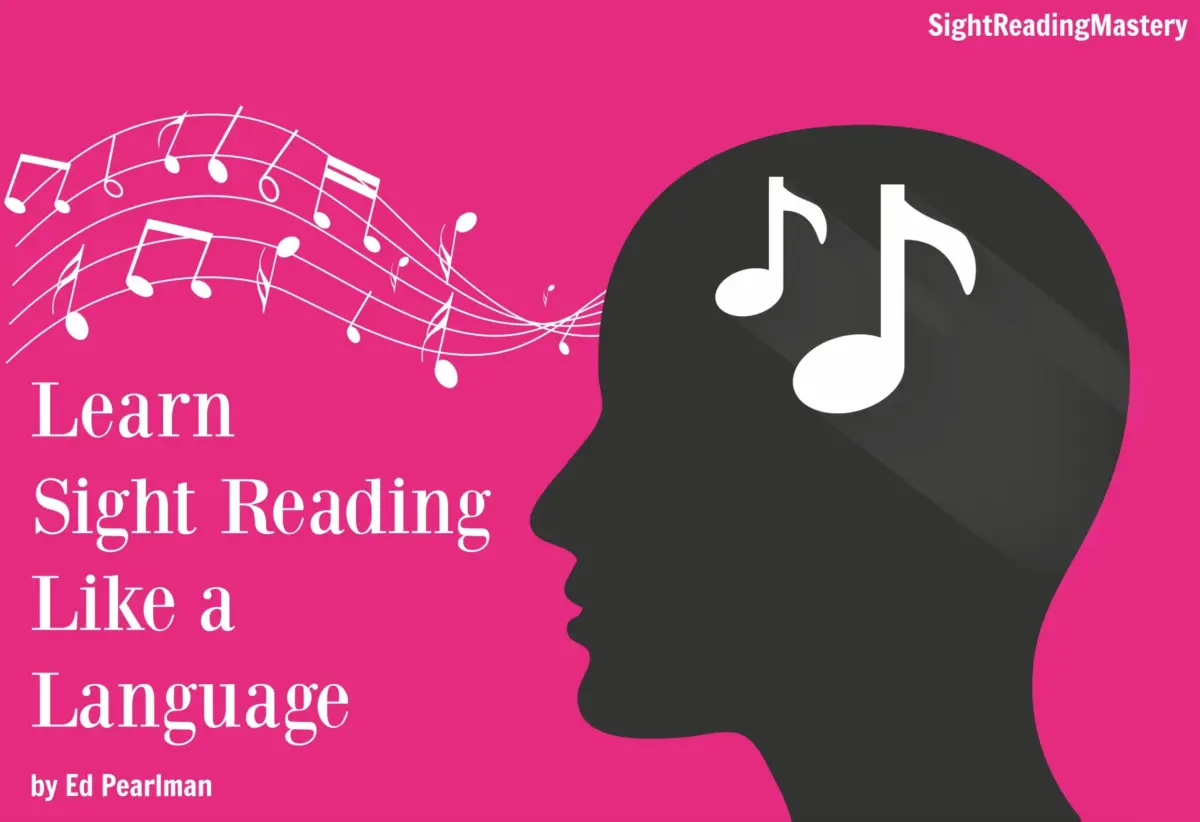
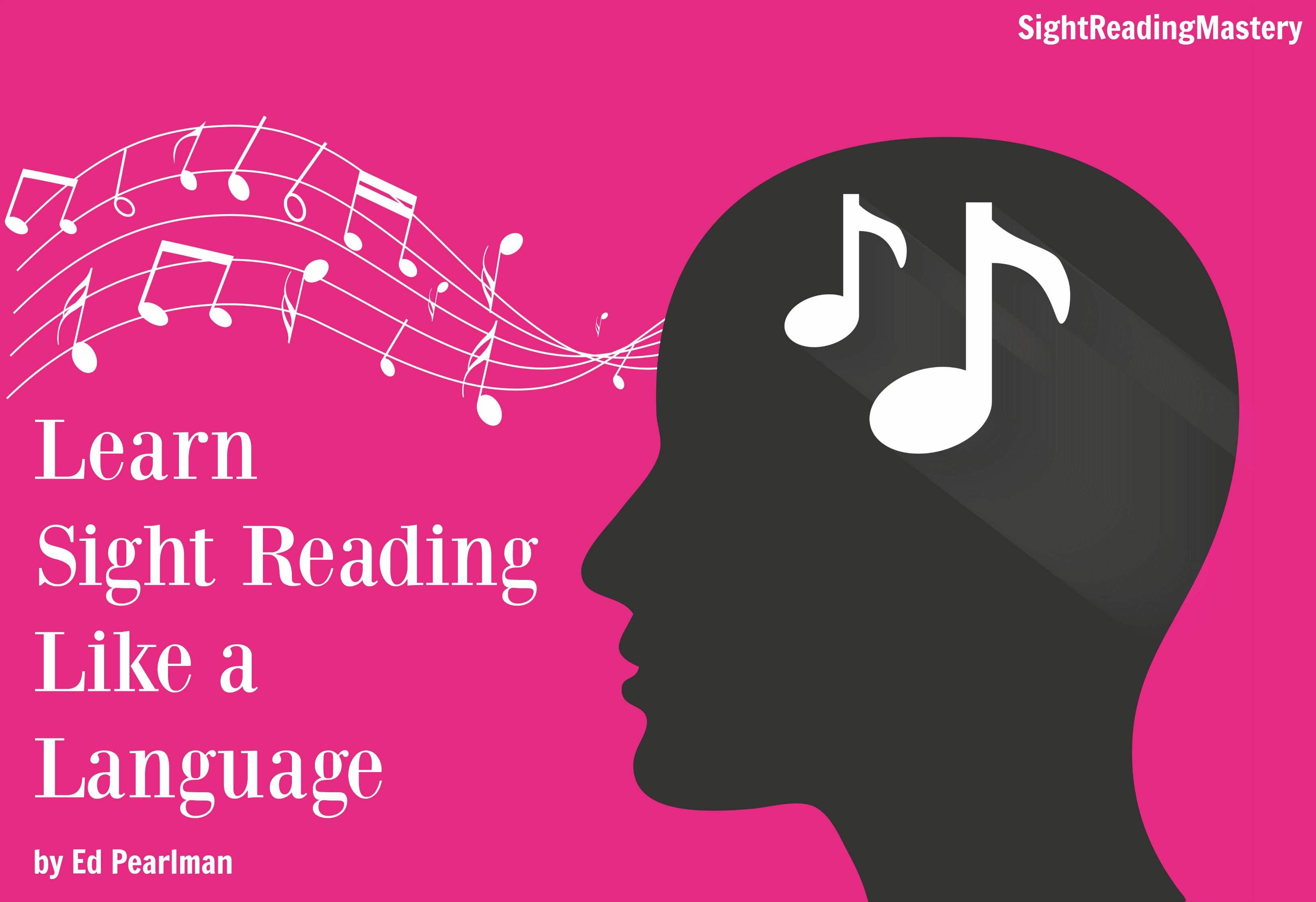
This paradigm is comprehensively challenged in a foundational pedagogical framework authored by veteran musician and educator Ed Pearlman. By drawing a direct parallel between sight-reading music and acquiring a spoken language, Pearlman posits that true mastery emerges only when notation is processed intuitively. When an individual learns the Spanish phrase "buenos días," the objective is immediate comprehension without the intermediary mental translation of "good morning." While translation offers a temporary security blanket, it ultimately stifles fluency.
Applied to music, this philosophy transforms sight-reading from an anxiety-inducing test into a natural act of expressive communication. Singers and instrumentalists alike must learn to bypass conscious note-naming and interact directly with the visual architecture of a score. To bridge the gap between labored decoding and effortless fluency, Pearlman outlines a progressive, five-tier developmental framework. Ranging from basic rhythmic tracking to advanced interval recognition, this methodology provides a systematic roadmap for musicians seeking to liberate their performance from the mechanical constraints of mental translation.
Detailed Chronology: The Evolution of Sight-Reading Pedagogy
To fully appreciate Pearlman’s progressive approach, it is vital to examine how modern music education has evolved regarding sight-reading. Historically, music reading instruction mirrored traditional literacy models: students learned individual components sequentially before attempting synthesis.
Phase 1: The Traditional Decoding Era (Pre-Late 20th Century)
For centuries, instrumental instruction relied heavily on note-by-note identification. Students spent their formative years drilling flashcards, associating specific ledger lines with pitch syllables (solfège), and mapping those pitches directly to fingerboards or keyboard layouts. While this built meticulous accuracy, it fostered a generation of performers who could meticulously decode a piece of music over hours or days, but who choked when confronted with unpracticed material at tempo. The cognitive load required to translate every symbol created an insurmountable bottleneck in live performance contexts.
Phase 2: The Cognitive Shift and Language Analogy (Late 20th to Early 21st Century)
As cognitive psychology merged with music pedagogy in the latter half of the 20th century, educators began recognizing the brain’s capacity for pattern recognition and chunking. Pioneers in linguistics and education demonstrated that language fluency is achieved not through grammar translation, but through immersion and holistic pattern uptake. Pearlman and contemporary digital platforms like SightReadingMastery translated these insights into instrumental practice, emphasizing that rhythms and notes must be processed as interconnected semantic units rather than isolated data points.
Phase 3: The Structured Progressive Framework (Modern Era)
The contemporary approach, championed by Pearlman’s five-level methodology, operationalizes this cognitive shift. Rather than demanding that a student process pitch, rhythm, key signature, and articulation simultaneously—a recipe for cognitive overload—the modern pedagogical model introduces constraints and layers. By isolating specific variables (such as rhythm in Level 1 and note profiles in Level 2), the modern pedagogical timeline empowers musicians to systematically rewire their visual-to-motor pathways, establishing a robust foundation for lifelong sight-reading proficiency.
Supporting Context & Metrics: Deconstructing Pearlman’s Five-Level Framework
To operationalize the transition from visual symbol to musical utterance, Pearlman’s framework strips away extraneous cognitive burdens, encouraging students to build their skills incrementally.
Level 1: Rhythms Only — The Foundation of Time
The initial tier demands that the practitioner choose a steady tempo and simply tap, clap, or speak out the rhythm of an unpracticed passage.
- The Core Objective: To shift the brain’s focus from individual note identities to the temporal relationship between measures.
- Pedagogical Rationale: Rhythms possess zero meaning in isolation; they exist entirely in relation to adjacent beats. By temporarily eliminating pitch from the equation, the student masters the temporal framework without the distraction of finding correct notes.
- Ancillary Insight: As the classic musical adage highlights—often illustrated by the gentle ribbing between violists and violinists regarding complex subdivisions—possessing intellectual knowledge of a tiny rhythmic value (such as a 64th note) is meaningless if one cannot integrate it fluidly into a living, breathing pulse.
Level 2: Note Profile — Capturing the Contour
Once rhythmic tracking is stabilized, the practitioner advances to Level 2. Here, the musician plays or sings the passage while maintaining strict tempo, focusing exclusively on the contour or profile of the notes: whether they ascend, descend, or remain level relative to one another.
- The Core Objective: To divorce spatial direction from absolute pitch names.
- Pedagogical Rationale: The eyes must learn to scan whole measures at a time, registering visual shapes (upward leaps, downward cascades, stepwise plateaus) in much the same way a reader perceives the shape of a word rather than spelling out every individual letter. Precision of pitch is intentionally deprioritized in favor of uninterrupted momentum.
Level 3: Focusing the Picture — Integrating Key Signatures and Half Steps
Level 3 introduces structural geography. Before playing, the student examines the key signature, identifies where the half steps reside within the passage’s practical range, and performs a preparatory scale.
- The Core Objective: To execute the sight-reading passage with accurate timing and proper note profiles while making educated guesses for ambiguous pitches without ever breaking the tempo.
- Pedagogical Rationale: Hesitation is the cardinal sin of sight-reading. If a student is unsure of a specific pitch, they must prioritize the rhythmic flow and spatial contour over defensive pausing. By constraining the margin of error to timing and relative shape, the musician learns to trust their internal map of the key signature.
Level 4: Seeing Intervals — Recognizing Spatial Geometry
At this advanced stage, the musician actively decodes the visual intervals on the staff.
- The Core Objective: To instantly differentiate scalar motion (moving consecutively from a line to a space, or vice versa) from skips and leaps (such as thirds, where movement occurs from line-to-line or space-to-space).
- Pedagogical Rationale: Larger leaps—fourths, fifths, and beyond—become recognizable visual signatures. Just as an experienced reader instantly recognizes common prefixes and suffixes in a language, an advanced sight-reader recognizes the geometric footprint of an interval without calculating half-steps.
Level 5: Names of Notes — The Optional Analytical Layer
The final level addresses note naming. Interestingly, Pearlman notes that consciously naming notes in real-time is strictly optional for fluent sight-reading.
- The Core Objective: To test ultimate focus and cognitive compartmentalization by adding pitch nomenclature back into the performance stream.
- Pedagogical Rationale: Because naming notes is not biologically essential to the direct translation of visual notation into physical performance, doing so under pressure serves as a rigorous stress-test of the musician’s concentration. Specialized tools, such as digital note-recognition modules, can assist those who find this layer particularly challenging.
Official Statements & Expert Perspectives
Education experts and master performers have increasingly endorsed the philosophy that language acquisition models offer the most viable path toward musical literacy.

In discussions surrounding advanced pedagogy, authorities emphasize that traditional methods often instill performance anxiety because they frame sight-reading as an examination rather than an act of communication. By decoupling the mechanical hurdles of music reading into manageable, sequential steps, instructors report a profound psychological shift in their students.
"When we treat music notation as a foreign code to be deciphered word-by-word, we paralyze the performer’s intuitive artistry," notes an editorial review of modern conservatory training methods. "Frameworks that prioritize rhythmic momentum and spatial contour—such as those articulated by Ed Pearlman—realign music education with natural human cognition. Students stop translating and start speaking."
Furthermore, master instructors point out that the democratization of digital learning environments has made sight-reading practice more accessible than ever. Rather than relying on a finite stack of printed etudes, students can leverage progressive online repositories to immerse themselves in diverse musical styles, reinforcing the unconscious pattern-recognition loops essential for true fluency.
Future Outlook: The Next Frontier in Sight-Reading Pedagogy
As music education continues to intersect with cognitive science and digital technology, the future of sight-reading instruction is poised for transformative growth. Several key trends are shaping the horizon:
1. Integration of Artificial Intelligence and Adaptive Learning
Future pedagogical tools will likely utilize real-time audio analysis and artificial intelligence to diagnose precisely where a student’s cognitive bottleneck occurs during sight-reading. If an algorithm detects a micro-hesitation at Level 3 (interval execution) or Level 4 (key signature navigation), the software will dynamically generate targeted, level-appropriate micro-exercises to reinforce those specific visual-motor pathways.
2. Gamification and Immersive Practice Environments
The psychological barriers associated with sight-reading—fear of failure, performance anxiety, and frustration—are frequently mitigated when practice is gamified. By framing sight-reading challenges around the language-acquisition model (where making mistakes is a natural part of conversational fluency rather than a punishable offense), digital platforms are shifting the cultural narrative around reading proficiency.
3. Holistic Curricular Reform in Conservatories
Formal academic institutions are gradually moving away from compartmentalized theory and performance classes. Forward-thinking music schools are embedding structured, progressive sight-reading protocols directly into core instrumental syllabi, ensuring that students treat notation not as an archival record to be painstakingly excavated, but as a living, dynamic language meant to be spoken fluently from the very first sight.