
Executive Overview
For instrumentalists and vocalists alike, auditions and academic exams serve as the primary gateways to professional orchestras, prestigious conservatory programs, competitive scholarships, and lifelong musical achievements. Yet, even the most technically accomplished performers frequently see their aspirations derailed at these very thresholds. The culprit is rarely a lack of dedication or technical proficiency with prepared repertoire; rather, it is a psychological and technical vulnerability to the unknown—specifically, the dreaded sight-reading component.
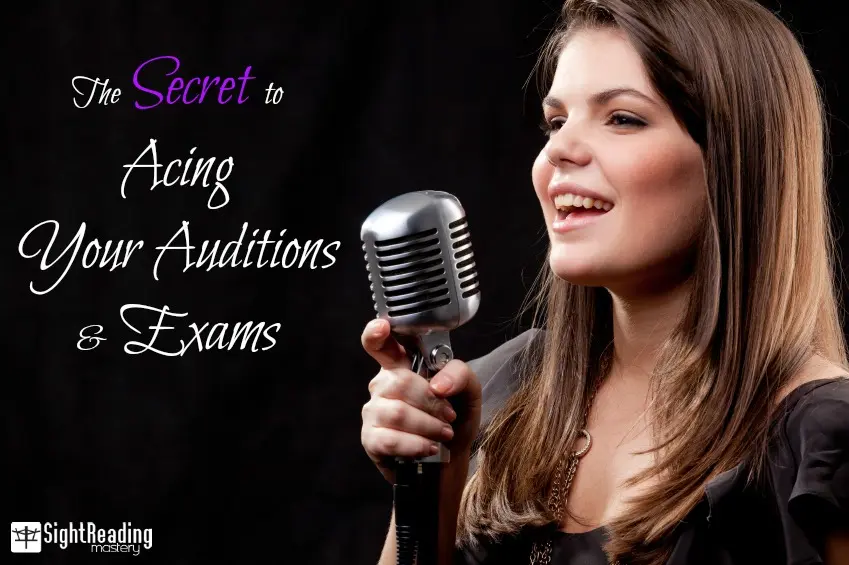
In high-stakes musical evaluations, candidates are routinely divided into two groups: those who have meticulously rehearsed a given piece of music to perfection, and those who possess the comprehensive musicianship required to interpret an entirely unfamiliar score on command. While hours of methodical, note-by-note practice can render a prepared piece second nature, the introduction of a sight-reading test strips away the safety net of familiarity. Performers are routinely given a mere 30 seconds to scan a score they have never seen before, evaluate its tonal center, decipher its rhythmic complexities, and project a confident performance before an evaluating panel.
This article provides an investigative and authoritative examination of why sight reading remains the ultimate differentiator in musical examinations. Drawing on pedagogical insights from industry leaders—such as Evan R. Murphy, founder of SightReadingMastery—we explore the neurological, psychological, and practical dimensions of conquering the unknown. By shifting the pedagogical paradigm from rote memorization to fluid, real-time musical literacy, performers can transform sight reading from a source of acute anxiety into a powerful catalyst for professional and artistic success.
Detailed Chronology: The Anatomy of an Audition and the Sight-Reading Crucible
To understand the immense pressure of the audition room, one must trace the psychological and physical journey of a musician preparing for a major evaluation. The timeline of an audition is rarely a simple snapshot; it is a multi-stage crucible that tests both resilience and adaptability.
Phase 1: The Honeymoon of Prepared Repertoire
Weeks or even months prior to the audition date, candidates receive their packet of required materials. This typically includes a primary performance piece or an excerpt list that demands absolute technical and interpretive mastery.
During this initial phase, the musician’s workflow is structured, predictable, and deeply comforting:
- Deconstruction: The piece is broken down measure by measure, section by section.
- Tempo Scaling: Difficult passages are isolated, practiced slowly with a metronome, and gradually brought up to concert pitch.
- Kinetic Consolidation: Muscle memory takes over, transforming abstract dots on a page into fluid physical gestures.
As the audition date approaches, the performer experiences a surge of confidence. They have polished every trill, refined every phrase, and mastered every dynamic shift. In the practice room, they feel invincible.
Phase 2: Crossing the Threshold
On the day of the audition, the psychological environment shifts dramatically. The supportive, low-stakes atmosphere of the private studio is replaced by sterile hallways, the muffled warm-ups of competing musicians, and the intimidating presence of a judging panel.
Even so, the candidate takes solace in their preparation. They enter the audition room, tune their instrument, and deliver a polished rendition of their prepared piece. Up to this point, the audition has unfolded exactly as rehearsed.

Phase 3: The Ambush of the Unknown
Just as the candidate begins to relax, believing the hardest part is behind them, the judges introduce the final, decisive challenge: the sight-reading test.
The evaluator hands over a fresh piece of sheet music—a composition the candidate has never laid eyes on, spanning an unfamiliar style, time signature, or harmonic landscape. The rules are unyielding:
- The candidate is handed the score.
- A timer is set for a brief 30-second inspection period.
- The candidate must perform the piece immediately afterward.
In this compressed window of time, performance anxiety spikes. The physiological fight-or-flight response kicks in: heart rates accelerate, tunnel vision sets in, and the comforting muscle memory cultivated over months of practice evaporates. For the unprepared musician, this moment represents an insurmountable barrier—the exact point where promising careers stall at the gate.
Supporting Context & Metrics: The Science of Sight Reading and Performance Anxiety
The psychological dread associated with sight reading is deeply rooted in human neurobiology. From an evolutionary perspective, our brains are hardwired to fear the unknown because novelty historically correlated with danger. In a musical context, the inability to predict the immediate future of a score triggers a cognitive overload.
Cognitive Load Theory and Music Processing
When a musician reads a familiar piece, much of the execution relies on procedural memory and automated motor patterns. The cognitive load is low, freeing up mental bandwidth for artistic expression and tonal nuance.
Conversely, sight reading requires simultaneous execution across multiple high-level cognitive domains:
- Visual Processing: Scanning ahead to anticipate rhythmic structures, intervals, and accidental markings.
- Translation: Instantly converting visual symbols into physical instrument geography or vocal pitch production.
- Motor Planning: Executing fingerings, bowings, breath control, and articulation without hesitation.
- Error Correction: Maintaining tempo and momentum even when a minor misread occurs.
Research in music education indicates that students who systematically practice sight reading develop stronger neural pathways between the visual cortex and the motor regions of the brain. A study tracking conservatory applicants revealed that candidates who scored in the top tier of sight-reading assessments were nearly three times more likely to secure orchestral positions or top-tier scholarships, independent of their prepared audition scores. This underscores a vital truth: while prepared pieces demonstrate a candidate’s capacity for dedication, sight reading reveals their true musical literacy.
Expert Perspectives and Professional Insights
Industry veterans and music educators have long recognized the chasm between technical polish and comprehensive musicianship. Among them is Evan R. Murphy, a multifaceted musician, software engineer, and founder of SightReadingMastery.
Reflecting on the motivations behind launching his platform in 2011, Murphy emphasizes that sight reading is not merely an auxiliary skill to be crammed before exam season, but the fundamental bedrock of musical freedom.

"We fear the unknown," Murphy observes, describing the psychological barrier that paralyzes so many talented performers. "Auditions and exams are the gateways to amazing opportunities for us in music. But unless we can manage this part, we’ll struggle to get through. We’ll be stuck at the gate."
According to Murphy, the traditional approach to music education often creates a false sense of security. Students spend months perfecting a single micro-universe of notes while neglecting the macro-skill of global sight reading. By reframing the educational curriculum, Murphy advocates for daily, low-stakes exposure to unfamiliar scores.
"Mastering sight reading prepares us for the unknown," Murphy explains. "It teaches us how not to fear it, and how to welcome it even. It helps us unlock opportunities, reach our goals, and ultimately realize our dreams."
Other leading pedagogues echo this philosophy, noting that professional musicians—particularly those working in commercial recording studios, pit orchestras, and freelance performance circuits—must sight-read complex scores daily with minimal preparation time. For these professionals, the ability to read down a chart on the first pass is not an academic exercise; it is an economic and professional necessity.
Future Outlook: Transforming Pedagogy for the Next Generation of Musicians
As the music industry continues to evolve, the demand for adaptable, highly literate performers is accelerating. Digital sheet music platforms, interactive software, and changing performance landscapes mean that musicians are increasingly expected to interact with diverse repertoires across genres—from contemporary classical works to complex jazz charts and cinematic scores.
The Shift Toward Integrated Sight-Reading Curriculums
Looking forward, music academies, university conservatories, and private instructors are overhauling how they integrate sight reading into daily training. Rather than treating sight reading as an arbitrary grading metric administered during end-of-year exams, forward-thinking institutions are implementing daily sight-reading protocols.
Key structural changes include:
- Micro-Dosing Practice: Encouraging students to spend 5 to 10 minutes at the start of every practice session reading through three to five lines of unstudied music without stopping.
- Technological Integration: Leveraging software tools and applications that generate endless streams of customized sight-reading exercises tailored to specific instruments, skill levels, and key signatures.
- Holistic Evaluation Models: Rewarding interpretive momentum and structural awareness over sterile, micro-perfection during sight-reading examinations.
By normalizing the encounter with the unknown, music education is shifting away from a culture of performance perfectionism toward a culture of resilient musical fluency.
Conclusion
Auditions and exams will always remain high-pressure milestones in a musician’s journey. However, the fear associated with the unknown sight-reading component does not have to be an inevitable hurdle. By embracing sight reading as a core discipline—rather than an afterthought—performers can dismantle their anxiety, unlock profound artistic freedom, and ensure they are never left standing outside the gate of their ultimate musical ambitions.