
Executive Overview
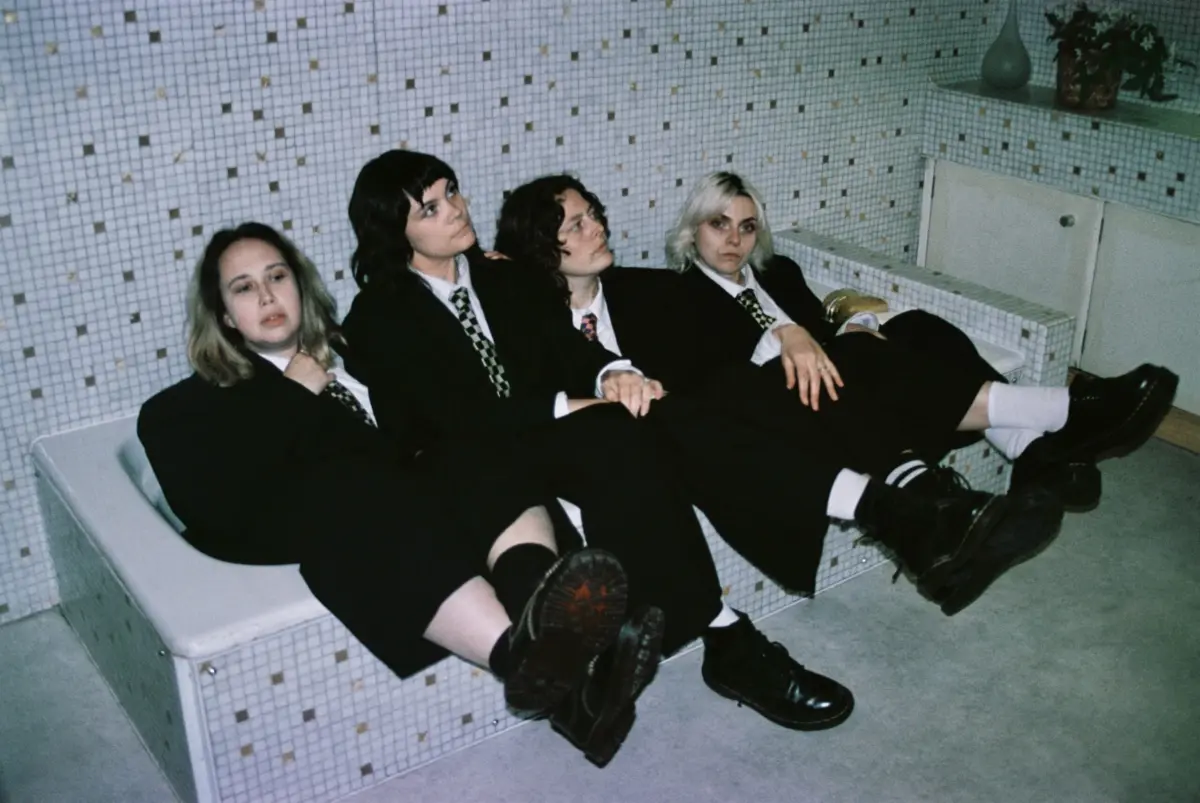
In the modern landscape of independent music, the trajectory of a band is often neatly mapped out: conservatory training, carefully curated social media personas, localized buzz nurtured by industry gatekeepers, and a polished debut album engineered for playlist curation. Grandmas House—comprising Yasmin Berndt, Poppy Dodgson, Zoe Zinsmeister, and Polly Jessett—shredded this industry rulebook long before they ever stepped foot inside a professional recording studio.
Emerging from the vibrant, left-field post-punk and garage rock underground of London and Bristol, Grandmas House represents a masterclass in DIY ethos. They formed not out of lifelong musical partnerships, but through university proximity, a shared obsession with acts like Goat Girl, Shame, and SOFT PLAY, and a pivotal epiphany sparked by a live performance by The Big Moon. None of the founding members possessed formal musical training; they couldn’t read sheet music, and music theory was entirely absent from their lexicon. Instead, they relied on a foundational bond of close friendship, stacking cardboard boxes in a university bedroom to practice rhythm, relearning forgotten childhood chords, and learning how to play their respective instruments together, live on stage.
Nearly a decade after their haphazard beginnings, this journey of communal experimentation has culminated in their debut full-length album, Baby You’re a Winner, produced by Ali Chant (known for his work with PJ Harvey, Mark Ronson, and Perfume Genius). Recorded across an intense two-week sprint of early mornings and late nights, the record captures a rare audio time capsule of self-taught evolution. Yet, the road to the debut LP was far from straightforward. Between grueling touring schedules, industry pressure, and a debilitating three-year battle with Topical Steroid Withdrawal (TSW) that left Dodgson bedbound for months alongside personal bereavements, the band’s resilience was tested to its absolute limits.
This feature explores the comprehensive journey of Grandmas House: from their humble, jittery beginnings playing 15-minute sets at a Bristol squat venue, through the crucible of physical and creative adversity, to the triumphant release of a debut record that redefines contemporary guitar music on their own terms.
Detailed Chronology
Phase 1: The University Crucible and the "Oh-My-God" Moment
The story of Grandmas House begins away from the traditional incubator of local youth music scenes. Yasmin Berndt, Poppy Dodgson, and Zoe Zinsmeister met during their first year at university in London. None of them were studying music: Dodgson and Zinsmeister were immersed in fine arts, while Berndt pursued a degree in film.
Despite their non-musical backgrounds, the trio shared a magnetic attraction to the experimental guitar music bleeding out of the capital’s underground venues. Throughout their final year, they became fixtures at local gigs, idolizing bands like Goat Girl, Shame, and SOFT PLAY. However, the definitive catalyst for their musical genesis arrived at Kingston’s Banquet Records during a performance by The Big Moon.
"It was seeing other women in bands. That was our oh-my-god moment—we can do this," Dodgson recalls. "That’s when we decided. And then I was like, well, I guess I should learn how to play drums."
True to her word, Dodgson engineered a makeshift drumkit in her university halls, stacking cardboard boxes and using pencils as drumsticks to test her foundational coordination. Once she proved to herself that rhythm was within reach, she upgraded to a rudimentary, inexpensive kit sourced via Gumtree. Simultaneously, Berndt dusted off an old childhood guitar, attempting to reclaim muscle memory from years past.
Phase 2: Relocation to Bristol and the Baptism by Fire
Following graduation, the trio migrated to Bristol, a city riding a fierce creative wave catalyzed by the meteoric rise of IDLES. They began cutting their teeth in local bars, eventually expanding their lineup into a four-piece outfit.
Their introduction to live performance was as baptismal as it gets. After casually mentioning to the manager of Bristol’s infamous squat venue, The Thunderbolt, that they had begun writing original material, the venue thrust a 15-minute, five-song set upon them.
“We were so nervous, but you just have to play live and see how it feels. That helped so much with learning. The nerves make us better players anyway,” the band notes. Playing through intense imposter syndrome and shaky hands, those early shows forged an undeniable chemistry born from stage-fright adrenaline.
The lineup solidified dynamically over time. When their former bassist proved unable to make their booking at the Dot to Dot Festival—their largest live slot at the time—Berndt issued a high-stakes challenge to Zinsmeister: could she learn the bass guitar in a single month? Zinsmeister stepped up and delivered. Meanwhile, second guitarist Polly Jessett entered the fold after catching Grandmas House from an upstairs viewing area at a shared venue. Hearing their kinetic sound drift upward, she knew she had to witness it firsthand.
Phase 3: The Adversity and the Crucible of Production
As the band graduated to international stages—opening for IDLES in Athens and performing official showcases at SXSW—external pressures mounted. For drummer Poppy Dodgson, the relentless momentum of the music industry collided catastrophically with a severe medical crisis.
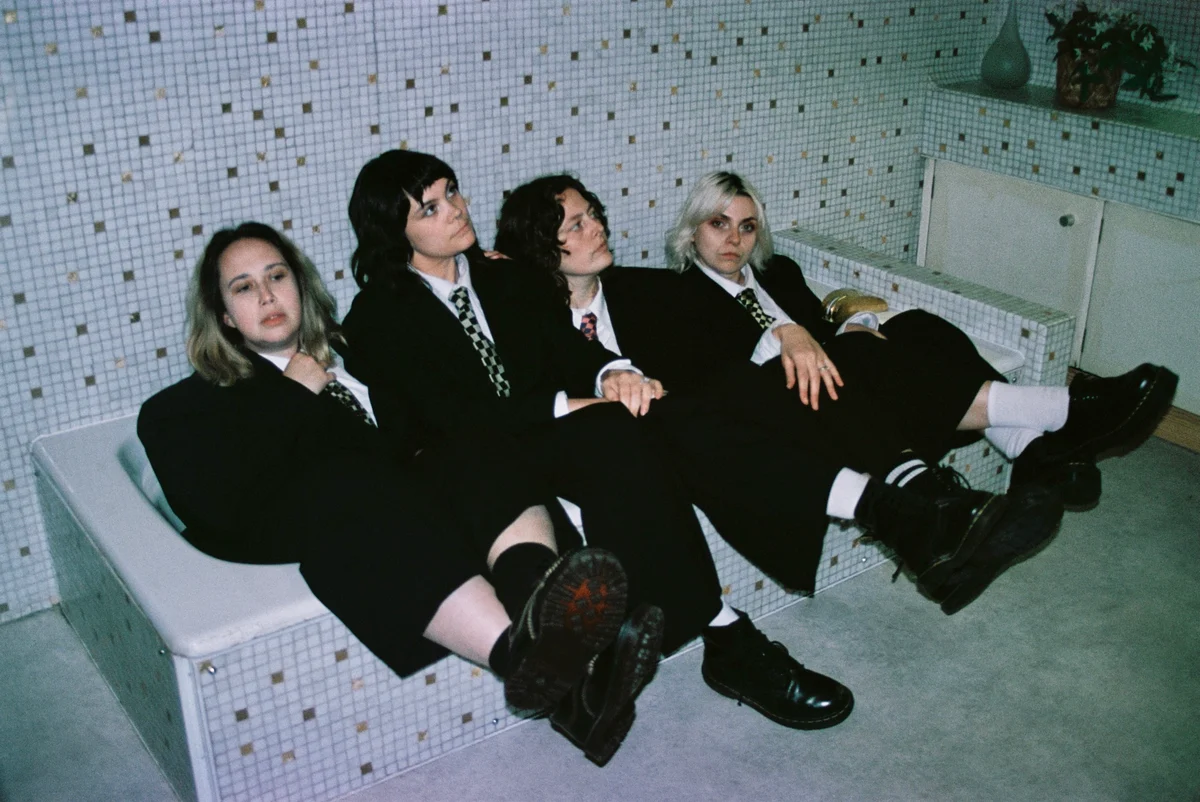
Dodgson spent three grueling years battling Topical Steroid Withdrawal (TSW), an excruciating and currently incurable skin reaction. At one stage, she was entirely bedbound for eight months, compounded by the profound grief of losing two family members. The hyper-accelerated output expected of modern independent acts felt profoundly incompatible with a body that could no longer physically operate her instrument.
“I was in a mentally tough place; it was a crazy time. I couldn’t drum and I knew that I couldn’t not keep doing the band because we’d worked so hard. It feels like if you pause then everyone is going to forget. We even lost a few people on our team because we weren’t releasing anything, but we physically couldn’t,” Dodgson reflects.
Despite these insurmountable hurdles, the band refused to dissolve. The enforced stillness fundamentally reshaped the emotional texture and structural depth of what would become Baby You’re a Winner.
Supporting Context & Metrics
To understand the sonic architecture of Grandmas House, one must examine the metrics of their creative output. Prior to Baby You’re a Winner, the band built a formidable reputation through a string of razor-sharp EPs that showcased their rapid technical progression and unyielding sonic identity.
| Album / Release Era | Key Producers / Collaborators | Defining Characteristics & Themes |
|---|---|---|
| Early EPs (2019–2021) | DIY / Self-Produced | Raw, high-energy garage punk; shaky execution transformed into kinetic charm; zero music theory foundation. |
| Festival & Touring Era | Live Support for IDLES, SXSW | Expansion to a four-piece; integration of Polly Jessett; tight synchronization built purely through live stage hours. |
| Baby You’re a Winner (LP) | Ali Chant (PJ Harvey, Mark Ronson) | Recorded over a hyper-focused two-week window; explores themes of chronic illness, grief, infatuation, and unbreakable friendship. |
The collaboration with producer Ali Chant was instrumental in translating their volatile live energy into a cohesive, high-fidelity record without sacrificing its raw edges. Working out of the studio, the band engaged in marathon sessions spanning early mornings and late nights, sometimes conceptualizing and tracking an entire song in a single day. Chant’s meticulous attention to detail allowed the band to dissect demos they had carried for years, dusting off discarded recordings and refining their chaotic interplay.
Official Statements & Artist Perspectives
The philosophy underpinning Grandmas House is deeply rooted in collaboration, anti-dogmatism, and mutual trust. Because the members were entirely self-taught, their creative process bypassed conventional academic rules, leaving room for pure instinct.
"We’re all self-taught. Music theory was not even in our orbit. We all learnt just from playing with each other and going off of each other’s energy. It sounds cliché, but our sound came from just exploring our instruments together, sat in a room together," notes Zoe Zinsmeister.
Reflecting on the milestone of their debut full-length record, Yasmin Berndt emphasizes the rarity of their artistic preservation:
"We’re still very much connected to our earlier music, but this album feels the most like us. It’s how we want to sound. This is Grandmas House. It’s quite rare for a band to have a time capsule like that in terms of how our EPs have sounded next to each other. It shows how far we’ve come and how much we’ve learnt how to make the exact sound we want to make."
The album’s stylistic range is vast. Tracks like "DOG" lean heavily into aggressive post-punk territory, driven by stomping propulsion and Berndt’s serrated snarls ("Got you growling through gritted teeth / The doctor always said this pill is all you’ll ever need"). Conversely, the closing track, "Spring," strips away the abrasive distortion, introducing velvety, murmuring basslines and lush vocal harmonies that ponder existential longing ("I think that in another life you’re still standing by the door / I’m still not sleeping").
Future Outlook
With the release of Baby You’re a Winner, Grandmas House has firmly transitioned from an underground DIY curio into a formidable force within alternative rock. The record stands as a defiant testament to survival—navigating the physical devastation of chronic illness, the psychological toll of industry expectations, and the personal grief of loss, all while maintaining the infectious camaraderie that ignited their journey in a London university hall.
Looking forward, the band remains dedicated to the core principles that brought them together: listening closely to one another, embracing the unknown, and rejecting formulas. Whether they are playing to packed crowds in international capitals or writing new material in a cramped rehearsal space, Grandmas House continues to operate on terms entirely of their own making.
As they reflect on their nearly decade-long evolution, the message to themselves—and to each other—remains simple yet vital: keep pushing forward, trust the person standing beside you, and never forget to give each other a well-deserved pat on the back.