
LONDON — In a landmark development for the British classical music landscape, Sinfonia Smith Square has announced a substantial £200,000 capital grant from the prestigious Wolfson Foundation. This pivotal injection of funding will spearhead the restoration and modernization of its Grade I listed Westminster home, Smith Square Hall.
The award anchors Doors Open: Transforming Lives Through Music, the most ambitious and comprehensive architectural redevelopment the iconic London venue has undergone since it transitioned from a historic church into a premier concert hall in 1969. Designed to safeguard an architectural masterpiece while dramatically expanding its civic and artistic utility, the project represents a watershed moment for the institution. By bridging centuries-old heritage preservation with 21st-century community outreach, Sinfonia Smith Square is positioning its home not merely as a relic of the past, but as a dynamic, accessible nexus for future generations of musicians and music lovers.
Executive Overview: Preserving Heritage, Empowering Artists
At its core, the Doors Open initiative is a dual-purpose masterstroke. It addresses urgent structural preservation needs while simultaneously unlocking the untapped functional potential of a building deeply embedded in London’s cultural topography.
For decades, Smith Square Hall—housed within the magnificent former St John’s Smith Square, a masterpiece of English Baroque architecture—has served as a beloved auditory sanctuary for chamber orchestras, choral groups, and soloists. However, the building’s physical infrastructure has lagged behind the evolving needs of modern performers and audiences. Issues regarding accessibility, outdated backstage and rehearsal facilities, and underutilized auxiliary spaces have limited the venue’s operational capacity.
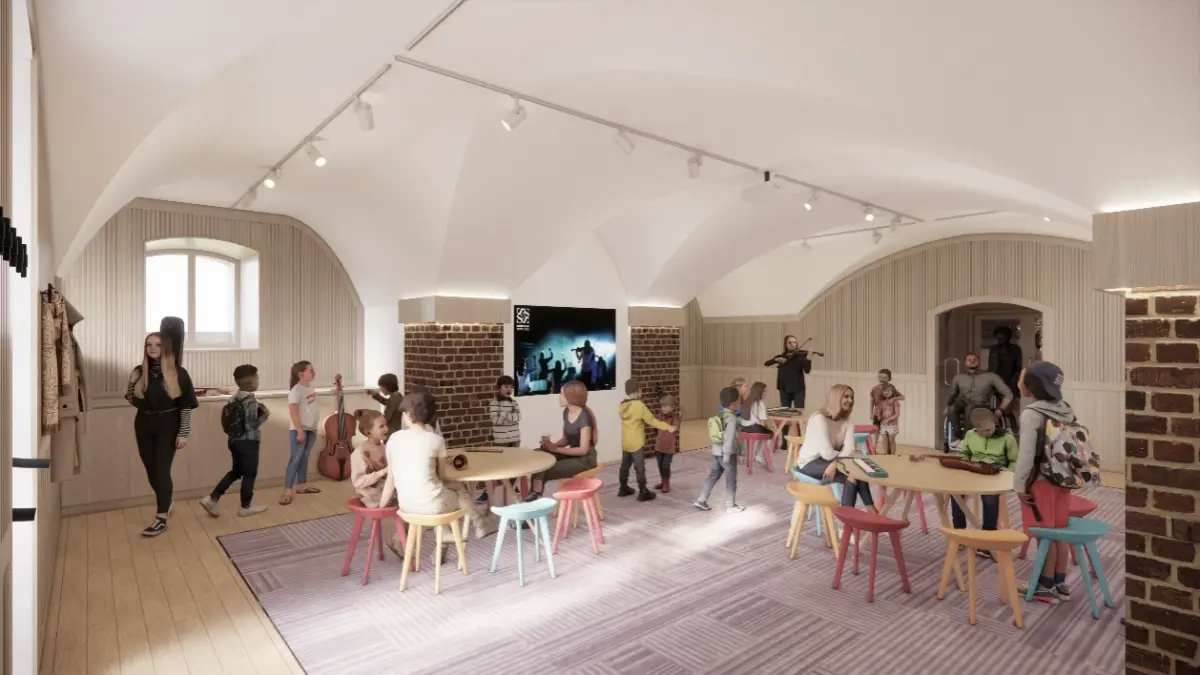
The £200,000 grant from the Wolfson Foundation provides crucial momentum to a capital campaign designed to solve these exact challenges. Beyond fixing the physical fabric of the Grade I listed structure, the redevelopment scheme introduces transformative interior re-engineering. Most notably, the historic crypt—long an under-utilized subterranean expanse—will be entirely reimagined. It will be converted into a state-of-the-art, dedicated learning space tailored for schools, community music initiatives, and creative workshops.
Concurrently, the project carves out upgraded, high-specification rehearsal facilities dedicated to the Sinfonia Smith Square Fellowship programme. Since its inception in 2002, this elite orchestral training initiative has served as a launchpad for more than 700 early-career musicians, bridging the notoriously difficult gap between conservatoire graduation and professional orchestral employment. By providing these emerging talents with world-class rehearsal spaces on-site, the organization is reinforcing its commitment to cultivating the next wave of classical music leadership.
Furthermore, the initiative carries a profound heritage mandate: to successfully remove Smith Square Hall from Historic England’s precarious Heritage at Risk Register. Through meticulous conservation techniques and sensitive modernization, the project guarantees that this architectural jewel will endure for centuries to come, fully compliant with modern accessibility standards and welcoming to all segments of society.
Detailed Chronology: The Journey to Transformation
To understand the magnitude of the Doors Open project, one must trace the architectural and institutional evolution of Smith Square Hall, as well as the deliberate, phased roadmap that leads toward its 2029 reopening.
From Baroque Parish Church to Concert Hall
The building that currently houses Sinfonia Smith Square is none other than St John’s Smith Square, designed by the visionary architect Thomas Archer and consecrated in 1728. Celebrated as one of the finest examples of English Baroque architecture—often whimsically likened to an upturned piano due to its four iconic corner towers—the church had a tumultuous history. Heavily damaged by incendiary bombs during the Blitz in May 1941, the structure stood as a fire-gutted ruin for decades.
It was not until the late 1960s that a concerted rescue and restoration effort, spearheaded by Lady Parker and a dedicated trust, brought the building back from the brink of destruction. Reopened in 1969 as a dedicated concert hall, it quickly earned a stellar reputation for its warm, crystalline acoustics and intimate performance environment.
The Modern Era and the Genesis of Doors Open
As decades passed, the demands placed upon concert venues shifted dramatically. Audiences increasingly expected universal accessibility, seamless digital integration, and immersive pre- and post-concert community experiences. Simultaneously, orchestral training models required dedicated, acoustically isolated spaces where young professionals could hone their craft without competing with main-stage concert schedules.
Recognizing these compounding pressures, institutional leadership formulated the Doors Open master plan. The strategy was clear: rather than merely patching leaks and updating cosmetic finishes, the organization would undertake a holistic, campus-wide redesign.
The Road Ahead: 2027 to 2029
The timeline for this monumental undertaking is meticulously mapped out:
- Current Phase (2026): Securing foundational grants, architectural finalization, and detailed planning permissions pertinent to Grade I listed structures. The injection of the Wolfson Foundation grant serves as the financial anchor for this phase.
- Late 2027: Groundbreaking and the formal commencement of heavy construction work. The venue will undergo structural stabilization, interior reconfiguration of the crypt, and the installation of modern accessibility lifts and sustainable environmental controls.
- 2029: The anticipated grand reopening of the fully transformed Smith Square Hall.
Upon reopening, the venue is projected to welcome upward of 90,000 visitors annually—a significant scaling up of its pre-renovation foot traffic. This surge will be driven by an expanded calendar encompassing not just evening masterwork concerts, but an active daytime schedule of educational workshops, community symposia, and open rehearsals.
Supporting Context & Metrics: Investment in the Future
Capital projects of this scale require robust financial engineering and measurable socio-cultural justifications. The collaboration between Sinfonia Smith Square and the Wolfson Foundation is underpinned by impressive operational metrics that illuminate the deep societal value of the arts.
The Impact of the Sinfonia Smith Square Fellowship
At the heart of the organization’s educational mission is its flagship Fellowship programme. Established in 2002, the initiative has quietly transformed the orchestral sector in the United Kingdom and beyond. Over the past two decades, it has provided intensive, high-level orchestral training, mentorship, and performance opportunities to more than 700 early-career instrumentalists.
Graduates of the Fellowship routinely populate the chairs of major international orchestras, including the London Symphony Orchestra, the Philharmonia, the Royal Philharmonic Orchestra, and global counterparts. By constructing dedicated rehearsal spaces within the newly reconfigured Smith Square Hall, the organization ensures that future cohorts will train in an environment specifically designed to foster ensemble cohesion and artistic excellence.
Community Outreach and Educational Scalability
The transformation of the historic crypt into a specialized learning hub directly addresses a critical deficit in arts education within inner-city London. State-funded schools in the capital frequently lack dedicated music facilities or the budgets required to transport students to external cultural venues.
By embedding a dedicated educational wing directly within Smith Square Hall, Sinfonia Smith Square can host regular school residencies, interactive instrumental workshops, and community-led music-making sessions. This democratizes access to classical music, ensuring that children from all socioeconomic backgrounds can experience the cognitive and emotional benefits of active musical participation.
Heritage Rescue and Architectural Stewardship
The inclusion of Smith Square Hall on Historic England’s Heritage at Risk Register has long been a source of institutional concern. Grade I listing denotes buildings of "exceptional national interest," and maintaining such structures demands specialized conservation expertise, artisanal craftsmanship, and continuous capital investment.
The Doors Open project allocates specific funds for stone masonry restoration, timber preservation, and the careful integration of modern mechanical and electrical services within a historic fabric. Successfully removing the building from the At Risk Register will not only safeguard Thomas Archer’s architectural masterpiece for posterity but will also serve as a benchmark for how historic ecclesiastical buildings can be successfully adapted for sustainable, modern cultural use.
Official Statements and Institutional Vision
The announcement of the Wolfson Foundation grant has elicited widespread acclaim from cultural leaders, philanthropists, and orchestral administrators, all of whom recognize the transformative potential of the initiative.
Representatives for the Wolfson Foundation emphasized the alignment between their philanthropic mission and Sinfonia Smith Square’s vision:
"The Wolfson Foundation has a long-standing commitment to supporting excellence in the fields of science, health, education, and the arts. Our grant to Sinfonia Smith Square for the Doors Open project reflects our deep confidence in the organization’s ability to steward a magnificent Grade I listed heritage building while simultaneously creating dynamic, inclusive spaces for education and artist development. This project does not merely preserve the past; it actively builds the future of classical music in the United Kingdom."
Leadership from Sinfonia Smith Square echoed this sentiment, highlighting the emotional and practical resonance of the redevelopment:
"Securing this £200,000 grant from the Wolfson Foundation is a monumental milestone for Doors Open: Transforming Lives Through Music. Smith Square Hall has been a spiritual home for countless musicians and audiences since 1969, but the time has come to elevate our infrastructure to match our artistic ambitions. By transforming our crypt into a vibrant learning hub and upgrading our Fellowship rehearsal facilities, we are ensuring that this historic building remains a beating heart for community engagement and artistic excellence for generations to come."
Arts sector analysts have similarly praised the initiative for its forward-thinking approach. In an era where traditional classical music institutions face mounting pressures regarding relevance and financial sustainability, Sinfonia Smith Square’s strategy of capital asset optimization and deep community integration offers a compelling blueprint for survival and growth.
Future Outlook: A New Cultural Anchor for London
As the classical music world looks toward the late 2020s, the completion of the Doors Open project at Smith Square Hall stands out as one of the most anticipated cultural infrastructure developments in the United Kingdom.
By harmonizing the architectural majesty of an English Baroque masterpiece with cutting-edge accessibility features, state-of-the-art educational spaces, and optimized training facilities for the Sinfonia Smith Square Fellowship, the organization is engineering a renaissance in Westminster. The projected influx of 90,000 annual visitors promises to inject renewed vitality into the local economy while cementing the Hall’s status as a world-class destination for orchestral music.
Ultimately, this £200,000 investment by the Wolfson Foundation is more than just a capital grant for stone and mortar; it is an investment in human potential. It ensures that young musicians will continue to find their professional footing in an environment of uncompromising excellence, and that school children from across London will discover the transformative power of music within spaces built to inspire them. When Smith Square Hall flings open its newly restored doors in 2029, it will reveal a historic institution completely revitalized—ready to meet the challenges of the 21st century with open arms, peerless artistry, and an unwavering commitment to the community it serves.