
Executive Overview
The medical community specializing in otolaryngology, voice disorders, and vocal rehabilitation witnessed a landmark educational event with the convening of the 17th Phonosurgery Course and International Workshop. Hosted on a pioneering hybrid platform on October 28 and 29, 2023, this specialized symposium bridged geographical divides to deliver cutting-edge clinical insights, live surgical demonstrations, and rigorous hands-on training.
Conceived and directed by Prof. V. Phaniendrakumar—an esteemed Emeritus Professor of ENT, Founder President of the Association of Phonosurgeons of India (APSI), and President of the India Chapter of The Voice Foundation (USA)—the event established a new benchmark for accessible, high-yield medical education. By blending virtual expert lectures and live-streamed surgical broadcasts with an immersive, in-person cadaveric workshop at Century Hospital in Banjara Hills, Hyderabad, the organizers effectively optimized time and resource utilization for attending delegates.
Supported by prestigious organizations including the Association of Phonosurgeons of India, the India Chapter of The Voice Foundation, AOI Telangana, the Hyderabad Telangana SLP Association, the Sri Sathya Sai Institute of ENT, and the Melody Voice Clinic in Guntur, Andhra Pradesh, this symposium underscored India’s rising prominence as a global hub for advanced laryngeal surgery and multidisciplinary voice care.
Detailed Chronology and Event Structure
The 2023 symposium was meticulously structured across two distinct days, maximizing the educational value of both digital dissemination and tactile, hands-on surgical practice.
Day 1: Virtual Innovation, Live Surgical Broadcasts, and Global Insights (October 28, 2023)
The opening day of the workshop utilized a state-of-the-art virtual infrastructure hosted via Zoom, connecting delegates from across India and around the globe with world-class faculty. The day was defined by two primary educational components: Live Surgical Demonstrations and Didactic Lectures.
- Office-Based Laryngeal Surgeries: Modern otolaryngology has seen a decisive shift toward minimally invasive, office-based procedures performed under local anesthesia. Day 1 featured real-time demonstrations of these techniques, offering participants a front-row virtual seat to procedures that minimize patient downtime, reduce healthcare costs, and preserve delicate laryngeal architecture.
- Phonomicrosurgeries: Highly magnified visualization techniques are critical when operating on the true vocal folds. The live surgical broadcast highlighted precision instrumentation and micro-flap techniques designed to treat benign vocal fold lesions—such as nodules, polyps, and cysts—while safeguarding mucosal wave dynamics and vocal quality.
- International and National Faculty Lectures: Esteemed thought leaders from various corners of the globe presented contemporary updates on voice assessment, diagnostic laryngostroboscopy, acoustic and aerodynamic evaluations, and complex phonosurgical decision-making. The interactive Q&A sessions facilitated robust intellectual exchange, allowing early-career surgeons and seasoned otolaryngologists alike to query global pioneers on nuanced clinical scenarios.
Day 2: Tactile Mastery and Precision Training (October 29, 2023)
Transitioning from digital observation to physical execution, Day 2 brought delegates to the cutting-edge facilities of Century Hospital (Road No. 12, Banjara Hills, Hyderabad) for an intensive, hands-on training workshop. Recognizing the irreplaceable value of tactile learning in surgical disciplines, the curriculum focused on meticulous anatomical dissections and simulations using a biological model (goat larynx).

- Thyroplasty with Arytenoid Adduction Technique: Designed primarily for patients with unilateral vocal fold paralysis, medialization thyroplasty combined with arytenoid adduction is one of the most mechanically demanding procedures in phonosurgery. Under direct faculty supervision, attendees practiced precise window creation in the thyroid cartilage, implant positioning, and suture placement for arytenoid repositioning to achieve optimal glottic closure.
- Injection Laryngoplasty: Delegates gained practical proficiency in transoral and percutaneous injection techniques using various biomaterials. Mastering the depth of injection into the vocalis muscle or paraglottic space is vital for achieving immediate voice restoration in acute paralytic dysphonia or glottic incompetence.
- Office-Based Laryngeal Procedures: Bridging the gap between Day 1’s virtual demonstrations and clinical reality, participants practiced handling specialized scopes, laser fibers, and micro-instruments utilized in awake, in-office interventions.
Supporting Context and Metrics: The Evolution of Phonosurgery in India
To fully appreciate the significance of the 17th Phonosurgery Course, one must examine the broader evolution of voice care within the Indian subcontinent and its intersection with global advancements showcased at platforms like The Voice Foundation’s Annual Symposium in Philadelphia.
The Hybrid Paradigm: Efficiency Meets Accessibility
Historically, specialized surgical workshops required substantial financial investments and time away from clinical practices, as attendees traveled cross-country for multi-day wet labs. Prof. V. Phaniendrakumar and the organizing committee recognized that the post-pandemic digital acceleration offered an opportunity to reinvent this model.
By delivering theoretical foundations, global panel discussions, and high-definition surgical videos virtually on Day 1, the symposium eliminated unnecessary travel expenses and time constraints. Delegates reserved their in-person attendance exclusively for the high-value, tactile demands of Day 2’s cadaveric dissection lab. Industry experts have lauded this dual-mode framework as a blueprint for future surgical sub-specialty training, particularly in developing healthcare economies where clinician time is at a premium.
Collaborative Synergy Across Disciplines
Phonosurgery does not exist in a vacuum; it requires a deeply symbiotic relationship between otolaryngologists, speech-language pathologists (SLPs), singing voice specialists, and specialized neurologists. The active participation of organizations such as the Hyderabad Telangana SLP Association highlighted the indispensable role of speech therapy in pre-operative evaluation and post-operative voice habilitation. Voice restoration is only as successful as the behavioral rehabilitation that follows, making multidisciplinary integration a core tenet of the course’s curriculum.
Official Statements and Leadership Vision
The enduring legacy and forward-thinking ethos of the workshop were championed by its founder and driving force, Prof. V. Phaniendrakumar.
Reflecting on the motivations behind the dual-concept hybrid workshop, Prof. Phaniendrakumar noted:

"With all our sincere efforts and your co-operation, we hope we can make this Course a memorable scientific event. Looking forward to your gracious participation."
His extensive academic lineage and leadership roles—including serving as Emeritus Professor of ENT, Director of the Sri Sathya Sai ENT & Melody Voice Clinic in Guntur and Hyderabad, Founder President of the Association of Phonosurgeons of India (APSI), and President of the India Chapter of The Voice Foundation—have positioned him as the patriarch of modern Indian phonosurgery.
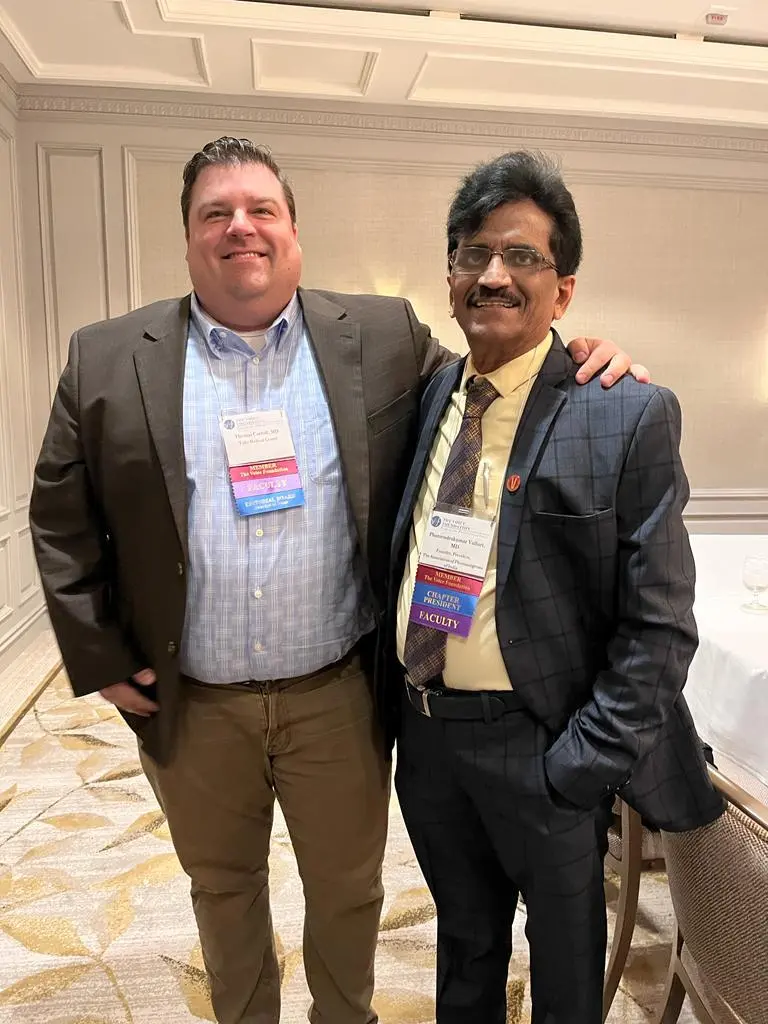
International connections were further solidified through historic collaborations, exemplified by academic exchanges between Indian luminaries and global authorities such as Dr. Thomas Carroll, reflecting a continuous cross-pollination of surgical techniques, diagnostic protocols, and voice science research between the USA and India.
Future Outlook: The Next Era of Laryngeal Care
As the curtains closed on the 17th Phonosurgery Course, the implications for the future of Indian and international otolaryngology became abundantly clear. Several key trajectories are set to shape the discipline in the coming years:
- Expansion of Office-Based Procedures: Driven by technological innovations in flexible endoscopes, miniature instrumentation, and office-friendly lasers (such as the KTP and blue lasers), more pathologies will be managed outside the traditional operating room. This minimizes general anesthesia risks and significantly reduces economic burdens on healthcare systems.
- Standardization of Hybrid Medical Education: The success of the 2023 Hyderabad workshop serves as a validated template. Future medical workshops are expected to adopt tiered hybrid structures, democratizing access to top-tier surgical instruction for surgeons in tier-2 and tier-3 cities who might otherwise be excluded due to travel limitations.
- Technological Integration in Voice Diagnostics: Future iterations of phonosurgery training will increasingly incorporate artificial intelligence-driven acoustic analysis, high-speed digital imaging (HSDI), and advanced laryngeal electromyography (LEMG), allowing for unprecedented diagnostic precision before a single incision is planned.
- Strengthened Global Networks: Through the continued leadership of the India Chapter of The Voice Foundation and the Association of Phonosurgeons of India, regional surgeons will continue to contribute robust clinical data and innovative surgical modifications to the global body of voice science literature.
In summary, the 17th Phonosurgery Course and International Workshop was more than a regional educational seminar; it was a masterclass in modern medical pedagogy, clinical innovation, and multidisciplinary collaboration. By honoring the complexities of the human voice, the event ensured that patients suffering from voice disorders will continue to benefit from safer, more precise, and more accessible surgical care for years to come.