
Executive Overview
In an era marked by heightened geopolitical tensions, societal fracture, and impending electoral milestones, the New York Choral Society (NYCS), in partnership with the Mannes School of Music at The New School, has formally announced a major performance of Sir Michael Tippett’s monumental 1941 oratorio, A Child of Our Time. Scheduled to take place at Lincoln Center’s David Geffen Hall in late October 2026—precisely one week prior to the U.S. midterm elections—the production seeks to directly confront contemporary anxieties surrounding democratic stability, civil rights, and state-sanctioned violence through the lens of mid-20th-century anti-fascist art.
Conceived by Tippett between 1938 and 1941 as an immediate, visceral reaction to the Nazi regime’s state-sponsored Kristallnacht pogroms, A Child of Our Time stands as one of the most significant choral-orchestral protest works of the 20th century. By weaving traditional African American spirituals into a dramatic narrative structure modeled after Johann Sebastian Bach’s Passions and George Frideric Handel’s Messiah, Tippett transformed singular historical trauma into a universal meditation on oppression, human dignity, and systemic renewal.
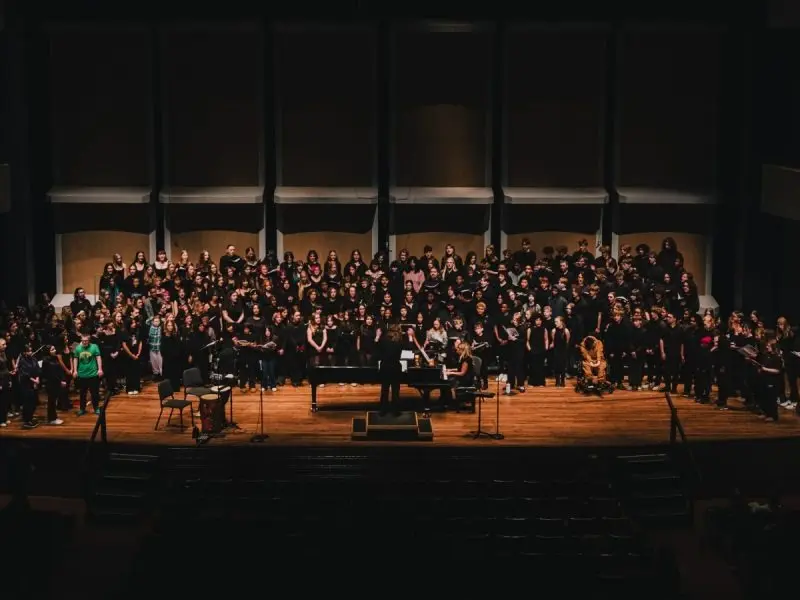
The upcoming Lincoln Center production will bring together the full forces of the New York Choral Society, the Mannes Orchestra, and a quartet of world-renowned vocal soloists: soprano Laquita Mitchell, mezzo-soprano Margaret Lattimore, tenor William Burden, and baritone Stephen Powell. Positioned deliberately on the eve of a critical national election, the project aims to leverage classical music not merely as an aesthetic escape, but as a rigorous platform for civic interrogation, posing a fundamental question to modern audiences: What does resistance sound like in the 21st century?
Detailed Chronology: From the Ashes of 1938 to the Stage of 2026
The trajectory of Tippett’s masterpiece—from its inception during the rise of European authoritarianism to its modern revival in New York City—spans nearly nine decades of artistic, political, and social transformation.
+-----------------------------------------------------------------------------------+
| HISTORICAL TIMELINE OF TIPPETT'S "A CHILD OF OUR TIME"                            |
+-----------------------------------------------------------------------------------+
| Nov 1938 : Kristallnacht Pogroms triggered by Herschel Grynszpan's action.        |
| Sep 1939 : WWII declared; Tippett begins formal composition of the oratorio.      |
| 1941     : Composition completed; Tippett incorporates five African American      |
|            spirituals into the score as structural anchors.                        |
| Mar 1944 : World Premiere at London's Adelphi Theatre during WWII air raids.      |
| 1943–45  : Tippett imprisoned at Wormwood Scrubs as a conscientious objector.     |
| Oct 2026 : NYCS & Mannes stage landmark production at David Geffen Hall, NYC.     |
+-----------------------------------------------------------------------------------+
The Catalyst: November 1938 (Kristallnacht)
On November 7, 1938, Herschel Grynszpan, a 17-year-old Polish-Jewish refugee living in Paris, walked into the German Embassy and shot diplomat Ernst vom Rath. Driven by desperation over the expulsion and brutal mistreatment of his family by the Nazi regime, Grynszpan’s action was immediately seized upon by Joseph Goebbels and the Nazi propaganda apparatus to instigate the November Pogroms (Kristallnacht). Over two days, thousands of Jewish businesses, homes, and synagogues across Germany, Austria, and the Sudetenland were destroyed, dozens of civilians were killed, and over 30,000 Jewish men were sent to concentration camps.
Composition and Pacifism: 1939–1941
Michael Tippett, an ardent pacifist, Trotskyist sympathizer, and artistic director at Morley College in London, was deeply shaken by the events. Rejecting the notion that art should remain detached from political reality, Tippett set out to create a major work that exposed the psychological roots of tyranny while offering a path toward reconciliation.
Tippett initially approached the poet T.S. Eliot to write the libretto. However, Eliot famously advised Tippett to draft the text himself, observing that the composer’s musical vision required a direct, uncluttered poetic syntax. Tippett structured the piece into three distinct parts, explicitly borrowing the architecture of Handel’s Messiah. To serve the structural and emotional function that Lutheran chorales played in Bach’s St. Matthew Passion, Tippett made the radical decision to incorporate five African American spirituals—recognizing them as universally understood anthems of racial oppression, longing, and spiritual resilience.
Premieres and Conscientious Objection: 1943–1944
As World War II escalated, Tippett refused military service on conscientious grounds, leading to his trial and subsequent three-month imprisonment at Wormwood Scrubs Prison in 1943. Despite societal hostility toward his anti-war stance, the premiere of A Child of Our Time took place on March 19, 1944, at London’s Adelphi Theatre. Performed by the London Philharmonic Orchestra and the Morley College Choir under the baton of Walter Goehr, the piece struck an immediate chord with a populace battered by the Blitz, offering a profound message of shared humanity amidst total war.
The Modern Mount: Fall 2026
Eight-two years after its London debut, the New York Choral Society announced its major restaging of the work for October 2026. Set within the newly renovated Wu Tsai Theater at David Geffen Hall, the concert is designed as a centerpiece for the cultural calendar leading into the 2026 U.S. midterm elections, explicitly linking historical anti-fascist rhetoric with contemporary civic responsibility.
Supporting Context & Metrics
Musicological Framework and Structural Architecture
A Child of Our Time is scored for SATB chorus, solo quartet, and full symphonic orchestra. Its narrative architecture relies on a psychological framework influenced by Carl Jung’s theories of the "shadow"—the concept that human liberation requires acknowledging both the light and darkness within oneself.
                  +----------------------------------------------+
                  |      TIPPETT'S ORATORIO ARCHITECTURE         |
                  +----------------------------------------------+
                                         |
         +-------------------------------+-------------------------------+
         |                               |                               |
         v                               v                               v
  +--------------+               +--------------+               +--------------+
  |   PART I     |               |   PART II    |               |   PART III   |
  | Oppression   |               | Narrative    |               | Healing &    |
  | & Collective |               | Drama & The  |               | Renewal      |
  | Shadow       |               | Pogrom       |               |              |
  +--------------+               +--------------+               +--------------+
         |                               |                               |
         v                               v                               v
   Spiritual:                      Spirituals:                     Spirituals:
  "Steal Away"                   "Nobody Knows"                  "Deep River"
                                 "Go Down, Moses"
"O, By and By"-
Part I: The Collective Condition
Focuses on general human suffering, authoritarian overreach, and the psychological weight of societal corruption. The music begins in stark, chromatic coldness before dissolving into the expansive comfort of the first spiritual, "Steal Away." -
Part II: The Narrative Drama
Depicts the specific tragedy of the "Child" (representing Grynszpan), the persecution of the minority, the violence of the mob, and the execution/imprisonment that follows. Key musical markers include the dramatic chorus "Away with them!" juxtaposed against the spirituals "Nobody Knows the Trouble I’ve Seen," "Go Down, Moses," and "O, By and By." -
Part III: Healing and Reconciliation
Shifts focus from physical conflict to internal transformation, arguing that societal rebirth requires self-awareness and empathy. The entire oratorio concludes not with a triumphant military march, but with a transcendent, contemplative arrangement of "Deep River," signaling quiet renewal.
Musical and Structural Components
| Component | Historical Antecedent | Modern Repertoire Function |
|---|---|---|
| Narrative Recitatives | Bach Passions / Handel’s Messiah | Drives dramatic storyline via soloist commentary |
| Dramatic Choruses | Turba choruses in Baroque Oratorios | Represents the oppressive state apparatus / angry mob |
| Spirituals (Chorales) | Lutheran Hymns (Ein feste Burg) | Acts as collective sanctuary; invites audience reflection |
| Solo Quartet Roles | Archetypal Classical Roles | Soprano (Innocence), Mezzo (Mother/Grief), Tenor (The Child), Baritone (Narrator/Authority) |
Institutional Synergy: NYCS and Mannes School of Music
The partnership between the New York Choral Society—an ensemble with a 65-year legacy of performing large-scale choral works—and the Mannes School of Music at The New School represents a significant intergenerational artistic collaboration.
- The New York Choral Society: Consisting of over 150 auditioned vocalists, NYCS has prioritized works that intersect with social justice, including recent performances addressing climate change, racial equity, and political freedom.
- Mannes School of Music: Renowned for its rigorous conservatory training and progressive approach to contemporary programming, Mannes provides a full symphonic orchestra composed of pre-professional instrumentalists, giving the performance a vibrant, youthful artistic energy.
Acoustical and Economic Footprint at David Geffen Hall
The selection of David Geffen Hall’s Wu Tsai Theater—reopened in 2022 following a $550 million transformation—provides both acoustic precision and massive civic scale.
- Audience Capacity: 2,200 seats per performance.
- Acoustical Re-engineering: The modern hall features a reduced stage footprint pushed 25 feet closer to the audience, enhanced resonance via maple-clad walls, and an adjustable acoustic canopy, designed specifically to optimize balance between a massive chorus, full orchestra, and unamplified solo vocalists.
- Projected Reach: Beyond live attendance, the partnership intends to engage educational outreach programs across New York City public schools and digital broadcasting channels to extend the performance’s reach into civic discourse.
Soloist Profile and Artistic Roster
The four featured soloists represent some of the most distinguished voices in contemporary opera and concert performance, each bringing specialized experience in handling socio-politically charged repertoire:
+-----------------------------------------------------------------------------------+
| FEATURED SOLOISTS & ARTISTIC ROLES                                                |
+-----------------------------------------------------------------------------------+
| Laquita Mitchell   | Soprano       | Embodies innocence, grief, and transcendent  |
|                    |               | vocal hope; acclaimed for Porgy & Bess.     |
+--------------------+---------------+----------------------------------------------+
| Margaret Lattimore | Mezzo-Soprano | Represents maternal sorrow and tragic poise; |
|                    |               | Grammy-nominated Met Opera veteran.          |
+--------------------+---------------+----------------------------------------------+
| William Burden     | Tenor         | Sings the role of the "Child" (Grynszpan);   |
|                    |               | internationally renowned lyric tenor.        |
+--------------------+---------------+----------------------------------------------+
| Stephen Powell     | Baritone      | Delivers authoritative narrative recitative; |
|                    |               | veteran of major global opera houses.        |
+--------------------+---------------+----------------------------------------------+- Laquita Mitchell (Soprano): A lauded performer on the stages of the Metropolitan Opera, Lyric Opera of Chicago, and San Francisco Opera. Mitchell has earned international acclaim for her interpretations of contemporary American works and her compelling portrayal of Bess in Gershwin’s Porgy and Bess.
- Margaret Lattimore (Mezzo-Soprano): A Grammy-nominated artist recognized for her vocal weight and agility across both Baroque and late-Romantic music. Her extensive work with the Metropolitan Opera and major American symphonies positions her as a crucial anchor for Tippett’s complex ensemble passages.
- William Burden (Tenor): One of the premier lyric tenors of his generation, Burden has originated dozens of roles in modern opera. In A Child of Our Time, his vocal flexibility is suited to convey the vulnerability, rage, and tragedy of the central character.
- Stephen Powell (Baritone): Celebrated for his rich timbre and commanding stage presence, Powell brings decades of experience in major orchestral works, serving as the voice of authority, narrative grounding, and tragic commentary.
Official Statements
Artistic and administrative leaders from the participating organizations emphasized the deliberate timing and civic imperative of the performance.
David Hayes, Music Director of the New York Choral Society, commented on the artistic necessity of staging Tippett’s work during a critical political moment:
"Michael Tippett wrote ‘A Child of Our Time’ not as an abstract academic exercise, but as an urgent, screaming demand for human empathy in the face of totalitarian violence. When we look at our contemporary political landscape—both domestically and globally—we see the same rhetoric of scapegoating and division that Tippett witnessed in the late 1930s. Bringing this score to David Geffen Hall just days before our national elections is a deliberate choice. We are asking our audiences to consider how music can move us past paralysis and into active civic responsibility."
Richard Kessler, Dean of the Mannes School of Music and Executive Dean of the College of Performing Arts at The New School, highlighted the educational and social impact of the collaboration:
"For our young orchestral musicians at Mannes, performing a work of this magnitude is not merely about mastering technical counterpoint or complex rhythms. It is an immersion in the ethics of artistry. Tippett was a composer who went to prison for his beliefs. By partnering with the New York Choral Society on this masterwork, we are training the next generation of professional artists to understand that their voices belong at the center of public life and democratic debate."
Laquita Mitchell, Lead Soprano Soloist, reflected on the musical integration of African American spirituals:
"Tippett’s decision to use African American spirituals as the emotional pillars of a piece written about the Holocaust was visionary. These songs—’Steal Away,’ ‘Deep River,’ ‘Nobody Knows the Trouble I’ve Seen’—were born out of the horrors of American slavery, yet they speak to anyone who has ever faced systemic brutality. Singing them within this orchestral context shows that human suffering, and the desire for freedom, knows no geographic or historical boundary."
Future Outlook: Art as a Civic Mirror in Election Seasons
As cultural organizations across North America grapple with shifting audience demographics, economic pressures, and questions regarding relevance in a digital age, the New York Choral Society’s staging of A Child of Our Time represents a bold template for modern arts programming.
Classical Music and Political Discourse
By framing a canonical 20th-century work directly around the 2026 midterm elections, the production challenges the notion that classical concert halls must remain neutral spaces. Instead, it positions artistic institutions as vital sites for civic gathering, critical reflection, and public mourning. Musicologists point out that Tippett’s famous line from the libretto—"I would know my shadow and my light; so shall I at last be whole"—serves as a psychological directive for modern democracies struggling with political polarization.
                    +------------------------------------+
                    | CIVIC ENGAGEMENT MODEL (NYCS 2026)  |
                    +------------------------------------+
                                      |
       +------------------------------+------------------------------+
       |                              |                              |
       v                              v                              v
+--------------+               +--------------+               +--------------+
| HISTORICAL   |               | ARTISTIC     |               | CIVIC        |
| RECKONING    |               | SYNERGY      |               | ACTION       |
| Examining    |               | Student-Pro  |               | Pre-Election |
| 1938 Fascism |               | Ensemble     |               | Audience     |
| & Resistance |               | Dynamics     |               | Discourse    |
+--------------+               +--------------+               +--------------+
Legacy and Educational Outreach
Leading up to the October 2026 concert, NYCS and Mannes plan to host a series of public panel discussions, pre-concert lectures, and academic symposia featuring historians, political scientists, musicologists, and civil rights advocates. These initiatives will explore:
- The historical mechanics of state-sponsored violence from 1938 to the present day.
- The musical iconography of African American spirituals in international protest movements.
- The role of artistic conscientious objection during times of military and political crisis.
Ultimately, the performance at David Geffen Hall aims to prove that Tippett’s vision remains as urgent today as it was during the darkest hours of World War II. By transforming grief into collective action and darkness into renewal, A Child of Our Time reminds contemporary listeners that every generation bears the responsibility of choosing what kind of world it intends to build.