
Executive Overview
In the dynamic and ever-evolving landscape of vocal pedagogy, scientific research, and clinical voice therapy, few organizations hold as much historical and contemporary significance as The Voice Foundation. Founded on the principle of advancing the science and care of the human voice, the organization serves as a critical nexus for laryngologists, speech-language pathologists, vocal coaches, performing artists, and researchers.
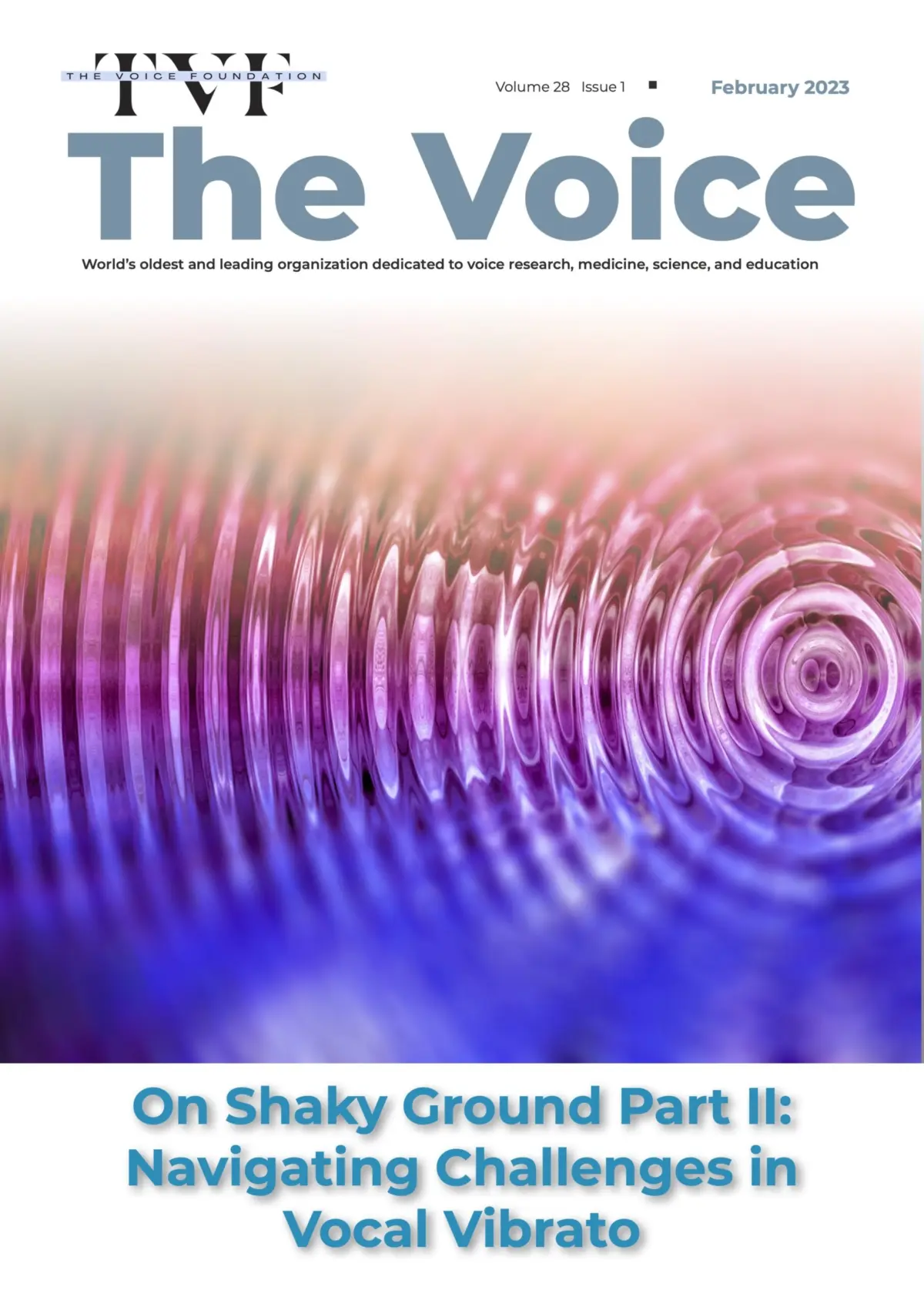
On February 24, 2023, The Voice Foundation officially published its highly anticipated February 2023 Newsletter, curated and authored by Ian DeNolfo. This edition brings forward a deep-dive exploration into one of the most fascinating, complex, and debated phenomena in vocal arts and sciences: vocal vibrato. Titled "On Shaky Ground Part II," the publication follows up on previous investigations into the physiological, pedagogical, and therapeutic implications of vocal modulation, offering a comprehensive look at how vibrato is understood through the tripartite lens of academic research, practical teaching methodologies, and clinical treatment frameworks.
This article provides an exhaustive overview of the February 2023 release, contextualizing its core themes within the broader framework of voice science. By examining the physiological mechanisms of vibrato, the challenges in pedagogy, and the clinical approaches to treating vibrato-related pathologies, we explore why this edition of The Voice Foundation’s newsletter represents a vital milestone for vocal professionals worldwide.
Detailed Chronology: The Lead-Up and Release of the February 2023 Newsletter
The path toward the publication of "On Shaky Ground Part II" in February 2023 is rooted in years of progressive dialogue within the vocal science community. Understanding the genesis of this newsletter requires a retrospective look at how voice professionals have historically approached the concept of vibrato—moving away from purely aesthetic descriptions toward empirically driven, physiological realities.
The Evolution of Vocal Research
For centuries, vibrato—the slight, regular fluctuation in pitch and intensity inherent in a well-produced sustained vocal tone—was treated largely as an instinctive artistic embellishment. Classical pedagogues trained singers through mimicry, imagery, and subjective sensation. However, the latter half of the 20th century, championed extensively by institutions like The Voice Foundation, saw a paradigm shift. High-speed laryngeal imaging, electromyography (EMG), and acoustic analysis began to demystify the physical mechanics behind the sound.
The Genesis of "On Shaky Ground"
The thematic exploration titled "On Shaky Ground" was conceived to address the anomalies, instability, and clinical disorders associated with vocal oscillation. While Part I laid the groundwork by examining the neurological and neuromuscular foundations of pitch stability and laryngeal muscle coordination, Part II—unveiled on February 24, 2023—dove headfirst into the applied aspects of these findings.

Publication Day: February 24, 2023
On this date, Ian DeNolfo and the editorial team at The Voice Foundation released the digital edition of the newsletter, accompanied by its distinctive cover art and a downloadable PDF resource for members and researchers. The release immediately captured the attention of the global vocal community, sparking discussions across academic departments, clinical voice centers, and professional singing studios. The timing aligned with a period of heightened interest in remote vocal health education and interdisciplinary collaboration between medical practitioners and artistic trainers.
Supporting Context & Metrics: Decoding Vocal Vibrato
To fully appreciate the significance of the February 2023 newsletter, one must examine the scientific and pedagogical metrics surrounding vocal vibrato. What constitutes a "healthy" vibrato, and how do researchers quantify stability versus instability?
The Acoustic and Physiological Anatomy of Vibrato
Scientifically, a classic operatic or artistic vibrato typically oscillates at a frequency of 5 to 7 Hz (cycles per second), with a pitch fluctuation of roughly a semitone (or a quarter-tone sharp and flat of the nominal center pitch), accompanied by a concurrent modulation in intensity (amplitude).
- Neuromuscular Pacemaker: Research supported by institutions like The Voice Foundation points to a central neurological oscillator—likely originating in the brainstem or central nervous system—that coordinates the rhythmic micro-contractions of the laryngeal musculature, primarily the cricothyroid and thyroarytenoid muscles, alongside respiratory support systems.
- Resonance and Tract Interaction: Vibrato is not merely a laryngeal event; it is heavily influenced by vocal tract adjustments and acoustic feedback loops.
The Tripartite Perspective Explored in the Newsletter
The February 2023 issue structured its discourse around three foundational pillars:
- The Research Perspective: Investigating the latest electromyographic and stroboscopic studies to map out how intrinsic and extrinsic laryngeal muscles behave during stable versus pathological oscillation. Researchers explored the fine line between expressive vibrato and structural tremors.
- The Teaching Perspective: Addressing how vocal pedagogues identify and nurture natural vibrato in developing student voices while avoiding the traps of "manufactured" or forced tremolos and straight-tone habits.
- The Treatment Perspective: Focusing on clinical interventions led by laryngologists and speech-language pathologists (SLPs). When vibrato becomes compromised—manifesting as a "wobble," "straight tone," "trill," or vocal tremor—it often signals underlying neuromuscular fatigue, vocal fold pathology, or technical misalignment. Clinical treatment requires precise rehabilitation strategies.
Official Insights and Expert Contributions
The February 2023 newsletter drew upon the expertise of leading voices in laryngology and voice science. While Ian DeNolfo spearheaded the curation and publication of the edition, the underlying concepts reflect a consensus among multidisciplinary experts affiliated with The Voice Foundation’s annual symposia.
Bridging Artistry and Medicine
A recurring theme emphasized in the February release is the necessity of communication between the voice teacher and the medical provider. Historically, a wall existed between artistic vocal coaches—who focused on aesthetics, style, and repertoire—and medical professionals, who focused purely on pathology, phonotrauma, and surgical intervention.
The Voice Foundation has long championed an integrated model where a singer experiencing vocal instability (such as a deteriorating vibrato) is evaluated not just for bad habits, but for subtle mucosal changes, neuromuscular imbalances, or subclinical laryngeal dystonias. "On Shaky Ground Part II" reinforced this bridge, providing educators with the diagnostic vocabulary to recognize when a student’s technical issue requires clinical referral.
Key Takeaways from the Published Issue
- Differentiating Vibrato from Tremor: A central pedagogical debate addressed in the literature centers on distinguishing a healthy, artistic vibrato (stable rate and extent) from a vocal tremor or wobble (irregular fluctuations often symptomatic of aging, neurological conditions, or severe muscular fatigue).
- Individualized Pedagogy: The articles underscored that there is no single "correct" vibrato speed or width for every vocal genre or voice type. Pedagogical approaches must respect anatomical and physiological realities unique to each individual singer.
Future Outlook: The Ongoing Evolution of Voice Science
As we look beyond the February 2023 release, the implications of "On Shaky Ground Part II" continue to ripple through the fields of voice research, clinical practice, and performing arts education.
Emerging Technologies in Vocal Analysis
The future of understanding vocal oscillation lies in advanced artificial intelligence, machine learning, and high-speed digital laryngoscopy. Researchers are now capable of mapping mucosal wave patterns and vocal fold contact areas with unprecedented temporal and spatial resolution. Future newsletters and publications by The Voice Foundation are expected to integrate these computational models, allowing voice scientists to predict vocal fatigue and vibrato degradation before they manifest audibly.
Interdisciplinary Training Programs
Another critical trajectory is the integration of voice science into standard conservatory and university music curricula. By utilizing resources like The Voice Foundation’s monthly newsletters and symposium archives, the next generation of vocal artists and pedagogues will be equipped with a robust, science-backed understanding of their instrument. This proactive education aims to reduce the prevalence of career-ending vocal injuries and demystify common technical hurdles like uneven vibrato.
Continuing the Dialogue
The publication of the February 2023 newsletter serves as a reminder that the human voice remains a frontier of scientific and artistic exploration. By breaking down complex research into accessible, actionable insights for teachers, therapists, and scientists, The Voice Foundation ensures that the art of singing rests on firm, scientifically validated ground.
For voice professionals seeking to deepen their expertise, access to archival editions like "On Shaky Ground Part II" via The Voice Foundation’s official portal remains an invaluable asset in the continuous pursuit of vocal health and artistic excellence.