
Executive Overview
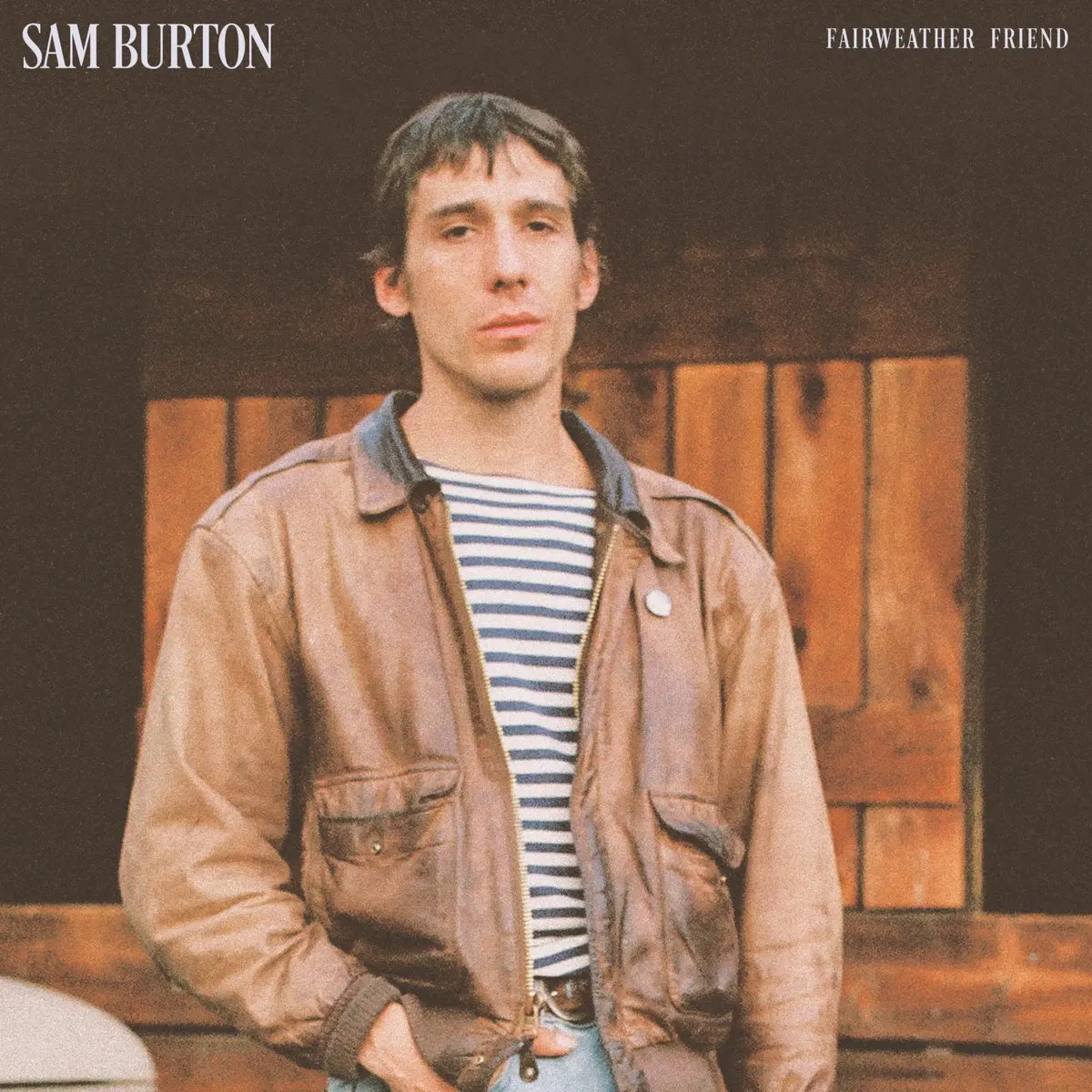
In an era dominated by hyper-compressed digital production, algorithm-driven playlists, and fleeting micro-genres, the release of a genuinely timeless-sounding record feels like an archaeological discovery. With his third full-length album, Fairweather Friend, the Los Angeles-based Palestinian-American singer-songwriter Burton has crafted a work that sounds less like a contemporary release and more like an unreleased acetate unearthed from a dusty garage sale in Topanga Canyon circa 1971.
Drawing from sonic templates as old as the concept of popular music itself, Burton channels the sun-bleached yet melancholy canyons of Los Angeles, the peerless precision of 1960s Nashville studio pickers, and the smoke-thickened air of Greenwich Village folk clubs. Yet, to dismiss Fairweather Friend as mere retro-fetishism or derivative recycling is to miss the fierce authorial command driving the project. Assisted by co-producer Jonathan Wilson—a modern maestro of West Coast analog warmth—Burton reaches unprecedented levels of emotional resonance.
The album’s foundational DNA was forged in catastrophe: a severe, near-fatal car crash involving Burton and his touring band. That traumatic event triggered a nomadic existence, culminating in months of manual labor on a remote Northern California farm. Out of this crucible of survivor’s guilt, displacement, and physical healing emerged eleven tracks that balance a deeply downcast worldview with a hard-won, resolute spirit. Fairweather Friend is not merely an homage to the golden age of the singer-songwriter; it is a vital, breathing testament to the redemptive power of acoustic music in the modern age.
Detailed Chronology: The Making of Fairweather Friend
The Catalyst: The Crash on the Pavement
To understand the heavy, nocturnal introspection that permeates Fairweather Friend, one must trace its origins back to a chilling moment on a desolate highway. While touring in support of his previous material, Burton and his bandmates were involved in a devastating automobile collision. While the physical injuries healed over time, the psychological toll proved far more enduring.
In the immediate aftermath, Burton found himself trapped in a labyrinth of survivor’s guilt—grappling with the arbitrary nature of tragedy, particularly regarding an accident in which he bore no direct mechanical or moral fault. The psychological weight paralyzed his creative faculties for months. Unable to find solace in traditional urban environments, Burton abandoned his Los Angeles routine and entered a prolonged period of transience.
The Northern California Farm and the Birth of Songs
This nomadic chapter eventually led him to the rustic isolation of a working farm in Northern California. Stripped of the trappings of the modern music industry, living out of a suitcase, and performing grueling physical labor from dawn until dusk, Burton began to process the trauma of the crash.
The repetitive, grounding nature of farm work acted as a form of cognitive therapy. In the quiet hours between shifts, armed with a rippling acoustic guitar, he began sketching out the framework for what would become Fairweather Friend. The lyrics written during this period reflect a mind stripping away non-essentials. They grapple with the fleeting, temporary nature of human connection—encapsulated in lines like "Fairweather friend, you know it rarely lasts"—while simultaneously discovering a strange, terrifying sense of liberation in rootless solitariness ("You could lose everything and be free again").
Entering the Studio with Jonathan Wilson
With the core songwriting completed, Burton returned to Los Angeles to translate these raw, acoustic lamentations into a cohesive sonic statement. For this phase, he enlisted multi-instrumentalist and producer Jonathan Wilson, a figure renowned for his encyclopedic knowledge of West Coast pop-rock history and his dedication to vintage analog recording techniques.
Working out of Wilson’s legendary Fivestar Studios, the duo captured performances that prioritized warmth, space, and human imperfection. The recording process avoided digital grid-locking in favor of live-room takes, tape saturation, and the careful placement of vintage microphones. The resulting arrangements never push Burton’s richly resonant, melancholy voice and intricate acoustic picking out of the driver’s seat. Instead, they frame his vulnerability with delicate pedal steel, subtle keyboard pads, and warm basslines that evoke the golden era of Laurel Canyon without ever sounding trapped in amber.
Supporting Context & Metrics: Navigating the Roots-Rock Revival
The Aesthetic Blueprint: Mapping the Influences
While Burton’s voice is entirely his own, Fairweather Friend proudly wears its historical lineage. Listeners intimately familiar with the classic 1970s singer-songwriter canon will immediately catch stylistic cues from legendary records of the past:
- Bob Dylan’s New Morning Era: The relaxed, organic pacing and conversational phrasing mirror Dylan’s early-70s pivot toward pastoral contentment and domesticity.
- Gordon Lightfoot’s Early Catalog: The narrative clarity and clean, rippling acoustic guitar patterns echo Lightfoot’s pristine Canadian folk-pop architecture.
- Neil Young’s Comes A Time: Once the weeping, mournful wail of the pedal steel guitar enters the mix on tracks like "Lilac Man," the emotional geography shifts toward Young’s sun-drenched, melancholic country-rock crossover territory.
- The Nocturnal Folk Masters: Echoes of past masters of wounded introspection—specifically Fred Neil and Tim Hardin—loom large, acting as a folk-rock beacon cutting through the fog of contemporary artifice.
Production Metrics and Analog Fidelity
In an industry dominated by loudness-war mastering and hyper-quantized beat production, Fairweather Friend stands out through its commitment to dynamic range and acoustic purity.
| Production Metric | Album Approach | Industry Standard (Pop/Rock) |
|---|---|---|
| Dynamic Range (DR) | High (DR11–DR13) | Low to Moderate (DR4–DR8) |
| Instrumentation | 100% Organic / Vintage Gear | Hybrid / Software-Assisted |
| Vocal Processing | Minimal Tuning / Natural Room Bleed | Pitch-Corrected / Multi-Stacked |
| Mastering Medium | Analog Tape Transfer & Vinyl Cut | Digital Limiter Optimization |
This commitment to high dynamic range allows the quietest moments of Burton’s fingerpicking to carry just as much weight as the sweeping pedal steel crescendos, creating an immersive, room-in-the-room listening experience that rewards high-end headphone usage and audiophile vinyl setups alike.
Official Statements and Critical Breakdown
The Lyrical Economy: Haiku-Like Sparseness
What elevates Fairweather Friend above standard roots-revival exercises is Burton’s lyrical economy. Rather than drowning his melodies in heavy-handed exposition, he relies on haiku-like sparseness that lets the listener project their own emotional history onto the canvas.
In a recent press statement regarding the thematic core of the album, Burton reflected on the process of writing under duress:
"When you survive something that could have easily taken everything from you, your relationship with language changes. You stop caring about clever turns of phrase or multi-layered metaphors. You just want to say what is true, as simply and directly as possible. If a thought can be expressed in seven words instead of seventy, you use the seven words. The farm work in Northern California taught me that endurance isn’t about shouting against the wind; it’s about standing your ground when the wind tries to blow you down."
Track Spotlight: The Peak of the Craft on "Start Over"
The emotional and artistic zenith of the album arrives midway through the tracklist with "Start Over," a song destined to be studied by aspiring songwriters for generations. Driven by an impossibly pretty, yearning-fuelled twang, the track pairs Burton’s vocal longing with pre-emptive premonitions of inevitable disappointment, crystallized in the devastating couplet: "Her love is plain and it quickly fades."
Co-producer Jonathan Wilson noted the magic captured during the tracking of this specific song:
"We had been playing for hours, working on the skeletal structure of the tune, when Burton stepped up to the microphone to lay down a scratch vocal. The room went completely silent. There was a fragile gravity to his delivery that we knew instantly could never be replicated if we tried to punch it in or fix it later. It had that rare, cinematic quality where you can practically picture Elvis Presley or Glen Campbell cutting it as an A-side single during their absolute creative peaks. It’s a masterclass in emotional transference."
Future Outlook: Where Does Burton Go From Here?
Navigating Critical Acclaim and Niche Stardom
As Fairweather Friend reaches record stores and streaming platforms, early critical reception indicates that Burton is transitioning from a well-kept secret among indie-folk aficionados to a recognized auteur within the broader Americana landscape.
The industry challenge moving forward will be maintaining this uncompromising artistic vision while scaling up to larger touring platforms. Roots music audiences notoriously demand authenticity; fortunately, Burton’s background—spanning his Palestinian-American roots, his life-altering transit through the American highway system, and his dedication to analog craftsmanship—immunizes him against charges of manufactured trend-following.
Upcoming Tour and Live Adaptations
To support the release of Fairweather Friend, Burton and an expanded live ensemble are slated to embark on an extensive, intimate theater tour across North America and Europe. Moving the intricate, vintage-soaked arrangements of tracks like "Lilac Man" and "Start Over" from the controlled environment of Fivestar Studios to live stages will be the next major test for the project.
Industry insiders anticipate that these sparse, emotionally intense live performances will solidify Burton’s reputation not just as a studio perfectionist, but as a commanding troubadour capable of holding large rooms in rapt silence.
The Longevity of a Modern Classic
Ultimately, the future of Fairweather Friend looks remarkably secure against the fickle tides of modern music consumption. By rooting his third album in the universal themes of trauma, recovery, wandering, and acceptance—and dressing those themes in arrangements that honor the golden age of American songwriting—Burton has created a record designed to endure. Long after current micro-trends have faded into digital oblivion, records like Fairweather Friend will likely still be found sitting proudly in record collections, waiting to be discovered anew by the next generation of seekers.