
Executive Overview
The intersection of generative artificial intelligence (GenAI) and the creative arts has expanded far beyond the standalone creation of audio tracks. While the initial wave of AI fascination targeted text-to-music generation, producers, tech developers, and industry analysts are increasingly turning their attention to adjacent multimedia fields—most notably video generation and gaming. As independent artists and major labels alike search for cost-effective, high-impact ways to market music across visually driven platforms like TikTok, Instagram Reels, and YouTube Shorts, the demand for dynamic visual accompaniment has never been higher.
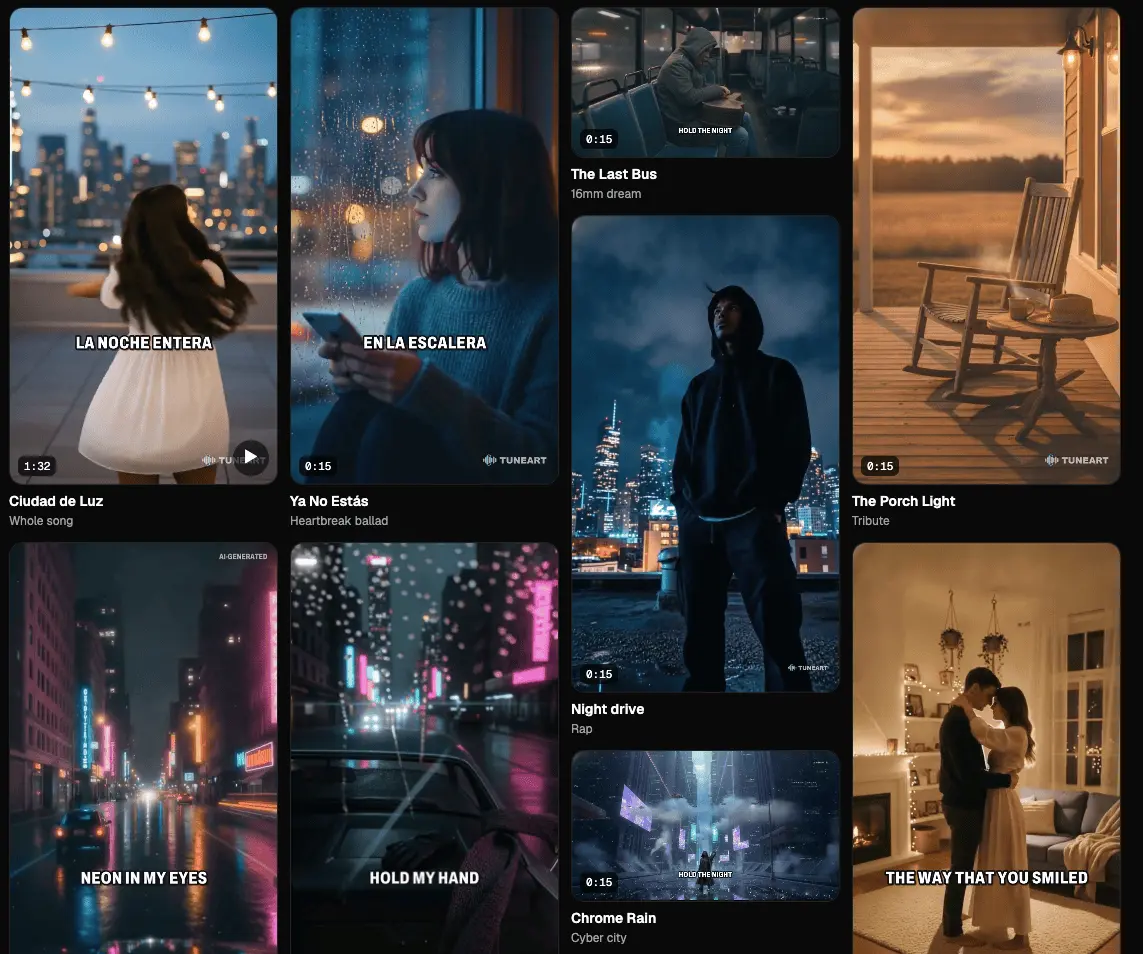
Enter TuneArt, an innovative service capitalizing on this exact market need. With a compelling and straightforward pitch—“your song as a music video, cut on the beat with your lyrics on screen”—TuneArt is bridging the gap between raw audio files and polished, narrative-driven visual content. By integrating cutting-edge third-party video generation models such as Kling, Google’s Nano Banana and Veo, and ByteDance’s Seedance, alongside its own proprietary beat-tracking algorithms, TuneArt represents a new frontier in automated multimedia production.
This article explores the mechanics of TuneArt, the broader ecosystem of generative video models, the implications for independent musicians and labels, and what the future holds for AI-assisted music video production.
Detailed Chronology: The Evolution of AI in Music and Visuals
To understand the significance of platforms like TuneArt, it is essential to trace how generative AI has permeated the music and video production pipelines over recent years.
Phase 1: The Audio-First Gold Rush (2022–2024)
The initial explosion of generative AI in the music industry focused almost exclusively on audio synthesis. Tools emerged that could generate full-length songs from simple text prompts, separate stems from legacy recordings, or clone the voices of famous artists. While these tools sparked fierce debates regarding copyright, fair use, and artist compensation, they established a precedent: technology could democratize the creation of raw audio content. However, creators quickly realized that having an AI-generated or independently produced song was only half the battle. In the modern attention economy, music requires compelling visual assets to capture audiences on social media.
Phase 2: The Rise of Generative Video Models (2023–2025)
Concurrently, the generative video space experienced its own technological revolution. Companies rolled out advanced diffusion and transformer-based models capable of producing high-definition, temporally consistent video clips from text prompts. Models developed by industry giants and specialized startups—ranging from OpenAI’s Sora to Google’s Veo, Kuaishou’s Kling, and ByteDance’s video initiatives—began transforming how visual media was conceptualized. Yet, these tools remained largely disconnected from the temporal constraints of music. Generating a stunning five-second video clip is one thing; synchronizing complex visual transitions to the precise tempo, meter, and emotional arc of a three-minute song is an entirely different engineering challenge.
Phase 3: Convergence and Synchronization (2025–Present)
As both audio and video generation matured, innovators recognized the necessity of synchronization. Platforms like TuneArt emerged to bridge this exact gap. By combining proprietary audio analysis—specifically advanced beat-tracking technology—with state-of-the-art third-party video models, developers created automated pipelines capable of rendering cohesive music videos. This era is defined by workflow compression: tasks that previously required weeks of editing, storyboarding, and significant capital can now be iterated upon in minutes, shifting the creator’s role from manual execution to directorial curation.
Supporting Context & Metrics: The Mechanics of TuneArt
TuneArt’s value proposition rests on three core pillars: audio synchronization, advanced video model integration, and automated lyric integration. Examining how these elements function reveals the sophisticated engineering powering the platform.
1. Proprietary Beat-Tracking Technology
A traditional music video relies heavily on human editors who manually cut scenes on downbeats, snare hits, or major structural transitions (such as the drop in a dance track or the bridge of a pop song). TuneArt automates this process by deploying specialized audio analysis algorithms that map a song’s transient points, tempo (BPM), and dynamic shifts. This ensures that every visual cut feels intentional and rhythmically locked to the audio, preserving the kinetic energy of the music.
2. Leveraging Third-Party GenAI Models
Rather than building a foundational video model from scratch—a capital-intensive endeavor requiring massive compute clusters—TuneArt acts as a meta-orchestrator. It harnesses some of the most powerful video generation models currently available on the global market:
- Kling: Known for handling complex physics and realistic motion dynamics.
- Google’s Veo and Nano Banana: Providing high-fidelity cinematic outputs and rapid, lightweight processing capabilities.
- ByteDance’s Seedance: Tapping into advanced short-form video generation architectures optimized for viral, dynamic pacing.
By routing prompts and visual themes through these diverse engines, TuneArt can generate varied aesthetic styles—ranging from hyper-realistic cyberpunk cityscapes to dreamy, surrealist watercolor animations—tailored to the specific mood of a track.

3. Automated Lyric Integration
Lyrics are a vital component of modern music consumption, particularly on short-form video platforms where users often watch videos with the sound off or low before engaging fully. TuneArt incorporates automated lyric-rendering tools that display words on screen in real-time, styled to match the aesthetic of the generated video clips. This transforms simple listening experiences into karaoke-style or lyric-video formats that are primed for algorithmic distribution on TikTok and Instagram.
Official Statements and Industry Perspectives
The emergence of AI-driven video generation tools for music has sparked intense discussions across the media and entertainment sectors. Industry analysts, such as those at Music Ally, monitor these developments closely to understand how adjacent GenAI technologies will reshape music marketing and consumption.
While official statements from major record labels often strike a cautious balance—emphasizing the protection of copyright and the ethical deployment of AI—independent creators and tech startups are far more vocal about the transformative potential of these tools.
"Our objective isn’t to replace human directors or cinematographers for major-label blockbuster releases," notes a digital media strategist tracking generative multimedia trends. "Instead, it is about solving the massive content bottleneck facing the 99% of independent artists who lack the budget to produce visual assets for every single track, remix, or snippet they release."
Furthermore, developers of foundational video models like Google and ByteDance have consistently highlighted their intent to build creative tools that empower individuals. By opening access to models like Veo and Seedance through platforms and APIs, technology companies are fostering an ecosystem where specialized applications like TuneArt can build verticalized solutions for specific industries, such as music, advertising, and independent filmmaking.
Future Outlook: Challenges and Opportunities
As generative video and music synchronization platforms continue to evolve, several key trends and challenges will define the landscape over the coming years:
1. The Democratization of Music Marketing
For independent musicians, the barrier to entry has historically been financial. High-quality music videos can cost thousands of dollars, making regular visual content creation unsustainable for emerging artists. Tools that automate beat-matched video generation lower these barriers dramatically, allowing artists to release a distinct visualizer or full music video for every track they drop, thereby improving their algorithmic footprint on streaming and social platforms.
2. Copyright, Ownership, and Ethical Considerations
As with audio-generating AI, the video generation space faces ongoing scrutiny regarding the datasets used to train underlying models. Questions surrounding intellectual property rights, likeness usage, and copyright infringement remain complex. Platforms that aggregate third-party models will need to navigate licensing agreements carefully to ensure that artists using their services are not exposed to legal vulnerabilities regarding the generated imagery.
3. Toward Narrative Consistency and Director Control
Current automated music video generators excel at creating mood pieces, lyric videos, and visually striking montages. However, the next frontier of development will focus on narrative continuity—allowing AI models to maintain persistent characters, plots, and emotional arcs across an entire three-minute song. As control mechanisms become more granular, creators will move from simple text prompts to true directorial suites, shaping AI-generated narratives with precision.
Conclusion
TuneArt and the broader movement toward generative video-music integration signal a fundamental shift in how audio and visual media interact. By combining advanced beat-tracking with state-of-the-art video models like Kling, Veo, and Seedance, the industry is witnessing the birth of an accessible, highly dynamic multimedia production ecosystem. For artists, marketers, and fans alike, the future of music is not just something to be heard—it is an instantly visualized, rhythmically synchronized experience generated at the speed of thought.