
Executive Overview
In an era where contemporary independent music is frequently dominated by digital gloss and swift, algorithmic trends, a formidable new collective has emerged from the subterranean currents of the American folk underground. Operating under the moniker Dowsers, the newly formed supergroup brings together a diverse ecosystem of musicians steeped in the traditions of Appalachian string bands, avant-garde composition, and crushing post-rock textures.
Today marks a critical juncture for the ensemble as they officially release their debut double-single, "Dogwood / Three Forks of Cheat." This release serves as an explosive introduction and a foundational blueprint for their highly anticipated debut full-length album, slated for release next year.
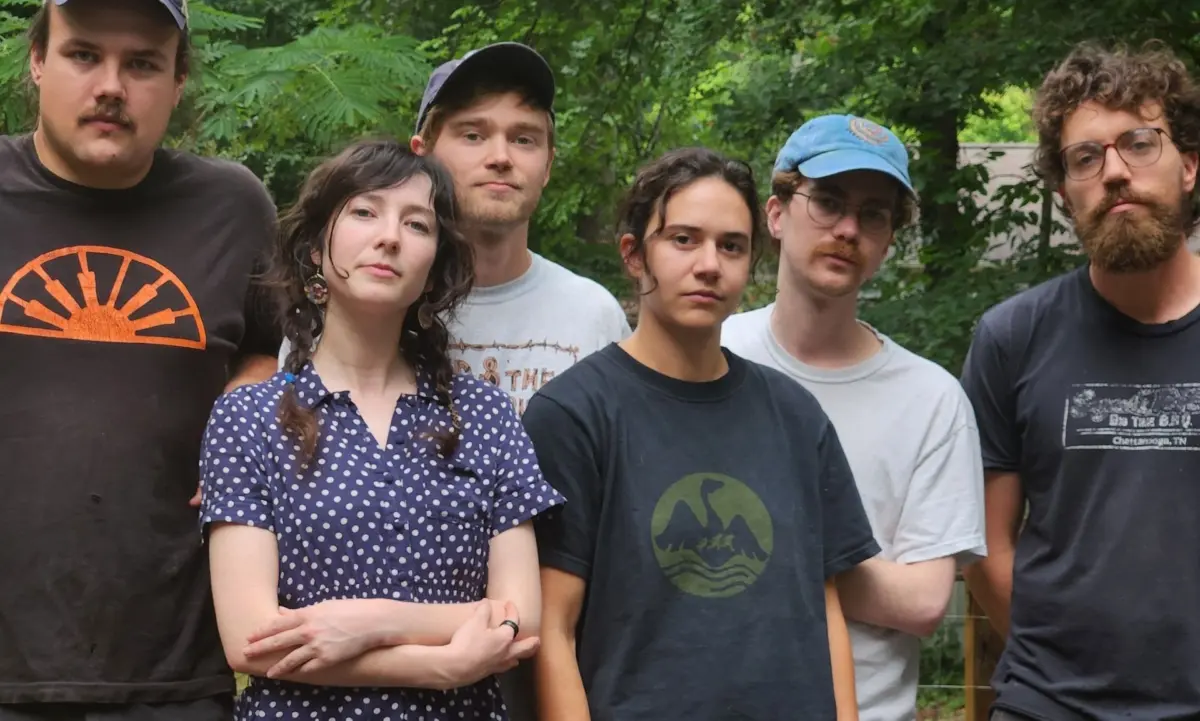
The band’s lineage reads like a who’s who of the modern American underground and experimental folk circuit. Comprising Courtney Werner and Evan Morgan (both of Magic Tuber Stringband and Weirs), Austin Cash (Nathan Smearage), Oliver Child-Lanning (Weirs, Sluice, and Fust), James Gibian (Beak Trio), and Alli Rogers (Alli Blois), Dowsers are not merely a side project or a fleeting collaboration. Instead, they represent a deliberate synthesis of disparate musical backgrounds, unified by a shared commitment to stretching the boundaries of acoustic instrumentation, narrative lyricism, and sonic architecture.
This introductory feature explores the anatomy of Dowsers’ formation, breaks down the thematic and stylistic DNA of their inaugural release through exclusive commentary from co-founder Evan Morgan, and evaluates the group’s trajectory as they position themselves at the vanguard of a burgeoning, genre-defying folk renaissance.
Detailed Chronology: From Isolated Roots to Collective Convergence
To understand the weight of Dowsers’ debut, one must trace the winding tributaries that fed into its creation. The genesis of the group did not occur in a sterile corporate rehearsal space, but rather across years of shared bills, late-night pick-up sessions, basement shows, and regional cross-pollination within the vibrant independent music communities spanning the American Southeast and Appalachia.
The Incubator: The Underground Circuit
Long before the moniker "Dowsers" was formalized, the individual members had established themselves as vital contributors to distinct, critically acclaimed projects. Courtney Werner and Evan Morgan had already earned reverence through their intricate, hypnotic work in the Magic Tuber Stringband, a project celebrated for its spellbinding interplay of acoustic guitar and fiddle that evokes both British folk revivalists and American primitive guitarists. Simultaneously, their involvement in Weirs connected them to Oliver Child-Lanning, whose concurrent work with projects like Sluice and the lauded indie-folk outfit Fust brought a distinct lyrical and structural grit to the table.
As these artists crossed paths at regional showcases, DIY house shows, and underground folk festivals, an informal dialogue began regarding the limitations and possibilities of traditional instrumentation. Where does folk music end, and where do drone, ambient soundscape, and post-rock begin?
The Spark of Formation
The official cementing of Dowsers as a singular entity occurred organically through live performance. Rather than retreating to a studio to manufacture a sound behind closed doors, the ensemble first solidified their chemistry on stage, testing the waters of their expansive lineup in front of live audiences. This trial-by-fire approach allowed the sextet to build a symbiotic musical telepathy, learning how to balance the delicate timbres of traditional folk instruments—such as the fiddle and acoustic guitar—with the low-end heft and rhythmic drive brought by members of the broader experimental community, including Austin Cash and James Gibian.
By late 2023 and early 2024, the band had refined a cohesive identity that honored the past while gleefully dismantling its structural expectations. With live shows generating significant regional buzz, the collective turned their attention toward capturing their dynamic stage presence on tape. Entering the studio with a clear artistic vision, they laid down the tracks that would comprise their forthcoming debut album.
Today’s release of "Dogwood / Three Forks of Cheat" marks the culmination of this foundational phase, transitioning Dowsers from a whispered secret among underground music aficionados to a formidable national act poised for broader critical acclaim.
Supporting Context & Metrics: The Anatomy of Modern Experimental Folk
To fully appreciate the cultural and sonic significance of Dowsers’ debut, it is necessary to examine the broader landscape of modern American folk and the socio-ecological themes that inform their songcraft.
The Sound of the Shift: Genre Fluidity in the 2020s
The contemporary musical ecosystem is witnessing a profound decentralization of genre boundaries. In recent years, artists such as The Mountain Goats, Bon Iver, Milo, Hiss Golden Messenger, and peers within the North Carolina and Appalachian scenes have increasingly blurred the lines between traditional roots music and avant-garde composition. Dowsers enter this ecosystem not as tourists, but as seasoned practitioners who deeply respect the historical weight of the canon they are engaging with.
| Band Member | Primary Affiliations / Background Projects | Contribution to Dowsers |
|---|---|---|
| Evan Morgan | Magic Tuber Stringband, Weirs | Co-founder, songwriter, acoustic guitar, fiddle translation |
| Courtney Werner | Magic Tuber Stringband, Weirs | Co-founder, multi-instrumentalist |
| Oliver Child-Lanning | Weirs, Sluice, Fust | Multi-instrumentalist, textural arrangement |
| Austin Cash | Nathan Smearage | Rhythm section, harmonic scaffolding |
| James Gibian | Beak Trio | Rhythmic dynamics, avant-garde percussion |
| Alli Rogers | Alli Blois | Vocal harmonization, melodic counterpoint |
By assembling six musicians with deep roots in diverse sub-genres—spanning Appalachian fiddle tunes, indie-rock songwriting, jazz-inflected rhythm sections, and noise-rock structural crescendos—Dowsers have created an ensemble capable of shifting from whispering intimacy to thunderous, wall-of-sound cataclysms within a single composition.
Ecological Grief and the Changing Landscape
At the heart of the band’s thematic output is a deep engagement with the natural world. This is not the pastoral romanticism of 19th-century poetry; rather, it is a clear-eyed, modern reckoning with ecological anxiety, climate change, and the passage of time.
The acceleration of environmental degradation and the shifting of seasonal markers—phenomena acutely felt across the Appalachian region where many of the members live and write—provide a melancholic backdrop to the music. When natural cycles become erratic due to shifting global ecosystems, the traditional markers that humans have used for centuries to measure their lives begin to fail. Dowsers tap into this collective psychological shift, transforming ambient ecological observation into visceral, emotional art.
Furthermore, the band’s engagement with traditional Appalachian fiddle tunes—as demonstrated on "Three Forks of Cheat"—serves as an act of cultural preservation and reinvention. By stripping these traditional tunes of their expected dance-hall constraints and filtering them through the lens of post-rock and noise, Dowsers argue that folk traditions are not museum pieces to be preserved under glass, but living, breathing entities capable of expressing modern trauma, grandeur, and catharsis.
Official Statements & Track Breakdown: Inside "Dogwood / Three Forks of Cheat"
The double-single release offers two distinct entry points into the Dowsers universe, balancing lyrical introspection with instrumental deconstruction. Below, co-founder Evan Morgan provides exclusive insight into the creation, inspiration, and execution of both tracks.
"Dogwood": A Meditation on Time, Memory, and Ecological Shift
The A-side of the release, "Dogwood," serves as a gentle yet emotionally heavy meditation on the relentless march of time and the shifting markers of the natural world.
“’Dogwood’ is a song that I wrote in the spring of 2020 at my friend Hunter’s grandparents’ house in Hayesville, NC, so its release has been a long-time coming,” explains Morgan.
Composed during the early, uncertain months of 2020—a period when the entire world was forced into a state of hyper-reflection—the song uses a specific botanical landmark as its focal point.
“The reliability of certain seasonal markers, some familiar and some new depending on local ecosystems’ shifting conditions due to climate change, is something I think we all become increasingly aware of as we grow older,” Morgan continues. “The Dogwood tree that grew outside this house in Hayesville was the center here for my reflection on humans growing older but natural cycles reappearing.”
Musically, "Dogwood" avoids heavy-handed emotional manipulation, instead relying on intricate acoustic fingerpicking, subtle vocal harmonies provided by Rogers and Werner, and a delicate web of textural accompaniment. The song captures the bittersweet realization that while human bodies age and societies fracture, the biological world continues its ancient, indifferent rhythms—even as those rhythms themselves begin to warp under the pressure of a changing climate.
"Three Forks of Cheat": Reinterpreting Appalachian Tradition Through Post-Rock Lenses
If "Dogwood" represents the intimate, lyrical side of Dowsers, the B-side, "Three Forks of Cheat," showcases their fearless instrumental ambition. The track takes a revered historical artifact from the Appalachian folk canon and shatters it, rebuilding it into something entirely new.
“’Three Forks of Cheat’ has always been one of my favorite fiddle tunes,” Morgan notes. “The source fiddler for this one is Edden Hammons of Webster County, WV. I learned it from playing with Will Csorba, who shared his obsession with me for Hammons family tunes.”
Edden Hammons is a legendary figure in American traditional music, known for his idiosyncratic, highly irregular, and deeply haunting fiddle playing style that stood apart from the more standardized commercial fiddle tunes of the early 20th century. Hammons’ playing was famously "crooked"—featuring irregular measure lengths and unexpected harmonic turns that gave his music an uncanny, ghostly quality.
Dowsers lean directly into these eccentricities, using them as structural fuel for an expansive, genre-blurring arrangement.
“I think of the three unequal, ‘crooked’ lines of the B part as representing the three forks of the Cheat River,” Morgan explains, highlighting the geographical and metaphorical interplay at the heart of the composition. “I wanted to try to draw out the atmospheric qualities of this strange tune with Dowsers, ending in a cacophonous sludge section inspired by the great Athens band Harvey Milk.”
This transition—from a delicate, crooked folk fiddle exploration into a crushing, feedback-drenched wall of sound reminiscent of Athens, Georgia sludge-metal icons Harvey Milk—encapsulates the entire Dowsers project. It demonstrates a profound respect for source material coupled with an absolute refusal to be bound by it. The track moves effortlessly from Appalachian porch music to avant-garde noise-rock, creating a breathtaking synthesis of historical reverence and contemporary nihilism/catharsis.
Future Outlook: The Road to the Debut Album and Beyond
With the release of "Dogwood / Three Forks of Cheat," Dowsers have firmly established themselves as one of the most intriguing and unpredictable new acts in independent music. However, this double-single is merely the opening salvo in a much larger campaign.
The Anticipated Full-Length Debut
As the band prepares to roll out their full-length debut album next year, anticipation is rapidly building among critics, tastemakers, and fans of the subterranean American music scene. While the details of the forthcoming record remain tightly under wraps, the sonic juxtaposition of "Dogwood" and "Three Forks of Cheat" suggests an album of immense stylistic range. Listeners can likely expect a masterclass in tension and release—where pastoral acoustic meditations sit comfortably alongside sprawling, post-rock noise excursions.
Live Performances and Touring Expansion
True to their origins as a band forged in the fires of live performance, Dowsers are planning an extensive slate of live dates to support their upcoming album cycle. Given the logistical complexity of mobilizing a six-piece ensemble featuring members of Magic Tuber Stringband, Weirs, Fust, Sluice, Beak Trio, and Alli Blois, securing regional and national tour routing will be a major operational focus for the group in the coming months. Fans of uncompromising, genre-stretching live music are strongly encouraged to catch the ensemble in intimate club and DIY settings, where their improvisational chemistry and dynamic range are rendered at their most potent.
Cultural Legacy and the Folk Vanguard
As independent music continues to grapple with questions of authenticity, commercial pressures, and artistic evolution, Dowsers offer a compelling blueprint for the future. By refusing to choose between the preservation of traditional folk forms and the radical experimentation of the avant-garde, they have carved out a unique space where both worlds can not only coexist, but violently and beautifully collide.
The release of "Dogwood / Three Forks of Cheat" is more than just a preview of an upcoming record; it is a declaration of intent. Dowsers are mapping uncharted territory across the shifting landscape of modern folk, and the underground is listening closely to where they lead next.