
Executive Overview
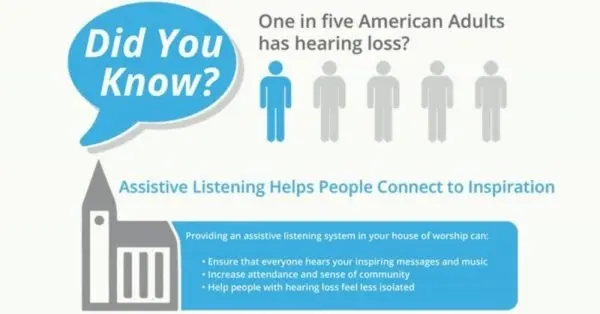
In an era defined by rapid technological advancements in worship production—ranging from line-array speaker configurations to immersive multi-media projection systems—houses of worship face a persistent, often overlooked challenge: auditory accessibility. While crystal-clear audio mixes and soaring acoustic designs elevate the standard Sunday experience for the majority of attendees, a significant demographic remains functionally disconnected. Hearing loss affects millions of individuals globally, cutting across age brackets, socioeconomic lines, and geographic locations. For these congregants, the weekly gathering can easily transform from a communal sanctuary into an isolating exercise in straining to catch fragmented phrases and obscured sermon points.
The implementation of an Assistive Listening System (ALS) is no longer a peripheral amenity or a mere compliance checkbox; it is a vital ministry imperative. Ensuring that every member of a congregation can fully perceive the spoken word, the emotional resonance of pastoral prayer, and the lyrical depth of corporate worship speaks directly to the foundational mission of any faith community: radical inclusion and pastoral care.
However, transitioning a worship facility toward comprehensive acoustic accessibility requires more than simply purchasing hardware off the shelf. It demands a deliberate, methodical strategy encompassing demographic assessment, financial forecasting, specialized staff training, and proactive community engagement. This report provides an authoritative, step-by-step roadmap for church leadership teams, AV directors, and facility managers seeking to successfully deploy, manage, and promote an Assistive Listening System. Drawing from industry best practices, expert consultations, and dedicated implementation toolkits, this guide outlines the four foundational pillars of acoustic inclusion: assessing community needs, navigating technological and financial options, preparing operational personnel for seamless deployment, and driving robust congregation-wide awareness.
Detailed Chronology: A Four-Phase Implementation Roadmap
Successfully integrating an Assistive Listening System into the rhythm of a church’s weekly operations requires a structured, multi-phase approach. Rushing the procurement or neglecting the human element of technology adoption frequently results in underutilized equipment and continued disengagement among those who need it most. Below is the definitive chronological framework for executing an ALS project with maximum impact.
Phase 1: Diagnostic Assessment and Audience Mapping
Before evaluating hardware specifications, radio frequencies, or budget allocations, leadership must first understand the precise contours of the problem within their specific congregation. Every worship space possesses unique acoustic profiles, demographic makeups, and architectural quirks that dictate the ideal listening solution.
- Deploying Congregational Surveys: The most effective method for gauging the true scope of hearing loss within a community is direct inquiry. Churches should design and distribute a comprehensive survey targeting their membership. This instrument should query respondents about their personal experiences during services—specifically asking whether they regularly miss key components of the sermon, struggle with ambient room reverberation, or find competing background frequencies distracting.
- Auditing Hearing Aid Adoption and T-Coil Integration: Crucially, the survey must assess whether congregants utilize hearing aids, and if so, whether those devices are equipped with telecoils (t-coils). A t-coil is a tiny copper wire coil found inside many modern hearing aids and cochlear implants that acts as a wireless receiver, directly pulling in audio signals from compatible loop systems or neck loops. Understanding the prevalence of t-coils among members heavily influences whether a facility should invest in an induction loop system, an FM system, or an infrared setup.
- Analyzing Architectural and Environmental Factors: Alongside demographic surveys, facility teams must evaluate the physical space. High ceilings, expansive glass windows, uncarpeted concrete floors, and hard plaster walls create reverberation fields that degrade speech intelligibility. Mapping these acoustic dead zones helps determine the necessary coverage area and signal strength required for the ALS.
Phase 2: Strategic Sourcing and Budget Forecasting
With empirical data regarding congregational needs and architectural constraints in hand, church leadership can transition to evaluating technological options and financial commitments. Navigating the marketplace of assistive listening equipment requires balancing performance, durability, and cost.
- Estimating Equipment and Infrastructure Costs: Costs vary widely depending on the chosen technology (FM, Infrared, or Hearing Loop) and the physical capacity of the sanctuary. Equipment budgets must account for transmitters, receivers, charging stations, personal neck loops, directional signage, and potential cabling or installation labor.
- Leveraging Professional Consultations: To avoid costly missteps, churches should partner with AV integration specialists. Organizations such as CCI Solutions offer invaluable assistance in this domain, providing specialized expertise and complimentary consultations designed to help church boards align technical requirements with fiscal realities.
- Developing Creative Funding and Fundraising Strategies: For many congregations—particularly smaller or mid-sized ministries—capital expenditures require dedicated fundraising efforts. Transparently communicating the vision of radical inclusion to the broader church body often inspires targeted donor giving, memorial gifts, or special offering campaigns specifically earmarked for accessibility upgrades.
Phase 3: Operational Readiness and Staff Enablement
The finest assistive technology available will fail if the human systems supporting it are disorganized or poorly trained. The success of an ALS relies heavily on the frontline personnel who interface directly with users: ushers, greeters, welcome center volunteers, and audio-visual technicians.
- Transforming Staff into "Assisted Listening Ambassadors": Volunteers and staff members must view themselves as proactive facilitators of connection rather than mere equipment distributors. Training sessions should demystify the technology, ensuring that every volunteer understands how the system operates, how to troubleshoot basic issues, and how to approach congregants with sensitivity and respect.
- Mastering the Hand-Off Protocol: When a device is checked out to an attendee, the interaction must be handled with dignity and clarity. Ambassadors should take a moment to walk the user through the device’s basic controls—such as volume adjustments and power toggles—and confirm that the personal earpiece or neck loop fits comfortably.
- Deploying Visual and Procedural Aids: To reduce cognitive load for volunteers during high-traffic Sunday mornings, facilities should maintain laminated quick-reference guides at the distribution desk. These sheets should feature concise answers to frequently asked questions, troubleshooting steps for low batteries, and instructions on sanitizing units between services.
Phase 4: Proactive Communication and Community Awareness
Investing in an Assistive Listening System yields zero return if the intended beneficiaries remain unaware of its existence. Creating sustained awareness requires an aggressive, multi-channel communication strategy that reaches both current members and the surrounding geographic community.
- Strategic Signage Placement: Clear, universally recognized accessibility signage must be prominently displayed throughout the facility. Signs should direct visitors to the exact location where Assisted Listening Devices (ADLs) are stored and distributed, removing any guesswork or hesitation.
- Multi-Channel Promotion: Reminders regarding the availability of listening devices should be woven into the fabric of weekly communications. This includes explicit notes in printed and digital bulletins, slides on pre-service multi-media loops, and verbal announcements from stage hosts.
- Hosting Dedicated Live Demonstrations: To overcome technological intimidation, churches can host a live training or open house event. Allowing congregants to test the receivers in a relaxed, low-stakes environment helps demystify the hardware and encourages hesitant individuals to give the system a try during a live service.
- Community-Wide Outreach: Advertising the presence of an inclusive ALS to the broader local community can yield profound pastoral dividends. Many individuals with hearing impairments have stopped attending religious services altogether due to frustration; broadcasting a church’s commitment to acoustic accessibility signals a welcoming, empathetic environment that attracts new visitors and restores disconnected believers to fellowship.
Supporting Context & Metrics: The Human and Acoustic Reality
To fully grasp the urgency of deploying Assistive Listening Systems, one must examine the intersection of audiology, demographics, and acoustic science within modern worship environments.
The Scale of Hearing Impairment in Modern Congregations
According to data from public health agencies and audiological associations, hearing loss is among the most prevalent chronic conditions affecting adults. While its incidence increases significantly with age—affecting roughly one in three individuals over the age of 65 and nearly half of those over 75—noise-induced and congenital hearing loss means that individuals of every generation struggle with auditory processing.
In a typical Sunday worship gathering of 500 people, statistical averages suggest that dozens of attendees are experiencing varying degrees of hearing loss that significantly impairs their ability to comprehend unassisted speech. When these individuals sit in a sanctuary characterized by reverberation times exceeding 1.5 seconds, the human brain is forced to expend massive amounts of cognitive energy simply trying to isolate the pastor’s voice from ambient reflections off walls and ceilings. This phenomenon, known as listening fatigue, often leads to disengagement, frustration, and eventual absenteeism.
Acoustic Challenges in Contemporary Worship Spaces
Modern church architecture frequently prioritizes aesthetic minimalism, hard reflective surfaces, and high-output sound reinforcement systems designed for dynamic musical performances. While these designs excel at delivering high-energy contemporary worship music, they often create a hostile environment for spoken-word intelligibility.

- Signal-to-Noise Ratio (SNR): Speech intelligibility is heavily dependent on a favorable signal-to-noise ratio—the difference in decibels between the desired sound (the spoken sermon) and background noise (HVAC systems, projector fans, shuffling feet, and side conversations). In poorly managed rooms, the SNR drops precipitously, rendering speech unintelligible for those with compromised hearing.
- The Limit of Amplification: Simply turning up the main house sound system is rarely a viable solution. Increasing volume in a reverberant room merely amplifies the reflected sound waves, muddying the audio further and overwhelming hearing aids that lack advanced digital signal processing. An Assistive Listening System bypasses room acoustics entirely by transmitting a pristine, direct-from-console audio feed straight to the listener’s ear or hearing aid.
Official Statements and Industry Insights
Industry leaders, accessibility advocates, and technological innovators consistently emphasize that hospitality in the digital and acoustic age requires moving beyond baseline legal compliance to embrace genuine empathetic design.
"Reaching out to those who feel disconnected from your community due to hearing loss is central to sharing the message of inclusion. Genuinely compassionate service involves being aware of and caring for the needs of everyone, especially those dealing with impairments. Make sure they are able to hear the beauty and emotion of the spoken word in your church by providing them with the equipment they need to stay connected."
— Industry Accessibility Advocacy Consensus
Experts note that the psychological barrier to admitting hearing loss is often far more formidable than the technological barrier of operating a receiver. When a church establishes a culture where assistive listening is normalized, celebrated, and seamlessly integrated into the welcome workflow, it strips away the stigma associated with auditory impairments.
Furthermore, acoustic engineers stress that compliance with accessibility legislation—such as the Americans with Disabilities Act (ADA) in the United States—mandates the provision of assistive listening systems in places of assembly with fixed seating or audio amplification systems. However, viewing the ALS merely as a regulatory requirement misses the profound pastoral opportunity it represents. It is an active declaration that every soul within the sanctuary walls is valued, seen, and provided with the unhindered means to engage with the sacred narrative.
Future Outlook: The Evolution of Acoustic Inclusion in Faith Communities
As we look toward the future of worship technology, the landscape of assistive listening is undergoing rapid transformation, driven by wireless innovations, personal smartphone integration, and shifting generational expectations.
The Rise of Bring-Your-Own-Device (BYOD) Systems
Traditional assistive listening setups relied exclusively on dedicated, church-owned FM or infrared receivers handed out at a welcome desk. While these systems remain reliable and essential for visitors who may not possess smartphones, the industry is increasingly pivoting toward Wi-Fi-based streaming architectures.
Modern Wi-Fi listening systems allow congregants to download a dedicated application onto their personal smartphones or tablets, connecting to a secure local network broadcast from the church soundboard. The user simply plugs their own standard headphones, earbuds, or Bluetooth-enabled hearing aids directly into their smartphone to receive an ultra-low-latency, crystal-clear audio feed. This approach drastically reduces hardware management overhead for church volunteers, eliminates the need to sanitize and charge dozens of standalone plastic receivers, and removes any perceived social stigma associated with asking for a specialized device.
Integration with Next-Generation Hearing Technologies
The rapid evolution of Bluetooth Low Energy (BLE) Audio and the emerging Auracast broadcast standard promise to revolutionize how audio is distributed in public spaces. Auracast broadcast audio will enable a church sound system to transmit multiple high-quality audio streams directly to an unlimited number of compatible hearing aids, cochlear implants, and consumer earbuds simultaneously, completely uninhibited by physical walls or line-of-sight restrictions.
Houses of worship that embrace acoustic accessibility today are building the foundational infrastructure and cultural mindset required to adopt these emerging paradigms tomorrow. By prioritizing the needs of the hearing-impaired community now, ministries position themselves at the forefront of compassionate, technologically advanced hospitality.
Actionable Resources and Next Steps
For church leadership teams, AV technicians, and administrative boards ready to evaluate, design, and deploy an Assistive Listening System tailored to their specific environment, a wealth of structured resources is readily available.
- Downloadable Implementation Tools: To accelerate the planning process, facilities can access comprehensive deployment guides such as the Listen Technologies Church Assistive Listening Toolkit. This invaluable resource includes sample congregational surveys, standardized signage templates, bulletin announcement copy, and step-by-step operational checklists designed to insure project success.
- Professional Audits and Consultations: Leadership is encouraged to reach out to AV solution providers like CCI Solutions to discuss specific sanctuary layouts, budgetary constraints, and equipment configurations.
By taking deliberate steps today to understand congregational needs, invest in reliable hardware, train dedicated ambassadors, and promote accessibility across all communication channels, your worship facility can ensure that no voice is lost and no member of your community remains disconnected from the beauty of the spoken word.