
Executive Overview
In the modern landscape of religious and community architecture, the Sunday service is a multi-sensory experience designed to uplift, educate, and unify. Yet, for millions of congregants globally, the foundational element of this experience—the spoken word, the dynamic range of musical instrumentation, and the quiet resonance of communal prayer—remains frustratingly out of reach. Hearing loss is one of the most prevalent yet under-addressed physical barriers in houses of worship today. While investments in line-array loudspeaker systems, sophisticated digital mixing consoles, and acoustic treatment have advanced exponentially, the physical environment of a sanctuary often fails those dealing with auditory impairments.
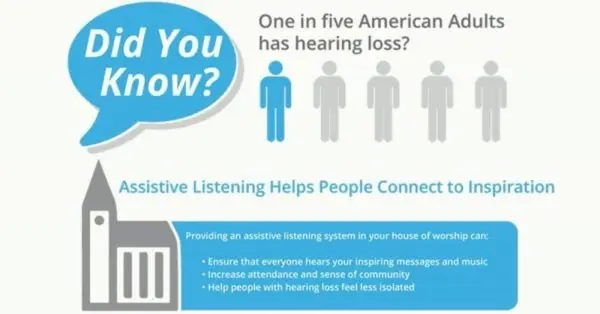
The integration of an Assistive Listening System (ALS) is no longer merely a regulatory checkbox or an optional amenity; it is a profound moral and operational imperative. When a house of worship fails to accommodate hard-of-hearing attendees, it inadvertently disenfranchises a significant segment of its community, cutting them off from fellowship, spiritual guidance, and emotional connection.
This comprehensive report, informed by industry best practices and operational insights from AV integration specialists like CCI Solutions and acoustic technology pioneers like Listen Technologies, provides an authoritative roadmap for faith communities seeking to deploy, manage, and optimize an assistive listening infrastructure. By moving through a strategic four-pillar framework—understanding congregation needs, evaluating technical options, preparing administrative and volunteer staff, and driving intentional community awareness—worship facilities can transform their acoustic environments into spaces of absolute inclusion.
Detailed Chronology: The Four-Step Implementation Framework
Successfully deploying an assistive listening ecosystem requires a methodical, step-by-step approach. Rushing the procurement of hardware without first evaluating audience demographics or neglecting staff training frequently leads to low device utilization and wasted capital expenditure. The following chronological framework outlines the lifecycle of a successful ALS integration project.
Phase 1: Understanding Congregation Needs Through Data Collection
The foundational error many facility managers and church boards make is purchasing audio equipment based on assumptions rather than empirical data. To select the appropriate technology—whether radio frequency (RF), infrared (IR), or audio induction loop systems—leadership must first map the actual auditory landscape of their congregation.
- Deploying the Congregational Survey: The most effective initial step is the distribution of a targeted survey. This questionnaire should be deliberately designed to capture quantitative and qualitative metrics regarding the worship experience.
- Key Data Points to Collect:
- Direct Experience: How would you rate your ability to understand the sermon and spoken elements during standard services?
- Medical Aids: Do you currently utilize hearing aids or cochlear implants?
- Hardware Specifications: If you wear hearing aids, are they equipped with telecoil (t-coil) technology? (This question is critical, as it dictates the viability of hearing loop installations).
- Environmental Obstacles: Does background noise, reverberation, or distance from the stage present the greatest challenge to your comprehension?
By gathering this information, the pastoral and technical teams can transition from guessing what their members need to designing a system tailored precisely to the demographic realities of their congregation.
Phase 2: Evaluating Technical Options and Financial Architecture
Once the demographic data has been aggregated, the next phase involves translating these insights into hardware requirements and budget allocations. The market offers a wide array of assistive listening solutions, each with distinct advantages, infrastructure requirements, and cost implications.
- Cost Estimation and Budgeting: Estimating the financial commitment involves evaluating not just the transmitters and receivers, but also neck loops, charging stations, and signage. Faith communities should not navigate this alone; expert consultation can save thousands of dollars in misallocated resources. Organizations like CCI Solutions provide specialized evaluations and free consultations specifically tailored to help houses of worship align their audio accessibility goals with fiscal realities.
- Funding Mechanisms: Because ALS integration directly impacts community accessibility, many congregations successfully utilize targeted capital campaigns, special fundraising initiatives, or designated memorial gifts to offset implementation costs. Framing the purchase as an "inclusion campaign" often resonates deeply with donors who understand the personal pain of feeling disconnected during services.
Phase 3: Preparing for Success Through Operational Training
Procuring state-of-the-art hardware represents only half the battle. The long-term viability and utilization rate of an Assistive Listening System depend heavily on the human element: the staff, ushers, greeters, and volunteers who interface directly with the congregation.
- Appointing "Assisted Listening Ambassadors": Volunteers stationed at welcome desks and information counters must view themselves as active advocates for accessibility. They should not merely hand over a receiver; they must be trained to act as empathetic ambassadors.
- Protocol at the Distribution Desk: When a device is checked out to a congregant, the volunteer should take a moment to provide a brief, respectful demonstration of the unit’s functions, including volume control, power operation, and proper placement of earpieces or neck loops.
- Mitigating Friction with Quick-Reference Aids: To ensure consistency—especially when volunteers rotate on a weekly basis—facilities should maintain a laminated, easy-to-read sheet of Frequently Asked Questions (FAQs) directly at the distribution counter. This document should cover troubleshooting steps, battery replacement procedures, and sanitization protocols.
Phase 4: Creating Awareness and Driving Adoption
Even the most advanced assistive listening technology is useless if the congregation does not know it exists. Building an inclusive acoustic environment requires a robust, multi-channel communication strategy to normalize and promote the availability of the new devices.
- Signage and Environmental Cues: Clear, universally recognized international symbols for accessibility should be displayed prominently in the foyer, at entrances, and near the welcome desk. These signs should not only indicate that devices are available but explicitly state where they can be obtained.
- Multi-Media and Print Integration: Weekly bulletins, digital slide presentations preceding the service, and social media channels should feature regular reminders about the accessibility program.
- Hosting Live Demonstrations: To remove the intimidation factor associated with new technology, consider hosting a dedicated live training session or orientation during a fellowship hour. This allows curious members to familiarize themselves with the receivers in a low-pressure environment.
- Community Outreach: Do not limit promotion to existing members. Advertising accessibility initiatives to the broader surrounding community can be a powerful evangelistic tool. Many individuals with hearing loss have stopped attending traditional worship services entirely because they expect acoustic frustration. When they learn that a facility has invested in their ability to hear, they are far more likely to visit or return.
Supporting Context and Metrics: The Hidden Epidemic of Hearing Loss
To fully appreciate the urgency of deploying Assistive Listening Systems, one must examine the socio-demographic data surrounding auditory impairments, particularly within aging populations that form the core demographic of many traditional and contemporary churches.
Statistical Prevalence
According to data from the World Health Organization (WHO) and the U.S. Centers for Disease Control and Prevention (CDC):
- Approximately 15% of American adults (37.5 million) report some trouble hearing.
- The prevalence of hearing loss increases dramatically with age: roughly 25% of those aged 65 to 74 experience disabling hearing loss, a figure that jumps to 50% for those aged 75 and older.
Given that houses of worship traditionally attract an older demographic, the statistical likelihood that a significant percentage of any given congregation is struggling to comprehend spoken dialogue is exceptionally high.
The Psycho-Acoustic Challenge of Sanctuaries
Architecturally, houses of worship present unique acoustic nightmares. Traditional sanctuaries are intentionally designed with high ceilings, hard reflective surfaces (such as stone, plaster, and stained glass), and expansive volumes to maximize the natural reverberation of pipe organs and choral arrangements. While this acoustic profile enhances musical resonance, it severely degrades speech intelligibility.
When sound bounces off multiple hard surfaces, reflections arrive at the human ear at different micro-intervals, blurring consonants and turning spoken words into an unintelligible acoustic soup. For a person with normal hearing, the brain can often filter out this competing reverberation; for an individual with sensorineural hearing loss, processing this environment is exhausting and frequently impossible.

- The Signal-to-Noise Ratio (SNR): In a typical sanctuary, background HVAC noise, shuffling feet, whispering, and natural room reverberation create a poor Signal-to-Noise Ratio. Assistive Listening Systems bypass ambient room acoustics entirely by capturing the audio feed directly from the soundboard (via microphones or direct injection) and transmitting it straight to the listener’s ear, effectively guaranteeing an optimal SNR of 1:1.
Official Industry Perspectives and Guidelines
Industry leaders and standardization bodies emphasize that accessibility is a legal, ethical, and operational baseline. Organizations like Listen Technologies have long championed the philosophy that hearing assistance technology is fundamental to human connection.
The Legal Framework: ADA Compliance
In the United States, the Americans with Disabilities Act (ADA) sets clear mandates regarding auxiliary aids and services in places of public accommodation, which explicitly includes houses of worship (though specific exemptions historically applied, modern interpretations and standard building codes strongly enforce integration for new construction and major renovations).
- Receiver Capacities: ADA guidelines dictate the minimum number of receivers a facility must provide based on its total fixed seating capacity. For instance, facilities with a capacity of 50 to 500 seats are generally required to provide receivers for at least 4% of the total capacity, with a mandatory minimum number of devices.
- Compatibility: Regulations increasingly mandate that a percentage of these receivers must be hearing-aid compatible, typically through the inclusion of neck loops that transmit magnetic signals directly to hearing aids equipped with telecoils (t-coils).
Expert Insights on Compassion-Driven Design
Audio engineers and accessibility consultants frequently point out that the implementation of an ALS shifts the atmosphere of a church from passive observation to active participation.
"Reaching out to those who feel disconnected from your community due to hearing loss is central to sharing the message of inclusion. Genuinely compassionate service involves being aware of and caring for the needs of everyone, especially those dealing with impairments. Make sure they are able to hear the beauty and emotion of the spoken word in your church by providing them with the equipment they need to stay connected."
— Industry Consensus Statement, Listen Technologies Architectural Guide
When leaders view audio accessibility through the lens of pastoral care rather than compliance, the entire culture of the institution shifts. It signals to marginalized members that their presence is valued, their struggles are recognized, and their ability to engage with the divine is uncompromised.
Future Outlook: The Next Generation of Acoustic Inclusion
As audio technology continues to evolve at a rapid pace, the future of Assistive Listening Systems in houses of worship points toward hyper-personalization, wireless integration, and the convergence of assistive tech with personal consumer electronics.
1. Auracast™ Broadcast Audio and Bluetooth Low Energy (LE) Audio
One of the most significant paradigm shifts on the horizon is the widespread adoption of Bluetooth LE Audio and Auracast™ broadcast audio technology. Historically, churches had to purchase and maintain dedicated proprietary receivers (RF or IR units) that congregants had to check out at a desk.
With Auracast, a sanctuary transmitter can broadcast high-quality audio directly to multiple personal audio devices simultaneously—including modern hearing aids, cochlear implants, and wireless earbuds—that are already owned by the congregant. This eliminates the stigma and logistical friction of checking out specialized hardware at a welcome desk. Attendees will simply open the settings on their smartphone or hearing aid, select the church’s broadcast channel, and stream the service directly to their ears with zero latency.
2. Artificial Intelligence and Dynamic Beamforming
Future acoustic systems will increasingly leverage AI-driven digital signal processing (DSP) to dynamically isolate voices from background noise in real time. As ambient noise profiles change within a sanctuary (e.g., children shifting in pews, HVAC systems cycling on), AI-managed mixing algorithms will automatically adjust the clarity and EQ of the direct feed sent to assistive listening transmitters, ensuring pristine speech comprehension regardless of the acoustic anomalies of the room.
3. Holistic Accessibility Integration
The future of worship design views accessibility not as siloed departments (e.g., wheelchair ramps handled by civil engineers, audio loops handled by AV techs), but as a unified, holistic discipline. Sign language interpreters, closed-captioning displays synchronized with sermon slides, tactile paving, and advanced assistive listening networks will be designed concurrently from the ground up during architectural conception.
Conclusion and Actionable Next Steps
The spoken word lies at the heart of congregational life. Whether it is the reading of scripture, the delivery of a pastoral sermon, or the shared recitation of communal prayers, these moments of auditory communication build the spiritual fabric of a faith community. Leaving hard-of-hearing members stranded in an ocean of acoustic reverberation is a systemic failure of environment, not of desire.
By following a structured implementation path—understanding needs via targeted surveys, evaluating options with professional guidance, preparing staff to act as compassionate ambassadors, and creating awareness through robust marketing—any house of worship can overcome the physical barriers of hearing loss.
For facility managers, AV directors, and pastoral boards ready to take the next step, comprehensive resources are readily available. To secure detailed toolkits, sample congregation surveys, standardized signage files, and promotional announcements, download the Listen Technologies Church Assistive Listening Toolkit.
Evaluate your sanctuary today, consult with integration specialists to assess your specific architectural and budgetary needs, and ensure that every voice in your community is heard in all its beauty and emotion.