
Executive Overview
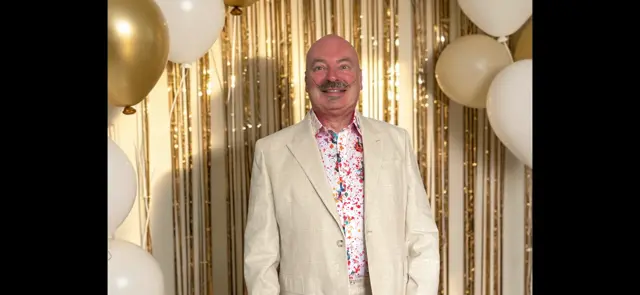
In the fast-paced, ever-shifting landscape of digital media, few cultural institutions manage to outlast the technological shifts, economic pressures, and platform migrations that define the modern internet. Yet, for over three decades, Classical Source has remained a vital digital harbor for classical music and dance criticism in the United Kingdom. At the beating heart of this pioneering enterprise stands Chris Caspell, who recently celebrated his landmark 60th birthday.
As Managing Director, technical architect, and unwavering financial and operational anchor, Caspell has quietly steered the publication through the rise of the dot-com era, the dawn of social media, and the unprecedented challenges of the post-pandemic digital economy. To mark his diamond milestone, colleagues, reviewers, and veteran arts journalists have rallied together to honor a man who is neither a career musician nor a traditional broadsheet editor, but rather an impassioned cultural entrepreneur. Caspell’s vision helped democratize music criticism, offering a generous, un-paywalled space where writers enjoyed absolute editorial freedom and comprehensive coverage.
This retrospective examines Caspell’s profound impact on British music journalism, tracing the history of Classical Source, celebrating its community of contributors, and looking toward the platform’s anticipated rebirth and future evolution.
Detailed Chronology: From Dot-Com Optimism to Digital Stewardship
The Genesis of Classical Source (The Mid-1990s to 1999)
Thirty-odd years ago, long before online arts journalism became the industry standard, Chris Caspell and two fellow visionaries conceived the foundational idea for what would become Classical Source. The media landscape of the mid-to-late 1990s was undergoing a seismic shift. Print magazines were experiencing a slow, sobering decline, while early electronic zines began flickering to life across nascent dial-up networks.
By 1999—coinciding precisely with what Caspell has fondly described as "the height of the dot-com boom, the year Napster appeared, BlackBerrys were everywhere, and the internet felt full of possibility"—Classical Source officially launched. It entered a sparse digital ecosystem. Alongside Len Mullinger’s MusicWeb International (founded in 1995) and Basil Ramsey and Keith Bramich’s Music & Vision (1999), Classical Source independently spearheaded the digital classical music movement in the UK. Major contemporary fixtures like Bachtrack (2008) and The Arts Desk (2009) would not emerge until a decade later.
In those early days, digital publishing was met with widespread skepticism by the traditional arts establishment. Industry gatekeepers frequently asked whether online platforms could ever be taken seriously, or if they were merely transient novelties incapable of replacing established print practices. Caspell answered with a resounding, prophetic "yes." He understood that the internet offered a boundless canvas, free from the physical constraints of column inches and printing press pagination.
The Golden Age of Unrestricted Criticism
During its peak years, Classical Source achieved something remarkable: it resurrected the comprehensive, deep-dive critical environment of post-war daily newspapers. In an era when major broadsheet newspapers were drastically slashing their arts coverage—reducing reviews to quick soundbites and forcing critics to prioritize brevity over nuance—Classical Source went entirely the other way.
The site provided a welcome antidote to the modern editorial blue pencil. Writers—ranging from seasoned professionals to enthusiastic lay critics—were given a wide berth. Length was never an issue, and there were no arbitrary caps on the number of concerts or compact discs an author could review. Suddenly, newcomers making their debut at the Wigmore Hall received the same meticulous, high-level critical attention historically reserved for legendary maestros like Arthur Rubinstein or Herbert von Karajan leading the Berlin Philharmonic at the Royal Festival Hall.
This bold, expansive editorial stance captured the imagination of the classical music industry. Promoters, artist management agencies, major London orchestras, and the BBC Proms eagerly lent their support, recognizing the site as an indispensable platform for cultural discourse.
The Storms, Setbacks, and Resilience
Running a fiercely independent, un-paywalled digital publication without corporate arts funding or institutional backing is an uphill battle. Over the decades, Caspell faced numerous obstacles—what long-time contributor Colin Anderson aptly terms "some googlies along the way."
The physical and emotional toll of sustaining the site became increasingly heavy. The passing of key team members, such as Kevin Rogers—a chemistry teacher at the City of London School for Boys who joined Classical Source as its media-savvy Deputy Editor in 2007—dealt profound blows to the editorial collective.
By February of last year, the pressures of a shifting media landscape appeared to catch up with the publication. The news that Classical Source might permanently disband came as a shock to the classical music community. At its height, the site routinely hosted up to three fresh reviews daily, boasted an active following of 18,000 on Twitter (now X), and recorded tens of thousands of monthly page views with a remarkably high retention rate of returning visitors. Yet, as Caspell candidly noted at the time, changing reading habits had inevitably reduced monthly traffic, threatening to let the site slowly fade away.
Rather than accepting an unceremonious quiet exit, the classical community pushed back. By April, an overwhelming wave of support from reviewers, friends, and readers catalyzed new plans to preserve the site’s rich historical archive and orchestrate a sustainable relaunch.
Supporting Context & Metrics: An Unrivaled Archive
To understand the cultural weight of Classical Source, one must examine its footprint as a living historical repository. For over a quarter of a century, the site quietly amassed one of the most comprehensive archives of London concert life in existence.
Traffic and Engagement Highs
While digital metrics fluctuate, the figures achieved by Classical Source during its zenith underscore its deep penetration into the global classical music community. In March 2017, internal tracking reported 59,492 page views, with an exceptionally loyal readership base demonstrating that 46.3% were returning visitors. These numbers reflect a dedicated audience of musicians, researchers, students, and passionate concertgoers who relied on the platform as their daily guide to the musical world.
A Sanctuary for Writers
Under the editorial stewardship of seasoned music critic Colin Anderson—who later launched his companion platform Colin’s Column in 2020—the site cultivated an environment of mentorship and artistic freedom. Writers who joined the fold in later years, such as broadcaster and critic Ateş Orga (who came on board in October 2015), frequently noted how the publication’s non-invasive, supportive editorial ethos offered a refreshing alternative to the high-pressure, commercialized media environment of modern broadcasting and print journalism.
Through every crisis—including the unprecedented operational challenges of the COVID-19 pandemic—Chris Caspell remained the steady, hands-on pillar holding the architecture together. Whether troubleshooting technical code behind the scenes or managing the platform’s financial survival, Caspell proved that technical acumen and a profound love for the arts could successfully intersect.
Official Statements and Tributes
As Chris Caspell reached his 60th birthday, members of the Classical Source family shared heartfelt tributes reflecting on his character, leadership, and enduring impact on the classical music ecosystem.
Rob Pennock:
"Congratulations to Chris on his 60th birthday. His personal and financial support of Classical Source has ensured that it has made a substantial contribution to the world of classical music and dance. I look forward to working with him over the coming years as the site develops and further improves the service it offers to the world’s classical music community."David Rice:
"Chris, I send my warmest wishes to you on your sixtieth birthday. Your tireless efforts to maintain and sustain The Classical Source over the years are deeply appreciated, as is the guidance you have provided to me on numerous occasions. Happy Birthday!"David Gutman:
"Wishing you a fabulous significant birthday. We may be living through an age of uncertainty in so many ways but now is not the time to underestimate the achievements, nor the joy and support you have given to others over the years. Take care and all the very best."Lisa Stone-Ford:
"Happy Birthday! Wishing you a truly wonderful day and every happiness in the year ahead. Your passion and commitment to sharing classical music with so many people is inspiring, and I hope this year brings you continued success, good health, and many reasons to celebrate. Have a fantastic birthday!"Curtis Rogers:
"Very best wishes on your milestone, and for taking Classical Source through to its next phase."Nick Breckenfield:
"Happy 60th Chris! I can well remember meeting you with Colin at the launch, and look back in amazement at the coverage Classical Source has amassed. What an archive of particularly London concert life. Thank you for your enthusiasm and your commitment. Long may it continue!"Ateş Orga:
"Once you marry music, she is your forever lasting love ~ Piazzolla ~ … Critics lead many lives. Chris isn’t a music professional, but a committed influencer in Britain’s musical arena post 9/11… Pragmatic and focussed, may he remain a guiding star. Happy Sixtieth Chris."Colin Anderson:
"Chris Caspell, 60 not out. Away from taxing matters, music is an important part of his life — as a viola-player, conductor, and entrepreneur. He also sings, mostly in church choirs, and, like Fred Astaire, can dance a little and when his unmissable moustache twirls a Tango with distinction… Thank-you Chris for remaining at the wicket, despite some googlies along the way, and a very happy birthday to you."
Future Outlook: The Next Phase of Classical Source
As Chris Caspell steps into his sixtieth decade, the narrative surrounding Classical Source has shifted gracefully from one of quiet retirement to energetic renewal.
Away from his digital entrepreneurship, Caspell’s life remains deeply intertwined with active music-making. A talented viola-player, conductor, choral singer, and accomplished dancer known for his distinctive moustache and tango prowess, he lives and breathes the art forms he champions. This hands-on artistic sensibility has always informed his approach to publishing: he approaches classical music not as an abstract commercial commodity, but as a living, breathing communal experience.
The collective outpouring of affection and professional solidarity witnessed during his diamond birthday serves as clear evidence that Classical Source is far more than an internet archive—it is a community. With concrete plans underway to secure its legacy, modernize its infrastructure, and usher the platform into its next operational phase, the site stands poised to inspire a new generation of music lovers.
In an age dominated by algorithmic curation, ephemeral social media feeds, and the relentless commodification of culture, Chris Caspell’s steadfast dedication stands as a beacon of integrity. As he continues to bat for the site’s cause, the classical music world extends its deepest gratitude: Happy 60th Birthday, Chris, and long may you remain at the wicket.