
Executive Overview
The modern musical landscape is continuously shaped by artists who traverse boundaries, synthesizing historical jazz traditions with global influences, large-scale orchestral arrangements, and innovative chamber aesthetics. This analytical review examines three remarkable recent contributions to the contemporary global music catalogue: veteran British trumpeter Henry Lowther’s orchestral masterwork Primetime with the London Jazz Orchestra; the telepathic duo collaboration between Danish harmonica virtuoso Mathias Heise and guitarist Pelle von Bülow on Repertoire; and the impassioned La Cocina De Tango by the Alex Roitman Tango Ensemble, which bridges the expressive improvisational frameworks of nuevo tango and jazz sensibilities.
Together, these releases represent a diverse cross-section of current creative music. They illustrate how mastery of historical idiom can coexist with fearless reinvention. From the sprawling, cinematic brass textures of a twenty-piece London ensemble to the intimate, breath-and-string dialogues of a Copenhagen studio, and onward to the evocative, bandoneon-driven pulse of New England-based nuevo tango, these albums offer deep insights into the current state of improvised and arranged music. This feature provides a comprehensive examination of each release, exploring their production histories, stylistic lineages, and enduring artistic value.
Detailed Chronology & Production Histories
Henry Lowther and the London Jazz Orchestra: Primetime
The lineage of British jazz is inextricably linked to the career of trumpeter and flugelhornist Henry Lowther. Born into an era of seismic musical shifts, Lowther’s journey through the upper echelons of British and international music is legendary. Yet, despite a prolific career that began in the late 1960s—marked by foundational work with John Mayall’s Bluesbreakers, Keef Hartley (including an iconic performance at the 1969 Woodstock Festival), Manfred Mann, Mike Westbrook, and John Dankworth—Lowther has selectively recorded under his own name. Following his 1970 solo debut, Child Song, decades elapsed where his primary output was channeled through collaborative masterworks, big bands, and experimental ensembles.
For the past thirty years, Lowther has been an indispensable pillar of the London Jazz Orchestra (LJO). His familiarity with the macro-dynamics of large ensembles spans decades, encompassing stints in the big bands of Gil Evans, George Russell, Stan Tracey, Barry Guy, and the London Jazz Composers Orchestra. In his youth, Lowther famously deputized at a moment’s notice for Jimmy Deuchar in the Tubby Hayes Big Band.
Recorded in London in July 2022 under the direction of Scott Stroman and released on Analogue/October Records, Primetime serves as the definitive orchestral statement of Lowther’s career. The double-vinyl release showcases an expansive twenty-piece line-up featuring elite UK jazz figures across brass, woodwinds, and rhythm sections. The title track, Primetime, exhibits Lowther’s lifelong fascination with numerology, opening with a crisp, driving drum lead from Paul Clarvis before unfolding into a masterclass in dynamic restraint. Rather than utilizing the orchestra for relentless volume, Lowther constructs a lush, intricate sonic architecture, deploying the ensemble economically to elevate individual soloists without ever overwhelming them.
Throughout the album, tracks like Jadran, Emona, Lights, and Frothing River highlight a compositional maturity reminiscent of Oliver Nelson. The orchestration pivots gracefully from evocative, impressionistic atmospheres to explosive climaxes, such as the blistering trumpet work of Miguel Gorodi near the conclusion of Emona. Meanwhile, pieces like Lights (originally titled Lights Of The North Circular) trace a cinematic, solitary walk through nocturnal urban landscapes, featuring the lyrical pensive interplay of pianist Alcyona Mick and Lowther himself. Rounded out by intricate contributions from woodwind specialists Tori Freestone, Martin Speake, and Mick Foster, Primetime stands as a cohesive, melodically rich triumph of British orchestral jazz.
Mathias Heise & Pelle von Bülow: Repertoire
Shifting from the sprawling orchestral canvas of London to the refined chamber intimacy of Copenhagen, the collaborative partnership between chromatic harmonica player Mathias Heise and guitarist Pelle von Bülow represents a compelling generational synergy. Recorded in December 2025 and released via Storyville Records, Repertoire captures two of Denmark’s most formidable modern jazz instrumentalists at the height of their creative powers.
While promotional materials occasionally frame younger Scandinavian artists as sudden arrivals, Heise and von Bülow are seasoned veterans of the Copenhagen jazz circuit. Heise, a multi-award-winning instrumentalist, has long championed the chromatic harmonica, utilizing its extended mechanical range and nimble slide mechanism to achieve an unprecedented velocity and harmonic fluency typically reserved for saxophonists or pianists.
Pelle von Bülow inherits a formidable jazz pedigree. Hailing from a prominent musical dynasty—his grandfather was a professional guitarist and his mother an accomplished saxophonist who shared stages with modal and bebop legends Lee Konitz and Horace Parlan—von Bülow approaches the fretboard with exceptional poise, technical command, and stylistic adaptability.
The genesis of Repertoire lay in the duo’s shared desire to curate a cross-genre setlist honoring foundational composers while injecting fresh improvisational vigor. Rather than relying on standard jazz songbooks, Heise and von Bülow cast a wide net. They navigate Stevie Wonder’s Overjoyed, Joe Sample’s One Day I’ll Fly Away, and Keith Jarrett’s So Tender (from his legendary Standards era) with telepathic rapport. The arrangements balance reciprocal roles; the harmonica and guitar seamlessly alternate between leading melodic voices and sophisticated chordal accompaniment.
The album also ventures into more esoteric territory, exploring Sam Rivers’ intricate Beatrice (from Fuchsia Swing Song), Pat Metheny’s soaring Always & Forever (originally recorded with harmonica pioneer Toots Thielemans on the 1992 Secret Story album), and a radical, expansive reworking of Rod Temperton’s Rock With You (famously recorded by Michael Jackson). Fittingly, the album concludes with Thielemans’ iconic Bluesette, serving as both a respectful nod to the instrument’s forebear and a triumphant validation of Heise and von Bülow’s modern vision.
Alex Roitman Tango Ensemble: La Cocina De Tango
Bridging the worlds of improvised chamber music and South American folk traditions, the Alex Roitman Tango Ensemble’s La Cocina De Tango—recorded in Vermont in August 2025 on the ARTE-FL imprint—challenges conventional genre boundaries. While ballroom tango often evokes rigid steps and predictable choreography, the Argentine tango tradition shares profound structural and philosophical DNA with jazz: elastic tempos, spontaneous dynamic shifts, deep emotional pathos, and sophisticated improvisational counterpoint.
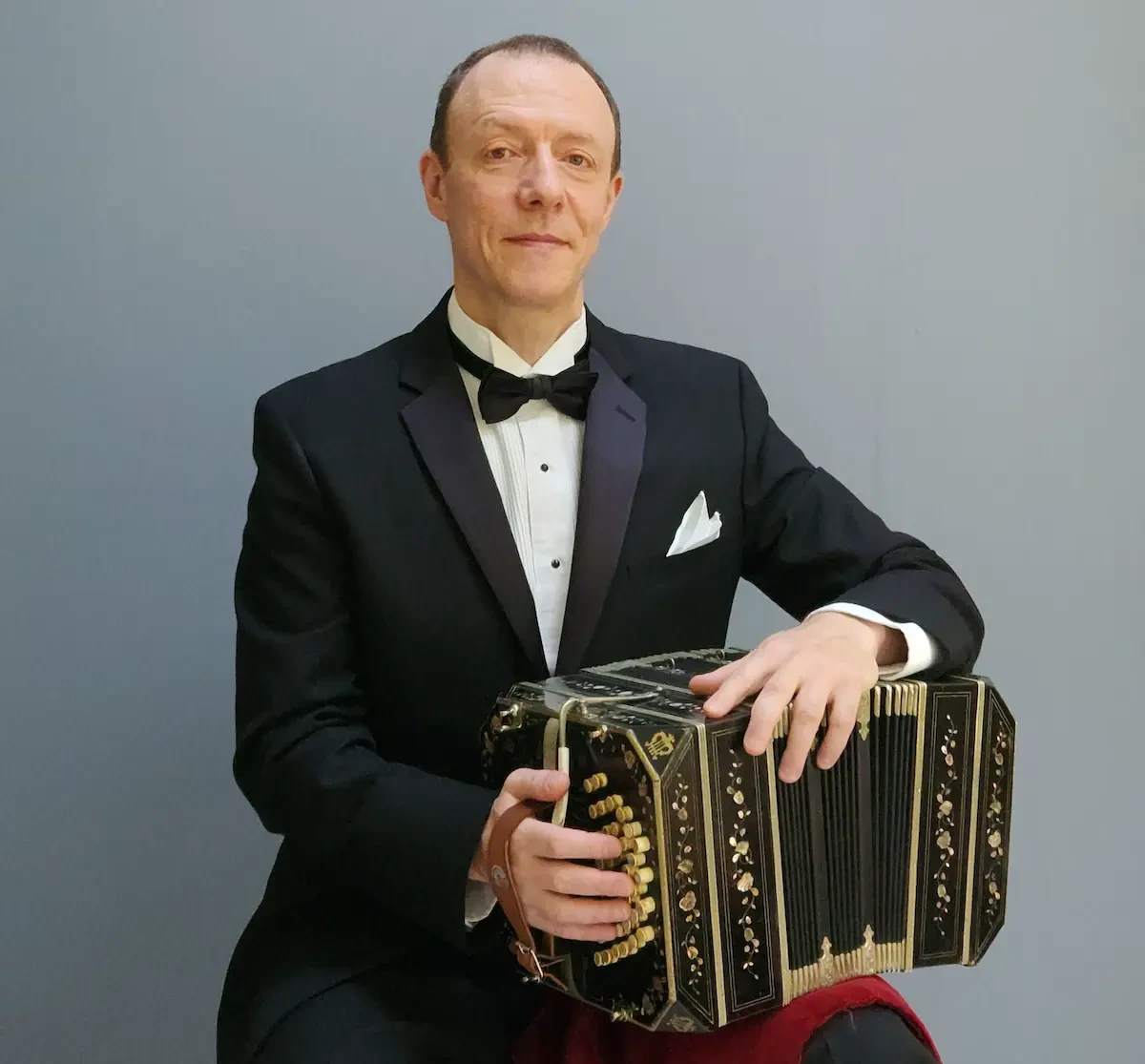
Led by bandoneonist Alex Roitman, the ensemble embraces the nuevo tango ethos pioneered by Astor Piazzolla, blending traditional idioms with contemporary chamber jazz sensibilities. Roitman’s program juxtaposes original compositions with freshly arranged historical masterworks, including pieces by Piazzolla (Chau, Paris and Marrón Y Azul) and foundational figures of the golden era, the De Caro family. Julio De Caro’s pioneering 1920s and 30s ensembles famously utilized the Stroh violin—a mechanical novelty fitted with a metal horn to project acoustic sound over early radio broadcasts.
Violinist Nayiri Piloyan channels this historic instrumental legacy, employing striking pizzicato and expressive bowing techniques to weave through textures with precision. On tracks like Gigoló and Chau, Paris, Piloyan executes calculated interventions, ensuring every melodic embellishment maximizes emotional resonance.
At the structural and rhythmic core of the ensemble is pianist Mayu Funaba, whose jaunty, cascading voicings steer pieces like the multi-faceted Lágrimas De Arrabal, supported by the steady, resonant pulse of bassist Carlos Maldonado Cisneros. Roitman’s bandoneon commands the sonic foreground, driving the music’s abrupt emotional pivots, romantic yearning, and turbulent outbursts. La Cocina De Tango is an intoxicating release that demonstrates how deep respect for regional tradition can yield universally resonant, improvisational art.
Supporting Context & Metrics
To fully appreciate the scope of these releases, it is instructive to examine the instrumental configurations, recording environments, and stylistic frameworks that define each project:
| Album Title | Primary Artist(s) | Key Instrumentation | Geographic Origin | Release Year | Primary Label |
|---|---|---|---|---|---|
| Primetime | Henry Lowther & London Jazz Orchestra | Trumpet, Saxophones, Woodwinds, Brass, Rhythm | London, UK | 2022 | Analogue/October Records |
| Repertoire | Mathias Heise & Pelle von Bülow | Chromatic Harmonica, Acoustic/Electric Guitar | Copenhagen, Denmark | 2025 | Storyville Records |
| La Cocina De Tango | Alex Roitman Tango Ensemble | Bandoneon, Violin, Piano, Double Bass | Vermont, USA | 2025 | ARTE-FL Records |
Acoustic and Structural Metrics
- Orchestral Density vs. Chamber Intimacy: Lowther’s Primetime utilizes a 20-piece ensemble to generate massive dynamic contrast, shifting from quiet, suspended background textures to thunderous, full-ensemble climaxes across extended track lengths averaging 18 to 22 minutes per piece. Conversely, Heise and von Bülow operate within a micro-dynamic framework, relying on breath control, finger-picking nuance, and microscopic timing adjustments across a concise 45-minute program. Roitman’s ensemble occupies a vital middle ground, leveraging the piercing acoustic projection of the bandoneon and Stroh-inspired violin techniques to command a compact, punchy 32-minute runtime.
- Harmonic Vocabulary: All three releases reject strict diatonic predictability. Lowther employs sophisticated orchestral voicings reminiscent of Oliver Nelson and Gil Evans; Heise and von Bülow incorporate post-bop harmonic extensions, modal jazz structures, and R&B reharmonizations; and Roitman utilizes the rich, chromatic dissonance characteristic of nuevo tango.
Official Statements & Critical Analysis
The Orchestral Vision of Henry Lowther
Reflecting on his decades-spanning career and the creation of Primetime, Henry Lowther’s approach to composition centers on structural economy. In contemporaneous liner notes and interviews surrounding the release, collaborators have emphasized Lowther’s refusal to over-arrange.
"Lowther’s strategy appears to be one of constructing a rich backcloth of sound, but using it economically as each soloist is featured. None of the solos are overdone, as they match the quiet authority of composition and arrangement."
This philosophy prevents the 20-piece London Jazz Orchestra from collapsing under its own weight. By leaving vast architectural spaces within the charts, Lowther allows soloists like pianist Alcyona Mick, trumpeter Miguel Gorodi, and saxophonist Tori Freestone to operate with chamber-like freedom inside a massive big-band chassis.
The Intergenerational Rapport of Heise and von Bülow
The dialogue between Mathias Heise and Pelle von Bülow has been widely praised by European critics for its telepathic precision. Speaking on the integration of disparate source material—ranging from Stevie Wonder to Sam Rivers—the duo noted that the primary objective was emotional permeability rather than genre curation.
Musicologists reviewing Repertoire have highlighted Heise’s mastery of the chromatic harmonica as a watershed moment for the instrument in modern jazz:
"Heise has won a number of awards over the years, using a chromatic harmonica which widens his range and gives greater control. This is noticeable in his technique and the speed and fluency of his delivery."
Combined with von Bülow’s stylistic composure—honed through his lineage of working alongside modal jazz royalty—the duo successfully elevates the harmonica from a peripheral novelty to a frontline solo instrument of profound expressive depth.
The Transcultural Synthesis of Alex Roitman
Alex Roitman’s exploration of nuevo tango addresses a historic oversight in mainstream jazz criticism: the structural kinship between Argentine tango and improvised jazz. Roitman’s integration of historical De Caro aesthetics with Piazzolla-esque dissonance has positioned his Vermont-based ensemble as a vital voice in contemporary chamber music.
As critical assessments of La Cocina De Tango note:
"Although some might baulk at including tango amongst the reviews here, there are clear links between the music, especially in Argentine tango… with its improvisational lines, sudden changes in dynamics and mood shifts. These are all integral parts in interpretation whilst performing the actual dance itself."
Future Outlook
As the global music industry continues to fragment and decentralize across streaming platforms and boutique physical releases, the ongoing vitality of independent jazz, improvised music, and cross-genre chamber works remains robust. The three albums examined herein point toward distinct trajectories for the future of creative music:
- The Longevity of Veteran Craftsmanship: Henry Lowther’s Primetime proves that generational experience within large-scale jazz orchestras yields masterworks of supreme authority. As veteran jazz musicians continue to document their definitive statements on vinyl and high-resolution digital formats, archival appreciation for European big-band traditions will likely deepen, inspiring younger arrangers to embrace expansive, cinematic orchestration.
- The Expansion of Unconventional Instrumentation: The critical and commercial reception of Mathias Heise and Pelle von Bülow’s Repertoire highlights a growing appetite for minimalist, timbre-focused instrumentation. By pushing the chromatic harmonica and acoustic guitar into complex post-bop and contemporary soul territories, artists are dismantling historical genre hierarchies, proving that expressive depth supersedes traditional instrumentation.
- The Globalization of Chamber Improvisation: Alex Roitman’s success with La Cocina De Tango signals a bright future for transcultural musical synthesis. By treating Argentine tango not as a static folk artifact but as a dynamic, improvisational vehicle akin to modern jazz, ensembles are opening new avenues for cross-pollination between South American folk traditions and North American/European improvised idioms.
Ultimately, whether through the thundering brass of a London big band, the breathless intimacy of a Copenhagen guitar-and-harmonica duet, or the passionate pulse of a New England tango ensemble, these releases confirm that contemporary improvised music is thriving, resilient, and endlessly inventive.