
Executive Overview
Jazz criticism has long served as the intellectual battleground where stylistic orthodoxies are tested, challenged, and sometimes aggressively defended. Rarely, however, does a single review capture the profound cultural and aesthetic friction of an era quite like Mike Shera’s September 1966 critique in Jazz Journal. Reviewing a trans-Atlantic collaboration featuring the visionary American reedist Prince Lasha alongside an elite cadre of British modernists, Shera did not merely pan the headliner; he launched a blistering critique that questioned the very boundaries of competence, avant-garde license, and trans-Atlantic musical translation.
Sixty years after Shera declared that Prince Lasha’s scant and erratic solo work would cause him to be "laughed off the stand of any self-respecting British jazz club," this historical artifact demands a rigorous re-examination. At its core, the 1966 session represents a fascinating collision of jazz paradigms: the burgeoning, exploratory post-bop and free-jazz impulses championed by Lasha—closely linked to the legacy of multi-instrumentalist Eric Dolphy—clashed directly with the sophisticated, hard-bop-grounded craftsmanship of the British rhythm section and horn players.
This retrospective analysis explores the anatomy of Shera’s review, contextualizes the recording session within the broader landscape of 1960s modern jazz, examines the contributions of the exceptional British sidemen who salvaged the date, and evaluates how historical distance alters our perception of musical radicalism. By dissecting the original critique through an investigative and authoritative journalistic lens, we uncover a pivotal moment when the old guard of jazz journalism confronted the chaotic, unmapped territories of the avant-garde.
Detailed Chronology
The Trans-Atlantic Convergence of 1966
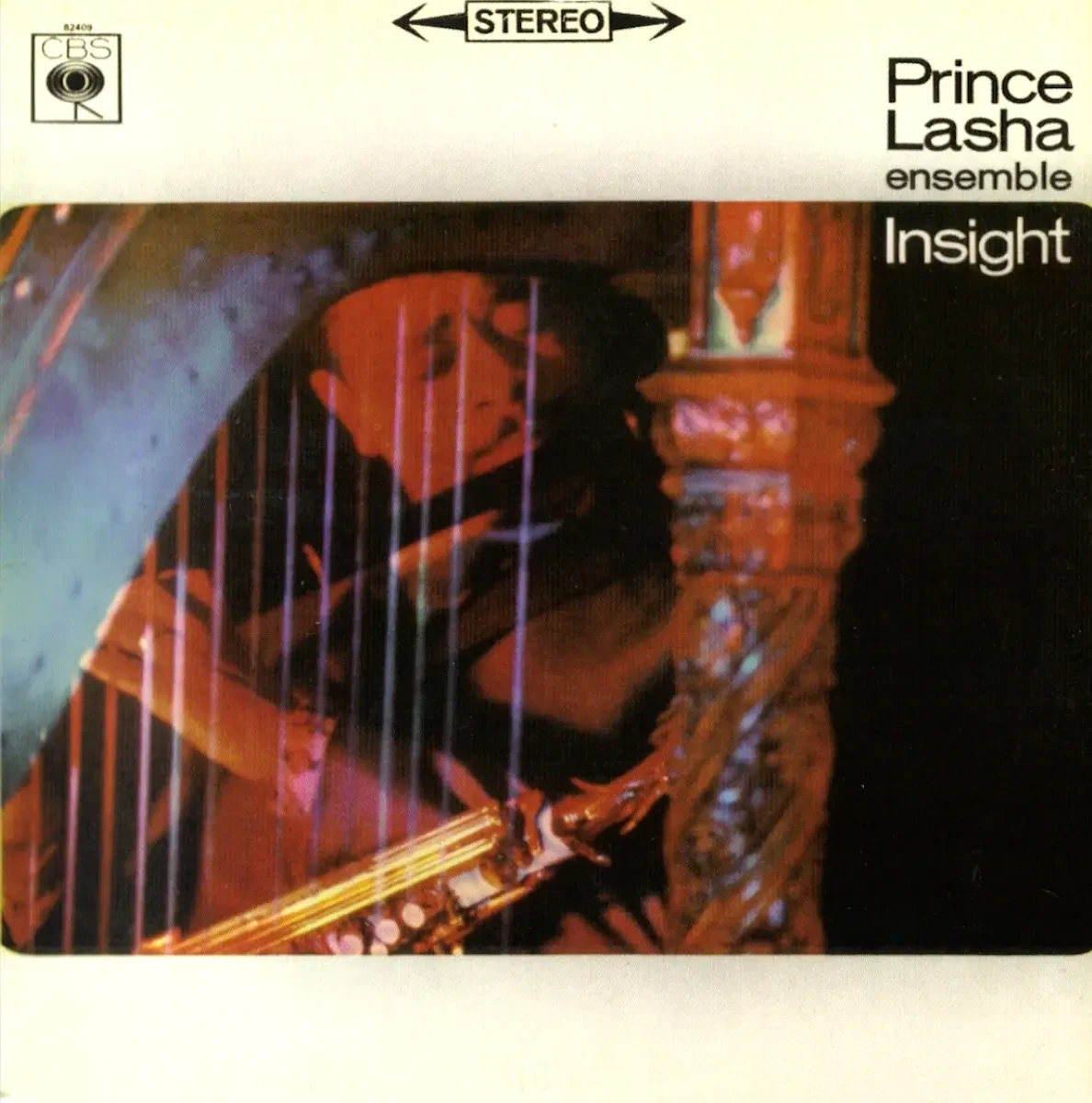
The genesis of the recording in question—released on CBS (BPG 62409)—lies in the fluid international mobility of jazz musicians during the mid-1960s. Prince Lasha, an alto saxophonist and flutist whose aesthetic was forged in the fiery creative hubs of the United States and heavily intertwined with the pathbreaking work of Eric Dolphy, found himself in England. The British jazz scene of 1966 was a vibrant, highly capable ecosystem. While London clubs frequently hosted visiting American virtuosos, local musicians had developed a sophisticated, idiomatic mastery of bop and hard bop, characterized by harmonic intelligence, technical precision, and a deep respect for swing.
When Lasha entered the British studio, the production was envisioned as a showcase for the American modernist. Yet, the resulting sessions—spread across configurations featuring stellar local talent such as trumpeter Chris Bateson, trombonist John Mumford, pianists Stan Tracey and Mike Carr, a formidable battery of bassists including Rick Laird, Dave Willis, Jeff Clyne, and Bruce Cale, drummer Joe Oliver, and even harpist David Snell—revealed deep fissures in musical vision.
The Anatomy of the Critique: September 1966
Mike Shera’s review, published in the September 1966 edition of Jazz Journal, wasted no time in dismantling the hallowed marketing language typically found in album liner notes. Lasha’s assertion that "From the beginning, everybody played extremely beautiful — right up to the top standard" was immediately met with critical skepticism by Shera, who argued that "everybody" conspicuously excluded the nominal leader.
Shera’s chronological track-by-track breakdown exposed what he perceived as a fundamental inability on Lasha’s part to handle conventional jazz forms:
- On Nuttin’ Out Jones: Shera observed that Lasha was entirely "incapable of sustaining any kind of idea," characterizing the phrases as disjointed, short, and structurally vacant.
- On Just Friends: The critic painted a picture of a musician struggling for survival, "making constant references to the original melody, clutching straws in the wind."
- On Out Of Nowhere: Lasha avoided soloing altogether, bypassing the challenge of improvisation on a standard.
- On Body And Soul: His contribution was minimized to a brief, obligatory theme statement at both the opening and the conclusion of the performance.
Rather than dismissing the entire record, however, Shera directed his praise toward the British ensemble. He highlighted the contributions of trombonist John Mumford and trumpeter Chris Bateson, the latter of whom delivered what Shera described as a "gem of a solo" on Just Friends. Furthermore, pianist Mike Carr emerged from the session as a revelation, praised as a "fluent and swinging pianist who, on this showing, deserves an album of his own."
The review culminated in a provocative philosophical strike against the avant-garde. Questioning why Lasha chose to tackle so many standard tunes when his technical and conceptual approach seemed unsuited to them, Shera famously concluded that Lasha "would do much better sticking to avant-garde music. In his case, the latter is indeed the refuge of the untalented."
Supporting Context & Metrics
Personnel and Track Architecture
To fully appreciate the dynamic tension of the 1966 CBS session, one must examine the granular data of the recording configurations and track listings. The album’s structure reveals a deliberate attempt to blend standard repertoire with thematic homages to the avant-garde.
Complete Album Discography & Personnel Matrix
-
Track List:
- Nuttin’ Out Jones (Group A)
- Out Of Nowhere (Group A)
- Body And Soul (Group B — approx. 20 minutes total duration for initial segment)
- Impressions Of Eric Dolphy (Group B)
- Everything Happens To Me (Group C)
- Just Friends (Group C — approx. 21½ minutes total duration for concluding segment)
-
Lineup Configurations:
- Group (a): Chris Bateson (tpt); John Mumford (tbn); Prince Lasha (alt/flute); David Snell (hp); Stan Tracey (p); Rick Laird, Dave Willis (bs); Joe Oliver (d). Recorded in England, 1966.
- Group (b): Identical to Group (a), except that bassist Jeff Clyne replaces Rick Laird, and pianist Stan Tracey is omitted.
- Group (c): Identical to Group (a), except that pianist Mike Carr and bassist Bruce Cale replace Stan Tracey and Rick Laird, respectively.
-
Original Label & Cataloging: CBS BPG 62409 (Retailing at 32s. 2d. in period currency).
The Instrumentational Anomaly: The Harp in Modern Jazz
One of the more polarizing elements noted by contemporary critics and listeners alike was the inclusion of classical harpist David Snell across multiple tracks. The deployment of the harp in a modern jazz context was—and remains—a rare and precarious experiment. While jazz harp had been championed by artists like Alice Coltrane and Dorothy Ashby, integrating the instrument into a brass-heavy British rhythm section required a delicate compositional touch. Shera’s skepticism regarding Snell’s role—admitting he remained "unconvinced that this is a suitable instrument on which to play jazz solos"—underscores the conservative aesthetic boundaries enforced by traditional critics of the era, who viewed non-traditional timbres with inherent suspicion.
Official Statements and Contemporary Perspectives
The discourse surrounding Prince Lasha’s 1966 British outing cannot be viewed in a vacuum. It mirrors a broader ideological war waged within jazz criticism during the 1960s. As the genre fractured under the weight of free jazz, modal exploration, and avant-garde abstraction, critics found themselves cleaved into two distinct camps: the traditionalists, who demanded adherence to functional harmony, swing rhythm, and thematic development, and the progressives, who argued that emotional honesty, sonic textures, and structural subversion superseded traditional metrics of "competence."
Prince Lasha’s own statements in the original liner notes—asserting the collective beauty and high standard of the music—stand in sharp, irreconcilable contrast to Shera’s analytical dissection. Lasha viewed his music through the lens of spontaneous expression and lineage, explicitly invoking the spirit of Eric Dolphy. For Lasha, the fragmented phrase, the microtonal bend, and the departure from standard chord changes were not technical failures, but deliberate artistic choices designed to shatter the constraints of conventional bop.
Conversely, Shera’s perspective reflected the expectations of the British jazz establishment. British jazz musicians of the 1960s prided themselves on harmonic literacy and swing execution. When an American avant-gardist stepped onto a London bandstand and seemingly stumbled through changes to Just Friends or Body and Soul, local critics perceived it not as visionary deconstruction, but as an abdication of fundamental musicianship.
Future Outlook: Re-evaluating the Avant-Garde Legacy
Six decades after Mike Shera penned his notorious review, how should contemporary jazz scholarship evaluate Prince Lasha’s British session?
Time has a way of softening dogmatic critical stances while sharpening historical irony. Shera’s parting shot—that for Lasha, the avant-garde was "the refuge of the untalented"—reads today as a quintessential document of mid-century critical backlash. It is the exact rhetorical weapon that was routinely deployed against Ornette Coleman, Albert Ayler, and Eric Dolphy during their respective European tours and recordings. Yet, history has largely vindicated the structural iconoclasts of the 1960s, recognizing that their "failures" to execute standard changes were often intentional bypasses of a musical language they had outgrown.
At the same time, Shera’s evaluation of the British sidemen retains enduring validity. The brilliant work of Mike Carr, Chris Bateson, John Mumford, and the formidable rhythm section players demonstrates the world-class caliber of the British modern jazz scene of 1966. Far from being passive accompanists, these musicians anchored a volatile session, ensuring that even when the nominal leader pushed against the boundaries of coherence, the ensemble retained a compelling musical gravity.
Ultimately, this historical episode serves as a vital reminder for modern jazz journalism and scholarship: the tension between tradition and innovation is perpetual. What one generation dismisses as ineptitude, a later generation may celebrate as visionary. Prince Lasha’s 1966 encounter with the British jazz elite remains a fascinating, beautifully flawed testament to the risks of musical cross-pollination—a recording where the sparks generated by stylistic friction continue to illuminate the complex, evolving history of jazz.