
Executive Overview
The mechanics of the human voice have long fascinated scientists, educators, and clinicians alike. Among the myriad nuances of vocal performance, few phenomena are as defining—or as scientifically debated—as vocal vibrato. For decades, the undulating oscillation in pitch that gives a trained singing voice its warmth, resonance, and expressive depth has been studied across multiple disciplines. However, bridging the gap between empirical laboratory research, practical vocal pedagogy, and clinical voice therapy remains a persistent challenge for voice professionals.
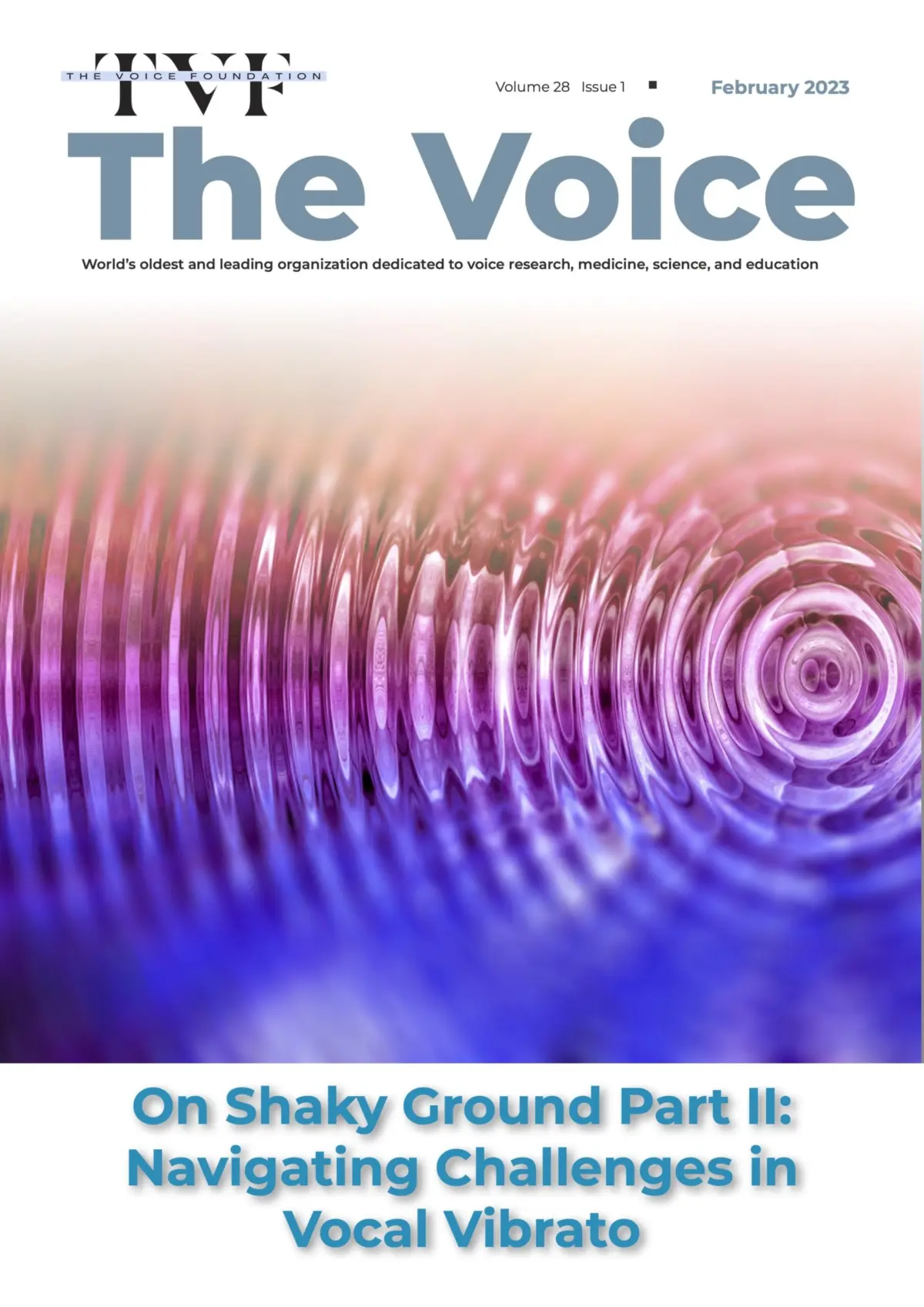
In the February 2023 edition of The Voice Foundation newsletter, authored and curated by Ian DeNolfo, this complex acoustic phenomenon takes center stage. Titled "On Shaky Ground Part II," this installment delves deeply into the multifaceted nature of vocal vibrato. Moving beyond basic definitions, the publication examines vibrato through a triple-lens approach: cutting-edge scientific research, pedagogical application in the studio, and clinical treatment in speech-language pathology and otolaryngology.
This comprehensive report unpacks the core themes of the February 2023 release, contextualizing its significance within the broader landscape of vocal health, artistry, and science. By examining the physiological mechanisms driving vibrato, the challenges faced by voice teachers, and the therapeutic interventions required when vibrato becomes compromised, this article provides an exhaustive exploration of The Voice Foundation’s latest contribution to vocal science.
Detailed Chronology: The Evolution of Vibrato Discourse
To fully appreciate the insights presented in the February 2023 newsletter, it is essential to trace the historical and ongoing trajectory of how the vocal community understands vibrato.
From Empirical Observation to Laboratory Analysis
Historically, vocal vibrato was understood largely through intuition and imitation. Master voice teachers of the 18th and 19th centuries described it in metaphorical terms—associating it with "the shimmer of light" or "natural emotional resonance." However, as the 20th century progressed, pioneers in voice science began utilizing acoustic and physiological tools to demystify the phenomenon. Early spectrograms and electromyographic (EMG) studies revealed that vibrato is not merely an artistic choice, but a complex neuromuscular oscillation involving the laryngeal musculature, respiratory support systems, and vocal fold mechanics.
The Genesis of "On Shaky Ground"
The framing of vibrato as "shaky ground" points to a profound reality in voice pedagogy and therapy: while a healthy vibrato is a hallmark of advanced vocal technique, an unstable, excessive, or absent vibrato (often termed a "wobble," "tremolo," or "straight tone") can indicate underlying laryngeal fatigue, neurological issues, or technical flaws. Part I of this thematic exploration laid the groundwork by examining the acoustic properties of vibrato and the initial physiological markers of instability.
By February 24, 2023, when Ian DeNolfo published Part II, the discourse had evolved to synthesize active laboratory findings with real-world studio and clinical applications. This release marked a critical milestone in connecting theoretical acoustics with the day-to-day realities of vocal coaches working with high-demand singers and clinicians rehabilitating injured patients.
Supporting Context & Metrics: The Science of Vocal Oscillation
What exactly constitutes vocal vibrato from a scientific standpoint, and why does it represent such a delicate balance within the human voice?
The Acoustic Anatomy of Vibrato
Scientifically, vibrato is defined as a periodic fluctuation in pitch (frequency), intensity (amplitude), and timbre (spectrum), typically occurring at a rate of 5 to 7 oscillations per second (Hz) in a healthy, trained western classical voice.
- Frequency Modulation: The pitch rises and falls slightly around a central frequency.
- Amplitude Modulation: The volume shifts concurrently with the pitch, though usually with a subtler variation.
- Extent: The degree of pitch deviation (typically around a semitone, or a quarter-step above and below the nominal pitch) dictates whether the vibrato sounds controlled or exaggerated.
The Neuromuscular Engine
Research highlighted by organizations like The Voice Foundation frequently points to the intrinsic laryngeal muscles—specifically the cricothyroid and thyroarytenoid muscles—alongside the respiratory musculature as the primary drivers of this oscillation. Far from being a conscious, mechanical shaking produced by the throat, a natural vibrato is the byproduct of dynamic laryngeal equilibrium. When the respiratory-phonatory system is balanced and tension-free, the nervous system naturally facilitates a micro-oscillation in muscle tension.
The Pathology of Instability
When this equilibrium is disrupted, the "shaky ground" phenomenon occurs. Metrics often monitored in clinical settings include:
- Jitter and Shimmer: Cycle-to-cycle variations in fundamental frequency and amplitude, respectively. Elevated jitter and shimmer often correlate with pathological hoarseness and loss of controlled vibrato.
- Rate Fluctuations: A vibrato rate dropping below 5 Hz is typically perceived as a slow wobble or trillo, often resulting from vocal fatigue or muscle laxity. Conversely, a rate exceeding 7 Hz can manifest as a tense tremolo, frequently tied to excessive muscular constriction.
Pedagogical and Clinical Perspectives
The February 2023 newsletter emphasizes that understanding vibrato requires bridging three distinct professional silos: the researcher, the teacher, and the clinician.
+-----------------------------------------------------------------+
|                   THE VIBRATO TRIAD                             |
|                                                                 |
|   [Research] -------------> [Pedagogy] <------------- [Clinic]  |
|  (Acoustics & EMG)      (Studio Training)     (Pathology & Rehab) |
+-----------------------------------------------------------------+
1. The Research Perspective
Researchers utilize advanced imaging, such as high-speed digital cinematography and electromyography, to map how neuromuscular impulses translate into acoustic waves. Through empirical studies, scientists continue to investigate how aging, hydration, hormonal shifts, and neurological conditions impact the regularity of vibrato.
2. The Teaching Perspective
In the voice studio, instructors must navigate the delicate task of cultivating vibrato without forcing it. Pushing a student to artificially manufacture vibrato through jaw shaking or excessive laryngeal manipulation can lead to severe vocal damage. Pedagogical strategies focus instead on establishing optimal breath support, laryngeal posture, and muscular release, allowing vibrato to emerge as a natural consequence of efficient phonation.
3. The Clinical Perspective
For speech-language pathologists (SLPs) and laryngologists, managing vibrato issues is an integral part of vocal rehabilitation. When professional singers present with a compromised vibrato—such as a sudden onset tremolo or a loss of pitch control—it can be an early warning sign of vocal fold pathology, neurological disorders (such as spasmodic dysphonia or essential tremor), or severe phonotrauma. Clinical intervention often combines voice therapy, medical management, and biofeedback to restore baseline laryngeal function.
Official Statements and Publications
While Ian DeNolfo’s editorial framing sets the conversational tone for the February 2023 dispatch, the broader authority of The Voice Foundation rests upon decades of peer-reviewed research, global symposia, and consensus statements from leading otolaryngologists, voice scientists, and speech pathologists.
In statements accompanying the ongoing discourse on vocal mechanics, Foundation leadership consistently emphasizes the necessity of interdisciplinary collaboration. As articulated in various symposia proceedings published under the Voice Foundation umbrella, treating the professional voice requires an understanding that art and science are inextricably linked.
"The beauty of the human voice is governed by immutable laws of acoustics and physiology," notes the overarching editorial ethos of the organization. "Only by uniting the empirical rigors of the laboratory with the intuitive artistry of the voice studio can we truly comprehend phenomena as complex as vibrato."
The downloadable PDF accompanying the February 2023 newsletter (Newsletter-Feb-2023.pdf) serves as a primary repository for these expert contributions, offering subscribers deep-dive articles, case studies, and bibliographic resources for further academic inquiry.
Future Outlook: The Horizon of Vocal Science
As we look beyond the findings published in early 2023, the future of vocal research and pedagogy is poised for dramatic transformation driven by technological advancements and cross-disciplinary integration.
Artificial Intelligence and Real-Time Biofeedback
Emerging technologies are increasingly being integrated into both vocal training and clinical diagnostics. AI-driven acoustic analysis software can now track vibrato rate, extent, and regularity in real-time, providing singers and therapists with immediate visual feedback. This allows for hyper-targeted interventions, enabling performers to correct micro-tensions before they manifest as clinical pathologies.
Regenerative Medicine and Laryngeal Health
With advancements in regenerative medicine, stem cell research, and biomaterials, the future of treating vocal fold scarring and vibrato degradation looks increasingly promising. As researchers gain the ability to restore optimal pliability to damaged vocal fold tissue, artists who might have previously faced career-ending voice disorders will have access to restorative treatments capable of preserving their signature vibrato.
Expanding Access to Interdisciplinary Education
Finally, initiatives led by organizations like The Voice Foundation are breaking down silos between traditionally isolated fields. Future educational models increasingly emphasize cross-training: voice teachers are gaining deeper literacy in laryngeal anatomy and pathology, while clinicians are studying the nuances of vocal aesthetics and pedagogy. This holistic approach ensures that the "shaky ground" of complex vocal phenomena will be met with increasingly stable, unified, and evidence-based solutions.
Conclusion
The February 2023 newsletter of The Voice Foundation, featuring Ian DeNolfo’s curation of "On Shaky Ground Part II," serves as a vital touchstone for the global voice community. By dismantling the complexities of vocal vibrato through the triadic lens of research, teaching, and treatment, the publication underscores the importance of a comprehensive, scientific approach to vocal art. As technology evolves and interdisciplinary collaboration deepens, our understanding of the human voice will continue to expand, ensuring that both the art and science of singing remain on remarkably solid ground.