
Executive Overview
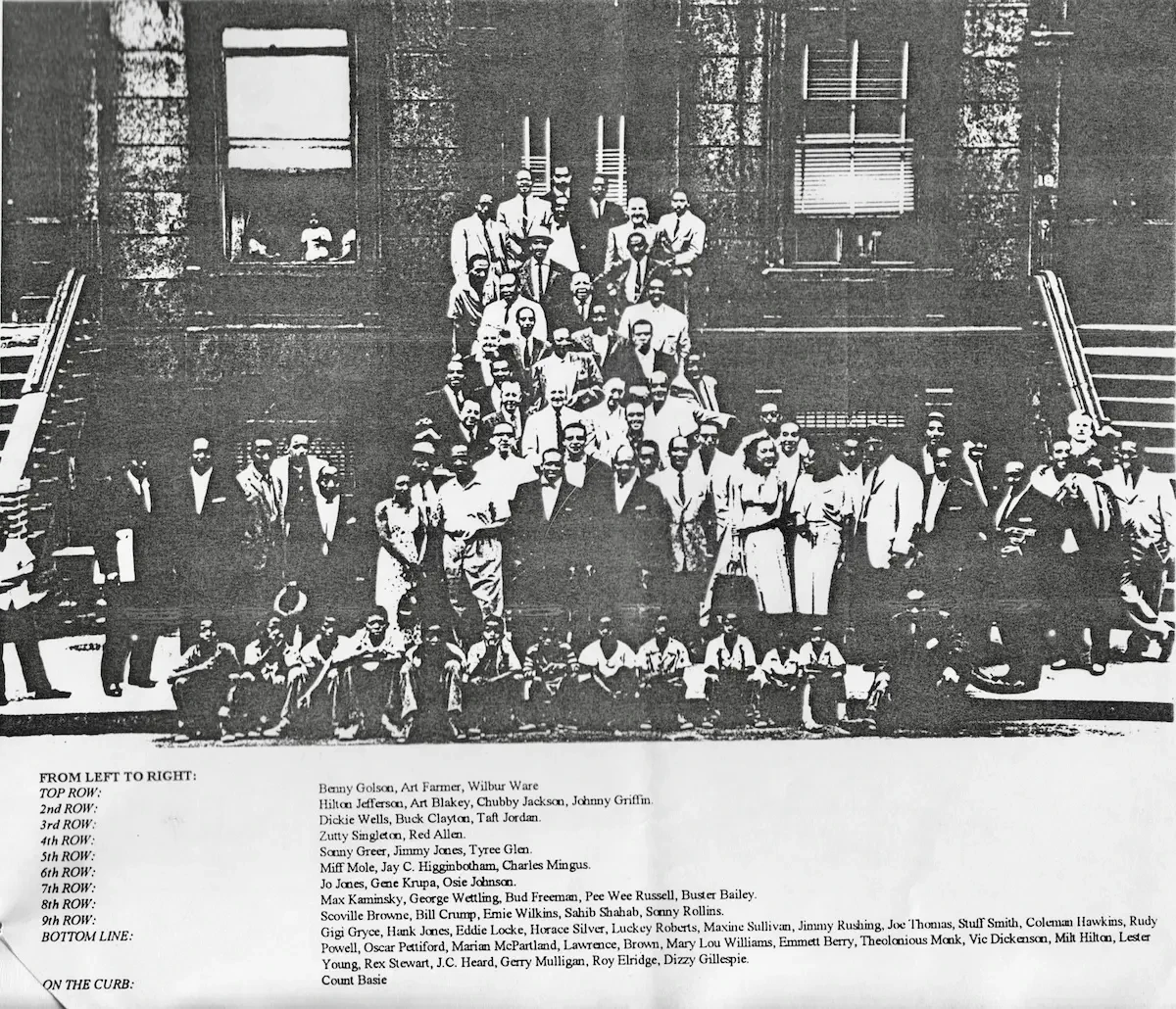
In the hazy, golden summer of 1958, a young New York photographer sent out tentative invitations to jazz musicians across the city, hoping a few might show up for a group portrait. To his astonishment, approximately 60 titans of the genre answered the call, assembling at the unearthly hour of 10:00 AM on a Harlem stoop. That singular morning was later immortalized in Art Kane’s iconic photograph—commonly known as A Great Day in Harlem—and subsequently captured in an acclaimed documentary film. Both have since been enshrined in the permanent archives of global music history.
More than half a century later, the spirit of that historic New York gathering crossed the Atlantic. British jazz enthusiast Ray Bolden conceived an audacious tribute: a homegrown recreation featuring the stalwarts of the UK jazz scene. Dubbed "The Great Day in Soho," the event took place on the morning of June 24 in the historic grounds of St Anne’s Church on Wardour Street, London.
What began as an ambitious homage quickly snowballed into a landmark cultural happening. While organizers expected a respectable turnout, the historic churchyard was overwhelmed by an influx of musicians, enthusiastic onlookers, and local youths drawn to the commotion. With a final headcount soaring toward an estimated 200 to 300 attendees, the gathering proved to be a chaotic, joyous, and historically significant celebration of British jazz.
This comprehensive report examines the genesis of the event, the logistical hurdles of herding Britain’s finest improvisers in a cramped Soho courtyard, the photographic legacy captured by Peter Symes, and the enduring cultural resonance of replicating one of America’s most revered artistic moments on British soil.
Detailed Chronology: From 1958 Harlem to Modern Soho
The Blueprint: The Legend of A Great Day in Harlem
To understand the magnitude of Ray Bolden’s undertaking, one must first revisit the immutable standard set in New York. In July 1958, photographer Art Kane gathered 57 jazz legends on 126th Street between Fifth and Madison Avenues in Harlem for Esquire magazine. Figures such as Count Basie, Thelonious Monk, Dizzy Gillespie, Charles Mingus, and Lester Young stood shoulder-to-shoulder on a residential brownstone stoop.
The resulting photograph captured an era of cool sophistication, camaraderie, and generational genius. It was a lightning-in-a-bottle moment that defied the odds of scheduling artists who notoriously lived by a nocturnal clock. When Jean Bach later turned the story into an Academy Award-nominated documentary, the mythos of the event was cemented forever.
The British Impetus: Ray Bolden’s Vision
For British jazz aficionados, the Harlem photograph represented an unattainable pinnacle of community unity. However, Ray Bolden believed that the vibrant, tight-knit British jazz ecosystem deserved its own defining portrait.
Planning commenced months in advance, requiring delicate coordination across a notoriously fragmented music scene. Bolden settled on a Sunday morning in late June, choosing the tranquil grounds of St Anne’s Church on Wardour Street as the canvas. Nestled in the heart of Soho—historically the beating pulse of London’s nightlife and jazz underground—the location offered symbolic resonance, with the historic, winding Archer Street sitting just out of frame in the top right-hand corner.
The Morning of June 24: Chaos in the Courtyard
The official call time was set for 11:15 AM for a prompt 11:30 AM assembly. Yet, jazz musicians, it seemed, could not resist the urge to arrive early—or perhaps simply could not sleep in. By 11:00 AM, the old churchyard was already buzzing.
Musicians streamed through the gates, greeting old friends, collaborators, and rivals with enthusiastic embraces. The atmosphere was electric, charged with mutual respect and the rare opportunity to see generations of British players in one place. However, the enthusiasm quickly presented a logistical nightmare.
As word spread through the Soho streets, a familiar scene—reminiscent of Harlem decades prior—began to unfold. A steady stream of curious passersby, local kids, and neighborhood characters drifted in to investigate the commotion. Keeping the restless, creative crowd focused long enough to secure a clean frame proved nearly impossible.

With photographers stationed precariously at the first-floor window of the church tower to capture a wide-angle perspective, the organizers needed a drastic method of crowd control. Salvation came in the form of a high-powered loudhailer. Wielding the megaphone with theatrical authority—reminiscent of a gritty detective shouting, "Come out Dillinger, we know you’re in there!"—organizers managed to corral the unruly artists into manageable sections. Reed players were grouped together, followed by brass specialists, percussionists, and rhythm section masters, allowing the cameras to capture snapshots of the various musical sub-sections before the crowd inevitably dissolved back into conversation.
Supporting Context & Metrics
Attendance and Demographics
While initial projections were modest, the magnetism of the event far exceeded expectations. In the September issue of Jazz Journal, the correspondence pages featured a letter from Ray Bolden expressing his profound gratitude for the unprecedented turnout.
- Estimated Attendance: While early headcounts varied wildly amidst the shifting crowds, the consensus settled close to 200 musicians, with some estimates pushing tantalizingly near the 300 mark.
- Generational Representation: The gathering bridged eras, uniting veterans of the post-war trad and mainstream jazz booms with the adventurous young lions driving the contemporary British modern jazz movement.
- Geographic Spread: Attendees represented not just the London club circuit, but regional hubs across the UK, turning the Soho churchyard into a national summit of improvised music.
The Photographic Record
Capturing a dynamic, moving crowd of hundreds from an elevated vantage point is an art form in itself. Photographer Peter Symes assumed the daunting task of immortalizing the day. Armed with wide-angle optics, Symes snapped the defining panoramic shot that would later be archived in the Jazz Journal files.
While the sheer density of the crowd and the constant shifting of bodies meant that not every single musician made it into the master frame, the resulting photograph remains an invaluable historical document. It serves as a visual census of British jazz at a specific, sunlit crossroad in time, with the historic architecture of Soho framing the composition.
Official Statements & Archival Discrepancies
The "Swinging Day in Soho" Nomenclature Debate
In historical archiving, precision is paramount, yet minor discrepancies often creep into the narrative. A notable naming debate emerged regarding the official title of the event and its associated imagery.
- The Organiser’s Letter: Ray Bolden’s published letter of gratitude in the September edition of Jazz Journal was titled "Swinging Day In Soho."
- The Archival Record: Peter Symes’ master photograph, preserved within the Jazz Journal photographic library, carries this exact title label.
- The Preferred Journalistic Despite the nomenclature used in the correspondence, veteran editorial consensus—championed by figures like Eddie—favored the grander, more evocative "The Great Day in Soho," directly nodding to its American predecessor.
This subtle linguistic tug-of-war highlights the dual nature of the event: it was simultaneously a swinging, joyous British social gathering (Swinging Day) and a historic, monumental homage to an international standard (The Great Day).
Future Outlook: Legacy and the Preservation of British Jazz History
The success of "The Great Day in Soho" raises an important question for cultural historians and music archivists: How do we sustain and celebrate the heritage of improvised music in an era of rapid urban and artistic change?
1. Archival Digitization and Accessibility
As physical prints age and foundational figures pass away, initiatives like the Jazz Journal archives become vital cultural repositories. There is an urgent, ongoing need to fully digitize, annotate, and catalog photographs like Peter Symes’ master shot. Future projects must ensure that the names and contributions of every musician present in the Soho churchyard are identified, cross-referenced, and preserved for educational and historical research.
2. The Evolution of Soho’s Cultural Landscape
Soho has undergone dramatic gentrification and commercialization in the decades since June 24. Historic venues have vanished, and the economic pressures on working jazz musicians have intensified. Events like Bolden’s recreation serve as a powerful reminder of the neighborhood’s artistic soul. Future cultural planning in central London must look to these historic touchstones to advocate for the preservation of live music spaces and community hubs.
3. Inspiring Future Generations
Just as Art Kane’s 1958 photograph inspired Ray Bolden decades later, the legacy of "The Great Day in Soho" provides a blueprint for contemporary organizers. In an era where digital communication often replaces physical community, face-to-face gatherings of artists are more crucial than ever. Modern musicians face their own unique challenges, and creating moments of shared solidarity—captured through modern lenses—ensures that the unbroken chain of jazz history continues to forge ahead.
Ultimately, what began as a whimsical idea among British enthusiasts transformed into a historic snapshot of musical fraternity. St Anne’s Churchyard on that bright June morning will forever remain a sacred site where London’s jazz community stepped out of the dimly lit clubs, stood shoulder-to-shoulder in the sunlight, and wrote their own chapter in the annals of jazz history.