
Executive Overview
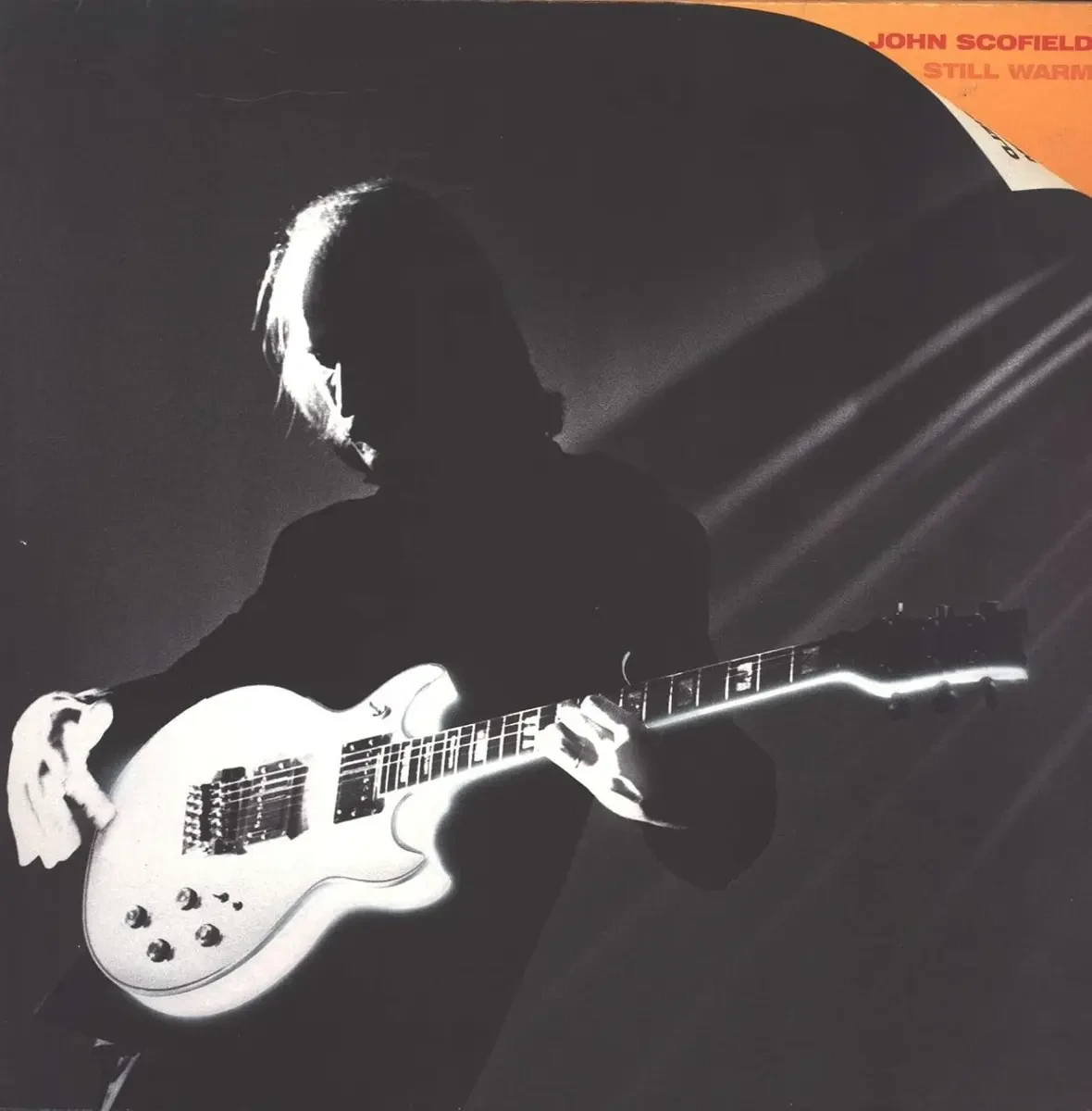
In the mid-1980s, the landscape of jazz fusion was undergoing a severe identity crisis. Commercial pressures pushed many genre pioneers toward slick, over-produced pop-jazz hybrids that prioritized synthesizers and smooth radio-friendly textures over spontaneous improvisation. Amid this backdrop of calculated gloss, guitarist John Scofield delivered a definitive counter-statement. Released in 1985 on Gramavision Records, Still Warm stands as a pivotal milestone in the guitarist’s sprawling discography—an album that strips away the unnecessary artifice of contemporary studio production to embrace the raw, elemental energy of live performance.
This feature-length retrospective examines the making, musical architecture, and lasting cultural impact of Still Warm. Recorded in New York City in June 1985, the album brought together an elite, hard-hitting rhythm section: keyboardist Don Grolnick, bassist Darryl Jones, and drummer Omar Hakim. Together, this collective forged a sound that was simultaneously rooted in the rich traditions of American roots music, funk, and post-bop jazz.
Far from being a mere continuation of his earlier work, Still Warm represented a crucial maturation for Scofield. Coming immediately on the heels of his Gramavision debut, Electric Outlet, the album addressed and corrected the overly meticulous tendencies of its predecessor. Where Electric Outlet occasionally suffered from excessive overdubbing and a slightly contrived atmosphere, Still Warm champions fundamental values: spontaneous interplay, unvarnished guitar tones, and the kinetic thrill of a high-wire "blowing" session.
This comprehensive review explores how Scofield’s tenure alongside Miles Davis informed his compositional approach, analyzes the indispensable contributions of his sidemen, deconstructs key tracks like the deceptively titled "Rule Of Thumb," and evaluates the album’s enduring legacy as one of the most vital statements of 1980s instrumental music.
Detailed Chronology: The Road to Still Warm
To understand the triumph of Still Warm, one must trace the trajectory of John Scofield’s career leading up to the summer of 1985. By the time he entered the New York studio to record the album, Scofield was already a respected figure in the global jazz community, having cut his teeth alongside giants such as Gerry Mulligan, Chet Baker, and Gary Burton. However, it was his tenure in the touring and recording band of trumpet icon Miles Davis between 1982 and 1985 that truly catapulted him into international prominence.
Playing alongside Davis fundamentally altered Scofield’s relationship with rhythm, space, and audience engagement. Davis demanded a relentless commitment to the moment, pushing his guitarists to adopt a punchy, blues-infused attack that could cut through heavy electronic textures. When Scofield left Davis’s fold to focus on his own projects, he brought this battle-tested aesthetic directly into his solo recordings.
The Gramavision Era and Electric Outlet
In 1984, Scofield signed with Gramavision, an independent label known for championing boundary-pushing avant-garde and fusion artists. His label debut, Electric Outlet, showcased his distinctive compositional voice and quirky harmonic language. Yet, in retrospect, the album was burdened by the studio production ethos of the era. It featured intricate layering, multi-tracked guitar parts, and a degree of sonic calculation that occasionally stifled the organic swing of the music.
Recognizing the need for a change of course, Scofield elected to assemble a powerhouse working band for his next outing. Rather than relying on studio trickery to construct songs from the ground up, he wanted to capture the combustible energy of musicians playing together in a single room.
The June 1985 Sessions in New York City
In June 1985, Scofield convened with Grolnick, Jones, and Hakim in a New York City recording studio. The lineup was an inspired mix of distinct stylistic backgrounds. Darryl Jones, who had also served in Miles Davis’s electric band, brought a deep, funky bottom-end forged in the crucible of Chicago blues and modern R&B. Omar Hakim, fresh off his groundbreaking work with Weather Report and Sting, contributed a sophisticated, whip-crack drumming style that balanced relentless propulsion with nuanced textural color. Don Grolnick, a veteran session keyboardist renowned for his lyrical touch and harmonic sophistication, acted as a crucial stylistic anchor.
The resulting recording sessions were marked by a spirit of directness and spontaneity. Eschewing heavy overdubs, the core quartet focused on capturing the primary takes of Scofield’s idiosyncratic tunes. The resulting tracks—ranging from the driving funk of "Techno" to the country-inflected shuffle of "Rule Of Thumb"—were preserved with a dynamic clarity that honored the live-set ethos Scofield sought to achieve.
Supporting Context & Metrics: Deconstructing the Sound
The enduring brilliance of Still Warm lies not merely in its pedigree, but in the microscopic details of its musical construction. The album represents a rare convergence of technical mastery and emotional transparency, fueled by specific production choices and instrumental interactions.
The Rhythm Section: The Engine of Still Warm
While John Scofield’s name graced the album cover, the structural integrity of Still Warm is maintained by the powerhouse rhythm section operating beneath his solos.
- Darryl Jones (Bass): Jones acts as the primary architectural support beam for the entire project. His basslines are relentlessly "in the pocket," transforming Scofield’s jagged, angular riffs into heavy-duty, load-bearing foundations. Jones avoids flashy, over-extended solos, instead focusing on a deep groove that locks seamlessly with Hakim’s kick drum.
- Omar Hakim (Drums): Hakim’s contribution is characterized by an almost imperceptible urgency. Utilizing crisp snare accents, intricate hi-hat work, and carefully chosen electronic accessories, he drives the music forward without ever overcrowding Scofield’s melodic space. His rhythmic phrasing provides the kinetic tension that keeps every track bubbling just beneath the surface.
- Don Grolnick (Keyboards): Grolnick serves as a fascinatingly subdued foil to Scofield’s assertive guitar work. Rather than engaging in bombastic trade-offs or competing for sonic territory, Grolnick provides warm harmonic cushions and subtle textural counterpoints. His understated approach allows Scofield’s rough-diamond improvisations to occupy the absolute center stage.
The Guitar Approach: Raw, Unchamfered, and Fearless
Scofield’s guitar tone on Still Warm is legendary among players and aficionados alike. Eschewing the compressed, glassy sustain favored by many 1980s fusion guitarists, Scofield utilizes a slightly overdriven, nasal, woody tone—frequently achieved via his favored Ibanez signature semi-hollowbody guitars and chorus-drenched amplifiers.
His improvisational methodology on this album can be described as fearless. Scofield embraces melodic detours and harmonic friction, bending blues phrases into microtonal territory and deliberately courting chaos before resolving lines with uncanny grace.
Track Breakdown and Structural Flow
The album’s tracklist is briskly paced, divided across two distinct sides in its original vinyl incarnation:
- Side One: Techno; Still Warm; High And Mighty; Protocol (22:03)
- Side Two: Rule Of Thumb; Picks + Pans; Gil b643 (19:26)
From the stuttering, infectious funk rhythms of the opening title tracks to the deceptive simplicity of Rule Of Thumb, the album maintains a relentless forward momentum. The compositions function as heavy-duty vehicles for improvisation, intentionally leaving wide seams and rough edges that allow the soloists to pull the music in unexpected directions during every take.
Official Statements and Critical Reception
Upon its release in the autumn of 1985, Still Warm received widespread critical acclaim, cementing John Scofield’s status as a leading voice in modern guitar-driven jazz. Jazz critics immediately recognized the record as a corrective to the sterile corporate fusion that dominated radio airwaves at the time.
Reviewing the album for prominent jazz publications, critics noted the stark contrast between Electric Outlet and the newly minted Still Warm. One contemporary critic famously remarked:
"Where Outlet was at times a little fussy, over-overdubbed and perhaps a touch contrived, Still Warm celebrates fundamental values. It has the zest of an impromptu live set, with Scofield hammering together the unchamfered offcuts of a good three decades of American music to form a solid platform for his own ideas."
In subsequent interviews, Scofield reflected on the recording process with fondness, highlighting the telepathic connection he shared with Jones, Hakim, and Grolnick. He noted that the quartet felt less like a pickup band of studio ringers and more like a true working unit, capable of turning simple rhythmic motifs into complex sonic journeys on the spot.
Jazz historian and industry analysts have frequently pointed out the ironic brilliance of the album’s title. As one retrospective review observed:
"Apart from being the best testimony yet to Scofield as improviser pure and simple, Still Warm is also misnamed. It’s actually Rudy Hot."
Future Outlook and Enduring Legacy
Decades after its initial release in 1985, Still Warm continues to serve as an essential touchstone for contemporary guitarists, composers, and jazz fusion historians. Its influence can be heard rippling through generations of modern improvisers who refuse to draw hard boundaries between jazz, funk, rock, and blues.
Impact on Modern Fusion and Jam Bands
The ethos of Still Warm—characterized by extended, blues-drenched blowing over complex, rhythmically sophisticated vamp-based grooves—laid crucial groundwork for the burgeoning jam band scene of the 1990s and 2000s. Artists operating at the intersection of jazz and rock often look to Scofield’s mid-80s quartet recordings as a masterclass in how to maintain compositional integrity while granting soloists absolute freedom to explore.
Archival Re-evaluations and Vinyl Resurgence
In recent years, as the vinyl revival has renewed interest in 1980s audiophile pressings and original Gramavision master tapes, Still Warm has enjoyed a critical renaissance. Younger generations of jazz listeners, fatigued by hyper-compressed digital mixing and clinical perfectionism in modern production, have gravitated toward the organic grit and human imperfections preserved on the album.
Conclusion
Still Warm remains a towering achievement in John Scofield’s illustrious career. By trusting the collective genius of his sidemen, stripping away excessive studio processing, and doubling down on fundamental improvisational values, Scofield created a record that transcends the stylistic constraints of its era. It is a work that captures lightning in a bottle—a brilliant, unvarnished collision of American musical traditions that proves true heat requires no artificial enhancement.